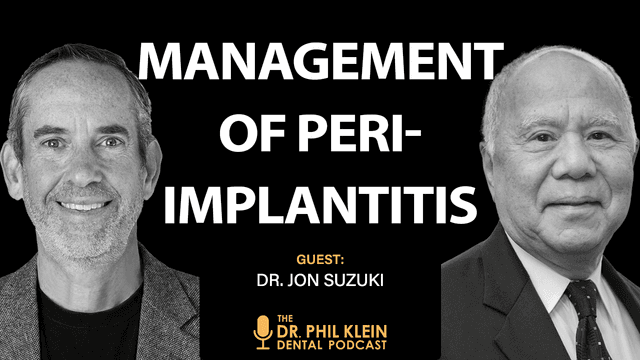
Professor of Periodontology, Oral Implantology, Microbiology and Immunology - Temple University
Temple University School of Dentistry - Temple University School of Medicine - Loyola University Chicago - Illinois Institute of Technology - University of Washington - University of Maryland - University of Pittsburgh - Nova Southeastern University - University of Oklahoma - Food and Drug Administration Dental Products Panel - American Board of Periodontology - International Congress of Oral Implantology - American Dental Association Council on Scientific Affairs - National Institutes of Health - American College of Dentists - International College of Dentists - American College of Microbiology - Omicron Kappa Upsilon
Read full bio
Dr. Jon Suzuki has a Presidential Appointment as Professor of Microbiology and Immunology in the School of Medicine and Professor of Periodontology and Oral Implantology in the School of Dentistry at Temple University, Philadelphia, PA. USA. He also serves as Chairman and Program Director of the Department of Periodontology and Oral Implantology and Associate Dean for Graduate Education at Temple University. He has been Dean at the University of Pittsburgh for a decade, CEO of the University faculty practice plan, and Chief of Hospital Dentistry.
Dr. Suzuki received his D.D.S. from Loyola University of Chicago and Ph.D. in Microbiology from the Illinois Institute of Technology. He completed an N.I.H. Fellowship in Immunology at the University of Washington in Seattle, and a Clinical Certificate in Periodontics at the University of Maryland. His MBA (emphasis on International Affairs) is from the Katz Graduate School of Business of the University of Pittsburgh.
Dr. Suzuki has recently been appointed as Chairman of the Food and Drug Administration Dental Products Panel, Silver Spring, MD. With a term ending in October 31st, 2018. He is on the faculty of the US Navy National Naval Medical Command, Bethesda, MD, and also holds Professorships at Nova Southeastern University, Ft. Lauderdale, FL, the University of Maryland, and the University of Oklahoma.
He served as Chairman of the American Dental Association Council on Scientific Affairs, Chicago, and continues to serve as a consultant to the Scientific Affairs Council, Practice Management Council, and Commission on Dental Accreditation. Dr. Suzuki served on the National Institutes of Health National Dental Advisory Research Council, and numerous NIH Study Sections, Bethesda, MD. Dr. Suzuki has current hospital appointments at the Episcopal Hospital, Philadelphia, PA and the Veterans' Affairs Medical Centers.
He is a fellow of the American and International College of Dentists, a Boarded Specialist Microbiologist and former Board Examiner of the American College of Microbiology, a Diplomate and current Board Examiner of the International Congress of Oral Implantology, and a Diplomate of the American Board of Periodontology.
Dr. Suzuki is the current Executive Secretary/Treasurer of the Supreme Chapter of Omicron Kappa Upsilon, the national Honorary Dental Society, and has served in this position almost a quarter of a century.
His honors include being named "Alumnus of the Year", Loyola University of Chicago, "Alumnus of the Year", Illinois Wesleyan University, "Recognized Alumnus in Biological Sciences", Illinois Institute of Technology, and "Faculty of the Year", University of Maryland. Dr. Suzuki won 1st place, Orban Prize Competition of the American Academy of Periodontology and won 1st place in the ADA/Dentsply SCADA Table Clinic Competition. He is in private practice limited to hospital periodontics in Philadelphia.
Dr. Suzuki has published over 150 papers, chapters, and symposia, 200+ abstracts, and 1 textbook in Medical Technology.
Are you treating patients with dental implants the same way you treat natural teeth — and could that approach be putting those implants at risk?
Dr. Jon Suzuki is a Professor of Microbiology and Immunology in the School of Medicine and Professor of Periodontology and Oral Implantology in the School of Dentistry at Temple University, where he also serves as Chairman and Program Director of the Department of Periodontology and Oral Implantology and Associate Dean for Graduate Education. A former Dean at the University of Pittsburgh and CEO of the University faculty practice plan, Dr. Suzuki holds a D.D.S. from Loyola University of Chicago, a Ph.D. in Microbiology from the Illinois Institute of Technology, an N.I.H. Fellowship in Immunology from the University of Washington, a Clinical Certificate in Periodontics from the University of Maryland, and an MBA from the Katz Graduate School of Business. He is a Diplomate of the American Board of Periodontology, a Diplomate and Board Examiner of the International Congress of Oral Implantology, a Boarded Specialist Microbiologist, a Fellow of the American and International College of Dentists, former Chairman of the FDA Dental Products Panel, and former Chairman of the ADA Council on Scientific Affairs, with over 150 published papers, chapters, and symposia and a textbook in Medical Technology.
In this episode, Dr. Suzuki joins Dr. Phil Klein to deliver a comprehensive, evidence-based framework for managing peri-implant health in the general dental practice. The conversation spans the biological reasons implant disease progresses faster than periodontal disease around natural teeth, the emerging concern of titanium corrosion and its potential systemic implications, and the practical protocols hygienists should follow at every implant maintenance visit. With 5 million implants placed annually in the United States, this discussion is immediately relevant to nearly every dental professional seeing patients today.
Episode Highlights:
Because dental implants lack a periodontal ligament, they have no PDL-associated vascularity, diminished local immune response, and only an epithelial soft tissue collar rather than a full gingival fiber complex. These anatomical differences mean peri-implant disease can progress significantly faster than periodontitis around natural teeth, making early detection and intervention critical to implant survival.
Probing depths of three to five millimeters are considered within normal limits around implants due to the nature of soft tissue adhesion, but pockets deepening to five to six millimeters, combined with erythema and bleeding on probing, represent clear red flags for peri-implant mucositis or early peri-implantitis. Hygienists should use a plastic or resin probe rather than a stainless steel probe during implant assessment to avoid scratching the titanium surface.
Titanium corrosion from dental implants is an emerging area of clinical concern supported by parallel literature in orthopedics and obstetrics-gynecology. Corrosion risk increases once implant threads become exposed to the oral environment — accelerated by pH changes from plaque, dietary factors, and occlusal loading — and the potential for systemic distribution of corrosion byproducts warrants continued research and clinical vigilance.
Approximately 80 to 85 percent of patients do not floss consistently, and implant patients are no exception. Power brushes, interproximal irrigating devices, and antimicrobial mouth rinses used selectively — particularly for two to three weeks following a surgical or maintenance appointment — represent practical, compliance-friendly strategies for reducing peri-implant biofilm in the home care setting.
Smoking lowers sulcular oxygen tension, promotes pathogenic anaerobic bacteria, suppresses neutrophil response, reduces salivary flow, and diminishes secretory immunoglobulin A — all of which increase peri-implantitis risk. While smoking is not an absolute contraindication for implant placement, dental offices should offer a tiered cessation approach including community counseling, nicotine-containing lozenges and gums, nicotine patches, and — with significant caution given documented psychiatric adverse effects — prescription cessation medications.
Perfect for: general dentists and restorative dentists managing implant patients, dental hygienists performing implant maintenance, periodontists, implant surgeons, and dental residents seeking evidence-based protocols for peri-implant disease prevention and early intervention.
If you place, restore, or maintain implants — or if you have patients who do — this episode gives you a clinical framework you can apply at your very next appointment.
Transcript
Read Full Transcript
This transcript was automatically generated and may contain errors or inaccuracies. It is provided for reference and accessibility purposes and may not represent the exact words spoken.
Clinicians in practice. always like to extend the envelope, take risks,
and perhaps put in implants that are marginal in terms of sight,
in terms of bone quality, in terms of bone quality, in terms of medical history,
in terms of oral hygiene factors, a number of other factors. I think as that envelope is extended
in a clinical practice, coupled together with the increasing age of Americans that we've discussed
in previous. podcast. I think we will continue to see periimplantitis, and I think we'll expect to
see more of it. Welcome to Austin, Texas, and welcome to the Dr. Phil Klein Dental Podcast.
In this episode, we'll cover the latest on implant care and disease prevention.
We'll explore why restorative dentists often play a more active role in maintaining implants
compared with natural teeth, especially since implant disease can progress at a much faster rate.
We'll also ask an important question that's been gaining attention. Could titanium corrosion from
dental implants pose risks not just locally but systemically for patients?
And this kind of corrosion typically occurs in cases of peri-implantitis. Our guests will also
share practical insights for hygienists, including what to keep in mind during an implant
maintenance visit, the best strategies for helping patients protect their implants at home, and
which tools can actually improve compliance. And finally, we'll tackle one of the biggest risk
factors for peri-implantitis, smoking. We'll discuss how dental offices can take practical,
proactive steps to support patients in smoking cessation. ultimately protecting both their oral and
overall health. So stay tuned. This episode is packed with timely, evidence-based strategies that
every dental professional dealing with dental implants can apply in their practice. Our guest is
Dr. Jon Suzuki. He's a professor of microbiology and immunology and of periodontology and oral
implantology at Temple University. A former dean at the University of Pittsburgh,
he has chaired the FDA Dental Products Panel, led the ADA Council on Scientific Affairs,
and served on numerous NIH committees. A diplomat of the American Board of Periodontology,
he has published over 200 papers and a textbook. and continues to teach and educate dentists all
around the world. Before we get started, I'd like to thank all of you for tuning in. If you're
enjoying the show, please follow us on Apple Podcasts and Spotify, and even better, leave a review.
By doing so, you're not only showing support for what we do here, but your reviews are instrumental
in getting more dental professionals to listen and benefit from our content. We really do
appreciate it. Dr. Suzuki, it's a pleasure to have you on the show. Thank you very much for having
me, Phil. So as general dentists, as restorative dentists, in addition to restoring the teeth,
it is our responsibility to also monitor the periodontal health of the patient. And that is looking
for red gingiva, bleeding upon probing, making sure we take radiographs at the regular intervals to
monitor the bone level and so forth. But when it comes to implants, we have to be even more
attentive because of the speed in which peri-implantitis progresses from a healthy implant to
mucositis to peri-implantitis. That process can happen rather quickly if we're not watching it as
restorative dentists. So from that perspective, and again, we talked about why that is, the lack of
soft tissue attachment, the lack of PDL, so we don't have the same biologic protection that we have
with natural teeth. So in light of that, Talk to us about the responsibility of the GP when it
comes to monitoring the health of an implant and intervening appropriately with the right treatment
in order to keep that process from progressing. Yes, I agree with you,
Phil, that there's a new set of rules in place if a restorative dentist has a patient in their
chair with dental implants. I think the sense of responsibility is higher.
The outlook for early disease is elevated. And actually the incentive to treat that particular
condition is paramount to ultimately keeping that dental implant.
So failure to do any one of those three, as you mentioned, can lead to a very...
fast-moving disease, faster than around teeth, disease progressing around dental implants.
Yeah, and talking about the speed in which implant disease progresses, how important is it to catch
it early? You know, they talk about oral cancer. That's a big thing with oral cancer. Go to the
dentist regularly. Make sure you get your oral cancer screening. Same with women that go to the
gynecologist for breast cancer prevention. All these types of things. have a better prognosis when
they're detected earlier. How much does this apply to implant disease starting at the initial level
of peri-implant mucositis? Do we have a much higher prognosis of saving that implant if it's
detected earlier than later? Absolutely. As in any systemic diseases,
the earlier the diagnosis is made, more likely treatment will be a success.
The less cost to the patient, the less morbidity to the patient,
earlier diagnosis is very, very critical. The anatomical and physiological reasons for it run
deeper than just looking at the implant versus a tooth. The implant, for example,
does not have a PDL as we've discussed in two previous podcasts, Phil,
because there's no PDL, there's no vascularity around a dental implant like there is around the PDL
of teeth. That means there's lack of nutrients, lack of oxygen that feed the health of an implant,
but also because of the diminished, if any.
immune response that is offered by the PDL to teeth. There is no immediate immune response
available around dental implants. It should an infection infect that particular area.
So it becomes important to diagnose early and also because of the soft tissue collar around a
dental implant. It is only an epithelial attachment collar, not a quote,
gingival complex set of fibers as connected to teeth. So because of the lack of the soft tissue
adhesion around the implant, it makes the implant much more susceptible to infection.
So therefore, you're right, the disease does progress rapidly. So for GPs and hygienists who are
monitoring the health, the periodontal health of a patient in a general dental practice, just
because the natural dentition has stippled gums, no bleeding arm probing,
the interdental papilla looks very tight and healthy, doesn't necessarily mean that the health of
the implant is in that same state. In other words, we shouldn't assume because in our natural
teeth, we have a very healthy periodontal state. Those implants are in the same level of health.
In fact, in other words, it may not be that unusual for mucositis,
peri-implant mucositis, or even peri-implantitis to be ongoing in a patient's mouth with the
natural teeth in a healthy state. And that's something that I think we should be aware of. What are
your thoughts on that? We'll be right back with our guest. But first, I want to tell you about
VOCO's newest... 4U. Top clinicians are calling it the most tooth-like universal composite ever
made. Unlike traditional composites that force you to choose between either an anterior aesthetic
composite, a stronger layering posterior composite, or a fast but aesthetic compromising bulk fill,
Grandioso 4U does it all, simplifying your workflow while delivering superior results in a single
material. It cures 4mm in just 10 seconds, looks stunning with 5 cluster shades covering all 16
Vita shades, and handles like a dream with 50% less resin. It's a 91% filled nano hybrid,
giving you tooth-like strength, ultra-low shrinkage, exceptional wear resistance, and an amalgam
-like high radio opacity. So as they say, seeing is believing. So grab your free sample of
Grandioso for you today at voco.dental. Yes, those selective implants within a dentition certainly
could trigger a disease prior to anything happening with the teeth. Maybe that there are separate
conditions, but sometimes implants suffer consequences first of plaque buildup and improper oral
hygiene. So I think the bottom line here is that as general dentists, hygienists that are working
in a dental practice, we should be particularly careful and meticulous about assessing the
peridinal health of the implants. There are 5 million implants placed every year. Many of our
patients have implants already. And just because the rest of the periodontal health of the natural
teeth look great does not mean there isn't something going on with the implant periodontally.
So we have to be very aware of that and keep that in mind. So I do want to touch on another topic,
another subject. And I don't think it's a major topic that's talked about too much, but there is
some concern about it. And that is titanium. And this has to do with titanium corrosion from an
implant. Is this something to be concerned about? Is there any evidence of this? And if there is
titanium corrosion going on in the mouth, which at some level, I guess there is.
So my question to you is, Dr. Suzuki, can this be dangerous to the patient systemically?
The short answer to that is yes. There are leading articles mostly in the orthopedic literature
for... chrome cobalt hip replacement and the potential of metal corrosion products emanating from a
chrome cobalt hip. There's another series of papers that's related to OBGYN journals looking at the
metal corrosion products that emanate from IUDs. And then the third component,
which are metal implants in the human body, does not have the strong science behind it because it's
more difficult to study and because it's relatively new to recognize among clinicians,
but the potential is certainly there. that if the titanium corrosion is especially accelerated by
pH changes, like with plaque, or even during, possibly during certain diets,
or even with occlusion, and we all learned about different types of metal fatigue from dental
materials in dental school, all of these different components could lead to titanium corrosion.
And so further research must be investigating the clinical outcome of the potential of titanium
corrosion, but it can be a real factor. And this corrosion, as far as implants, usually occurs once
the disease process progresses, right? Because when it's fully integrated with the bone, there
shouldn't be any titanium corrosion. Is that right? Yeah, that's correct. If the threads are not
exposed to the oral cavity, In my opinion, there's probably minimal opportunities for titanium
corrosion to occur. But once even one or two threads begin to show,
I think the process can be at least initiated and perhaps even escalated as further implants begin
to show. And what visually does the dentist see that indicates that there's corrosion going on?
What should he or she look for visually? Well, visually... still looking for the parameters of
inflammation you're still looking at deepening pockets three to four millimeters and possibly even
five millimeters of probing around a dental implant is considered within normal limits because of
the soft tissue adhesion around an implant so deepening of pockets say for example five to six
millimeters becomes becomes a red flag Also bleeding upon probing,
erythema, and this redness around an implant are also red flags too, indicating that periimplant
mucositis is perhaps starting and perhaps even periimplantitis.
But the exact... The definition and the exact delineation of periimplantitis related to titanium
corrosion products still remains relatively evasive at this time. We don't know what is happening
to the titanium corrosion. So let's switch over to the operatory for a second, Dr. Suzuki. We have
a dental hygienist. She's doing a perio assessment. She's probing across the arch.
There's only one implant in the mouth, tooth number 27. She's approaching tooth number 27.
and she's continuing to probe, what should she do differently, if anything, when doing her perio
assessment of that implant? The first step I would recommend is the hygienist would take a resin or
a plastic probe instead of a stainless steel probe. That's the first step I would do to prevent any
type of scratching of the titanium implant surface. The second thing I would look for is redness or
erythema around an implant. Is the redness around the implant different than around the dentition
surrounding the quadrant? The third I would look for in particular is mobility of the implant.
If it's immobile at all, a one-plus mobility or worse, or if it's worse than the surrounding
dentition, then maybe the doctor should be alerted to adjust the occlusion or to ensure that the
patient is wearing a night guard or retainer appliance. So as someone who has been part of the
educational process for many years, past dean of a dental school, chairman of the Department of
Perio at Temple, and so on and so forth. You've been so involved in education.
Are you in touch with the new generation of hygienists that are coming out where you feel confident
they are getting the proper training, given the fact that so many of our patients have dental
implants and that it requires a different look as far as how to treat those implants periodontally
versus the natural tooth in order to maintain? the safety measures that need to be considered when
taking care of these implants I guess because I believe in the American education system,
especially in dental education, I'd like to assume that virtually all the dental hygiene schools
are teaching their newly minted dental hygienists the principles of hygiene and especially that of
hygiene maintenance and their responsibilities as dental hygienists to make the proper diagnosis
and to manage dental implants. So I'm in favor of the education system doing its job training
hygienists properly. for dental hygiene maintenance. When you were at Temple and you were the
department chair for Perio, was implants even something that was going on back then? It goes back
even further. When I was the dean at the University of Pittsburgh for over... dental hygienists
were just starting to come into clinical significance in the 1990s and into the 21st century.
But based around the turn of the century, education changed dramatically in hygiene and in dental
schools. Actually, with Commission on Dental Education, which I'm also a CODA site visitor of,
now make it mandatory for that education to be qualified and taught in both dental schools and
dental hygiene schools. So beginning at around 1997, when periodontics required periodontists to
learn. to place dental implants. Likewise, restorative dentists and dental hygiene schools were
also beginning to be required to learn about dental implants and especially maintenance.
So while I have you on this episode, Dr. Suzuki, as someone who really has been around the block
for a while, really understanding so much about periodontics, so much about education,
so much about clinical practice, I want to ask you, what do you think
responsibility is of a dentist slash hygienist in a general dental practice when it comes to
maintaining the periodontal health of a dental implant in their patients.
Before we jump back to our guest, I want to take a moment to thank our sponsor, EMS, the company
behind guided biofilm therapy, or GBT. If you haven't heard of it, GBT was developed with leading
universities and clinicians, and it's quickly becoming the gold standard for managing biofilm. What
makes it so effective is the minimally invasive evidence-based approach. With airflow,
perioflow, and piezon technologies, GBT gently removes biofilm,
stains, and calculus with impressive precision. Patients really notice the comfort and speed,
and hygienists love how efficient the workflow becomes. No surprise that thousands of practices
worldwide are already seeing great results. And EMS makes it easy to bring GBT into your practice
with clinical guidance, marketing support, and a clear plan for implementation. So check out the
GBT-ready practice setup at gbt-shop.us. I think,
I believe that the first step, As the patient is seated into the dental chair in an operatory,
either the restorative dentist or the dental hygienist or both should make it mandatory to update
the medical history and medication history of that patient. And they need to do so annually in
paper or digitally for the entire health history, but at every single appointment.
at a recall appointment at a surgical appointment and anywhere in between that question should also
be asked to the patient are there any updates in your medical or medication history because
frequently medications change in a patient so that also could have a governing factor on implant
success especially if a patient is being treated with
selective serotonin reuptake inhibitors commonly known as antidepressants or as we discussed in
previous podcasts patients taking massive amounts of antacids for over weeks or months at a time
and other medications they also could play a big role The second thing a clinical hygienist should
do is look for signs of inflammation, just like around teeth, but be equally as vigilant,
if not more vigilant around dental implants. Look for redness, bleeding upon probing, mobility of
the implants as we've previously discussed. And then following through, of course, making sure that
the patient understands what the optimum oral hygiene methods are at home. If you would, could you
elaborate a little more on the tools at home? the home care compliance tools that you think are
most effective and should be recommended to the patient? Because some of our patients just don't
like to floss. I firmly believe that power brushes and interproximal irrigators play an important
role in implant success. Not always, but I think for the typical patient that does not floss every
single day, and that's a... 80-85 percent of the population i think that also goes for implant
patients they probably don't floss as vigilant as they're supposed to so these power brushes power
irrigating devices all play a role in increasing the success of their implant So that's one step.
Another step is to make sure that the interproximal cleaners will be successful from the patient to
use on a daily basis. The third component they could look for are antimicrobial mouth rinses,
and I don't recommend that they do it every single day, but perhaps selectively,
and especially for the two to three weeks after a surgical appointment,
after a maintenance appointment, it becomes an significant, I believe, to the implant success.
So let's talk about smokers and how that affects the success of a dental implant.
We know from years, decades of data, how smoking has been so detrimental to our health.
There's no doubt about it. It's not even something to debate. And we also know a lot more about the
mouth-body connection. And we know that smoking is detrimental to our periodontal health. So
obviously there's a connection to the health of the implant. Talk to us about smokers in our
practice, what that actually means for the prognosis of the case. I think as most...
Patients know smoking affects virtually every cell in the body,
including the oral cavity. It changes the pH of the oral cavity. It makes the sulcus in the pocket
more anaerobic from aerobic. It fosters the growth of pathogenic bacteria,
and it decreases the local immune response, such as decreasing the neutrophil response to any type
of plaque microorganisms. It also affects the overall oral cavity the oral cavity becomes drier and
less saliva flow and with less saliva flow there are less components of saliva that are also
antibacterial such as the proteolytic the hydrolytic enzymes the immunoglobulin secretory A in
saliva is diminished from patients that smoke. So they are at higher risk that smoke. Smoking is
not an absolute contraindication for surgical implant placement, but it should be a red flag and
the patient should be made aware of the consequences of continuing to smoke after implants are
placed. So given that smoking is not a contraindication to doing an implant, we certainly want to
persuade the patient. and encourage them to stop smoking, right? Because obviously,
osseointegration is going to be more successful without that risk factor. And also the health of
the implant going forward will be more successful, most likely have more longevity without that
risk factor of smoking. So what can a dental office do to get the patient to stop? What programs
should they recommend or what strategies and approaches should they use to encourage the patient to
stop smoking? prior to an implant and during implant maintenance?
As a clinician, I believe that there are about four different levels of, quote,
care that should be offered to the patient who continues or insists on continuing to smoke. The
first level is to at least advise the patient of any type of community counseling services,
individual psychologists that might be available to help them stop smoking.
including that of their own personal physician, of course. A second level are the chewing devices,
the lozenges, the sugarless... um chewing gums that are also aimed for reducing smoking a third
level is a little bit more aggressive and that's using the patches the nicotine soap patches that
are used periodically to also try to diminish smoking habits in the patient.
The fourth and last level are the prescription medications that can be used to recommend to
patients to stop smoking. It's probably the most serious and most aggressive way to encourage
patients to stop smoking. But in 2009 and subsequent papers after that published in Journal of the
American Medical Association, supported by the AMA. The clinician proceed with great caution before
prescribing these prescription smoking cessation tablets.
There's a higher risk of suicide in these patients that take these particular tablets.
And I don't believe that the dentist wants the onus of a patient who goes to that extreme.
So I would probably at least focus on counseling and chewing gums and patches for patients to stop
smoking. You know, we've made a lot of strides in implants, and one of the most important things
that we've done is implant planning. You know, we have AI now, we have CBCT.
It's a very exacting placement process that we're doing right now. Do you think that we're going to
see less cases of peri-implantitis because we're more precise in the angulation and the strategic
use of the mandible and the maxilla to place these implants with the help of AI and these
incredible imaging 3D devices that we now have, the equipment, is that going to make it where our
implant success improves dramatically? Or do you think the same risk factors and the same issues
are going to still be here and we're still going to be looking at a growing risk of peri
-implantitis? Bill, my answer is personal opinion. But you're partially correct that with improved
AI and with improved knowledge and science behind us, the clinician should better understand the
risk factors and the diagnostic and surgical factors to have a successful dental implant.
On the other hand, I think clinicians in practice always like to extend the envelope,
take risks, and perhaps put in implants that are marginal in terms of sight,
in terms of bone quality, in terms of bone quality, in terms of medical history,
in terms of oral hygiene factors, a number of other factors. I think as that envelope is extended
in a clinical practice, coupled together with the increasing age of Americans that we've discussed
in previous. podcast. I think we will continue to see periimplantitis, and I think we'll expect to
see more of it. Yeah. No, there's no question. The surgeon, after they do many years of this,
whether it's a periodontist or oral surgeon or whoever's putting them in, they feel a little
emboldened. You know, they feel empowered that, you know, I've done hundreds of, I've done
thousands of these things, and I'm working in the maxilla, I'm working in the second molar area. I
know the bone isn't great, but the success rate is not as high as in the dense mandible. But I've
got plenty of success in this area. And maybe they feel this empowerment because of their success
and the equipment they're using, but they may be neglecting to some extent the medical history,
like you said, which changes regularly. That's something to be very, very concerned with when it
comes to implants. And I'm not sure all doctors are taking the medical history as seriously as
you're teaching us to do in your courses and when you speak. So I guess...
all the factors and they're still human error. But, you know, you'd think by now with all the
advanced technologies we have, the success rate of implants, at least in the front end of the
integration, should be higher. Whether or not we develop peri-implantitis down the road because of
the things I just mentioned and what you just mentioned, I guess that's kind of irrespective of the
technology that we use to put them in, right? Because they're two separate things. Very well said,
Phil. I couldn't have said it better myself. Well, I appreciate that. Dr. Suzuki, thank you very
much for your time. You've been a great contributor to Viva Learning and the things that I've been
doing over the years to get the word out through media, through the internet. We've worked together
for 25 years and I hope we have another 25 years to keep doing this. Let's be optimistic.
And I really appreciate it. I really appreciate everything you've done for the dental profession, it’s amazing. Thank you so much and have a great night. Thank you for having me, Phil. Once again, good night.