Capital University · Econologics Financial Advisors
Read full bio
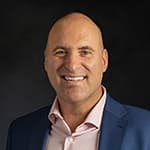
Eric Miller has been in the financial planning industry for over 20 years. He is the Co-Owner of Econologics Financial Advisors and the Chief Financial Advisor. He has a degree from Capital University and is a Registered Financial Consultant. He takes pride in helping practice owners become the financial heroes of their own stories and has taken this passion to over 600 families in the past decade.
Are you financially thriving as a practice owner, or are you just surviving paycheck to paycheck despite running a successful dental practice? Many dentists excel clinically but struggle to build true wealth from their business investments.
Eric Miller brings over 20 years of financial planning expertise specifically focused on dental practice owners. As Co-Owner and Chief Financial Advisor at Econologics Financial Advisors and a Registered Financial Consultant with a degree from Capital University, Miller has guided over 600 families through more than 15,000 conversations covering practice expansion, transitions, taxes, and estate planning. His specialized approach helps practice owners become what he calls "the financial heroes of their own stories."
This episode challenges the conventional mindset that clinical excellence alone guarantees financial success. Miller explains why many dentists think like employees rather than owners and investors, missing critical opportunities to maximize their practice's return on investment. The conversation covers practical strategies for proper owner compensation, cash flow management, and making strategic equipment purchases that truly build wealth rather than just increase debt.
Episode Highlights:
The 10% rule for owner compensation requires taking 10% of gross practice revenue (not profit) as owner compensation separate from clinical production payments. This creates necessary cash flow pressure that drives efficiency and ensures owners receive appropriate returns on their investment risk, even when purchasing major equipment or expanding operations.
Productive debt evaluation should consider three key factors before financing practice equipment: does it produce positive cash flow, provide tax deductions, and increase overall business value. Equipment purchases should only proceed when these criteria are met and adequate financial reserves are maintained.
Traditional retirement planning advice recommends saving 70-80% of current income for retirement, but this generic approach fails dental practice owners who need specialized guidance on their largest investment - their practice itself. Most financial advisors lack understanding of practice operations, profit drivers, and unique cash flow patterns.
Monthly financial advisory meetings provide ongoing decision support for equipment purchases, refinancing opportunities, and practice expansion timing. This frequent communication model contrasts sharply with traditional advisors who typically review portfolios only once or twice annually.
Financial discipline assessment through business savings levels, reserve accounts, and tax planning execution demonstrates an owner's readiness for major investments. Advisors should evaluate these control indicators before approving significant equipment financing or practice expansion projects.
Perfect for: Practice owners struggling with cash flow management, dentists considering major equipment purchases, and practitioners seeking specialized financial guidance beyond traditional retirement planning.
Discover why treating your practice like a true investment rather than just a job could transform your financial future.
Transcript
Read Full Transcript
This transcript was automatically generated and may contain errors or inaccuracies. It is provided for reference and accessibility purposes and may not represent the exact words spoken.
You're listening to the Phil Klein Dental Podcast.
As a dental practice owner, do you feel like you're financially sound? Do you feel comfortable with
your finances? And if not, how can you turn things around? How could you improve your financial
position and grow your wealth? Today, we're going to be talking to an expert on this topic, Eric
Miller. He has been in the financial planning industry for over 20 years. He's the co-owner and
chief financial advisor at Econologics Financial Advisors. He takes pride in helping practice
owners become what he calls the financial heroes of their own stories and has taken this passion to
over 600 families in the past decade. During this time, he's had over 15,000 conversations with
practice owners regarding money, investing, practice expansion, practice transitions. taxes,
estate planning, and so forth. So he certainly knows a lot about this topic. Eric, thanks for
joining us on the show. Thanks for having me on, Phil. Appreciate it. So many people, including
dentists, do not have a financial advisor. They go through life and they invest their money based
on what they're told or what they read or what they hear. And those that do have a financial
advisor, many of them have not done a whole lot of research on this person. However, a financial
advisor actually is very important and someone that really cares about you and your family that you
can trust plays a big role. So tell us, first of all, to begin this podcast, why a financial
advisor is so important to have, especially for a dentist who owns a dental practice. There could
be a number of reasons. You know, I think that a lot of practice owners, look, there's a difference
between owning a practice and then having financial success as a practice owner.
And, you know, you go to school to learn, you know, how to be a top-notch dentist,
but they never really teach you, as you said before, they push like the, all of the practice
management and the financial management skills that you actually need to continuing education.
Right. And they never really teach you how to be like a really good owner and an investor.
They're too much thinking about themselves as practitioners and not thinking about themselves as
like owner and investors. Do you think the mindset is of dentists that if they do good clinical
dentistry and they have a nice office, all this will just fall into place like they don't really
have to do much more than provide great health care service? And then the patients will be coming
in and recommending them and their business will flourish. Is that part of the mindset you think? I
think you're spot on. You know, I think if they, they, they feel like if, Hey, if I just do a good
job technically and, and, and, you know, word of mouth will spread and more people will come in
and, but that doesn't really teach you. That's not really running a business. You know,
I mean, in a business, you have to know how to market. You have to know how to promote. You got to
be good at selling and you have to really deliver what's promised and make sure that other people
know about it. So, you know, running a business is just different and it's a different hat.
It's different skills. It's different responsibilities that you have. And it's not impossible to
learn. It's but it's just not taught. And I think, you know, if someone really can grasp that,
they have that responsibility in that role. then it will just improve the overall value of the
business. And then, of course, it'll allow them to see more of the fruits of their labor.
So what are some of the key financial success strategies that dentists should keep top of mind?
You know, there's one that I do all the time with most practice owners is this.
And, you know, accountants may not like it. Practice managers may not like it. But, you know,
the way I look at it, it was a awful lot of risk to put a practice there. You have a lot of
liability. There's a lot of debt that you have to go into if you own the building and all the
equipment, and then you're responsible for the staff and liability insurance and all this stuff.
So the first thing that I make sure that dentists are doing is that they're paying themselves
correctly and not just what they get as production for their clinical work.
But I also make sure they're taking 10% of the practice revenue and using that as kind of owner
compensation. That's their return of their investment as an owner and making sure that they're
paying themselves not 10% of profit, 10% of practice revenue and make sure that they're
separating that out so that they see like, okay, like this is why I own this practice.
getting compensation relative to the risk that they're taking, I think is really, really important.
Right. But isn't that process dependent on cashflow? So, you know, if they're buying a CBCT
machine, they just hired another hygienist and they added another chair. Now you're recommending
that they pull 10% out top revenue, right? This is top line revenue. Yep.
That's a big piece of the practice coming out every two weeks. It's a huge piece of the practice.
But one thing I learned about money is that what creates revenue is necessity.
We'll be getting right back to Eric Miller in a second. But first, thanks to GC America, we're now
able to incorporate all the advantages of glass ionomer into a beautifully aesthetic, strong,
long-lasting restoration. That's a great reason to try GC Fuji Automix LC.
You'll love the convenient automix delivery system and ergonomic dispenser. which allows precise
placement into the preparation. And GC Fuji Automix LC is bioactive, allowing for a high
rechargeable fluoride release, which is ideal for high caries risk patients. And because it forms a
chemical bond to tooth structure, even in the presence of saliva, there's no need for etchant and
adhesive bonding. This saves steps and is ideal for challenging patients where access and isolation
are difficult. And the small filler particles in the material allow for superb polishability and
excellent aesthetics. So when you're thinking glass ionomer for your clinical cases, think GC
America, a world leader in dental materials. To learn more, visit gc.dental.
If I told you, hey, look, Phil, you know, to save your child's life, you need to come up with $50
,000 in 24 hours. You know what you do? you'd come up with that money, right?
So it's necessity that creates revenue. So the reason that I have that put in almost like an
expense, it pulls out. So it creates the necessity for production and efficiency and making sure
that the business is running that way. And yeah, it does put some stress on the cash flow. But
stress is good on cash flow because, again, it creates that necessity which is needed. And,
you know, I do the same thing for reserves and taxes and, you know, equipment or anything like
that. You know, you want to make sure you have the money to do those things. You have to treat it
like it's like it is a necessity or an expense. Otherwise, it'll never be there. As an owner of the
practice, I don't think that's a bad thing to do at all. Otherwise, you're just like an employee.
And at the end of the month, you're just not getting compensated enough. You're getting compensated
perhaps for the dental services that you're providing, but you're not getting compensated as an
investor, like you said. Correct. Even if they didn't go to work at all there, if they invested in
the practice, they should be able to get something if they never even walked in the door, right?
Because they helped hold it. And I think that's where a lot of burnout comes from because you get
owners that are just like, why am I doing this?
And I feel like a lot of it has to do with they're just. Look, if you put a lot of energy and
effort into an activity and you didn't get what you thought you were going to get out of it, I
mean, that's going to make you tired. That's going to make you upset. It's going to make you cranky
and it's probably going to burn you out. So I don't know if it solves everything, but it certainly
does make people feel better when I have them do that. So let me ask you this. Recently,
I interviewed a doctor, actually a dentist. Her name is Dr. Julie Woods, and she wrote a book
called Profit Over Production.
She essentially believes that, and I can't disagree with her, that if you don't have the money to
buy something for your practice, like a new machine or a new laser or a new piece of technology,
you shouldn't buy it. If you don't have the cash on hand to pay for that, you shouldn't buy it.
Because most of the salespeople that are selling these pieces of equipment and new systems sell it
on ROI. You buy this now. You put 10% down. You pay this every month,
but you're going to make it back. By the third month, you're making more than what your payments
are and so forth. What's your feeling on that? As a financial advisor that really understands
dentistry, Eric, what's your opinion on that? I don't totally disagree with her at all. I think way
too many people buy things that they probably shouldn't in the wrong condition of where they're in.
That being said, I think it's going to be more circumstantial than anything else. And look,
I always look at it this way. Do people go into debt for these things? Yeah. Is it productive debt?
I don't know. Let's see. Does it produce cash flow?
Yeah. Does it give me a tax deduction? Yeah. What else? Does it help the overall business
appreciate in value? Yeah. OK, so that would be productive debt. Then I would go ahead and say I
would pull the trigger on that. But to her point, I think she's she's on to something is that too
many dentists will not have any reserves, will not have,
you know, places where they could pull the money if they needed to. And will just over leverage
themselves so quickly. So, you know, she's definitely not wrong. I mean, but I think it'd be
circumstantial before I would say don't do it. What would you say if a dental practice said,
listen, I want to buy this CBCT machine and start to get 3D imaging, but I can't have everything.
So the 10% that I was pulling off the top, as you mentioned earlier in this podcast, something has
to give. So I'm going to cancel that and use the money. to pay for this machine. And you're my
advisor. What are you going to tell me? I would say that I would wait to do it because I do not,
I have some non-negotiables in what we do, and that's one of them.
I'd never, ever cut that. I've had people reduce it, but I never cut it completely.
And again, I think if, like I said before,
necessity is what creates revenue. And you have to make sure that, you know,
if you're going to do something like that, you're going to have to create some more necessities.
Make it a game of somehow. Like say, okay, I'll do it for a period of time, but then I'm going to
make sure that I adjust it right back up to where I was. You know, I've had people do that as well.
It's imperfect.
But I think that's why it's important to have a financial advisor that kind of is in constant
communication with you.
You can kind of talk through these things and come up with a strategy. I hate to say no to people
because I love when expansion occurs, but it's got to be done in the right financial condition.
Too many people don't do that. Right. So in addition to being done in the right financial
condition, how much of a role does discipline play? Personal discipline by the practice owner as
far as when they should say, no, we can't afford to make that investment at this point in the
practice. So there's a discipline. concept there. What's your feeling on that? Agreed.
The only way you control money is through discipline. That is one of the characteristics of
controls. If you have good discipline, I think you can control things better. And when it comes to
money, it's very evident. If you have business savings, if you have plenty of reserves,
if you're paying yourself correctly, if you have money in your tax account, if you You know,
if you have all these things in that, that demonstrates to me that you have good control of money.
I would be much more, if you have those things in place, I would be much more agreeable if you
wanted to go ahead and take a risk and buy that equipment. If you've already demonstrated that you
have that discipline to do it. But if you're sitting on $5,000 in your business savings account
and you've historically never been able to control money. then I would tell you,
no, don't do it. You don't have enough discipline to be able to do something like that. So getting
back to the title of this podcast, tell us why you think the traditional financial advisor is
failing most dentists. And I know you are very in tune with dental practices.
That's your specialty. I know you work with veterinary practices as well. But dental, you really
know the dental space and you've worked with a lot of dentists. So, you know, and I'm not trying to
promote you here. This is a podcast for education, but I want to know in general, what makes
someone like you different than the traditional advisor that you feel is failing many dentists?
Yeah. And it really is more in an, I don't want to call it an indictment, but you know, our
industry, the financial advisor industry is really based upon a couple of things. You know, they,
they want to make sure that you are, um, properly, uh, planning for retirement,
which means that you're, you're saving enough in your retirement plans to cover 70 to 80% of your
current income. That's not me making that number up. That's right out of the retirement planning
book 101. So, so many dentists are kind of following that advice and,
and, and all these advisors that they have, they're not bad people. They don't have bad intentions.
It's not like they're, you know, saying that they're doing things that I completely disagree with.
I just don't think that, you know, for me, it was really easy. If I was going to give financial
advice to someone, I had to understand about all of your investments, not just your investment
portfolios. So in your practice, for most dentists, is the biggest investment that they have in
their building or their real estate. So I had to understand about those things and ask questions
and, you know, be able to say, like, what drives your profit? And how do we use your cash flow
better for your household? So it just allowed me to become a better financial advisor because I
wasn't afraid to ask them questions about their practice because I immersed myself in understanding
about them. Yeah, I think it's very interesting that you mentioned earlier, Eric, that you think
it's important to have a dialogue going between the dentist owner and yourself,
someone like yourself or a financial advisor who understands the dental space. That dialogue should
be fairly regular, right? Like how often are we talking? Yeah. How often are we talking about
speaking to that office and how important is that? Yeah, that's a great point. And that's another
reason why I think the traditional advisors are failing because most of the model, the service
models are, hey, I'll review your portfolios maybe once or twice a year. And that's pretty much it.
And I'm like, well, your money doesn't take, you know, six months off and you're always faced with
financial decisions like all the time. So that was one of the reasons why we were like,
we need a service model where we have routine check-in calls with our, with our dental owners
every single month. And, you know, we have our own prepared checklist of things that we're going to
go over, but most of the time they start. like saying Eric we we have this issue here and you know
What do you think we should do? Is it a time to refinance? Should we buy this piece of equipment?
It really turned into just a sounding board for people to make sure that they feel comfortable that
they're making good decisions. So I think the frequency is really, really important of how often
you're talking to your advisor. And I just found that most traditional advisors don't have a
service model that allows you to do that. Yeah. So the dialogue is certainly very important. So
we're going to wrap up this podcast. And again, Eric, thanks so much for being on. Can you tell us
where our audience could check you out and as far as getting information about services you offer?
Yeah, for sure. You can just go to wealthforpracticeowners.com, wealthforpracticeowners.com.
And we have all kinds of information that are directed towards you as a practice owner. Thank you
very much, Eric. Thank you. If you're enjoying this podcast, please leave a review or follow us on
your favorite podcast platform. It's a great way to support our program and spread the word to
others. Thanks so much for listening. See you in the next episode.
Clinical Keywords
Eric Millerfinancial advisorpractice managementdental practice ownershipcash flow managementequipment financingCBCT financingpractice expansionowner compensationfinancial planningdental practice investmentROIproductive debtbusiness savingsfinancial disciplineretirement planningpractice transitionsestate planningwealth buildingDr. Phil Kleindental podcastdental educationpractice profitabilityfinancial strategies