Episode 601 · September 16, 2024

Attract, Convert and Deliver: Reliable and Efficient Systems in Your Practice

Attract, Convert and Deliver: Reliable and Efficient Systems in Your Practice

Listen on your favorite platform

Apple PodcastsSpotifyYouTubeiHeart

Featured Guest

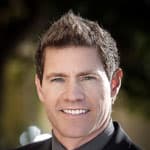
Dr. Todd Snyder

Dr. Todd Snyder

View profile →

Cosmetic Dentist · UCLA Center for Esthetic Dentistry

University of California Los Angeles School of Dentistry · F.A.C.E. Institute · Esthetic Professionals · UCLA Center for Esthetic Dentistry

Read full bio

Dr. Todd C. Snyder received his doctorate in dental surgery at the University of California at Los Angeles School of Dentistry. Dr. Snyder has learned from and worked under some of the most sought after leaders in dentistry, refining his skills in comprehensive, extremely high quality aesthetic dentistry and full mouth rehabilitation. Furthermore he has trained at the prestigious F.A.C.E. institute for complex gnathological (functional) and temporomandibular joint disorders (TMD).

Dr. Snyder lectures both nationally and internationally on numerous aspects of dental materials, techniques, and equipment. Dr. Snyder has been on the faculty at U.C.L.A. in the Center for Esthetic Dentistry where he co-developed and co-directed the first and only comprehensive 2-year postgraduate program in aesthetic and contemporary restorative dentistry. He currently is on the faculty at Esthetic Professionals. Additionally, Dr. Snyder is a consultant for numerous dental manufacturing companies and has had the opportunity to research and recommend changes for many of the materials now being used in dentistry. Dr. Snyder has authored numerous articles in dental publications and published a book on contemporary restorative and cosmetic dentistry.

Dr. Snyder also founded and is CEO of Miles To Smiles a non-profit mobile children's charity that helps indigent and underprivileged children.

Episode Summary

How many potential patients slip through the cracks after that first phone call to your practice? Despite investing heavily in marketing to generate leads, many dental practices struggle with converting inquiries into scheduled appointments and loyal patients.

Dr. Todd C. Snyder brings decades of expertise in comprehensive aesthetic dentistry and practice optimization to this critical discussion. A UCLA School of Dentistry graduate, Dr. Snyder has trained at the prestigious F.A.C.E. institute for complex gnathological and TMD disorders, lectures internationally on dental materials and techniques, and served on the faculty at UCLA's Center for Esthetic Dentistry where he co-developed the first comprehensive 2-year postgraduate program in aesthetic and contemporary restorative dentistry. As a consultant for numerous dental manufacturing companies and founder of the non-profit Miles To Smiles, he combines clinical excellence with proven business systems.

This episode focuses on the often-overlooked but critical phase between initial patient contact and appointment completion. Dr. Snyder reveals why even practices with successful marketing campaigns lose potential patients due to inadequate follow-up systems and inconsistent staff training. The conversation explores practical automation strategies, communication protocols, and staff development approaches that can dramatically improve patient conversion rates while reducing administrative burden.

Episode Highlights:

  • Automated follow-up systems can eliminate human error in patient tracking by sending periodic communications to prospective patients without staff intervention, ensuring consistent engagement throughout the decision-making process. Different patient types require different automation pathways - appointment schedulers need reminder systems and pre-visit forms, while inquiring patients need educational content and periodic check-ins.
  • Text messaging demonstrates substantially higher engagement rates compared to phone calls or emails, making it the preferred communication method for appointment reminders, form distribution, and patient education. Advanced texting platforms can provide keyword-responsive automation, allowing patients to receive specific information by responding with designated letters or phrases.
  • CRM sales systems from outside the dental industry often provide superior automation and tracking capabilities compared to dental-specific software, offering more sophisticated patient nurturing sequences and analytics. These systems can be configured to automatically send educational materials, forms, and follow-up messages based on patient responses and behaviors.
  • Staff training must focus on communication flow charts that categorize different types of patient interactions, ensuring each inquiry follows the appropriate follow-up pathway. Employees need specific protocols for handling appointment requests versus general inquiries, with clear systems for data entry and patient tracking to prevent leads from being lost.
  • Properly implemented systems allow practices to transition from high-volume, low-fee insurance-dependent models to more selective, higher-value patient relationships. This shift requires systematic changes in patient communication, treatment presentation, and follow-up processes that support premium service delivery.

Perfect for: Practice owners, office managers, and front desk coordinators looking to improve patient conversion rates and implement effective communication systems. Dentists seeking to transition from insurance-dependent models to fee-for-service practices will find particularly valuable insights.

Discover how simple automation changes can transform your practice's patient acquisition success.

Transcript

Read Full Transcript

This transcript was automatically generated and may contain errors or inaccuracies. It is provided for reference and accessibility purposes and may not represent the exact words spoken.

You're listening to the Phil Klein Dental Podcast. The first interaction you have with a potential patient is critical. You need to portray your practice in a way where that person wants to become your patient. Now in order to do this, you of course have to have the right staff and they need to be properly trained. But as important is the follow-up. The follow-up to that first phone conversation is critical in getting them to come back to your practice. And to have a successful follow-up, you need to have a system in place that's designed just for that purpose. To tell us all about it is our guest, Dr. Todd Snyder. Dr. Snyder is a regular contributor to VivaLearning.com. He's a cosmetic dentist, international author, lecturer, and consultant to a variety of dental companies. He can be reached at www.legion .dentist. Dr. Snyder will be joining us in a second, but first, if you're doing endo, then you need to know about Jay Merida's new Root ZX3, the latest generation of their world -renowned Apex Locator product line. In addition to its sleek design, smaller footprint, and larger high-contrast display, the Root ZX3 accommodates the revolutionary HF module, which utilizes high-frequency conduction. Once you snap on the module, which is quick and easy to do, the RootCX3 becomes an invaluable tool in helping you prepare the canal system. Using its high-frequency conduction, the HF module effectively ablates pulp tissue, residual dental filling materials, such as gutta percha, and tissue in and around root canals. It can also tackle procedures such as gingivoplasty, gingivectomy, hemostasis, and excision of intraoral lesions. For more information about this revolutionary advancement in endodontic treatment, visit marita.com slash USA. Dr. Snyder, thanks for joining us. Thanks, Phil. So to begin, let me ask you this, Dr. Snyder. Let's assume an office is doing a very good job at marketing, and as a result, they're getting lots of leads. What is a common problem that occurs in some of these practices? You know, I'll go back to the last one saying the first thing, obviously, is the communication that happens on the phone call, because that communication needs to be in such a matter that they've collected information and either have booked the patient or they've put them somewhere in their system such that they can continue to track and follow up on these patients. You know, we get so busy in the office and, you know. Different employees may answer the phone, not always the same one. And so some are trained at different levels and some may write something down on a sticky note. Some may put someone into a schedule and not follow up on it. So I'd say that communication becomes important. But from there, it's the follow up system that what happens after that phone call is done is critical. How is the interaction with the staff members to know that something was there and what needs to be done for the next stage for that particular patient? So what are you seeing dentists typically doing with these leads? Even for that basic phone call where a person calls up and asks, do you treat young children? Do you treat sleep apnea? Do you do any kind of orthodontic treatment? Those kinds of questions and interactions. What are your recommendations for handling those kinds of interactions? Well, and that's where I think the employees need to be trained in such a manner. They understand that there's a flow to the office. So if you look at a flow chart, okay, if this person had said they're making an appointment, we've done the appointment, then they're going down a different section of this flow chart. Someone else that was calling and asking questions and they're still shopping around, so to speak, well, that's a potential lead customer that you need to follow up on quickly. And so that becomes a different type of interaction and goes into the funnel in a different place. And so some of these have... that we're implementing now, that we can send stuff back to them on a regular basis. So instead of us having potential human error, automation to send things back to the patient periodically without us even having to think or lift a finger becomes critical to success. The same as the person that has set the appointment, they need automation as far as reminding them that their appointment's coming up or sending out documents that they can fill out before they show up for their appointment. And we can see that the forms are filled out before the appointment. So we know they're not going to be taking up our time when they get to the office. So I'd say automation becomes critical. Can you give us some examples of software or tools that a dentist can use to streamline all this? Yeah, you know, there's a lot of different types of software out there nowadays, especially stuff that's not even in the dental arena. You know, so you could use something as simple as, let's say, an Excel spreadsheet, you know, just to track people. If someone puts the information, you know, good information in, gives you good information back out. But there's other software you could say that are like CRM sales systems that you could implement that have automation on them, that should you plug a potential candidate into that software, it has the ability to automate and push things out. based on how you've configured it or someone's configured it for you. With that also, there's potential software in the dental arena that, again, if they're a patient of record in the software, that it can do some automation. But I find that the dental ones typically aren't as good as stuff, again, in the business world that has a way better job of sending things out through automation and tracking capabilities. We'll be right back with Dr. Snyder in a second. But first... When it comes to patient dental chairs, why choose between sitting or standing when you can have both? Experience the perfect blend of ergonomics and intelligence with the new Forrest 6400 chair from Dentalese. As the highest rising chair in the industry, the 6400 offers unparalleled treatment flexibility, allowing more dentists to practice without pain. your patients are less likely to interrupt your treatment as they relax in the soothing warmth of adjustable heat and massage, in the comfort of plush, ultra-leather cushions and optional neck and knee pillows. And with Aris Intel, the new standard in smart technology, you'll gain insights into practice efficiency, revenue, and maintenance, all from the only chair that monitors data at no extra charge. For more information, contact your local DSX rep. or visit dentalese.com. What about texting? Is that a good way to keep the patient engaged? Definitely. Research has shown that text message is one of the best ways to interact with people nowadays. I forget what the engagement level was, but it's substantially higher than phone calls or emails. With all the junk phone calls we get nowadays and spams in our inbox, texting is the way to go for sure. And that, of course, is not limited just to reminding patients of an appointment, correct? Yeah, there's ways nowadays with different softwares, again, that if you have patient's information, you can put them into your database and actually send automated responses to them based on certain lines of questioning they ask, or you can specifically send things out. So like forms can go out, the same as people send out reviews currently. You can send forms automatically before people ever show up. You can send information. to people before they ever show up or if they're just kicking the tire, so to speak. There are key words you can say that, you know, hey, if you have questions on this, this or this, you know, please say A, B or C and it will automate all that process. For the same token, if someone calls your office and they can't get someone because the phone lines are busy or someone stepped out for lunch, you can get an automated response back saying, hey, this is Stacy. I'm away from my desk or I'm with a patient. I'll call you back at my earliest convenience. And so people think you wrote them, but yet it was all automation. Yeah, and the way AI is moving forward so quickly, we will certainly begin to see AI built into dental software applications in the years to come, for sure. So, Dr. Snyder, you're a big advocate of training, and we both agree that having a properly trained staff is critical to a successful practice. But some dentists resist training for their staff. They feel it's very expensive, and they would rather hire team members that are already trained and already know how to do the things they're supposed to do in a dental practice. Give us your thoughts on that. And also tell us about your training program at legion.dentist. We spent a lot of... talking about, again, marketing, how to attract the right type of customer and changing the mindset so you can be more productive in less time without all the constraints potentially of the insurance as well. And from there it becomes, okay, training is very critical. You know, communication is critical. So converting someone, you know, requires that your employees have been trained well and have goals each day and have accountability and tracking capabilities that everyone knows where they're at and who's responsible for which task. So systems become critical as well as that communication aspect of, you know, interacting with a client, both on the phone and in person is also. something that needs to be trained on regularly so that one can become very skilled at it. And so inside of our programs, we train on these different things. I've already mentioned previously, like singularity, inception. And based on all of those things, we find that our offices just have a huge shift and instantly see the results and find that they're, again, more productive in less time and enjoying more freedom to do the type of dentistry they've always desired to do, but fear had always held them back. And I think most dentists feel they have to continue running on that treadmill every day, you know, seeing as many insurance patients as possible to get paid peanuts, you know, from the insurance company. And I can tell you, as soon as you slow down and take more time with patients and change your systems, life becomes far easier if that's the type of practice that you dream of owning. And if you would, Dr. Snyder, share with us the website where our audience can get in touch with you regarding training. Yeah, Legion Dentist is the best way to find me. Appreciate your time, Dr. Snyder. Thank you very much for the input, and we'll see you on another program. Thank you, Phil. If you're enjoying this podcast, please leave a review or follow us on your favorite podcast platform. It's a great way to support our program and spread the word to others. Thanks so much for listening. See you in the next episode.

Clinical Keywords

Dr. Todd Snyderpractice managementpatient communicationdental marketingstaff trainingpatient conversionautomated follow-up systemsCRM softwaretext messagingdental practice automationcosmetic dentistryaesthetic dentistryfull mouth rehabilitationTMD disordersgnathological disordersF.A.C.E. instituteUCLA dentistryDr. Phil Kleindental podcastdental educationpatient engagementappointment schedulingdental practice systemslegion.dentistpractice optimization

Related Episodes