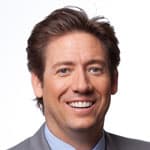
Joseph G. Willardsen, D.D.S. graduated from Loma Linda University School of Dentistry. He then continued his cosmetic dental training and became a full mouth graduate at the prestigious Las Vegas Institute, Arrowhead International and Occlusion Connections post-graduate educational programs. In addition, Dr. Willardsen has been trained and certified as a biomimetic instructor through the Alleman-Deliperi Centers for Biomimetic Dentistry. His comprehensive training in advanced neuromuscular, biomimetic and cosmetic dentistry makes him part of small group of dentists. His understanding of occlusion in relation to cosmetic and biomimetic dental procedures make his training especially unique.
As a result of Dr. Willardsen's training and clinical results he has been asked to be the invited dentist on numerous television, news and talk shows. Dr. Willardsen has also been chosen as the official dentist of the Miss Nevada U.S.A. pageant. His knowledge and experience has allowed him to teach other dentists across the country interested in the field of cosmetics, biomimetics and occlusion. As well as writing articles for well- regarded dental publications he has been featured and seen in popular magazines such as Cosmopolitan, Harpers Bazaar, Town & Country, Marie Claire, Redbook, Vegas, Aesthetic Dentistry, Dental Economics, Nevada Woman and several others.
Dental podcast: Welcome to DentalTalk. I'm Dr. Phil Klein. Today we'll be discussing insights and tactical tips on anterior esthetics. Hopefully we'll hear some things that will help us achieve predictable clinical results in this area. Our guest is Dr. Joseph Willardsen, who is trained and certified as a biomimetic instructor through the Alleman-Deliperi Centers for Biomimetic Dentistry. He is a founding member of Occlusion Connections training center in Las Vegas. And his practice in Las Vegas, focuses on cosmetic and reconstructive dentistry.
Transcript
Read Full Transcript
This transcript was automatically generated and may contain errors or inaccuracies. It is provided for reference and accessibility purposes and may not represent the exact words spoken.
You're listening to The Phil Klein Dental Podcast from Viva Learning.com.
Welcome to the show. I'm Dr. Phil Klein. Today we'll be discussing insights and tactical tips on
anterior aesthetics. Our goal is to discover some things that will help us achieve predictable
clinical results in this area. Our guest is Dr. Joseph Willardsen, who is trained and certified as
a biomimetic instructor through the Alleman-Delapari Centers for Biomimetic Dentistry. He is a
founding member of Occlusion Connections Training Center in Las Vegas, and his practice in Las
Vegas focuses on cosmetic and reconstructive dentistry. Before we get started, I'd like to mention
that Dr. Willardsen’s webinar, titled Critical Techniques for Veneers and Anterior Ceramics,
is now available as an on-demand webinar on VivaLearning.com. Simply type in the search field
Willardson, W-I-L-L-A-R-D-S-E-N.
and you'll see his webinar. Dr. Willardsen, it's a pleasure to have you on Dental Talk. Hi, Phil.
Thanks for having me. I appreciate the opportunity. Yeah, and getting right down to the crux of
this podcast, we're going to be talking about clinical tips and tactics for indirect restoration,
specifically anterior. So when it comes to anterior aesthetics, what are you doing now differently
in your practice compared to, let's say, seven or eight years ago? I think there's been a real
trend in my practice to be a lot more conservative. minimal prepping.
I've really tried to focus on preserving as much tooth structure as I can. And because of that,
we're no longer relying on mechanical retention like we used to. And so I think that the advances
in materials and techniques when it comes to bonding has been a real change in my practice.
Being able to rely on the new materials to ensure that I have good bond strength is has really
changed the way that I prep, and I think it keeps my patients out of that dental cycle of going to
a more and more aggressive restoration every time something needs to be changed. Yeah, I mean,
studies have shown that patients that never see the dentist and they have good home care end up
having their teeth for quite a long time, many cases longer than those that do go to dentists, and
that's probably due to what you just said. The more they go, the more... tooth structures removed.
And obviously when that happens, it leads to more dentistry. Exactly. If you could perform
minimally invasive dentistry early on in the cycle, that's a great benefit to the patients.
And you find that you're doing that because of the materials. So tell us what you think about on a
day-to-day basis. We're talking routine dentistry now. Are there any specific products that have
made your practice more clinically effective and profitable? Yeah, there's several products. I
think, you know, if we were to look at posterior restorations, let's talk about direct posterior
restorations. I use what we call dentin replacements,
a material that flexes and bends and adheres to the tooth just like dentin would. I use Curare's
APX for my dentin replacement or my packable posterior composites.
So I think that's a big shift. in what I use on a day-to-day basis.
And then if we're talking about the anterior, I'm really excited about the new veneer cements that
we're using. Again, higher bond strengths, less need for mechanical retention,
giving me the ability to prep more minimally and keep people out of that dental cycle.
The new Panavia veneer cement, I think anyone that is into anterior Indirect restorations,
this is something that we've all kind of been waiting for for a long time, is a veneer cement that
is actually making a difference compared to what I've been using the last 20 years.
What is it about the material that's so different? I mean, if you want to go into the science a
little bit, that's fine. The bond strength itself, we'd love to learn more about the actual
material. Why is it performing so well in veneers? Okay, so I think there's a couple key factors
that have helped me make the shift. One is the bond strength. From what the research I'm seeing,
it has the highest bond strength, not only to the dentin, but to, if you're using Emax or lithium
disilicate, it has the highest bond strength there. The other thing that I really like about it is
the ease of cleanup. It has kind of a gel-like consistency, so it doesn't smear. It kind of
collects and cleans up easily.
this is the ability to use different bonding agents with the Panavia veneer cement.
So the Panavia veneer cement can either be used with the Panavia V5 primer,
which tends to be a little bit thinner and it's not something that's light cured before you load
and put the veneer on. So you don't have a film thickness that might interfere with the seeding.
with the restoration because you know a lot of times you lean the patient back you put the
temporaries on you try everything in and everything fits great and then you apply your bonding
agent and cure it and then when you go to to seat there's a little bit different in the way that it
seats just purely off the the film thickness so being able to use the v5 primer and having no
change whatsoever in the film thickness is a big deal to me the other thing that Curare will never
say, and this is just something I know having used the V5 primer for a long time,
is when you take the temporaries off, the tissue is already angry. And if it's not bleeding,
it wants to bleed. What I'm noticing with the V5 primer is it almost settles it down without having
to use some sort of astringent. Look, that's not something that Curare advertises or talks about,
but it is something that any doctor that uses the V5 primer would notice that. Could you briefly go
through the clinical steps? The tooth is prepped, the temporary is on. You haven't taken the
temporary off yet. You take the temporaries off, you've got to, you know, get the biofilm off and
clean everything. So once I take the temporary off, I'll go in with the, I use the Cabo Rondoflex
and kind of sandblast the tooth, get the biofilm off. And then at that point,
I'll do my try-in. One other thing about the new Panavia veneer cement is the try-and pastes
match exactly to what the cement is. So we try everything in with the try-and paste, make sure
everything fits. And then at that point, once the veneers are ready to be seeded,
I use the Katana cleaner to clean out any of the try-and cement and just make sure there's no
contamination in the veneer. And then from that point, we'll select a vetch where we need to,
use our bonding agent, and then simply just... cement or bond the veneer on.
So the bonding agent, that's not light cured? So you have two choices. You can use the universal
quick bond, which is light cured. The advantage to that, it's only a three second scrub to help
create your hybrid layer. Or you can use the Panavia V5 primer,
which is not light cured and it has no film thickness. Right,
and that film thickness, when you're talking about a very thin veneer, is really a factor, is it
not? It is, 100%. Yeah, you know, I think anyone that's ever done ultra-thin veneers,
one of our biggest worries is, you know, don't crack the veneer in seating. You know,
just the pressure of the cement and applying it can sometimes crack it. So, you know,
it's always something we worry about. Right, and those are obviously, most of those thin veneers
are... pretty much solely on Enamel. Correct. Yeah. Yes. And let me back up.
You know, with the, you know, there's the two bonding agents. You know, you have a universal quick
bond and your Panavia V5. And I should clarify, both of them do not need to be light cured.
So here's a hypothetical question. Why would a dentist change his or her veneer cement after using
the same system predictably for over 20 years? And that was me. I've used the same cement for 20
years, and I have cases that look like I did them yesterday, and they're 20 years old. So why would
I switch? I think the reason that I would switch for me personally is, one,
the ease of use with the new bonding agents. Two, the cleanup. And three, the bond strengths are
stronger. And when we're using minimally invasive veneer preps and I'm relying on that bond
strength, that alone would probably be enough for a doctor to switch knowing like, okay, hey, look,
I can sleep better at night knowing that I'm even bonding stronger than what I have been the last
20 years. Curari is an impressive company. I mean, they don't market like a lot of other companies
in this space. They really... publish a lot of stuff that's evidence-based and they rely on the
research. And Japan believes that the product quality itself speaks for itself.
And to spend a ton of money trying to market something in America, that's not their culture as
such. The key thing that you're bringing across today in this podcast is the fact that you can
really conserve tooth structure because you could rely on those strong bond strengths without
having to remove more tooth structure to get that retention. You're right. They don't market like
some of the other companies. But if you look at all the research papers, they're the gold standard.
That's who everybody compares their product to is like, OK, well, how does it fare up or how does
it compare to the Curare products? Because if it does well against that, we know we've made a good
product. Yeah, that's very interesting. And it's funny because I've talked to some of the marketing
people from Curare over the years. I've known the company for decades and some of them were
actually a little frustrated saying, you know, we have the best product. We don't have the. ability
to get the word out, like some of our competitors who are making claims that claim to have the best
bond strength and all this other stuff. But in this case, the company spends its money on
development, making sure that product is exactly doing what it's supposed to do and benefiting the
patient in the way you just described. So to wrap up this podcast, what insight would you give
anybody listening today on creating and maintaining a successful cosmetic practice?
I think being passionate about what you, you know, really, if you're passionate about owning and
operating and servicing a cosmetic practice, that's going to carry a long way because the second
part of that is having grit to do it and understanding the challenges.
And if you're passionate about it enough and you love it enough that any challenges like any
spectrum of dentistry has is... The end result is always worth it.
So I would say having some passion and grit to continue to do what you love because it doesn't come
easy, but the rewards are great. Do you think it's critical that the dentist who focuses on
cosmetic dentistry, is it really necessary and important for them to follow the research? How far
down into the weeds should a practicing dentist who really has mastered cosmetic dentistry,
how far should they go when it comes to the actual research? The things that you're reading to
ensure you're using the best product. You bring up a great point because as dentists, we're all
marketed to very heavily by different companies. And so it's very easy to take face value on what
someone might tell us in a marketing ploy. I think that in order to keep the headaches down and to
keep the frustrations down and to really continue to do. the cosmetics,
you have to dive a little deeper, stretch a little farther to understand the research and the
numbers to make your life a lot easier and not have to deal with the failures that you might
encounter otherwise. I hope I answered your question there, but that's just something I feel for
myself. You know, we're in the medical field. It's oral medicine, but we're in the medical field.
And just like a physician should be following. what drugs they're prescribing on a regular basis
and not, you know, what a sales rep walks in and says, hey, you know, they used to do it where they
would send you on a vacation if you prescribed X number of patients' drugs. So that's all gone now,
hopefully. But still, now we're at a point where the research is available. We can get it on the
internet. And I think it's a responsibility and it behooves the dentist to really look down deeper
into what products really have the... the in vivo and the laboratory results that's necessary to
perform the cosmetic procedures you're doing. It's interesting. I just lectured at California
Dental Association meeting in San Francisco this last weekend. And, you know, we had a full house
and the responses afterwards were just amazing in the sense, like, I've never heard this before.
How come we're not, you know, this is all new information for me. And it's just. straight research
and statistical numbers show how good these products are and these techniques. And they're just not
made aware of it until they find the right mentor or lecturer to hear it.
Yeah, that's why we do these podcasts, Dr. Willardsen, and webinars. So we have a large audience.
We're doing over 25,000 listens per month on this program. And then we're getting over 70,000,
75,000 webinar views per month on VivaLearning.com. So enjoy the rest of your day. And thanks for
your time today, Dr. Willardsen. Yeah, thank you. And thank you for always putting out great
information. You know, I appreciate it. And it's always fun to listen to and be part of.
Our pleasure. Thank you very much.