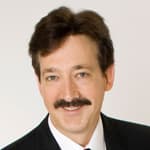
Dr. Klim is an internationally recognized speaker, author, manufacture consultant, beta tester, and educator of biofunctional and aesthetic CAD/CAM dentistry.
Graduating Summa cum Laude, valedictorian, from Loma Linda University in 1984, Dr. Klim has been awarded high academic recognition by the Alpha Omega Fraternity and the Omicron Kappa Upsilon Society and has received the Prince Award from Loma Linda University School of Dentistry.
Dr. Klim is a Fellow in the Academy of General and an Accredited Member of the American Academy of Cosmetic Dentistry.
Currently, Dr. Klim has a full-time restorative practice in Santa Rosa, California, and is founder and director of the Klim Institute (CAD/CAM training center), and directs the Klim Institute online CEREC training (Cadstar.tv).
Dental podcast: Welcome to DentalTalk. I'm Dr. Phil Klein. Today we'll be discussing the frightening parts of cementation and bonding as well as some important clinical tricks that can help us make everything more predictable and successful. Our guest is Dr. James Klim, an internationally recognized speaker, author and educator of bio-functional and aesthetic CAD/CAM dentistry. Currently, Dr. Klim has a full-time restorative practice in Santa Rosa, California, is founder and director of the Klim Institute (CAD/CAM training center), and directs the Klim Institute online CEREC training CADStar.tv
Transcript
Read Full Transcript
This transcript was automatically generated and may contain errors or inaccuracies. It is provided for reference and accessibility purposes and may not represent the exact words spoken.
You're listening to The Dr. Phil Klein Dental Podcast
Welcome to the show. I'm Dr. Phil Klein. Today we'll be discussing the frightening parts of
cementation and bonding, as well as some important clinical tricks that can help us make everything
more predictable and successful. Our guest is Dr. James Klim, an internationally recognized
speaker, author, and educator of biofunctional and aesthetic CAD CAM dentistry.
Currently, Dr. Klim has a full-time restorative practice in Santa Rosa, California. He's the
founder and director of the Klim Institute and directs the Klim Institute online CEREC training,
cadstar.tv. Before we get started, I would like to mention that Dr. Klim's webinar titled
Sensitivity, Cleanup, Bonding, Oh My, is now available as an on-demand webinar on VivaLearning
.com. Simply type in the search field Klim, K-L-I-M, and you'll see the webinar.
It's an excellent presentation for the entire dental team. Highly recommend it. Dr. Klim, it's a
pleasure to have you on Dental Talk. Phil, it's great to be here. I hear you loud and clear.
Excellent. So I've heard so many good things about you, Dr. Klim. A lot of... Key opinion leaders
actually have been praising you lately. They're following techniques that you're teaching and the
things that you're doing in the educational space for dentistry. So hats off to you for being such
a powerful influence in the dental space regarding doing quality clinical dentistry.
We need people like you in our industry, in our profession. So thank you for that. As the title
states, we're going to be talking about cement protocols and other things in order to get
predictable outcomes, which ultimately results in a happy patient. So share with us some of your
tricks to avoiding post-treatment sensitivity, which seems to be for some of us a problem that
occurs more frequently than we would like. That's a good question. It goes back to just my
experience in adhesive dentistry. I got started in it back in the 80s,
and that journey has been very unique. And a lot of it's because a lot of my clients wanted metal
out of their mouth and we wanted to develop the proper techniques. So I've gone through a lot of
adhesive journeys. And through the years, when you start seeing that, you kind of get a feel for
what you want to do clinically. I think our products today work a lot better than they used to
because they used to be so technique sensitive. But in that journey of avoiding post-treatment
sensitivity, I think number one is isolation. I'm really big about. rubber dam,
or you can use an ice light, but we want to control the humidity in our adhesive environment,
particularly when we're bonding. I'm a big fan of all etch, even though our current systems now,
like for instance, if you look at the He's Universal, which is a system that I use and I like it
because it's really thin, you can make it 10 microns so I can pre-cure before I bond in and
indirect. But I can use it for everything I do. So, for instance, it operates extremely well since
it's self-etching with selective etch, full etch. And, of course, they say you can use it without
any type of phosphoric etch. But I'm a big etch person on enamel because I want to avoid any type
of micro leakage. So I think any protocol we use, we need to look at the manufacturer's
recommendations, instructions, because they are different. Right. You mentioned a product and it
wasn't clear. And that's Adhese Universal? Yeah, Adhese Universal.
That's a Novicler system. It comes in a Viva pen. So it's really easy to express new doses.
So the carrying agent is really fresh. And then that penetrates the dentin really well and seals
it. So getting back to your question, I mean, I could talk all day about this one.
But I think isolation, rubber dam. isolate, control any type of fluid coming out of the sulcus.
Of course, a rubber dam can help you there. But if you're subgingival, I'm going to use some type
of retraction paste, but I need to use full etch to clean off that smear layer. So that's really
important. And then the other things I'm looking at is managing occlusion. I can't overemphasize
occlusion. I would say in my clinical theater today, if I have post-treatment, it's usually
occlusion. So post-treatment sensitivity, you're saying, is more related to occlusion,
which is a restoration that's high or hasn't been adjusted where the interferences aren't cleared.
You're saying that causes more discomfort post-treatment than sensitive dentin.
Yes, in my hands and with the systems that we're using today. And think about this. We have someone
open like a crocodile, right? So they may not have fully settled in their occlusion yet when they
leave. And so they're leaving. Everything looks good. Or, and you could have micro movement of that
tooth after a restoration. So it settles a little differently. Then it picks up at balancing and
working interference. And that's enough to bring on symptoms. So I always inform my clients.
Well, before we start a procedure, I always inform what we're doing. And then I do an exit,
just overview of what we did. And I tell every client, look, I don't see a lot of sensitivity
anymore.
Two or three days, if you pick up hot or cold, you need to call me because there's going to be some
type of collision happening that could be microscopic, but it could be enough to cause you pain.
And if that happens, I want to be the first to know. And we bring them back in. But I would say
occlusion is huge in all my experience through over 30 years now. A lot of times it's occlusion
with our current adhesive systems. Right. And that's more than inadequate polymerization.
Well, yeah, I just do not see that anymore, particularly with the systems that we're using today.
There's a lot of good systems out there now, and I've used a lot of them as an educator. I would
say our adhesive systems now are very, very, very forgiving. Let's talk about bonding and adhesive
options. Dentists are looking for one adhesive option for everything. Is that possible to have one
adhesive option for all bonding procedures? A lot of them are now. If you look at some of the top
ones that are out there, like you have OptiBond, which has been around for years. It's a really
good system. You have FuteraBond. You have Adhese Universal,
which is my preference. And the reason for that is that it's very forgiving, whether it's wet
conditioning of the dentin or dry conditioning of the dentin. It's still going to penetrate those
dental tubules. But getting back to our adhesive systems today, I'm finding that most of them are
very forgiving. I don't change adhesive systems too easily. You know,
once you get into them, I use Solo Plus for years. and had very good success with that.
Then I went into an acetone because I like the acetones because they're really thin and I like to
pre-cure before I bond in and direct restorations, which I do a lot of. About four and a half,
five years ago, I went into Adhesive Universal for one reason. Number one, it's an ethanol type of
base, which is more forgiving, but it can be used well at 10 microns without creating any type of
voids into the dental tubules when you're drying it because it has these salts in it that they
develop from the monomers and they really plug the dental tubules. Well, I'm going to do another
podcast that really will describe that type of chemistry. And as a result, we just don't see post
-treatment sensitivity. And I can use it for everything. So I can use it on other brands. I can use
it for direct. I can use it for indirect. And I like one system. When you have one system and you
get that down, then it becomes very predictable. So I'm not moving between a lot of different
systems like I used to. Yeah, no, that makes total sense. But I have been hearing a lot about
staying within the same. company product line with the bonding adhesive systems and then moving
into the restorative materials. You're saying that in your particular practice, you're using Adhese
Universal. That adhesive system is compatible with just about any composite restorative,
bulk fill, flowables, doesn't matter? Good question. I have not seen a problem there. I know
historically we had to stay more in alignment with different product lines. Once you have that
cured system and those free radicals, it's going to stick to anything that you put into it or on
it. Yeah. Well, listen, you're having great success with it and you've been doing this for a while.
How many years have you been practicing clinical dentistry? I'm going on 39 years now. I'd like to
say I was in high school when I started, but no, I was 25 when I got out of school. And I had a
huge interest in composites, even in dental school. So I know when I made that transition to
removing Dical from the Denton and going to a full etch, I remember those days. Oh, yeah. I
graduated dental school in 1983. I started dental school in 79,
graduated 83, and then I graduated endo at Penn in 85. I was 28 when I got out. But Dical,
that was the product to use. And the composites were... Adaptic, you know, we mix these tubs
together. I remember that one. Yeah, yeah. What about the isolation techniques? You keep talking
about isolation as an important factor in doing operative dentistry. What techniques do you employ
in your practice? I love the rubber dam when I'm not having to go to subgingival because,
first of all, the patient's not talking. And it allows me to be really proficient.
I find the ice light working extremely well because it really controls humidity well. In fact, in
some studies, it shows that humidity is controlled better. So when I am using the ice light,
I want to make sure that I don't have any seepage from the sulcus. So I'm going to use various
techniques for that. Maybe I'll do a laser troughing. I'll use some type of stringent.
You know, anytime we're putting a stringent. whatever brand it is, I really believe in using full
etch because we need to really clean off that surface that we're adhering to. Anytime I go
subgingival, and we've all seen it. Anytime there's micro leakage on a margin, it turns dark.
I work with a lot of winemakers through the years. I have to really use good techniques because
they can really be tough on their teeth. And what I've learned from that is really controlling that
margin. Another thing I'm going to do is once I'm done curing. I'm going to use some type of
glycerin over my adhesive seam, if it's indirect or a full composite,
to make sure I'm curing that oxygen inhibited layer. If I'm seeing micro leakage,
and we all know the stories, if we're seeing stain, we're getting micro leakage. And so I really
worked through the years to control that. And a lot of it's just technique. I still come back to
the rubber dam. Yeah. And as an endodontist retired, the rubber dam was my best friend.
I mean, I looked at it from, of course, safety to the patient, isolation, clean working
environment. And also it did cross my mind that it keeps the patients from talking to you the whole
time.
It's a pleasant practice management tool. Yeah, absolutely. Patient control. So just out of
curiosity, do you try to end your margins supragingival when possible in the posterior?
I tell you, I'm more of a biomimetic mindset. I love enamel. If enamel is in good shape,
I'm going to preserve enamel and end that margin super gingival, particularly with the ceramics we
have today. My other thing is I'm really into CAD-CAM. So I've been controlling that. I do a lot
of clinical testing in CAD-CAM and materials. And as you mentioned just a while back, we have so
many. More materials we're using today. I'm a big fan of VMAX mainly because I can go thin.
If I'm on the enamel margin, I can create a seam, use a high translucency, melt the margins,
which basically is the contact lens effect, and then you don't see it. So I do a lot of onlays that
are super gingival. If I can preserve that cervical natural dentition and there's not a disease
risk down there, definitely. Super gingival, unless we're changing a significant shade.
You know, I'm known for my aesthetics. I'm really involved with the AECD. So I do a lot of those
type of workflows. And sometimes if we have to brighten a tooth up, we have to drop it. But I don't
like doing it. Right. You talk about curing lights in some of the webinars you do. Talk to us about
curing lights, how important that is, what a practicing dentist needs to know, any tips you can
offer us. I would say whatever brand you're using, make sure you calibrate it.
or test it to make sure that its output is excellent because a lot of times we can get a curing
light and it keeps, as long as it goes on, it looks like it's working, but maybe it's losing its
vitality and its ability to cure.
And so I really recommend always testing your curing lights to make sure they're working optimally
because you've got to trust it. And if you're not getting a complete cure, You may not see it that
day, but it's going to come back and bite you later on. What's the best way to test your curing
light and how often do you do it? You can have meters. Most curing systems today will have meters
that will test it for you. And I always like to at least test it once a month. At least that's what
I've done with my protocols because I'm using curing lights every day.
I mean, adhesive dentistry is probably 90% of what I do. from a restorative standpoint.
So I want to make sure that curing light is working. Yeah. So when you say that the curing light is
working, what are we talking about scientifically as far as wavelength? Are we worried about not
curing the initiator? All and above. And that's a really, that's a good question.
In other words, these lights are, they have various wavelengths. Now what's really unique, I'm
using what we call the... cure now with Ivoclar, and I don't want to go down this rabbit hole,
but they have certain initiators in some of their products that allow me to do a three-minute cure
with minimal shrinkage. In fact, lowest shrinkage, which we know has always been a problem with any
type of composite resin. Three-second mean? You said three minutes. You mean three seconds. Oh,
I'm sorry. Yeah, sorry. That was too good to be true. It's a three-second cure. Three minutes is a
little bit long for our... yeah i know wait maybe maybe i'm going back to the old days right uh but
yeah three seconds that's what i meant to say and there's certain activators in the resin that
allow you to do that but this light allows you to control the various intensity of your wavelengths
to optimize your cure. But, you know, in the past, I've used pack lights and we talk about ramp
curing and things like that historically. And I think you need to know your resin system,
particularly if you're using a Flobo. And if you don't have Denton on the margin, how you cure and
how fast you cure can make a big difference whether you're going to get micro leakage. So we need
to know our resin systems in addition to our lights. But most resin systems today are really
working well. You're still a believer that the sensitivity, the postoperative sensitivity, for the
most part, is really more related to occlusal issues rather than inadequate polymerization,
although it's important to be aware of your curing light because you certainly don't want to add
that variable into the mix if you don't have to. In my hands, probably reflecting on the last
decade with... systems we're using today, particularly if we're using an ethanol or ethanol water
-based combat system in our adhesive system, they are very, very forgiving.
And I would say curing these, maybe I'm just spoiled because I'm always having the latest.
curing lights, because I rely on that for my success, but I just am not seeing sensitivity from a
curing issue that we would have seen, let's say, in the 90s. Right, right, exactly. Yeah, that's
what I'm saying. The advancements we've seen in the last 10 years, it's been big time. What's the
name of the curing light that you use? You mentioned it. There's a 3S Power Cure. I call it a
curing torch from Ivacler, and you have different settings on it. Like, for instance,
you have a tacking setting. One thing I like, I use a dual-cure resin when I'm doing my posterior
adhesive dentistry that I can now gel and clean it up like zinc phosphate. So we're not getting
that. So there's different settings you want to use. I call it the waveform. That's actually very
link aesthetic universal, which is one of my favorite resins because it cleans up so well.
And we've all had it. Anyone who's done adhesive dentistry where you'll get a resin locked in
approximately that you just cannot remove. Or it's hard. And you feel like you're going to have to
do peril surgery to release it. That's a bad day when that happens. Dr. Klim, it's been a short
little talk with you, 15 minutes. But as I expected, tons of information. You covered it very well.
We look forward to more podcasts and webinars with Viva Learning. Our audience, which is now 350
,000 dental professionals, subscribe to Viva Learning. Wow. Yeah, they're going to get a taste of
the stuff that you do, which is really exciting. We're very happy to work with you, Dr. Klim. Thank
you very much for your time. Well, Phil, it's been great being on with you. And I know your
reputation and what you do. And I've already done one webinar with you a while back,
and I had a lot of fun doing it. And I'm looking forward to doing some more. So thanks for having
me on. Yeah, my pleasure. Thank you.