General Dentist · University of the Pacific Arthur A. Dugoni School of Dentistry
University of the Pacific Arthur A. Dugoni School of Dentistry · Tufts University School of Dental Medicine · Seattle Study Club · Bioclear Alumni Network
Read full bio
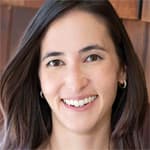
Dr. Lauren Yasuda Rainey is a proud alumna of the University of the Pacific, Arthur A. Dugoni School of Dentistry. After receiving her dental degree, she completed a General Practice Residency at Tufts University School of Dental Medicine. Her focus at Tufts was on advanced restorative techniques, including the use of surgical microscopes for restorative care, treating patients with complex medical needs and strengthening her skills by teaching in the undergraduate dental clinics.
After residency training, Dr. Rainey began teaching at the Dugoni School of Dentistry in the Department of Reconstructive Dental Sciences and the Department of Dental Practice. She was involved in both lectures and hands-on coursework in teledentistry, pre-clinical restorative curriculum, and local anesthesia administration. Dr. Rainey continues to teach direct composite restorative programs including black triangle closures, predictable class II techniques and is an advocate for using composite resin for crown alternatives wherever possible. She has taught dentists in the US and Canada, both in-person and in virtual hands-on formats. Dr. Rainey was recently featured by the Seattle Study Club in their Expert Tips series.
Dr. Rainey maintains a private practice in Berkeley, California where she developed and launched her own in-office membership program in 2018. She is active in mentorship and community building with her involvement with the Wellesley Club of Northern California, the Bioclear Alumni Network, and currently sits on the board of the Alumni Association at the Dugoni School of Dentistry. In her free time, you can find her outdoors in the Bay Area, mentoring young women interested in the health professions or whipping up a cake.
What do you do when your first practice purchase comes with zero transition time and patients who aren't sure about their new dentist? How do you build trust while maintaining profitability, and when is it time to walk away from practice ownership?
Dr. Lauren Yasuda Rainey brings a wealth of experience from her unique journey through dental practice ownership. A graduate of University of the Pacific Arthur A. Dugoni School of Dentistry with additional training through a General Practice Residency at Tufts University School of Dental Medicine, Dr. Rainey has focused on advanced restorative techniques including surgical microscope use for restorative care. She currently teaches direct composite restorative programs across the US and Canada, specializing in black triangle closures and predictable class II techniques while advocating for composite resin as crown alternatives. Dr. Rainey has been featured by the Seattle Study Club and serves on the board of the Alumni Association at the Dugoni School of Dentistry.
This episode explores Dr. Rainey's seven-year practice ownership journey, from an unexpected Monday morning start with no seller transition to building a thriving fee-for-service practice in Berkeley, California. She shares the analytical approach she used to evaluate practice purchases, the critical importance of understanding patient demographics and value metrics, and how she ultimately made the difficult decision to sell a profitable practice. The conversation reveals both the entrepreneurial rewards and administrative burdens of solo practice ownership.
Episode Highlights:
Practice evaluation requires comprehensive financial analysis beyond patient numbers, with the most valuable metric being annual revenue per patient rather than total patient count. A practice with 1,000 patients doing full mouth rehabilitation can be more valuable than one with 10,000 patients receiving only annual prophylaxis.
Building patient trust after practice acquisition demands extensive listening and relationship building, with Dr. Rainey scheduling full hour appointments for comprehensive exams and 30-minute dedicated consultation time for routine checkups. Morning huddles with existing staff became essential for learning patient preferences, family connections, and individual characteristics.
Transitioning from insurance-based to fee-for-service practice becomes necessary when quality patient care conflicts with insurance reimbursement limitations. This shift, while challenging, ultimately enabled practice profitability and allowed for the time investment needed for comprehensive patient relationships.
Practice ownership demands significant administrative time beyond clinical dentistry, including compliance management, HR responsibilities, payroll administration, and facility maintenance. Many dentists find themselves spending more time on business operations than on the clinical work they entered dentistry to perform.
The decision to sell a profitable practice can be driven by work-life balance considerations rather than financial performance. Even successful practice owners may find the energy demands of running a business incompatible with maintaining quality family relationships and personal well-being over decades.
Perfect for: General dentists considering practice ownership, recent graduates evaluating career paths, current practice owners questioning their long-term plans, and dental professionals interested in fee-for-service transitions.
Discover the real-world realities of practice ownership and the strategic decisions that shape a dental career.
Transcript
Read Full Transcript
This transcript was automatically generated and may contain errors or inaccuracies. It is provided for reference and accessibility purposes and may not represent the exact words spoken.
You're listening to the Phil Klein Dental Podcast.
Our guest today is Dr. Lauren Rainey. She's a general dentist who currently teaches direct
restorative techniques to dentists in the U.S. and Canada. She'll be sharing her experiences
during her seven-year period of practice ownership. She says that there were definitely things
that happened during that time that were somewhat anticipated, but as it turned out, many more
events occurred that were simply unexpected. She certainly has a very interesting story to tell
that covers the gamut of buying, building, and selling a dental practice. Dr.
Rainey will be joining us in a moment, but first, are you looking for an air-driven handpiece that
rivals the power and torque of electric? Well, I have good news. It's finally here. It's called the
T-Mac Z and it's from NSK, a company we all know and trust as a world leader in dental handpieces.
In addition to being lightweight and ergonomic, this revolutionary air-driven handpiece delivers
unprecedented 44 watts of power, allowing it to cut through tough zirconia smoothly and quickly.
In fact, the T-Mac Z reduces overall cutting time by 30%. That means less chair time,
reducing the burden on you and your patient. Take a test drive of the TMAX Z air-driven handpiece
from NSK. For a free 10-day trial, go to nskdental.com and find your local rep to inquire.
Experience the power and excitement of the TMAX Z series. Dr. Rainey, it's a pleasure to have you
on the show. Thanks. Thanks, Phil. Good morning. Good to talk with you. Yes, good to talk with you.
And thanks for doing a recent webinar with Viva Learning. It got great reviews, great attendance,
and you're an excellent speaker. We're really happy to have you on this podcast. Oh, thanks for the
feedback. It was a lot of fun for me to be able to put that together. Yeah, very, very good. So
we're going to be talking about buying and selling a practice and building trust, which is the
title. So to begin, how did you come to the decision that you wanted to buy a dental practice in
the first place? So I really never had the intention of buying a practice and being a business
owner. I mean, I knew that I loved dentistry. I knew since I was a teenager that that was the
career track that I was headed down, but mostly for the science and the artistry of it, not for the
small business ownership. I really didn't even know that was going to be. kind of where I was
headed. I had a fantastic first associateship right at a residency on the East Coast,
and I learned a ton. I had a fantastic mentor boss that gave me a lot of latitude to really come
into my own as a dentist. But unfortunately, an unexpected move brought me back to the West Coast.
And then I spent a number of years temping, covering maternity leave, and a number of years
teaching, which I loved. But I wanted something a little more permanent. So I started poking around
in the classifieds. Ideally, I was looking for a group practice setting or some sort of
partnership. And I dabbled a little bit with that as an associate, and it just wasn't a great fit.
And that proved pretty challenging to try and find something that you could have your own.
you know latitude but also be part of a bigger group so after about 18 months of reading prospectus
packets i made a few offers and ended up in a solo practice in a beautiful converted craftsman home
right in the heart of berkeley but that was not part of my grand plan so so how did you just happen
yes and that's the way life happens very typically but so what was the path for you to go on when
you said, you know what, I'm going to consider actually purchasing a practice and not doing an
associateship or working with someone else or working for someone else. What did you do?
Did you speak to some people about owning a practice? And then how did you find where to look and
what guidance did you get to make sure you got a fair deal? Yeah, so I was teaching at the time at
University of the Pacific. So every week I'd be in the building and I would have, you know, 20 to
50 dentists just be able to pick their brain about how they did it, how they ended up being in
ownership. Were they owners? Were they associates? And just started to just kind of collect some
information that way. There was actually one of the instructors I worked with and her advice to me
was to carry around a notebook. And this is advice that I also pass on to. anyone else that's
looking at buying or thinking about being a dentist on the front side of the notebook you flip the
page open and you write things that you like about this practice or things you like about this
position or things that like you like about whatever kind of role you're in right now and then you
flip the notebook over and open it from the back cover and there you start writing things about
things that i wish i could change or things that i really don't like or things that could use some
improvement and once you started carrying on this notebook for a while and i have a physical
notebook i started to realize that there was more of the things that i wanted to change than there
were things that i really loved about what i was doing and this woman specifically had bought her
own practice was in solo practice and was very successful at that so sort of seeing that and trying
to mirror okay well if she did some of that we'll make maybe i could too and after looking at some
of the classifieds you know i'm not financially minded but luckily my husband is and he just
devoured these prospectus to be able to put everything in the spreadsheets and then it was this
like eight tab spreadsheet and then we figured out you know price per square inch all the way to
what i think one of the most valuable things to look at was like dollar figure that each patient
brought into the practice annually Because you could have, you know, if you just look at, oh, wow,
this practice has 10,000 patients. That's a lot of teeth. Versus one practice that had 1,000
patients. You know, the 10,000 patient practice, you know, maybe each patient only came in once a
year for a prophy. Versus the 1,000 patient practice, you know, people were coming in for,
you know, full mouth rehab. So that was a really valuable tool that actually he set up for him and
for me to look at. But I think if you're looking at like one metric specifically, location being
really important, but also like what is the value that each patient brings to that practice? I
totally agree. It's something that I was going to ask you about. Isn't it so important to find out
what the patient population is like? And does it fit your values,
ideology, and how you practice dentistry? Yeah. So that's really, really important. Okay. So let me
ask you this. After buying the practice, it seems to me that it's important for the dentist or
dentists who were currently working there as owners stay on a while, right? Because you want to
build that transition where it's not like, oh, wow, Dr. Rainey, nice to meet you.
Where's my dentist? Correct. Right. So how did that whole transition go for you?
Well, it's funny that you mentioned it that way because... The dentist I purchased from retired on
a Friday and I started on a Monday and there was no transition. And that was his way that he wanted
to do it. And I respected that. Certainly, I was a little taken aback, but I can say right now that
he is one of my biggest mentors and greatest friends in dentistry. So we moved past that. No
problem. But but you're right. The first actually the story of my first day was that I walked in
and a patient. was sitting in the chair. And of course, the way that these operatories were set up,
it was rear delivery. So you walk in at the head of the patient, they can't see you. They're
staring out the window and I walk in behind him. And he turns and looks at me and goes, wow,
I'm older than you. And that's good because I plan on dying before you. The second thing he said
was, also, you're a woman. So the first piece, the conversation clearly took a turn because I was
going in to introduce myself and do his exam. But he clarified his first point by saying that his
room dermatologist had recently passed away his cardiologist had just retired and he was really
bummed that he had to go out and find new providers he was recently retired so it's kind of just
like looking to you know sail off into his retirement taking care of you know la-di-da and gets
this letter in the mail like the day before I show up and then he's sitting in the chair looking at
me but he was thrilled that I just showed up in the same space that he'd been coming to for dental
care for the last 30 years and he didn't have to make a decision And he goes, great, you're young.
I'm going to die before you, which I just really didn't know how to respond to that part. Based on
his experiences with the other doctors that he was seeing, he was kind of like, okay, when is this
whole process going to end? I got to reestablish relationships with every healthcare provider that
takes care of me at a time in my life when I need a lot more healthcare providers than I did 10
years ago. Yeah. Well, I'll tell you, my cat. And I often talk about my cat on this podcast.
I wonder if our audiences want to know what my cat looks like. But we brought our cat to the vet
for many years. And that vet was acquired. And the new vets that came in, these vets that worked
there before, left. And they weren't near as good. And we just had to say,
you know. And this was a decision we made for our cat because we are the advocate for our cat's
health. And we just moved to another vet practice where we're happier because it was a business
move and it was kind of like almost like a DSO in the vet world. But this purchase that you made
was a private purchase, right? It wasn't part of a big corporate deal. Yeah.
So now, as far as establishing trust, that's so important to develop that rapport.
Depending on the patient, it takes a different period of time to build that trust. Some people like
maybe the patient you were just talking about said, hey, you're young, you're going to be here
longer than I'm going to be alive. So I'm all set now with a good dentist. And then there are
others that doesn't go that quickly. So tell us about building trust as you transition into that
ownership. Dr. Rainey will be right back to answer that question, but first, as dental
professionals, we want our crowns and bridges to be strong and beautiful, but it seems we've always
had to sacrifice one for the other, until now. With prime zirconia, you get a revolutionary
material that provides the strength for splints and bridges, and the superior aesthetics and
translucency for anterior cases. Prime Zirconia Discs are made with a state-of-the-art gradient
technology that creates Y3 strength where it's needed, as well as Y5 translucency for aesthetics.
So thanks to Ivoclar, you can finally choose a material that offers the strength of zirconia and
the aesthetics of lithium disilicate. That's why top clinicians around the world are prescribing
Prime Zirconia to their labs. Your patients will be thrilled, and so will you. To learn more,
visit Ivoclar.com, or to locate a lab near you, Check out the link in the description. Well,
I mean, just even with that second part of his comment was like, wow, you're a woman. I didn't even
know what to say back to him. And I always thought it would be great for me to go and take stand
-up comedy classes so that I could have a retort for that kind of situation. But given that I had
two toddlers at home and a new practice, it just never really made... get into the cards for me to
do. But right, how do you build that rapport? Because I didn't know if he thought that was an
awesome thing or he thought that was not that great. You being a woman, you mean?
Right, right. I'm not really sure what my ovaries were doing to bother him.
Right. Did you have a kind of a fixed response to most of the patients in that first interaction
with them as that Monday morning continued on in the weeks and months? I think... In my mind,
I did, but most of the patients had such a great relationship with the previous doctor that I think
they were just kind of taken aback. So I really had to put whatever I had planned aside and just be
a really good listener. And I spent hours that first year and a year and a half pouring over these
paper charts of the patients that I was expected to treat. you know just because they had a number
two do the last time that they were there didn't mean that i knew anything about them so i actually
recommended we do a morning huddle with this team that was in place and i relied heavily on the
team that was there because they had gosh i want to say probably 30 years of experience between all
of them that were still there um and they knew the people they knew the patients as people and what
i wanted to know in morning huddle was tell me everything you can about this person are they
related to other people in this practice what makes them tick do they really hate leaning back all
the way um and as i got to know the people in the practice i started also seeing them like in the
neighborhood i came to know that there's a woman freda who loved egg salad sandwiches and she would
get them at the donut shop down the street And when I would walk past the donut shop, it wouldn't
just be Freda that was sitting there. I'd bump into another patient, Ron, and then Ted at the donut
shop with more regularity than I should admit, you know, as a dentist walking past the donut shop.
But I relied heavily on the team to help me really know these people.
And I made a concerted effort to know them. And if I went in and did my same old spiel for every
single person that walked in that door, there's no way I would have gotten to know that Freda loved
egg salad. Right. So I just had to build time into the schedule to listen.
Right. So that's the take home here, which I think is very important that you mentioned is
listening. And, you know, when you hear a lot about practice management gurus and they talk about
communication with the patient, especially the first visit to that office where they're making that
new interaction with a new dentist, listening by the dentist is huge because the patient doesn't
want to be bombarded with. You need to do this. You need to do that. Here's the problems you have.
And in order to fix them, you need to do this. Listening is such an important part of gaining trust
and confidence from the patient without a doubt. So related to the first interactions with your
patients at that office, what period of time did you typically schedule for those visits? Gosh,
that first year and a half. Every patient that had an exam, I didn't do the kind of like wave at
the hygiene door and say, hey, see you in six months. That was never really in my style. So
everyone that came in for an exam, if they were due for an FMX, it was a full hour with me. And if
they came in for their just regular bite wicking exam, it was a separate 30 minutes with me. And I
actually, you know, continued that through the entire time that I was the owner of that practice
because it came to be. like the biggest practice builder was just knowing who my patients were.
I never had to rely on external marketing. All the new patients that we had were patients that were
referred by people that were already well-established in our practice. I mean, it was very rare.
We had a random person call for a new patient appointment that had just found us online. It was
almost always through the Slack channel at work or through the neighbor that lived next door or the
friend of someone who went to school with someone that was in the practice. Yeah, without a doubt.
Word of mouth is the best way to market. Now, spending all that extra time with the patient surely
paid off to develop a strong relationship with the patient, build the practice. And as you
progressed in that practice, was it profitable? You don't have to tell us how much you made, but
did it start to look financially sound, the whole operation? It did,
eventually. But that was not because of the time that I spent with the patients. That was because I
decided after about three years that I needed to go fee-for-service because I wasn't willing to
compromise the time that it would take me to know my patients. And it was not financially
sustainable to stay in network with the dental insurances. So if I wanted to keep... Duke.
doing dentistry and practicing on people that I knew that I needed to make a shift in sort of how
we did the finances of the practice. And to our audience, we have another podcast that you'll find
on our show titled Making the Jump from Insurance-Based to Fee-for-Service. And we're very
fortunate to have Dr. Rainey. be our guest on that show. So look out for that one. It's certainly
very interesting to hear, Dr. Rainey, why you bought a practice, some of the things you thought
about, and lucky you had a very meticulous husband who laid out spreadsheets for you to kind of
bring some analytics into the reality of what you're getting involved with,
because this is a pretty big decision. So in the stock market, they say the hardest decision is to
sell. A lot of people buy stocks, and unfortunately, they're not disciplined.
And I'm one of those people where I hold them way longer than I should when they don't perform.
This is not necessarily indicative of your practice not performing, but the concept of just
psychologically being in a position where you just say, hmm, I don't know if I want to sell. I
don't know if that applies to a dental practice because every predicament is different. But when it
came to your practice, what factors did you consider before selling? So I started working with an
executive coach a number of years ago. when i knew that i was thinking about figuring out how to do
this fee-for-service bit and the person that i work with is not dentist specific it's just a
regular executive coach and he was really instrumental in helping me recognize kind of what my
bandwidth was and how much energy i was really pouring into this business and when i took a couple
steps back and realized like i had two kids under the age of five a young practice a husband it was
just something that i couldn't really see myself running at this capacity for 24 years I could see
myself doing any of this for 24 months, but not 24 years. And so I sort of set a goal for myself at
the end of 2019 and said, okay, I'll give myself 24 months. And if I can figure out a way to run
this business where I feel like I have enough energy at the end of the day to give my full self to
my kids and to my husband and to my life outside of dentistry, then great.
But because I care so much and so many dentists are primarily just like, really caring people and
we want to do good by our patients and we want to do right by our teams. But I just didn't have
enough energy at the end of the day to give my business 120% and then come home and have 120% for
the people that really mattered. So I just started dabbling with like, okay, well, what are the
options, right? I could just close the doors. I could get an associate. I could find a partner.
And I started to explore each of those options. It just became much clearer to me that,
you know, maybe just putting on the market and see what happens. I knew what my end goals were
going to be. I knew that I had some debts to repay, some, lots of debt to repay.
And could I still be a clinical dentist? Absolutely. Could I buy another practice in the future?
Sure. Do I have a set of policies and protocols that I could roll into a new practice tomorrow?
Absolutely. Is that what I want to be doing right now? I don't know. um so i think kind of looking
at all those pieces and getting all the information from all the different sort of sides of it the
financial piece the sort of i guess mental health piece with my um executive coach and then just
like what did i want to be doing i never really stopped and thought about was this the life that i
wanted to create for myself i did because i think as dentists we go to dental school and then
there's this pressure to say okay hang your own jingle have your own practice let's do it But my
heart wasn't really even in it at the beginning, right? I wasn't really thinking when I got out of
school that I wanted to be an owner.
And so when selling became a reality, it really just opened up a lot of other possibilities for me.
Now I do a lot more time teaching, which I love, and it gives me a great opportunity to give back
to the profession in a way that I just really didn't know was possible. Just curious, Dr. Rainey,
did your decision to sell, was that at all influenced by any pushback? when you wanted to
transition your office from insurance to fee-for-service? No, not at all. That was not part of
it. I think had I gone fee-for-service from the get-go, maybe I wouldn't have been feeling so
much pressure after being a practice owner for two or three years. Those were like two very
independent things. And being fee-for-service allowed me to be able to sell the practice for
profit. Okay, so you were successful. in transitioning okay so you very much so and even though you
transitioned to fee for service you still felt that it'd be better to sell the practice because of
the reasons you mentioned about having more time with your family and so forth um yes that and also
the building was gonna i was up to buy the building in 2020 um and we all know what happened in
2020 so that turned into a bit of a a mess um and by the time 2021 came by and there had been
changes in compliance with the state of California, I just found myself doing more things related
to the business than the actual dentistry. And when I realized how many hours I was spending on
compliance and HR and employee stuff and payroll,
I was getting away from the reason I became a dentist. I became a dentist for the artistry and the
science and the relationship building.
More and more of my time was spent on the aspects that just didn't bring me quite as much joy.
That's interesting. And we'll wrap up this podcast now. But do you think that's why the DSOs and
the dental partnership organizations that are coming out that are purchasing these offices and with
the pitch that a lot of the stressors that you have on a day-to-day basis, we're going to handle
that for you. We're going to handle your HR. We're going to make sure that. You have the right
inventory. We're going to manage all the repairs of your office. We're going to do your taxes and
whatever, all the things that a dental practice needs to do, which is a ton of things beyond the
actual clinical dentistry, as you just mentioned. Maybe that's why there's just a big trend moving
in that direction. It's just a thought. I mean, I guess that's what's doing it. I still think there
are... that love to own their own practice because they want that independence. They just don't
want it. Yeah. The independence and the freedom and the entrepreneurship of owning your own
practice, but it does come with a lot of burden. There's no question about it. Yeah. The
entrepreneurship is definitely part of it, but I went into it thinking that like I could create
something where the patients would always see the same provider because I know when I choose
provider, I want to see the same person every single time. I really didn't want to have like a
stream of individuals right in a bigger practice where you would have where you might not see the
same person every single time so i still think there's a place for in private practices especially
for patients to find like a provider or a provider team that's going to be the same kind of group
of people time and time again yeah well listen uh i agree with you like the the dso model for sure
does alleviate a lot of the burden of practice ownership Yeah, and there's different kinds of DSO
models that are emerging right now. Some companies are buying minority ownerships in the dental
office, and the dentist owns the majority, and they have all the independence that they want.
Yeah, there's just a lot of options out there, but I think I'm sure you're happy you went through
it. You bought a practice, you ran it, and God knows what you learned from all that.
I don't know if we have enough time for that today. Yeah, well, not on this part. since we're
ending it now, but yeah, we'll have you on more. Dr. Rainey, thank you so much for your input. A
very interesting conversation and we'll talk to you soon. All right. Thanks so much. If you're
enjoying this podcast, please leave a review or follow us on your favorite podcast platform. It's a
great way to support our program and spread the word to others. Thanks so much for listening. See
you in the next episode.
Clinical Keywords
Dr. Lauren Yasuda RaineyDr. Phil Kleindental podcastdental educationpractice ownershippractice managementfee-for-service dentistrypractice acquisitionpractice evaluationpatient trust buildingcomposite resin restorationsblack triangle closuresclass II restorative techniquescrown alternativesdirect compositesurgical microscoperestorative dentistrypractice transitiondental practice valuationpatient demographicswork-life balancedental entrepreneurshippractice profitabilityinsurance-based practiceadministrative burdencompliance management