University of Michigan School of Dentistry · American General Dentistry
Read full bio
Dr. Gupta after completing a one-year GPR in Cleveland, started a practice from scratch in 2005. Armed with what he considered adequate knowledge, hand skills, and a personable demeanor, he watched as his practice floundered, finances became un-predictable, and his lower back and spirit toward life became worrisome. Rather than continue the trend, he made a guinea pig out of his office, family, and self; attempting any and all personal and professional "experiments" in self-improvement. More than a decade later, he enjoys excellent new patient numbers and case acceptance, a solution oriented dental team; and most importantly, a meaningful and positive identity. He happily shares the failures and successes with dental and community groups throughout the country, always ending his presentations with practical, implementable, step-by-step ways to be better.
Are you truly delivering extraordinary patient experiences, or are you just another dental office claiming to be "friendly" and "high-quality"? Most practices believe they're exceptional, yet they struggle to differentiate themselves from every other dental office in their community.
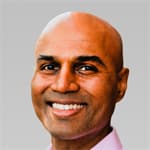
Dr. Ankur Gupta graduated from the University of Michigan School of Dentistry in 2004 and is a certified AGD/PACE provider in private practice in North Ridgeville, Ohio. After watching his new practice flounder despite adequate clinical skills, Dr. Gupta transformed his approach to create what he calls a "uniquely extraordinary practice" — one that stands out in ways patients have never experienced before. He has become a sought-after speaker and lecturer on building extraordinary dental practices through systematic implementation of exceptional patient experiences.
This episode explores the three essential components every extraordinary practice must possess: vulnerability to acknowledge weaknesses, dedicated time for implementation, and effective delegation systems. Dr. Gupta shares his philosophy that extraordinary practices aren't run by perfect people, but by ordinary individuals who systematically implement genuine acts of care that patients never expect to receive in a dental setting.
Episode Highlights:
The umbrella protocol demonstrates how 40 seconds of genuine care creates lasting patient loyalty — offering to escort patients to their cars during rain requires minimal time investment since most patients decline but deeply appreciate the gesture. This simple system requires only having umbrellas available and staff trained to make the offer, yet creates community-wide recognition as the only dental office providing this service.
Systematic over-delivery through handwritten letters, fresh flower gifts to selected patients, and immediate Starbucks gift cards for wait times longer than five minutes transforms routine appointments into memorable experiences. These protocols work because they're unexpected gestures that require minimal financial investment but maximum emotional impact when properly systematized.
Community engagement through annual scholarships for graduating seniors and dedicating one full day annually to free care for underserved populations builds extraordinary reputation beyond clinical excellence. Even a $500 scholarship can differentiate a practice as the only small business in the community offering such support, creating lasting community recognition.
Case acceptance improves dramatically when patients already like, know, and trust the provider before treatment recommendations are made — this emotional foundation is established through consistent small gestures rather than expensive office renovations or high-end equipment. The phrase "I don't want to do anything that's going to cause you financial stress" actually increases treatment acceptance by demonstrating genuine concern.
Implementation requires making extraordinary gestures effortless through systematic preparation — handwritten note stationary must be readily accessible, gift cards pre-purchased and stored, and staff protocols clearly defined. Extraordinary service fails when it depends on effort or memory rather than systematic infrastructure that makes caring gestures automatic.
Perfect for: General dentists, practice owners, dental team members, and DSO practitioners seeking practical strategies to differentiate their practice through genuine patient connection rather than expensive equipment or office renovations.
Transform your ordinary practice into an extraordinary patient experience that builds lasting loyalty and increases case acceptance through simple, systematic acts of genuine care.
Transcript
Read Full Transcript
This transcript was automatically generated and may contain errors or inaccuracies. It is provided for reference and accessibility purposes and may not represent the exact words spoken.
Every dentist, even the ones that are struggling the most financially, we all make enough where we
can offer a scholarship to a graduating senior in our local town. When we first started, it was a
$500 scholarship. It's not very much, but it was still very appreciated and it was noticed by the
entire community. We were the only dentist. Actually, we were the only small business in our entire
community that was giving away a scholarship.
Welcome to the Phil Klein Dental Podcast. Practicing high-quality dentistry with premium materials
is a cornerstone of building an extraordinary dental practice, no doubt about it. But there's
another crucial element, one so vital that without it, reaching the level of extraordinary is
nearly impossible. This key component has been the foundation for some of the greatest companies in
existence today. Yes, you guessed it, it's customer service. Without exceptional customer service,
your dental office may be good, but it won't reach its full potential. Today we'll be talking to a
dentist who is an expert in customer service. He will share insights and strategies to help us
elevate our customer service game and move toward establishing an extraordinary dental practice.
Our guest is Dr. Ankur Gupta. Dr. Gupta graduated from the University of Michigan School of
Dentistry in 2004. He is in private practice in North Ridgeville, Ohio, and has become a sought
-after speaker and lecturer on many aspects of how to build an extraordinary dental practice.
Dr. Gupta, thanks for joining us today. It's a pleasure to be back here. Thank you so much for
having me, Dr. Klein. So, Dr. Gupta, you are a really well-known speaker, and you speak very
articulately and with great enthusiasm about the concept,
the notion of creating an extraordinary office. And you use the term extraordinary quite a bit. And
we all know what that word means. But in some respect, many of us think we have extraordinary
offices. That's a kind of a term that's relative to the person who's using it. What do you mean
when you use the word extraordinary? I'm glad you asked that because often when I ask that question
at a lecture, I say, is your office extraordinary? The person say, yes, yes, I think my...
is extraordinary. And I'd say, okay, what is it about it that's extraordinary? And say, well, we're
really friendly. We do great customer service. We deliver high quality dentistry.
We use the best labs, the best materials. Okay. I hear that. Actually,
I would say that the 90% of the people that are listening right now, if I were to go up to them
individually, I'd say, what makes your office extraordinary? They would give me some version of
what I just said. And the problem with, and that's great. That's wonderful. That's something to be
proud of, but that doesn't exactly make you extraordinary. It just makes you ordinary. It's good,
but it just makes you ordinary. Good still, and nothing to be ashamed of. But one thing that I
think I've always had a hunger for is to have a uniquely extraordinary practice. To have an office
that people in the community would say, oh, wow, they're the only ones that do that.
Oh, wow, that was neat. I've never seen a dental office do that before.
And that was always burning in me. For sure, it's a successful enough practice where we can pay the
bills, et cetera, fine. But I think that there was just something personally driving me.
Okay, my wife and I, we own this practice, and maybe we have the capacity to make it an
extraordinary office. The problem is we're both very ordinary people.
I have bouts of laziness. I have bouts of impatience. I am,
especially when it comes to my charting, I'm very not thorough. And if I were to ask my wife the
same question, she would say, oh yeah, I have a nice handful of things that I'm ashamed about
myself too. And I think all of us do. All of us have our human tendencies that we're not exactly
proud of. So how is it that there are... incredibly extraordinary offices or incredibly
extraordinary businesses that are out there. They're run by ordinary people. They're run by humans.
Humans that have some of the similar flaws that me, you, and a lot of the people listening to do.
And what I realized is that there's three things that every extraordinary office must possess.
And I'll go into greater detail a little bit later. Number one is vulnerability. is the desire to
articulate those things that we are not good at and that our office is poor at.
That's number one. Number two is time. And that is, okay, we want to do this crazy,
extraordinary, philanthropic thing. It's going to be amazing. We're going to deliver a bunch of
free dental work to an underserved population. And it's going to be the entire community is going
to say, wow, what an amazing dental office. Well, you don't do something like this.
by having a little morning huddle where you talk about it or where you get together during lunch
and you say, hey, let's do something like this. You can't delegate, you can't systematically plan
and implement extraordinary things without that time. And number three is delegation.
And this is probably the hardest thing for a lot of dentists because we were taught how to be
dentists and then we became entrepreneurs. And when we became entrepreneurs,
we were maybe given the impression that we were in control of everything. Everything has to run by
me. I'm in control. Does Op.1 need new wall hangings?
Okay, I'll get the wall hangings. That's a very common thing, right? An inability to trust our team
members to implement a beautiful solution. because we think hey i'm the boss i'm the one who has to
do it so those three things um time vulnerability and delegation and so actually i don't want to go
too much detail about each one of them i'll let you just ask the next next question we'll be
getting right back to our guest in a second but first with countless dental composites on the
market today choosing the right one can be overwhelming Yet a few products rise above the rest,
and VOCO composites lead the way. For over a decade, Grandioso's tooth-like physical properties
have remained unmatched by any other restorative material. With its stunning aesthetics,
exceptional durability, and superior handling, Grandioso stands out as the clear choice for all of
your composite needs. And if you're looking to simplify posterior restorations with a single-shade
solution, check out AdmiraFusion Extra. This omni-chromatic nano-hybrid covers all 16 Vita
Classical shades with a single shade. It achieves this without compromising strength, handling,
or radio opacity, providing fast, strong, and aesthetic posterior fillings.
Join thousands of dentists who trust VOCO for proven performance, superior aesthetics,
and lasting results. Explore VOCO's full range of composite materials and request a sample at voco
.dental. So you talked about in a previous discussion we had, this was several years ago,
Dr. Gupta, and it was about an umbrella. It was raining out and you had an umbrella behind the
reception desk. And tell us that story about what you did for the patient when they went to their
car. And what was the outcome of that as far as your voyage, your journey to establish an
extraordinary practice? Yeah, that's a great question. OK, so I was just doing traditional dental
work on an elderly female patient and I walked her to the front and it was pouring outside and she
was walking out with a bag, you know, like a goodie bag. She was walking out with her.
actual purse or handbag and then she was walking out also with a folder that had some of the
financial paperwork from whatever she paid for for the office. And I could see she had a lot of
things in her hands and it was pouring rain. And so I just thought, not because I wanted to create
an extraordinary practice or anything like that, I just thought the decent thing to do here is let
me grab the umbrella, let me hold the door open for her, and let me walk her out to her car. And
she was really, really, she was just tickled by that.
I mean, she was just really, she was so, grateful. And I thought, man, this wasn't that big a deal.
I mean, this took me maybe like 40 seconds. This was nothing. And I had this patient who just
thought I was like the greatest thing ever because I did this extra little thing, held the door
open for it. Right. And so anyway, I got back and we had a team meeting the following Friday and I
said, Hey, how hard, I want to ask all of you, if we made it a policy where every single time it's
raining, every single time it's raining, that whatever patient leaves our office, we are at least
offering to walk them out with an umbrella to their car, and then we'll just use that same umbrella
to walk back into the office. I said, what would make that unrealistic? And a couple of the
employees said, well, if there's people leaving at the same time, we need more than one umbrella.
And I said, okay, let's. All right. We could do that. Another person said,
well, I don't know. That's a lot of time. I mean, you know, there might be 20 patients leave.
That's a lot of visits to the car. And then I asked them, I said, well, if somebody offered you to
walk you to your car with an umbrella, would you take them up on the offer? And almost everybody
said, no, no, no. I would appreciate the offer, but I would still walk to their car, to my car. I
know I would, you know, I'm a 45 year old dude. I'm just going to walk to my car. I don't mind
getting wet. but I would appreciate the offer. But you know who would take us up on the offer? The
people who would appreciate us the most. So I said, okay, let's just do it. I'm going to buy two
extra umbrellas. We're going to have three sitting there. Every time it rains, it's a part of our
job description that patients walking out will be at least offered for somebody to escort them to
their car, hold the doors open, maybe hold their little goodie bag for them, et cetera. What we
found is in a day where there might be 20 patients who we make that offer to, two people say,
yes, I would appreciate that. Two people. It's no extra time. 40 seconds each. It's a minute 20.
It's nothing. Everybody can do that. And what I realized was, wait a second. This had nothing to do
with how nice of people we are, how caring we are, how good our customers are.
This had nothing to do with that. This had 100% to do with. having a discussion about it
beforehand, and then making sure that we had the infrastructure in place, meaning the umbrellas
available. You talked about whether it was this podcast or a previous one, I believe it was a
previous one, where your real desire was to make your office different, something that stands out.
And even though you talk a lot about systems and doing things properly in the office with your
employees and having the morning huddle. A lot of offices do that. So how do you separate yourself
or differentiate yourself? And that little thing that you were doing with the umbrella, like you
said, it didn't really cost you a lot of time because probably 98% of the people said, that was
really nice, but no thanks, I got it. They'll be the first ones to tell someone else, oh,
Dr. Gupta's office is great. And by the way, they're so nice over there. They actually offered to
walk me to my car when it was raining, which... I've never seen that happen in any other dental
practice or any physician's practice I've ever been to. So it may not sound like a big deal to some
of us, but if a patient is thinking about it and it's in their mind that you had that concern for
them, that's a big thing. It's a big thing and it represents the culture of the office.
And it's the kind of culture that patients really would like to have a dentist.
have that culture who's caring for them. Because you're not only caring for them walking to their
car, but you're also looking at their mouth and you're caring for everything else. So that same
philosophy of care and empathy carries over to the oral environment.
And you also trust that doctor much more. So there's an immediate trust that's built up.
And it was genuine. That's the key. The offer to take them to their car with the umbrella is
genuine. I want to talk about something else. When you hear people lecture and they're talking
about practice management and how to make more money in the office and all this other stuff, they
use the term systems a lot. They use the term intentionality a lot. They use them over and over
again. And like anything else, when something's overused, it becomes less meaningful.
It has less impact. What specifically are you suggesting that offices do outside of the typical
things we just talked about, which is always systems? How do you get an office to become
extraordinary in terms that are not repeated over and over by these typical KOL lectures?
So let me just rattle off a handful of things that we've now systematized and that are consistently
done. Okay. Every new patient gets a handwritten letter. Every kid gets a handwritten letter.
And anytime we have a conversation with a patient in which, say, their daughter's getting married
or their mother was diagnosed with breast cancer or anything unusual like that, they get a
handwritten letter. Okay? So there's a handwritten letter. Number two is every time,
and you've heard this one before, every time that we do a difficult procedure on a patient, they're
getting a phone call that evening. We've ditched the phone call because we all hate it, so now
we've switched to just texting people that evening. I don't know if it's as meaningful, but it's
still something. Number three is we have fresh flowers that are sitting in our waiting room.
And then on Wednesday or Thursday, we choose a patient. Usually it's an elderly patient.
Usually it's a female. And we decide that that patient is going to get the flowers at the end of
their appointment. And so they finish their appointment. One of us says,
hey, Darlene, come here. I have something to show you. And Darlene comes back and we say, hey,
listen, we talked about this and we wanted to let you know that you're our patient of the week. And
we wanted to give you these flowers. And then Darlene, she's just incredibly grateful because she
hadn't expected that. Number four is if a patient is waiting for more than five minutes to be seen,
we give them a Starbucks gift card and a little handwritten note that we've already pre-written
that says, sorry for making you wait. This isn't our style. But we appreciate your patience.
And there's a Starbucks gift card for, you know, I'm in a position now where my Starbucks gift card
is a little bit more generous. But when I started doing this, it was a $5 Starbucks gift card.
Okay, enough for one coffee. We'll be getting right back to our guest in a second. But first,
silver diamine fluoride, SDF, is a game changer in Kari's management. offering clinicians more time
to plan appropriate care while effectively desensitizing teeth and arresting caries.
Centrix, a trusted leader in dental materials, offers SilverSense SDF, a cost-effective,
fast, and easy-to-use solution. Its bactericidal silver particles stop caries' progression in its
tracks and instantly eliminate hypersensitivity, providing a more comfortable experience for your
patients. Unlike other SDF products, SilverSense SDF won't stain healthy tooth structure.
Only the treated lesion darkens, which can later be restored to full form, function,
and aesthetics. So it's time to elevate your caries treatment with SilverSense SDF from Centrix.
To learn more, visit centrixdental.com. Those are little things that are over-delivering love to
patients in a dental office. They were expected to be... to be treated well they were expecting
high quality dental work but they weren't expecting those little things a handwritten note a little
gift card um you know the fresh flowers whatever it is they weren't expecting those and i think
that all anybody here listening would have to do is just sit there with their team and say okay i
have a couple examples of what i would call extraordinary customer service customer service that
nobody else is doing give me some more ideas And team members can come up with all sorts of amazing
ideas. Then after you've come up with nine or 10 good ones, you say, okay, let's now take some time
to really attack one of them. Let's come up with every barrier, every point that would make this
unrealistic. And let's attack that. And let's make it so that it's so systematic that anybody can
do it. So for example, I think everybody here would agree the handwritten note thing is a good
idea. But I'll tell you this, Dr. Klein, if I didn't have my handwritten note stationary sitting
right here on the desk next to my computer, where all I have to do is basically like use zero
effort to write that note, I wouldn't do it because it wasn't systematic.
If I had to go and find the stationary or if I had to go do, I wouldn't do it. Everything has to
become easy in order for it to be systematized. Okay. So can I give you two more ideas?
Sure. The two other, just your reputation in the community, I think every dentist out there,
every dentist, even the ones that are struggling the most financially, we all make enough where we
can offer a scholarship to a graduating senior in our local town. My wife and I now,
we are at a position in our lives where our scholarship is a bit more generous. When we first
started, it was a $500 scholarship. It's not very much, but it was still very appreciated.
And it was noticed by the entire community. We were the only dentist. Actually, we were the only
small business in our entire community that was giving away a scholarship. Weird. We weren't the
richest, but we were the only ones. The second thing is, I think every dental office,
especially dental practice owners, if you have a space, close your space for one day.
Close it to your regular schedule for one day and just see underserved people. whether it be
military veterans, whether it be inner city children, whatever it is, whatever you would find the
most satisfaction from doing, close your office for a day and create a Veterans Day of free
dentistry or, you know, give kids a smile day, but directly from your office.
Not a lot of offices do this. It's something that if you do it and you systematize it, well,
then you can do it every single year. How do you qualify those patients? to come in to be eligible
for that free care versus your current patients of record? So my day is a veterans day.
And so we just, we do a lot of effort marketing to local VFWs,
VAs, American legions, community colleges, et cetera. And then we don't.
We don't do anything to qualify them. If somebody decides to come in and get the free dental care
and they never served in the military, I don't know. That's on them. I'm not going to take the time
to. So how long have you been practicing dentistry with your wife? 20 years.
Okay, so 20 years. Now, when you got out of dental school, you had a lot to think about. It took
you a while to develop these ideas that you're now implementing in your practice.
So real briefly, before I get to my next question, tell us. What part of your career you realized,
wait, I could do more to make my office and my practice extraordinary. I could do more to
differentiate my practice from any other dental practice in my area. I need to get my team on board
with this. When did it start to happen and what caused it to happen? What made you come to the
enlightenment period with this kind of culture where you really wanted to find...
new ways to make your office extraordinary beyond the typical ways that the person like you
mentioned in the top of this podcast would normally mention. We have a great lab. We have great
equipment. We have great dental chairs. They're comfortable. How did that all evolve?
Yeah. So when we were six years in practice, my wife and I realized that we had.
Really poor business skills, business acumen. We were, you know, we had employees that were walking
all over us, gossiping. It was toxic environment. We weren't making a lot. And so at that time,
we made the decision to hire a dental coach. His name was Bill Blatchford.
I don't know if he's still around. We hired him. And actually, it was a lot of real tough love.
Like he basically told us, like, how are you running a business like this? Nice guy.
Yeah, yeah, it was great. Very good message. Anyway, I'm very appreciative. But at one point he
said, he said, what are you doing to set yourself apart? And we gave him the normal answers. And he
said, no, the next time we talk on the phone, you need to give me one thing that's going to set you
apart, that truly you're going to implement, that's going to set you apart. And at that time, we
came up with this new patient protocol where our assistants,
they, you know, when a patient walked in. Our team at the front desk would have to stand up, shake
their hand, call them by name, compliment them. And then they would have to come out with the
paperwork, sit next to them, offer them coffee. It was a whole deal. And we came up with that. My
wife and I were very proud of it. But then he basically said, have you told this to your team yet?
And we were like, oh, no, we're afraid because we're messing with the status quo. And he said,
your goal in life is to make it so that you're not afraid to be.
extraordinary. And I thought that was just really, really great advice. You know, this is my 20th
year in practice. We do a lot of cool stuff, really extraordinary things, but it's not like we did
them all in the beginning. We did nothing at first. And then we realized,
no, we want to do something. And so we came up with one idea, that new patient protocol. And it
took probably a year. before we were able to really successfully implement it in a predictable
manner where it didn't matter who was sitting at the front desk, whether we would have employee
turnover or whatever. It was always going to be done. It was just the norm. It was a normal, non
-negotiable part of the routine, just like showing up to work in a uniform or showing up to your
morning huddle on time. There's no difference between that and doing a new patient protocol. Right.
The things that you've implemented over the years and you've done it successfully seem to be
focused on personal connections with the patient. These are human elements,
empathy and concern and trust and being genuine beyond just looking at the patient as a mouth that
has dental disease and we need to fix this and bill your insurance.
Do you know how many times I call a physician's office and the first thing they say, or almost the
first thing they say, what kind of insurance do you have? What's your group number? And I realize
they're getting a lot of calls and they don't know who I am. I get that. But it's just so
disenfranchising when you're listening to someone ask you, the first connection you have with this
office is, you know, what's your group number?
Before your name sometimes. Yes. We're not taking any Medicare. Are you on Medicare? That was
something like that. So in Austin, Texas, we don't have a lot. There's a lot of people here that
have moved from other places. So it's very difficult for us to get good physicians. So you don't
complain about it. You're happy that they answer the phone. But what you've accomplished in your
world, which I... a suburb of Cleveland, Ohio. The people in your community notice what you've done
and you've taken it to a level that's extraordinary. No pun intended. I know that's what we're
talking about, but it's all personal connection stuff. Yeah. It's not like we have a fancier office
or higher end equipment. I mean, that does help, but that's not the priority for you in making your
office extraordinary. It's the personal connection. So can this approach be utilized by any dentist
in any practice? Because some dentists work in DSOs, some dentists are solo practitioners.
Are there any restrictions on that? Or is it just something that any dentist can implement and make
it work? Yeah, okay. So in a previous podcast that you had me on,
we were talking about health and longevity. And that there are certain people in certain situations
where they can... out and play basketball with their kid. Then they can go to a yoga class and they
can do stretches and go for a run. And then there's certain people that are so busy and they're so
limited that all they can do is spend maybe five extra minutes every day doing some stretches and
strengthening. But in both cases, if you go from zero to doing five minutes of stretching and
strengthening, you are going to permanently change your trajectory health-wise. So when we look at
certain, yes, it's true. I have a practice. I don't take PPOs. We're a slower paced office.
There's more of a boutique style. Yeah, it's true. I can do a bunch of these little extraordinary
ideas. Great. Good for me. And then somebody listening is like, dude, I'm not like you, man. I have
a much busier office. Things are crazy. We don't have enough time for pay. Fine. That's okay. Maybe
you can't do everything that I just rattled off, but you can do something.
Everybody has the capacity to improve a little bit, to do something.
And so even the busiest offices, you sit down together, you think, how can we over-deliver just a
little bit more love to our patients? How can we make this a more loving four walls than it was
before? And how can we do it so it's realistic and it's implementable permanently where we're doing
it? We're still doing that same thing five years from now because we've systematized it.
Everybody's can do something. Even the business offices out there. Yeah. And what you're talking
about pertains to every business, every small business,
especially, you know, we have various shops in our shopping center and our community.
And some of the people that work there are just so nice and so caring. You look forward to going in
there and saying hi to them and picking up the conversation. And their business is thriving,
whether it's the cleaners, whether it's the bakery, whether there's a healthy pet company that does
cat food and dog food and pet supplies. And they are like, return anything the cat doesn't eat,
even if it's open. Well, we donate it and we get reimbursed. Don't even worry about it. Try four
different types of canned food. And then they tell you about new things that are good for a torn
ACL on a cat.
interactions that you're developing with the person who is running their business that
differentiates them. And you really enjoy spending your money there. You don't mind spending your
money there. And a dental practice is a business. We all know that. I mean, your case acceptance,
Dr. Gupta, must skyrocket once you've, yeah, after this whole process became mature.
I mean, in closing, and we only have a few minutes, tell us about your case acceptance, like what
this has done for you as far as making recommendations to patients about treatments. So it's
interesting. So a person told me, I don't remember where I got this, but they said, your financial
decisions are basically made based on whether you like a person, you trust a person. And what's the
other word? You like them, you know them, you like them, you trust them. I don't remember what the
three were. What's really cool is like, if we do this stuff, they kind of already know me,
like me and trust me before they've met me. You know, I'm just a random dude in scrubs who's
walking in and looking at those x-rays, but because they were so well treated, they're going to,
I'm going to make a recommendation, but they feel like that recommendation is coming from somebody
that they like and trust more. And it just, it makes the case acceptance factor much less of a
stressful thing. You know, there's a phrase that I use every time. Every time I talk to a patient,
I recommend expensive treatment. I say, I don't want to do anything that's going to cause you
financial stress. I don't want to do anything. And I look at them right in the eye and I don't want
to do anything that's going to cause you financial stress. And you would think like, oh man, that's
not a good sales technique. No, that's actually the best sales technique. It's the thing that I
think most people wish they would hear. whenever they're seeking out a service.
So I wanted to close with that. Dr. Gupta, thank you very much for a good conversation.
The importance of connecting with your patient, customer service, creating an environment where you
can actually achieve an extraordinary practice with techniques that are simpler than you think.
And these are techniques that actually work. Patients connect with you that way and tremendous
value to developing. the trust between the patient and the provider. Have a great evening.
And again, thank you very much for joining us. Absolutely. Thank you, Dr. Klein.