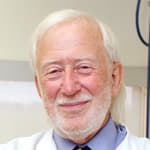
Dr. Malamed is a Diplomate of the American Dental Board of Anesthesiology as well a continuing education lecturer on anesthesia, sedation, and emergency medicine. He has authored more than 170 scientific papers and three textbooks that are used around the world.
Welcome to DentalTalk. I'm Dr. Phil Klein. Knowing when to, and when not to, treat a patient is of extreme importance. Today we'll be reviewing several common medical problems and their potential significance to the treating dentist. Our guest is Dr. Stanley Malamed, a dentist anesthesiologist and emeritus professor of dentistry at the Herman Ostrow School of Dentistry of U.S.C., formerly the University of Southern California School of Dentistry.
Transcript
Read Full Transcript
This transcript was automatically generated and may contain errors or inaccuracies. It is provided for reference and accessibility purposes and may not represent the exact words spoken.
You're listening to The Dr. Phil Klein Dental Podcast from Viva Learning.com.
Welcome to the show. I'm Dr. Phil Klein. Knowing when to and when not to treat a patient is of
extreme importance. Today, we'll be reviewing several common medical problems and their potential
significance to the practicing dentist. Our guest is Dr. Stanley Malamed. a dentist
anesthesiologist and emeritus professor of dentistry at the Herman Ostrow School of Dentistry of
USC, formerly the University of Southern California School of Dentistry. Dr. Malamed,
it's a pleasure to have you on Dental Talk. Phil, thank you very much. Pleasure to be back. So
thanks everyone for coming back to part two of this two-part series on avoid medical emergencies
in your office, dealing with a medically compromised patient. now in part one we talked about high
blood pressure various cardiac conditions that are very important to the practicing dentist as far
as whether to treat in the office or not we're going to continue on that topic today what are other
cardiovascular problems associated with high blood pressure that we should be concerned about well
angina or angina both correct myocardial infarction heart failure and stroke and of course The
bottom of the list, of course, is cardiac arrest. I mean, none of these things are good. None of
them are good. And all of them are seen much more frequently in patients with high blood pressure.
Absolutely. Now, if you're treating a patient that has severe high blood pressure, but it's under
control through medication, and you kind of have the green light from the cardiologist,
which again, we talked about this before. I know it's up to the dentist. It's not up to the
cardiologist. The one who's treating the patient is the one that's responsible. So we cover that.
But let's say they do have the green light. The patient's on medication. They're under control. Is
there anything you should be looking at in a patient's behavior during the treatment as a dentist
that would tip the dentist off to say things are moving in the wrong direction? We need to stop the
treatment and get this patient relaxed or... of the office to a hospital or just calm down so that
we can get the patient out the door and not do anymore because the patient's getting so anxious
that there's a risk of something happening cardiovascularly. Okay. So Phil, don't forget that
question because I want to throw something in beforehand. Okay. And I'm likely to forget what you
just asked me. You don't expect me to ask that question again. That was a long one. Okay. Okay. No,
but just, okay, here's the thing. A patient who has high blood pressure, okay,
you have a thermostat. in your body for blood pressure. And it's set for one, let's say systolic,
it's set for 120, okay? It's not 120 all day. It goes a little above it, it goes a little below it.
If somebody has high blood pressure, their thermostat's broken. And it's been reset for a systolic
of 180. Okay, it'll be 180 up and down a little bit. By taking your medication,
antihypertensive drugs, you are artificially lowering the blood pressure. You're not fixing the
thermostat. Okay, you're lowering the blood pressure as long as you take the medication.
And one of the biggest problems that all physicians have with patients who take drugs on a regular
basis is called noncompliance. I feel good, therefore I'm not going to take it.
And that's the reason why I said earlier that if a patient has high blood pressure, you take their
blood pressure at every visit. And by the way, you use the number you take that morning right then.
That's the blood pressure for that patient. So they may be in ASA2 last week. They come in today,
they could be in ASA4. You use the number that you have. Okay, so now you've got to give me the
short version of that question. So the short version is you're treating the patient, and what are
you looking to see in that patient that tips you off that they're moving in the wrong direction
with a cardiac problem? Okay, I mentioned earlier that high blood pressure is called the silent
killer. Okay, unless you take it, you don't know. Problems that can lead to the acute cardiac
problems are angina, which would be chest pain. Myocardial infarction, again, would be chest pain.
And the word pain, by the way, you know, the patient may say to you, it feels like there's an
elephant sitting on my chest or a boulder on my chest. They don't actually use the word pain very
often. Heart failure, when all of a sudden a patient is having extreme difficulty breathing.
You might even hear crackling, gurgling. from their lungs and a stroke which we'd hope would never
happen but and the stroke that happens in a dental office is going to be the worst kind of stroke
uh 88 of strokes are ischemic which is like a heart attack a blood clot forms up in the brain but
when there's a sudden elevation in blood pressure you get what's called a hemorrhagic stroke where
an artery in the brain just simply bursts and think about this now you have the skull you have the
brain inside the skull and you have blood being pumped out into the cranium, a hundred systolic
blood pressure of 200. So the brain, the cranium is filling up with blood and the brain is there.
And what happens, the brain now gets pushed down through foramen magnum and you're dead. Right.
Hemorrhagic strokes have about an 80%. mortality rate. And sadly,
that's the kind that's going to happen in the dental office because it's produced by a sudden
elevation in blood pressure. Again, monitoring the blood pressure before you start is one thing.
Keeping an eye out. Back to the CVA, the stroke, is the worst headache you've ever had in your
entire life. That would be the start of it. and then you get the unilateral muscle weakness and
things like that and for all of these for angina the elephant on my chest uh extreme difficulty
breathing you hear fluid uh coming you know in your lungs if you will and a stroke you pick up that
phone call that telephone and you dial 911 immediately right now you didn't talk about taccardia
what happens there Well, I think if every dentist took their pulse, heart rate of every patient
they've seen, they're going to see tachycardia all the time. I mean, by definition, a heart rate of
above 100 or 110 is tachycardia. Dental fear. I mean, that's what's going to do it. And if you see,
you know, so I take a blood pressure in the patient, it's 130 over 80, and their heart rate is 110.
I got to ask them about that. You know, and you basically, you address the fact that what is your
normal heart rate? And they say it's 70 or 80. well 110 right now you know and um are you nervous
find out what's going on and if they are nervous okay that's a reason for it and then you think
about doing your sedation right if they have a tachycardia and there's no obvious reason you might
you you could go ahead with the treatment assuming everything else about their medical history is
within normal limits go ahead and treat the patient but suggest strongly that they visit their
physician and find out what's going on Walking around with 110 heart rate constantly. If you're six
years old, that's normal. If you're an adult, that is not normal. You have always been a proponent,
Dr. Malamud, of having the recommended essential emergency medications readily available in the
dental office. And of course, up to date because of the stuff that you have in the kit doesn't, if
it's expired, it's no good. So what's the easiest way for a dental practice to make sure they're
prepared for a medical emergency? The four steps. that I always talk about in my lectures in
medical emergencies is, number one, every person who works in the dental office, not just a doctor
and hygienist and assistant, but everybody is trained in basic life support, CPR, number one.
Number two, have an emergency team. Again, we don't want to be paranoid about this, but if it hits
the fan, people need to know what to do. And you have an emergency kit.
We'll discuss that in a moment. You have an emergency kit, you have oxygen, you have a
defibrillator. one person's in charge of Bring it to where the emergency is.
If you need to call 911, that's John's job. If you work in a medical dental building and you're in
the fourth story of a building and just called for an ambulance, you want one person to go down to
the lobby of the building and make sure the elevator is waiting in the lobby. You want to get
things done as efficiently as possible. So number one is CPR. Number two is having an emergency
team. Number three is calling 911. You know, and I always say that you call 911.
When something happens to a patient, by the way, 10% of medical emergencies in dental offices
happen to people other than patients. It could be people in the waiting room. And a good number of
these happen to people who work in the office. Because not every dentist and hygienist and
receptionist is ASA1. It happens to us also. But here's the thing. If you don't know what the
emergency is, you call 911. If you know what's going on and you're uncomfortable with it,
and this could be the stroke or the... crushing pain in the chest uh you call 9-1-1 now everybody
out there i'm certain who's listening to this has had a patient faint the patient who fainted was a
21 year old macho dude and when you pulled out that syringe to give him an injection he was gone
you didn't call 9-1-1 for that you simply laid the chair back supine position and he woke up he
was fine Many, many years ago at the Chicago Midwinter meeting, I asked that question. Has anybody
ever called 911 for a person who turned out fainted? And this doctor raises his hand and I asked
him why. And he said, because the patient who fainted was 80 years old. You know what I said? Good.
Good. In fact, you know, you call for help when you, the person who's responsible,
you're the doctor. If you are uncomfortable, don't hesitate to make that phone call.
and then the last part of this last part of this is drugs we need to have drugs now in the united
states there are only two states uh massachusetts and west virginia that have a mandatory list of
drugs you have to have for emergencies massachusetts and west virginia not nobody else now if
you're a dentist in any state if you're using oral sedation you're using intravenous sedation or
general anesthesia you have to have a permit from your state dental board to do that and part of
that permit there's a list of emergency drugs you have to have okay but let's get down to the vast
majority of us out there most dentists use local anesthesia okay there's no permit needed for that
most dentists or a lot of dentists use nitrous there's no permit for that so i have gotten down
over these many years to eight emergency drugs that you should have in the office this is my
recommendation And, well, let me get commercial right now, okay, because I am a consultant with
Health First Corporation. I've been one for many, many years. And there is a bare-bones basic
emergency drug kit that contains the eight drugs. Well, it's certainly the eight drugs because one
of the drugs is oxygen, so it wouldn't fit in the box. But we have the epinephrine autoinjector.
We have injectable antihistamine Benadryl. We have the inhaler.
We have powdered aspirin. We have nitroglycerin. We have sugar.
And the newest drug, unfortunately, is Narcan. And I'm saying unfortunately because,
you know, most dentists are getting away from prescribing opioids in the office.
But I could give you, if we had another hour to go, I could give you five,
six, seven cases where patients, even though the doctor doesn't prescribe opioids in the office,
the patient premedicated himself with it. and came into the dental office, basically overdosed on
opioids. And the thing about the Narcan nasal spray is that it's a nasal spray. So there's no need
to inject it. You simply spray it in the patient's nose and the patient, they live. So yeah,
there are eight drugs. And again, to be commercial one more time, Health First Corporation makes a
variety of emergency drug kits. And they also have procedures. It's called the OnTrack system where
they will... you see the thing is and what i like about this is that we have an emergency kit you
make your own whatever it may be and the nice thing is we rarely if ever need to use them thank god
we don't need to use them but the drugs expire and you need to keep your drugs up to date so health
first has this on track system where you automatically automatically send you a fresh supply of
whatever drug because they have it on a computer they'll send you the fresh drugs you return the
old drugs to them so it's it's one way of doing it I encourage everyone to check out their website
at healthfirst.com. My last question, I do want to ask you this before we stop, Dr. Malamud. Just
in a few minutes, two minutes or less, give us your take on local anesthesia when dealing with
patients that have blood pressure problems and cardiac problems. How critical is it with the amount
of epinephrine that's in these corpules and the offsetting the risk of not having epinephrine?
What's your take on all that? Oh, take is really easy. if a patient blood pressure wise is
treatable again so whatever that number is it was 200 systolic and and it's the systolic that is
going to be more important here okay so in la i said under 200 in wichita i made up a number and
said under 180. they're treatable and you're going to take their blood pressure they're sort of
getting close to that upper limit you want to do whatever you can to prevent any further elevation
if you're doing a procedure where you could get good pain control with Plain,
3% mepivacaine or 4% prilocaine can go ahead and do it. But drugs which contain a vasoconstrictor
give you a longer duration and more profound anesthesia. So if you are going in and you really want
good pain control, then you need a drug like that. But you also want to use the lowest amount of
epinephrine. Well, we have two drugs, actually only for relatively,
you know, the one-hour dental procedure, articaine with epinephrine, one in 200,000.
And the other drug is marcaine, bupivacaine, but that's used for post-surgical pain control. So
you want to use the lowest concentration that you can in that situation. Oroblock and septicaine,
there are three or four brand names of articaine in the United States. It's all the same drug.
You know, drug companies may tell you that ours is better because whatever, but they're all, it's
articaine, same drug. Now, if you're using lidocaine, you have 150,
100, 100. I've always been against using the 1 in 50,000 epinephrine lidocaine for anything
because here you are, you're putting, first of all, 1 in 50,000 lidocaine, 1 in 100,000
lidocaine, there is no clinical difference in the depth and duration of anesthesia. So by giving 1
in 50,000 epinephrine, you're putting in, for no good reason, twice as much epinephrine. Now,
let's go to arcticane. Arcticane 1 in 100, arcticane 1 in 200. There's no clinical difference.
So logically, you would be using the lesser epinephrine concentration. But, you know, the one
that's used most often with arcticane is 1 to 100 because it was introduced five years before the 1
in 200,000. And the 1 in 100,000 is not going to, none of these drugs are going to give you any
significant elevation in blood pressure. It's the lack of good pain control that's going to give
you a sudden spike. And it's a sudden spike that's going to produce the problem. If it goes from
150 to 180 or 190, conceivably pop.
And that's what I'm talking about the brain again. Something in the brain pops. So local would that
be? Yes. Uses little epinephrine volume-wise and concentration-wise that will give you the
effective anesthesia you need. Right. No, very good. And also when you give those blocks, make sure
you aspirate and you're not in a blood vessel. That's part of it as well. Yep. We're only hoping
that whoever is listening to this, and I have a feeling that if they are listening to these
podcasts, they're doing it right. That's why they're listening. 30,000 listens per month on this
program. So there are people listening. Dr. Malamed, it's fantastic stuff. We want to have you on
again. And again, I recommend everybody to go to vivalearning.com. Look up Malamud in the search
field, M-A-L-A-M-E-D, and you'll find both of those webinars. Your whole team should watch
them. They're really fantastic. Dr. Malamed, thanks so much for everything you've offered us here
today. Phil, thank you very much. It's been a pleasure again. Thank you.