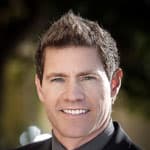
Dr. Todd C. Snyder received his doctorate in dental surgery at the University of California at Los Angeles School of Dentistry. Dr. Snyder has learned from and worked under some of the most sought after leaders in dentistry, refining his skills in comprehensive, extremely high quality aesthetic dentistry and full mouth rehabilitation. Furthermore he has trained at the prestigious F.A.C.E. institute for complex gnathological (functional) and temporomandibular joint disorders (TMD).
Dr. Snyder lectures both nationally and internationally on numerous aspects of dental materials, techniques, and equipment. Dr. Snyder has been on the faculty at U.C.L.A. in the Center for Esthetic Dentistry where he co-developed and co-directed the first and only comprehensive 2-year postgraduate program in aesthetic and contemporary restorative dentistry. He currently is on the faculty at Esthetic Professionals. Additionally, Dr. Snyder is a consultant for numerous dental manufacturing companies and has had the opportunity to research and recommend changes for many of the materials now being used in dentistry. Dr. Snyder has authored numerous articles in dental publications and published a book on contemporary restorative and cosmetic dentistry.
Dr. Snyder also founded and is CEO of Miles To Smiles a non-profit mobile children's charity that helps indigent and underprivileged children.
Dental podcast: Welcome to DentalTalk. I'm Dr. Phil Klein. Today we'll be discussing the question many dentists are asking, "when do I use an adhesive cement and when do I use a so-called bioactive cement? Our guest is Dr. Todd Snyder, a popular speaker on Viva Learning.com, a cosmetic dentist, author, international lecturer, researcher and instructor at various teaching facilities. Dr. Snyder is a consultant for numerous dental manufacturing companies and has had the opportunity to research and recommend changes for many of the materials now being used in dentistry. You can reach Dr. Snyder at: www.legion.dentist.
Transcript
Read Full Transcript
This transcript was automatically generated and may contain errors or inaccuracies. It is provided for reference and accessibility purposes and may not represent the exact words spoken.
You're listening to The Dr. Phil Klein Dental Podcast from Viva Learning.com.
Welcome to the show. I'm Dr. Phil Klein. Today we'll be discussing the question many dentists
are asking. When do I use an adhesive cement and when do I use a so-called bioactive cement?
Our guest is Dr. Todd Snyder, a popular speaker on VivaLearning.com, a cosmetic dentist,
author, international lecturer, researcher and instructor at various teaching facilities. Dr.
Snyder is a consultant for numerous dental manufacturing companies and has had the opportunity to
research and recommend changes for many of the materials now being used in dentistry. You can reach
Dr. Snyder at www.legion.dentist. Before we get started,
I do want to mention that Dr. Snyder has an excellent webinar on vivalearning.com titled
Fundamentals to Delivering Indirect Ceramic Restorations. Simply go to VivaLearning.com,
type in the search box Snyder, S-N-Y-D-E-R, and you'll find that webinar.
Dr. Snyder, it's a pleasure to have you back on Dental Talk. Thanks so much, Bill. In the old days,
you know, Dr. Snyder, we pretty much had one choice, right? At least when I went to dental school,
it was zinc phosphate. And by the way, that cemented very well for us for years and years. I
remember I had to replace a crown in dental school that went in with zinc phosphate. to get that
thing off was a nightmare, right? You think you're going to literally extract the tooth. So there
was definite benefits to that cement and it wasn't sensitive to moisture. It just worked.
But now we have very highly sophisticated chemistry in our cements. Now the question is, as
clinicians, how do we choose the right cement? You know, it's a great question. We can go for hours
on this. And, you know, first thing I look at is obviously the preparation design. You need to have
a good preparation design, I think, regardless of whatever type of cement you're using. You want to
have mechanical retention. You want to have resistance form. You want to have a good axial wall
taper of six degrees, roughly.
Because at the end of the day, it doesn't matter what cement you use, all cements will break down
and fail with time. And so knowing that things can break down and fail with time, it's a good
testament to zinc phosphate, knowing how weak it was and how poor it was. And yet it did phenomenal
because we had so much good preparation design and things adapted well. Versus nowadays,
there's a lot of talk of, well, you can just glue anything together. You can, but eventually that
cement will fail and it may fail sooner if you don't have that mechanical retention form. So I
always still like to build in those traditional, you know, kind of retention forms into my systems.
Now, that being said. You start looking at isolation and the tooth structure you're working on. If
you can't isolate an area, well, then it's pretty tough to use an adhesive cement because the
resin's not liking moisture. So you're going to have to move to some other type of cement that does
like moisture or is made mostly of water. So I think the isolation, the preparation design,
and the type of tooth structure you're on. Like obviously, if you're on enamel, you know, the
traditional cements might not work as well if you don't have good retention. So maybe now you're
looking at adhesive where you couldn't build in retention. So in case of like a veneer. So I think
you're looking at those three things as dictating which one I'm going to implement. So why not use
the best and most retentive cement on everything, regardless of the preparation,
assuming that the clinician is attempting to prepare the tooth in the most ideal way with what is
available? Yeah, I love that question. And so here's how I approach it. I see the tooth.
I look at everyone as though it's my own daughter or wife or whomever and say, OK, what would I do
for this case? For my daughter, if let's say she was getting a crown, I'm weighing the option of,
yes, I could use adhesive to glue something together. Like if I was trying to bond the cusp back on
or put a veneer on, yes, I would do adhesive. But I also look at the long term going, OK, well, if
I have good retention. and I'm not worried about having to utilize something that's adhesive. Now
I'm thinking like, okay, long-term, what can I put into the tooth from the cement that can
strengthen the tooth, can fight off potential bacteria acid attacks that might give this tooth
better longevity because of it having some great properties inside of it as compared to just being,
let's say, a super glue. Because super glue, it's called adhesive cements, they do absorb moisture
with time. And with that moisture, you can get bacteria and things. And as they break down, you may
get more caryogenic processes happening. So for a younger person trying to maintain that tooth for
the rest of their life, if I've got good retention, I'm going to go with more of like a bioactive
cement as opposed to a adhesive resin. So that's my philosophy. But I want to try and maintain
something longer by using a bioactive cement. In the case where retention is the issue and you are
lacking ideal retention, you'll sacrifice the bioactivity for adhesion because we need that crown
to stay in, right?
You definitely have to have both in my mind. You need the adhesive for those poorly retentive teeth
or where the tooth is just gone and you're trying to rebuild something by the patient a few years
extra maybe. Are you using bioactive cements for those cases where you do have internal retention
and what are you seeing with them if you are? Yeah, you know, it's funny, you know, depending on
how you want to describe that, it's kind of a buzzword nowadays, you know, bioactive cements, like,
well, heck, glass ionomers are bioactive. They've been around since, what, the 60s or 70s. They
keep getting better. But then you look at these newer cements, you know, like Theracal from Abisco.
Doxa Ceramira, all these different ones that are coming out, they have some phenomenal properties
as far as not causing histological change in pulpal tissues or gingival tissues,
their ability to release particles into the tooth to strengthen the tooth.
And again, when acid attacks, they actually somewhat release material to help neutralize pH.
I mean, phenomenal in what they can do that we really didn't have. bioactive cements like glass
honors that were this capable as we have now in modern materials just with technological
advancements and adhesive cements can't do that either so there's definitely a uniqueness that
where i think you need both based on what you have in front of you there are some naysayers right
now that say yeah i don't use bioactive cements they're just not strong enough they can't do the
job and i don't want to risk having a patient call me when they just went on vacation three weeks
after i cemented the crown in that destroys the relationship with the patient when that happens and
they don't want to take that chance because they don't think technologically we're there yet what's
your feeling on that well you know i get where their mindset's at that they don't want to have
failures in the cost of replacement and or the negativity the patient would have and obviously
that's why with anything you pick and choose where you use certain materials and there's a learning
curve with anything so if you're thinking that somehow a bioactive cement is going to glue
everything together you're mistaken I would use that where I would have used traditional glass on
or cement, or like you said, zinc phosphate for some of us to go back that far. That's where I
would utilize those materials. So again, it's where you place them. But then you also have to
follow the protocols that come with the manufacturer products such that if it says the tooth is
supposed to be moist and you desiccate it and try to glue something on, well, it's not going to
work. The tooth needed to be moist. So there is a huge learning curve there that if you're not
doing things properly, you may see more failure. Understand that there's phenomenal research behind
these and they can work extremely well, provided you're doing your part in following the
instructions, as well as putting on the right type of tooth preparation to make sure it works. So
there is a bit of an understanding there of how things are going to work together versus just
assuming it's going to glue everything together and save the day. So you brought in the retention
form or the prep form, which is an indication for which cement to use or criteria for which cement
to use. What about carries risk? That patient, you know, for a fact has mediocre oral hygiene at
best and that kind of thing. How does that affect this? cements. Definitely.
You know, and so again, that's one of the components, obviously, when you're looking at someone,
you know, can you isolate something, but also if I'm not, whether I can or can't isolate something,
the next thing goes, all right, well, if this person's got a bunch of caries in their mouth, then I
want to give them some added benefit that a traditional resin won't give them. So if I have a
traditional crown preparation, yeah, I'm going to use a bioactive cement. Now, if you said the
person had ground all their teeth down and they're broken, they look like Swiss cheese. Well,
there's not much to hang your hat on at that point. I'm going for some strength at this point. So
now I'm going to say, all right, well, I'll go back to my adhesives and adhere everything together,
hoping to save the tooth long term, as opposed to worrying about a little karyogenic aspect.
But if the tooth is broken and destroyed because it wasn't held together well enough, well, then
they don't get to keep the tooth. So you've got to weigh the tooth. So in that case, I'd say
karyogenic, but good tooth structure. Yeah, I'm going for the bioactive. Not much tooth there.
I've got to really bond something in to try and scaffold this ceramic off what's remaining of tooth
structure. Then, yeah, you're going to have to use adhesive. In your office, could you give us some
examples of some of the things you're using? I'm always trying everything. But, you know, again,
throw all the trying out from everything I've played with. As far as the bioactive ones,
I really love the TheraCal or TheraSem, I should say, that's offshoot from the TheraCal product.
But this goes TheraSem. I've also used... Dr. Ceramere. And so those are the bioactives that I use
on a regular basis, where I had been using, let's say, glass sonobers for many years. If you're
talking about adhesives, we talked in a previous podcast where I was talking about Visco's Albon
Universal is my go-to for my direct and indirect restorations. And therefore, they have both a
light-cured and dual-cured resin system that I can use for my inlays, onlays, crowns,
veneers. So I have pretty much a simplified system for everything I do based on their product
lines. yeah now you mentioned theracal that's more of a liner material right would that be used uh
yeah yeah tell us about theracal it's been around around longer than the therasymp so theracal is a
trisilicate product basically if you think of like a pulpo lining product like if you think of the
old like dicat which dicat is totally different we're talking apples to tomatoes but uh so the
theracal is very unique in its ability obviously to help the tooth mend itself where you have close
and you're worried about maybe sensitivity or you're worried about root canals, et cetera, this
would go down first underneath your direct or indirect restorations. Obviously the offshoot of that
great product is the TheraSem product where you now have a cement to loot on your crowns basically
with the similar type of chemistry to give you that same benefit of helping the tooth as far as its
physical form, fighting off cavities and minimizing damage over time.
So the Theracal would go down first, and then you would use your universal bonding agent? Yeah,
yeah. So basically, just like you would with, you know, like a traditional pulpal liner. It is a
very thin, you know, half a millimeter kind of line over the pulpal area or indirect exposure.
After having placed that, then you're going to place your bonding agent over the top of it to seal
it into place, and then you can go ahead and scaffold from there your flowable, your composite, et
cetera. Yeah, and that's an example of staying within a system that we talked about in previous
podcasts. That's kind of advanced chemistry technology where you feel more comfortable staying
within a system to achieve those kinds of clinical, predictable outcomes. Definitely, yeah, because
some of the systems nowadays are so unique that you want to stay within their similar chemistry
because we've actually shown in bond tests that certain products just do not work with other
competitive products. And also, if you have a potential problem and you're using a system that has
materials made from the same manufacturer, It's easier, I think, to troubleshoot because you can go
back to that manufacturer and they'll say, what did you use? What were the steps? And then they'll
say, in this particular step, did you rub it in for 20 seconds or did you desiccate the dent in?
How long did you leave it on before you did the next step? But if you're mixing and matching,
they're kind of like, well, I don't know what to tell you. That's what you put on after that. You
know, that's not ours. So we can't help you there. i don't know is that is that true or i'm just
kind of making to some extent and i hate to speak on behalf of the company because you know a lot
of times the companies have tried their stuff with other brands and recognize that certain things
just don't work with theirs so they may be able to tell someone at least um you know like hey you
use brand x with ours yeah that you're going to have a very poor adhesive interface and you're
probably going to find more failures or sensitivity etc right i think Most companies have tested
various things, but I don't know if they could say every product, obviously, whether it works for
them or not. I'd leave that up to each company. Right. But using a universal bonding agent, though,
for direct restorations, you're okay with using various composites on top of that?
Oh, definitely. Yeah, yeah. No, that's fine. You don't have a problem with that. It's really the
only time you have a problem is when you're moving into dual-cure products. So you're looking at
certain core materials or you're looking at dual-cure resin cements. That's when you start having
chemistry problems. Appreciate it very much, Dr. Snyder, and we look forward to you on your next
podcast. Thanks, Phil. Appreciate it.