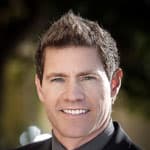
Dr. Todd C. Snyder received his doctorate in dental surgery at the University of California at Los Angeles School of Dentistry. Dr. Snyder has learned from and worked under some of the most sought after leaders in dentistry, refining his skills in comprehensive, extremely high quality aesthetic dentistry and full mouth rehabilitation. Furthermore he has trained at the prestigious F.A.C.E. institute for complex gnathological (functional) and temporomandibular joint disorders (TMD).
Dr. Snyder lectures both nationally and internationally on numerous aspects of dental materials, techniques, and equipment. Dr. Snyder has been on the faculty at U.C.L.A. in the Center for Esthetic Dentistry where he co-developed and co-directed the first and only comprehensive 2-year postgraduate program in aesthetic and contemporary restorative dentistry. He currently is on the faculty at Esthetic Professionals. Additionally, Dr. Snyder is a consultant for numerous dental manufacturing companies and has had the opportunity to research and recommend changes for many of the materials now being used in dentistry. Dr. Snyder has authored numerous articles in dental publications and published a book on contemporary restorative and cosmetic dentistry.
Dr. Snyder also founded and is CEO of Miles To Smiles a non-profit mobile children's charity that helps indigent and underprivileged children.
Dental podcast: Welcome to DentalTalk. I'm Dr. Phil Klein. Today we'll be discussing the recipe for achieving success in our dental practices. Our guest is Dr. Todd Snyder, a popular speaker on Viva Learning.com, a cosmetic dentist, author, international lecturer, researcher and instructor at various teaching facilities. Dr. Snyder is a consultant for numerous dental manufacturing companies and has had the opportunity to research and recommend changes for many of the materials now being used in dentistry. You can reach Dr. Snyder at: www.legion.dentist.
Transcript
Read Full Transcript
This transcript was automatically generated and may contain errors or inaccuracies. It is provided for reference and accessibility purposes and may not represent the exact words spoken.
You're listening to The Dr. Phil Klein Dental Podcast from Viva Learning.com.
Welcome to the show. I'm Dr. Phil Klein. Today we'll be discussing the recipe for achieving
success in our dental practices. Our guest is Dr. Todd Snyder, a popular speaker on VivaLearning
.com, a cosmetic dentist, author, international lecturer, researcher,
and instructor at various teaching facilities. Dr. Snyder is a consultant for numerous dental
manufacturing companies. and has had the opportunity to research and recommend changes for many of
the materials now being used in dentistry. You can reach Dr. Snyder at www.legion.dentist.
Before we get started, I'd like to thank our sponsor, Saikan. a world-renowned company that
provides a complete range of infection control solutions for dental practices. So if you're looking
for equipment or products in the area of infection control, look no further than Sycan, known as
the maker of the statum cassette autoclave, the fastest cassette autoclave out there for sure.
Sycan offers cutting-edge solutions for efficiently washing, disinfecting, and sterilizing dental
instruments. Really phenomenal company. Great products. You'll see it at the dental shows or
showrooms and so forth. Super cutting edge stuff. They make any stereocenter stand out.
So we thank SICAN for their support for this podcast series with Dr. Snyder. Dr.
Snyder, it's a pleasure to have you on Dental Talk. Thanks for having me, Phil. Always a pleasure.
Yeah. So your other podcasts have been doing phenomenally well on Viva Learning. We really
appreciate all the insight you've given us through those podcasts. And I know you have a podcast
program of your own. How is that going? You know, it's been a lot of fun. We've got a lot of
downloads and I've got a lot of great compliments and feedback, so I'm enjoying it. What is the
name of that podcast program? Delusional. Delusional. What does that mean as far as what the topics
are? Well, I think a lot of times in dentistry and just life, many of us are delusional in things
that we approach and what we do. And so basically, I pigeonhole this just for dentists and saying,
how do we win the weekly war of dealing with patients, employees, and insurance companies? And so
we're... Where we're delusional, think we can't do something or it's not possible, we talk about
all the problems and things in dentistry that we can actually improve upon, but most of the time we
fail to do so. So it's kind of a reality check. Yeah. A lot of limitations we put on ourselves,
everyone else has the same limitation we believe, and yet there's many of us out there that don't
have limitations that others do. So yes, it's bringing to light many of the problems. as well as
showing people how they can accelerate their career and do better by many of us that have already
been through things. We can show them how to get over hurdles faster. We're looking forward to
hearing more about that podcast, and I've listened to a couple of episodes, really enjoyed them,
and I wish you the best of luck. Keep us informed on how that's going. So my first question could
theoretically, Dr. Snyder, take you a full day to answer. It's a question that you can go on and on
about, but because you're... of those that loves challenges, and that includes being a race car
driver. I'm hoping you can answer this question within the timeframe of this podcast. So here we
go. What is the recipe for a successful dental practice? You know, it is a long-winded answer,
right? So I'm going to simplify it for you. We call it the trifecta inside of Legion. So it's ACD.
What it means is attract, convert, and deliver. If you can learn how to attract customers to your
business, regardless of what type of business you're in, obviously we're dentists here, but if you
can attract the people that you want, and then once they get there, if you and your staff can
convert them to stay and move forward with treatment, then you get to deliver. And that's when you
get paid. So attract, convert, deliver. So the goal, of course, would be to execute those three
components and we'll be on the path to a successful dental practice. That's impressive because you
did that in a little over 30 seconds. So let me ask you this, Dr. Snyder, as a practice owner,
should we be on a mission to be an expert at all aspects of dentistry? You know, that's up to each
individual person. But if you look at most companies that are successful, they offer one thing.
And that one thing they offer is in all their advertising and marketing is what draws people in.
Now, it doesn't mean they can't sell other items or do other things. They certainly can. But, you
know, you look at like UPS, they do shipping. You look at Amazon, you'd say, wait a minute, they
sell all kinds of stuff. no they don't they sell one thing they sell the luxury of you being able
to get whatever you want in one place and they get it to you quickly right you look at like pepsi
the main thing they sell is pepsi cola but they also have subsidiary colas they sell but the one
main thing that you see in all their advertising is their product not all the subsidiaries so in
dentistry it's kind of similar in that you could say well if you're selling one thing like an
endodontist or oral surgeon or orthodontist we know that specialists make more money Because they
do one thing and they do it well. As general dentists, we try out very often to do everything. And
it's hard for us to do everything well, right? We just can't be specialized at each one of them. So
we're offering everything. And so a patient doesn't really perceive us as being different because
we offer everything the same as everyone else. I would say if you could market one thing.
Even though you do everything else as a general dentist, you might find you get more people to come
in for that one thing and you become more lucrative. And that goes back to the Pareto Principle 80
-20 rule. Figure out what the one thing is you like to do and market that one thing. Yeah, so that
leads into my next question about marketing. I'd like to have your thoughts about marketing and
what should a dental practice be thinking about and doing when it comes to marketing their
practice. And if you could attack that question from what stage that particular practice is in.
They're fresh out of dental school. And then you get the next level where they work with an
associate for a while. They decided to move on to their own practice and so forth. So the strategy
is probably a little bit different, right? Depending on where you are in your career. Yeah, you're
definitely correct. And I was just having a conversation the other day with a potential associate
that, you know, he's young and out of school and he's got a little bit of money, but he doesn't
want to spend a lot of money either, right? So I told him, well, look, I was in the same position
as you when I opened my office from scratch. I didn't have the money to spend. So what do you have
to do? Well, you've got to take some kind of guerrilla tactics, as I would call it. You've got to
go out and meet people, hand out business cards, kiss babies kind of thing. You've got to go out
and meet people. So where do you go to meet people? Well, you go to the places where you're trying
to find the people you want. So if you want people that shop at Nordstrom's or Mercedes or at the
country club, you need to go to those places. So you really have to decide. who your customer's
going to be early on and figure out how you can get in front of them. Me personally, I went to like
the Kiwanis, the Rotary Club, Chamber of Commerce. I went to these different types of places where
they gave you a podium to speak for free. And so in doing so, I've got a captive audience for 15
minutes to half an hour that instantly I'm gonna drag 40, 50% of those patients up to the
microphone by the time I get done. They're gonna ask me questions about, hey, can I come see you or
tell me more about this procedure? And so that's how I found patience, was literally going out and
talking. Now, obviously, the number one fear in life is public speaking. Number two is death. So
obviously, I've got my priorities backwards. But I wasn't always, you know, happy to speak in front
of our audiences and whatnot. That came with time and effort. So I would tell you that's the first
thing. Now, if you're later in your career, okay, you've got more patience. You don't have time to
be outside talking to people as much. So now you're looking at different avenues. And with the
ability for the Internet to give you just a ton of places to market. you can actually pinpoint who
you want on the internet or in the world as far as putting marketing in front of certain people.
And so whether you're in the middle of your career or the end of your career, you can pinpoint
exactly who you want to be coming to your practice nowadays in your marketing efforts. So that's
kind of how I discern between the two, whether you're earlier or later. Now, do you need someone
specific in your practice that helps you market? I can't see with the schedule of a typical dentist
who's got a lot going on to be really proficient at their own marketing program.
Well, and I agree, most dentists are not, and they usually outsource it, whether you work for it.
DSO and the DSO manages everything, or whether you're a private practitioner and you, you know,
give it to a dental marketing company, or whether you're someone like me that you go, okay, I want
to see less patients. But by seeing less patients, I'm offering more, you know, high value
procedures that, you know, maybe take less of my day. And so I have more time to go and work on my
own marketing, as well as hiring specific companies to do things for me. So as far as, you know,
depending on what type of business model you have or systems in place. You have to decide if you're
going to be doing the marketing or someone else. I would say the majority of dentists let someone
else. But then when you do, usually I think you get less than desirable results. And I think most
dentists agree. Do you think word of mouth is still the number one driver to fill the patient
chairs over time? I think that most dentists, once they get to a certain comfort level where
they're making a certain amount of money, that's where they just kind of rely to some extent on
word of mouth and maybe do a little bit of marketing. versus I, for me personally, I don't want to
rely just on word of mouth, hoping someone's going to talk about me. I want to actually spend some
money to get, you know, a four or five, 10 times return on my money. And so I want to see more
patients in less time. And to do so, I've got to spend some money on my marketing. I find I get a
huge return by marketing and most dentists won't market the way I do. So it becomes very easy to
shoot fish in a barrel. Here in Austin, Texas, I get cards in the mail, which is kind of archaic
and it will have. the picture of the dentist and maybe it has the picture of the facility uh an
operatory whatever and it says they're using the latest equipment and they do the greatest
procedures is that still something that you recommend to do male marketing Depending on the message
of your marketing, that's going to drive a certain type of patient. Now, a lot of times in that
marketing, if you say it's technology-based, okay, so you're going for someone that wants new
technology. A lot of those have usually a fee on it, and so you're going for someone who wants a
less expensive type of thing or an inexpensive lead-in. So you're getting a certain type of
patient with that mindset. That can work in certain geographic areas or certain cities, towns,
but recognize the type of patient you're potentially getting from that. And if you try it once and
you find that the, you know, call it the analytics, the results that come from it, if they're not
desirable, if you're looking at it, then maybe you need to look at something else as far as a
better return on investment. Me personally, I wouldn't be investing in something like that because
it's far easier to spend money to literally target someone, like I said earlier, on the internet or
through their cell phone, through geotagging or display ads, things that are very inexpensive. They
get put right in front of the type of customer I want as opposed to just. throwing things out in
the world by mailers and hoping someone calls me for an inexpensive lead. No, that makes a lot of
sense. So I'm going to throw a few words at you in the final minutes of this podcast and tell us
what first comes into your mind as it relates to our dental practices. So the first word is profit.
Platinum offer. Platinum offer. Platinum offer. Find the one procedure that you like to do most in
your career. that pays you the most and has the lowest overhead or the biggest result,
whatever it is, or the least amount of insurance write-off, whatever it is, you want to market to
those people. You want those to come in. The big cases that you really would like, market to those
because you only need a couple of those each month to be profitable. So when I think of profit, I
think of how many big cases do I need a month? I need two and I'm profitable. Okay. Expenses.
Employees. Your number one expenditure is typically employees. Most offices.
If you look at your employees, I would say there's probably someone that's not pulling their weight
that either needs a career opportunity or a discussion, or you might find that other employees can
step up and fulfill the role of someone that's not doing as well as you'd like. And by doing so,
you instantly cut some of your overhead out. Now, in addition, 98% offices don't train their
staff. So what's your biggest liability? The ones that aren't trained in doing their job well. So
either invest in training them. or start to figure out who's your A players and get them to play a
little bit higher and take on the role of others and or remove people that are not playing at the
right level. Yeah, and before I get to the last word, which I'll give you in a second, in your
training program, Legion.Dentist, do you train only dentists or could a dentist refer their staff
to you for help? I'm typically talking to the dentist because they're the ones overseeing
everything. They're kind of the leader of their office. And so what I would like them to do is
learn the concepts and then disseminate and train their staff accordingly, because every office can
be slightly different. And so my training doesn't spell out like you have to do this, that and the
next thing. It's like, OK, here's basically the concepts that work. Now, being that your business
is slightly different, take the concepts and now apply it to your business. If you want to have
your employees watch your programs inside my group, go right ahead. But we don't really have them
coming into the actual. discussions, we're going to let that kind of, since everyone's different,
be handled by each individual dentist in their office. And do you think training staff helps reduce
turnover and the employee is happier and more satisfied with their career at the office?
Or do you think too much training is kind of burdensome to the employee and they kind of think, I
already know this. I went to school. I get how this practice works. You're kind of hitting me with
training all the time. What's your feeling on that? Two things. I think you hit it on the head in
the beginning that research actually proves that the more training that an employee has had,
the better they perform, the less turnover, the less problems, the more happiness you have in your
office, which they've shown again through research. But for the same token, you may say, well, OK,
I already trained on that. Well, I can tell you any one of us. could go through training on the
same subject over and over and usually find a pearl in there. Hence, we all go to continuing
education programs and usually find a pearl. So I think constant training is a good thing because
you can always learn and perform at a different level if you're trying. If you're not, you're just
comfortable and staying where you're at. Right. And we forget things. If we don't use things we've
been trained to do, we forget them. So additional training or a little redundant training isn't the
end of the world. What do you recommend to a dentist to do to make sure their staff... gets not
only regular training, but quality training. Well, there's a number of different ways. Obviously, I
think you need to make time in your schedule where a lot of dentists are like, well, wait, I don't
make money when I do that. You'll make more money if you take the time to train them and educate
them on how you want things to work. That's been proven many times for Medicare, Medicaid,
HMO offices, PPO offices in private. Anyone that's come through my program will tell you the same,
but it's not common sense to most of us as dentists. Like, no, no, I need to be behind the chair. I
need to be producing and making money. Okay, so last word. We'll wrap this podcast up. Write-offs.
Insurance. So I was talking to a dentist last week. I consult dentists every week,
basically. And so he was doing $3 million. And I said, wow, that's impressive. And I said, so did
you write off a million? He says, yeah. And I said, how did that feel? He said, it hurt. Imagine
how hard he had to work to make that much money just to have a million dollars wiped clean off the
plate from the insurance companies. And I said, so again, Pareto principle, if we wiped out the
insurance patients or some of the insurance patients, and maybe some people left because you were
no longer accepting their insurance or whatnot, do you think you'd make the same amount of money or
less, possibly more? And he's like, well, I don't know. And so obviously fear steps into our mind.
We get scared. And I said, well, I can tell you as an out-of-network provider, I get paid better
by every insurance company. I don't have a problem. And I've been doing it for 22 years and I'm in
a busy area with a lot of other dentists that are in network. And so again, that fear holds us
back. But I told him, I said, I guarantee you'll make more than 2 million and not have it to write
it off. I said, so the question becomes, is it really close to 2 million still, just like it was,
or does it get to 2.5 or is it 2.8? What is that number? You'll never know until you try.
So you can either sit there and be comfortable and write it off or move forward and do something.
These are write-offs that you're talking about in this particular example. of money that's not
collected for services rendered. So you have your UCR fee and then you have your insurance benefit
plan fees that you've been contracted. And so when you look at the amount that you've written off
there, that's a fair amount. And so most offices that I talk to,
usually it's about a third. That's a lot of time, effort, money, overhead, et cetera. And so
instantly, if you add some of that money back in, you can imagine how profitable you could be just
by adding a hundred or 200,000 back in that you would have written off that goes right in your
pocket. So the argument is, though, from the dentist who's doing this, is that I would not normally
have gotten these patients into the office unless I accepted those plans at that fee. I would lose
all that. I would lose all that business. Yeah, that's their assumption, where oftentimes we're
delusional to think that, oh, the patient wouldn't come to us if I wasn't on that plan. So you
think somehow my office is different, that they will come to me because I'm not on their plan?
Because everyone asks me the same question when they call them, that they call to any office. Do
you take my insurance? It's at that point, I better have good education and good systems in place
for my employees to be able to talk to them in a way that they understand why coming to my office
and still getting to use their benefits, but not being contracted in network is a benefit to them.
That approach where you're willing to take that chance to some extent, where you may not get that
patient, even though with your techniques and strategy, most of the time you will. um that's kind
of a mindset right with their training and say this is the approach this is the strategy we're
going to lose some patients but in the long run according to you that office will come out ahead if
you have the right systems in place and everyone's been trained if you're trying to do the same
thing you've always done when you were on insurance and now you're out of the insurance you may
have some problems right Exactly. Okay. Well, that's great stuff. As usual, Dr. Snyder, we love
having you on the show. Thank you very much. And in closing, I'd like to thank our sponsor, Sycan,
a world leader in infection control products and equipment. Dr. Snyder, thank you so much for
joining us. Thank you, Phil.