New York University Dental School · Harlem Hospital, Columbia College of Physicians and Surgeons · Oral Surgical Institute Nashville
Read full bio
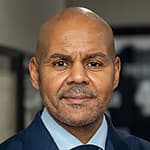
Dr. Martin migrated to New York and studied biological sciences at the University of Maryland. He was elected Omicron Kappa Epsilon at New York University Dental School and graduated with full honors in Oral Surgery. Dr. Martin Completed residency at Harlem Hospital, Columbia College of Physicians and Surgeons, appointed chief and completed one-year Fellowship in Nashville at the Oral Surgical Institute. Since 2002 he has been practicing in Lewisville Texas as a solo practitioner and developed more than 20 dental instruments.
Are you still planning restorative cases by focusing primarily on individual teeth, or have you started thinking about the entire face? This fundamental shift from tooth-centered to facial-driven treatment planning represents one of the most significant changes happening in modern dentistry.
Dr. Richard Martin brings over two decades of clinical experience as an oral surgeon practicing in Lewisville, Texas since 2002. A graduate of New York University Dental School where he was elected to Omicron Kappa Epsilon and graduated with full honors in Oral Surgery, Dr. Martin completed his residency at Harlem Hospital, Columbia College of Physicians and Surgeons, where he was appointed chief resident. He furthered his training with a one-year Fellowship at the Oral Surgical Institute in Nashville. Beyond his clinical expertise, Dr. Martin is an innovator who has developed more than 20 dental instruments throughout his career.
This episode explores the revolutionary integration of 3D facial scanning technology with traditional digital workflows, demonstrating how facial scanners are transforming treatment planning from a tooth-centered approach to a comprehensive facial-driven methodology. Dr. Martin discusses how these technologies create virtual patients by merging facial scans with CBCT data and intraoral scans, fundamentally changing how dental teams approach interdisciplinary care. The conversation covers practical implementation strategies, laboratory integration, and the clinical impact on case acceptance and treatment outcomes.
Episode Highlights:
Facial scanning technology allows practitioners to capture multiple facial positions including rest, natural smile, and full retraction, providing comprehensive data sets that merge seamlessly with CBCT and intraoral scan data to create complete virtual patient avatars. This integration enables treatment planning that considers facial proportions, midlines, and anatomical relationships beyond just dental structures.
The jaw tracking feature available with certain facial scanners significantly reduces chairside adjustment time for prosthetic deliveries by capturing patient-specific movement patterns and parafunctional habits. This technology allows laboratories to fabricate restorations that require minimal occlusal adjustments, particularly beneficial for patients who are sensitive to bite discrepancies.
Intraoral photogrammetry built into modern scanners eliminates the stitching errors commonly encountered when scanning multiple implants, providing accuracy comparable to extraoral photogrammetry systems but at a fraction of the cost. This technology captures implant positions and surrounding soft tissues in a single workflow without requiring multiple file transfers.
Full arch cases, particularly those involving complete vertical collapse or edentulous situations, benefit most significantly from facial scanning technology as it provides critical reference points for establishing proper vertical dimension and facial support. The technology is equally valuable for extensive tooth-borne restorations involving multiple units in the aesthetic zone.
Successful digital workflow implementation requires comprehensive education through study clubs and online resources, close collaboration with digitally integrated laboratories, and mentorship from experienced practitioners. The transition should include maintaining analog knowledge as a foundation while gradually adopting digital technologies based on practice needs and case complexity.
Perfect for: General dentists, oral surgeons, prosthodontists, and laboratory technicians interested in integrating facial scanning technology into interdisciplinary treatment planning workflows.
Discover how facial-driven treatment planning is reshaping modern restorative dentistry and learn practical strategies for implementing these game-changing technologies in your practice.
Transcript
Read Full Transcript
This transcript was automatically generated and may contain errors or inaccuracies. It is provided for reference and accessibility purposes and may not represent the exact words spoken.
When you're facial scanning, the patient can actually watch it build on the screen,
depending on, you know, the type of facial scanner. With the MediSmile, there's several ways that
you can utilize it. You can have the patient sit in front of the scanner and you can move around
them, but they're still looking at the screen as it's literally building their face.
And the wow factor is quite amazing. Welcome to Austin,
Texas, and welcome to the Phil Klein Dental Podcast. So here's a question to think about. When
you're planning a restorative case, are you still thinking primarily in terms of teeth? Or are you
starting to think about the entire face? Because that shift from a tooth-centered mindset to a
facial-driven approach might be one of the biggest changes happening in dentistry right now.
Today, I'm joined by Dr. Richard Martin. He's a practicing oral surgeon in Louisville, Texas since
2002, and he's also an innovator, having developed more than 20 dental instruments.
Dr. Martin and I will be discussing newer technologies like the 3D facial scanner and an intraoral
scanner that has built-in photogrammetry. We'll talk about how the general dentist, specialist,
and laboratory collaborate. to bring all this data together into a single platform,
essentially creating the virtual patient. This is certainly a fascinating forward-looking
conversation with someone who's not just using the technology, but helping shape where it's going.
Before we bring in our guest, I do want to say that if you're enjoying these episodes and want to
support the show, please follow us on Apple Podcasts or Spotify. You'll be the first to know about
our new releases, and our entire production team will really appreciate it. Dr. Martin,
it's a pleasure to have you on the show. Hi, Dr. Klein. Thank you. It's quite an honor to be
invited to speak on such a widespread and well-followed podcast. So thank you for the opportunity.
I appreciate the kind words. And it's really been a privilege and honor for me to see the... grow
as fast as it has. And it's obviously due to the great guests that we're honored to have on a
regular basis to share their expertise with our large audience. So it works both ways. Thank you
very much for being on. To start this episode, let me ask you this. Dentists that primarily do
restorative work often think in terms of individual teeth or a group of teeth,
like the aesthetic zone, for instance. And typically, they're using photos, 2D photos.
They're using intraoral scans. Maybe some of them are using CBCT, but they primarily focus on a
tooth-centered approach. But with the addition of the facial scanner, which we're going to
highlight today, among other things, when you start adding that into the digital stack, there seems
to be a fundamental shift from the teeth mindset to more of a facial-driven approach.
And we've talked offline, Dr. Martin, and I've heard you use the term facial-driven approach.
So what are your thoughts on that as far as what the newer facial scanners are doing to the
profession when it comes to restorative dentistry? Great question, Dr. Klein.
How we treat the face and the move from the single unit to looking at the mouth as a complete
whole, looking at it as facially driven. And when we say facially driven, we're looking at the
position of the eyes, the position of the nose, the position of the ears, the midline. So we're not
just looking at the teeth and the lips. It becomes an entire unit.
When we look at facial scanning, it's nothing new, but it's an evolution. It's like the iPhone.
You know, we had early models of facial scanners where, you know, they weren't as accurate. But as
the industry has improved, they've gotten a little bit smarter, smarter engineers being able to
say, hey, you know, we need to be able to better capture the teeth. So now we have facial scanners
that, yes, we can capture the face. It looks real. We're able to merge the data files,
but they're more. accurate. So they're evolving. And when, you know, you use an important word, you
said data stack. Now, when we look at a facial scanner,
we're able to use a cone beam scan to merge along with it. We're able to use the intraoral scan.
And this is a very powerful, very powerful tool because we're able to make an avatar of the
patient. And so we can have the patient right in front of us. in reality, rather than spending
endless hours in the office. And I think now when we look at interdisciplinary treatment,
I think a facial scanner is a very good adjunctive tool that we're able to utilize.
Talk about the patient reaction, the patient experience when they first see a 3D face scan.
What kind of reactions do you see and how does that change the treatment conversation? Another
great question. It's a wow factor because, you know, we take photos of a patient and we turn our
phone around, we turn our camera around, we show it to the patient. When you're facial scanning,
the patient can actually watch it build on the screen, depending on, you know,
the type of facial scanner. With the MediSmile, there's several ways that you can utilize it. You
can have the patient sit in front of the scanner and you can move around them. But they're still
looking at the screen as it's literally building their face. Or they can rotate back and forth to
capture. But again, they're able to see their image actually being built on the screen.
And the wow factor is quite amazing. The beautiful thing about facial scanning also is that you can
scan. over and over again or capture over and over again. And you can do it with their face at
rest. You can do it with their smile. So it's a very powerful tool for the patient to actually see.
And I think, in my humble opinion, it shows the patient that they believe in you. They believe that
you're invested. in their care, because one of the questions that I do get is, wow, Dr. Martin,
that's a pretty expensive piece of equipment that you're helping to assess my treatment with or
build my treatment plan with. Wow, you know, we really appreciate that. Yeah, there's no question
it's a practice builder, and it's certainly a wow factor. You know, it's interesting, though, you
mentioned Metasmile 3D. Now, that has a component to it that is very helpful to dentists all the
way through dentistry. I'm talking about even... tooth crowns, this would help. And that's the jaw
tracking feature. Now I know that's an add-on to the Metasmile 3D face scanner, but what I'm
hearing from other dentists that are using it is that the time they save in the adjustment of a
prosthesis, once they deliver it into the mouth, almost goes to nothing. Once they get that jaw
tracking thing dialed in, they don't need the articulator anymore and the transfer bow and all that
stuff we learned in dental school. At least I did in my day. You're younger than I am. Not by much.
Not by much. Okay. You look younger. You look a lot younger than I am. But the point is, it's like
you're getting these restorations back from the lab. using that draw tracking feature. And I want
you to tell us about that too, before we proceed, because that is something that is quite unusual
to attach to a facial scanner. I don't know if anything else is out there. So talk to us about
that. You know, the draw tracking feature, what it does, it allows you to, like you said, the
beautiful word, dial in the occlusion, dial in the patient's movements. And,
you know, we all know that patients, certain patients may have parafunctional habits that,
you know, if you just... a model in your hand and put it in occlusion and manipulate it, you know,
you're not going to capture those intricacies that you're able to with a jaw tracker.
So that is a really... very nice tool. And again, you know, it allows you to see the patient's
movements without the patient physically being there. So I think, again, that's an area in
restorative dentistry that continues to grow. And we're looking at the importance of it. You know,
Dr. Klein, we have many patients that they can tolerate anything in their mouths. You know, we put
a crown in, we put a bridge in, and they seem to tolerate it.
quite nicely but then we have that population of patients where they can tell you the lower right
lingual cusp i feel it you know slightly and and and and you're killing yourself trying to make
that adjustment and they tell you they see it but you can't so that's where the digital technology
the jaw tracking all comes into into into play i think it allows us to to fine tune um you know,
some of the areas that we had difficulties with before. Now, again, you have to be able to
understand the technology. You have to know what you're looking for. I've always felt that
technology is beautiful. And, you know, Dr. Christian Coachman says that I'm probably going to
butcher the line a little bit, but he has a line that says, you know, like digital technology will
not make you a better dentist, but it will make a... dentist maybe even better because they
recognize that the technology can help them and that they can utilize it but christian's probably
going to be you know when he hears this he's going to be what did you you know you butchered up but
you get you get my gist you know digital dentistry is is not going to take you from uh it's not
going to make you a superstar unless you understand you know what you're what you're looking for
yeah i mean it's it's like flying an f-35 fighter jet i mean It has a lot of technology in there,
but there are better pilots.
You can be a good pilot, but the great pilots are going to be able to take advantage of the
technology a lot better. And I'm only using that example now because of what's going on in the
world these days. Right, right. But what's interesting, what you said about the jaw tracking
software and technology is that you don't need it for every case. In fact,
many of the... dentists and aesthetic dentists that I talked to that do have it,
you know, the basic simple single crowns and veneers, they're not going to go through that
necessarily. But when they get that patient, like you mentioned, who is particularly sensitive to
where their bite is and their chewing capability. In fact, one patient told a dentist that was
using this salt, that actually didn't use it at that time, said to the dentist, my teeth look
great. but I just can't chew as well as I did before you restored my mouth. And when he started
using the jaw tracking software with MetaSmile 3D face scanner, he didn't have that problem
anymore. I mean, literally, these restorations came back and he barely touched them. So that's
something that dentists should consider. So let me ask you this. Can you walk us through how you
integrate facial scans with intraoral scans and CBCT to build a complete treatment plan?
And again, you talked about the avatar. Talk to us about how the dental lab plays in all of this
too. So what happens, Dr. Klein, is once you come in,
meet the patient, decide on what the treatment is and how we're going to move forward,
you have your data set. You have your digital files. And so you have a 3D facial scan.
That's essentially a 3D photo versus taking a 2D photo. Then you will also take your comb beam
scan. So the cone beam scan is where you're able to evaluate the bone, the condition of the teeth,
the joints. You take your intraoral scan with your Shining 3D Elite.
And the way that the software works is you have all those, let's call them pieces,
you have all those pieces in front of you in one platform. And you're able to collate,
merge, mesh. all those files so the cbct will match to the facial scan due to the the software you
have some ai that plays a role here and what we call ai segmentation as you bond in or add in the
the intraoral scan then what happens is you export those files in one click that's the beauty of it
it's one click there's other um software on the market where you have to do what we call send
individual files. So I have to take one file here, put it in a portal, email it over here.
Then I have to go to another area to grab a file, put it in a portal, put it over here. With this
workflow, you have everything right in front of you. It's one click. And we know that we want to
reduce the number of clicks that we have to do to get to our endpoint.
Now, once that goes to the lab, then the lab has that, downloads it directly into their planning
software, whether it's ExoCAD, whether it's three-shaped designer,
whether it's dental wings, whatever. But they now have that in their lab.
And then we start to use the tools to plan. We evaluate the bone,
AI segmentation. Where can we place our implants after we've determined our prosthetic setup?
So very prosthetically driven, facial driven. So we know what we want to accomplish if we're
looking at a single unit or if we're looking at a full arch. Is it a fixed prosthesis type one?
Is it a fixed prosthesis type two or three? Then we determine where are we going to place our
implants with that same software? Do we need bone reduction, bone contouring? So you mentioned
something about the lab and the designer. You have to have a lab that's fully digitally integrated
and understands. how to use the software, how to manipulate the software,
how to manage. You're going to hear me say that over and over again. Because again, if we have all
this technology and we don't know how to utilize it, we might as well use analog methods.
But I always say analog knowledge gives you digital flexibility. I do want to ask you about case
acceptance, how this helps. all this technology with case acceptance, but it's part of the wow
factor that you already talked about. But I'll ask it again. But before I get to that, can you
break down what role the GP plays in this? So let's say we're talking about a general dentist who
does not do the surgery. Now, I know you're an oral surgeon. You do it. Yes, yes. So what role does
the GP play in acquiring these data sets? Let's say they don't have a CBCT.
They only have an intraoral scan and they take photographs, but they want you, Dr. Martin, to put
the implants in. So how do you get that whole stack together where it can be meshed by a lab if the
GP doesn't have a cone beam, doesn't have a facial scanner? The way that that would work, Dr.
Klein, is that the restorative or the GP dentist would take his intraoral scan and his...
maybe his 2d photos at the time and he's still able to do a digital wax up just like he did when we
were using you know plaster you still it is still the the responsibility of the restorative dentist
to guide me prosthetically of what can be done with that patient and then all i do is again i'm
essentially adjunctive also i just facilitate you know what the to getting to the to the end point
So yes, I can facial scan. Yes, I can CBCT scan. But he gives me the files and the wax and the
digital wax up that he can get from his lab. And I can load those. all into my software and we've
already hit the ground running. Now, from a practical standpoint, let's get back to case
acceptance. How much does a facial scanner actually improve case acceptance in a general practice?
Again, it increases the likelihood of the case being accepted.
I don't know if I can say to you, you know, if I facial scanned a patient versus if I...
facial scan a patient, is that the facial scan is going to push them over the top. I think, again,
the wow factor maybe might make that patient go home and chat with their spouse or their
significant other and say, hey, you know, I think it shows that you're vested in the patient.
I think from a restorative standpoint, when a restorative dentist sees you as a specialist,
as an oral surgeon, and that I have the facial scan, capability, things to say,
hmm, okay, this guy is really locked into improving our outcomes.
So he's got all these different capabilities to really try to dial in a successful outcome for our
patient. In your experience, Dr. Martin, what kind of clinical cases does facial scanning make the
biggest clinical impact? Probably the most obvious would be our full arch cases.
And let's break down our full arch cases. Now, you know, we have these,
I don't want to use the word routine, but we have our full arch cases that are a bit more
straightforward than some others. Now, when you have the edentulous cases or the complete vertical
collapse cases, those cases can be a bit more challenging than, say, a case where you have
advanced. periodontal disease, you can still somewhat establish an occlusion. But when you have
these cases that there's just really, you scratch your head and you say, where's my starting point?
Because where the facial scan can help you is, as I mentioned earlier, you can scan the patient
multiple times in relaxed, I'm going to probably butcher this too,
Duchenne smile, full retraction. I also think that It does help in traditional or let's say tooth
-borne full arch restorations where, you know, you may have someone that's restoring,
you know, 5 through 12 on natural teeth. I think it does help in those situations also.
So we covered quite a bit on facial scanning and I think the information was really valuable,
Dr. Martin. I do want to touch on photogrammetry. This is important for implant placement.
Talk to us about the intraoral scanner that has photogrammetry built into it and the advantage of
that versus having an intraoral scanner and a separate camera that provides the photogrammetry.
Phil, that is such a powerful question. You know, traditional photogrammetry is a technique where
you actually use a camera. from outside of the oral cavity and you put in what we call scan flags
that most instances look like dominoes to register the position of the implants. One of the most
difficult things that we have when we're trying to do intraoral to use digital technology on
multiple implants is the stitching, basically the overlap, and then the inaccuracies that you can
get when doing that. So photogrammetry is a technique that... utilized to capture multiple implants
without the stitch error. Now, that technology is very, very expensive.
Extraoral photogrammetry can run anywhere from $40,000 to $50,000. So for years,
there's been attempts to try to say, how can we capture the implant positions intraorally with an
intraoral scanner? And that's where I think Shining... knocks it out of the park. I've used
multiple, several different intraoral photogrammetry units to where I can use my put my scan bodies
in or my scan flags, my scan boats and capture. And the Shining 3D Elite,
in my opinion, is the cleanest, the smoothest workflow that I've utilized to date.
The other beauty about this, and I mentioned this before. It packages all my files into one.
Other units that I've used, I have to scan, stop, send off, scan, stop,
send off. And it's able to match the implant position and the soft tissue seamlessly.
So I'm a very big proponent of the Shining 3D and their IPG or the intraoral photogrammetry versus
extraoral. Now, let me ask you something about dentists that are slowly moving into the digital
world. You know, there's the early adopters, they get in very early. You've been practicing a
while. I think you've been in Texas since what, 2002 in that range? 2002, yeah,
24 years. 24 years you've been practicing an oral surgeon in Louisville and you were in New York
and your residency. So you've been around the block a few times and you've been doing this and you
were totally analog when you started, I assume, as a young dentist. Yes. So what recommendations
can you make to our listeners as far as transitioning into a digital workflow? Because it's pretty
overwhelming. It's not only the kind of technology that they would need. It's the cost.
It's working with a company that will provide tech support, the learning curve. It's everything.
There's so many things involved. It's kind of overwhelming. I mean, I'm using the same word because
I can't think of a better word. But it's important that dentists understand that if they don't move
into the digital workflow, they will be left in the dust eventually. So if you sat down with a
dentist who said to you, Dr. Martin, I'm really looking to up my game in digital dentistry, what's
the best way for our practice to move to the next level? I would say, Phil,
to educate yourself. Attend study clubs, attend meetings.
There's a lot of online meetings. Now, you know, since COVID, there's so much online education and
these scanning companies. The printer companies, they give you so much information online.
So read, read, read. Scan as much as you can. Learn and understand the technology.
Communicate with your lab. A lot of times your lab is going to have, I've learned so much from my
lab technicians. I actually will go over and spend a couple hours here and there at the lab just
looking at how they design, understanding what they do. And how do I take better scans?
How do I give them better data? Little things like, you know, if you're scanning and you're doing
an implant on a central incisor or whatever, take a periapical and send that to the lab so they see
where the implant is. They don't just get a scan. And so that's something that they can do even
without a CBCT. If they're placing implants or they're restoring the implant, take a periapical,
send it to the lab so they see where the implant position is. The labs will love that.
But I would consider if you've already had an intro scanner, you already have a CBCT, you already
have a printer, get yourself a CBCT. They're not inexpensive, but they're not,
you know, at the cost of when I got my first CBCT machine in 2004. It was ridiculous.
And now I look at the quality of CBCT scans and the cost,
and they have software built in now that you can plan your implant case.
with you know but utilize the technology that's that's out there and the online capabilities that
that are that are available i wrote a paper maybe 10 12 years ago and the title of it was don't get
left behind by not going digital that was maybe 12 or 13 years ago and you know just to see like
you said i've i've been in this game for quite a while and i am still baffled at what we're able to
do and how the digital
arena continues to grow. The thing that I'm concerned about, and you mentioned it briefly in this
podcast episode, is the importance of understanding the analog side of things. Because you may be
the last generation that actually... No, really. You may be the last generation that has experience
on both sides. And I think it's important to wax up a tooth in dental school and to understand what
that means. And we were doing form and function in dental school. with wax and i'm not sure in 10
years that's going to even be taught i don't know but the analog part of it provides the dentist a
really true fundamental understanding as much as i didn't like face bow transfers and using the
articulator it taught you something but i think your advice about going to the laboratory is is
very very good and i think even before digital emerged it was important to go to the laboratory
when you were doing it the old-fashioned way right Exactly, exactly. And I think another thing
that I was thinking about as we were sitting here is if you're a young dentist out there and you're
interested in the technology and interested in growing, find a mentor.
Find a mentor. Find that there's going to be another dentist, surgeon, specialist in your town that
does have some digital knowledge. Guys like myself, you know,
you want to come learn. I'm very open because I'm very passionate about it. And I'm still baffled
by what we're able to do. The young guys have a little bit different mindset than we do.
And so that mindset actually may be able to grasp and understand some of the technology a bit
quicker. However, come learn the analog side. Learn this is what we used to do.
One of the main reasons why I got into digital technology, because I was in the era of the
transition of where the surgeons, when they place an implant, they provided all the parts to the
restorative dentist. And it was impression copings back then. It was impression copings and the
analogs for the referrals. And, you know,
Phil, I was spending, gosh. Gosh, $50,000 to $60,000 a year.
On parts. On providing parts to my... And impressions. I was taking, you know,
alginate impressions, PVS impressions. And I literally just, you know...
And my referrals were... They were using the CERAC machine. And I don't know if we have time to
finish this, but they were using the CERAC machine. And I was like, wow, that's pretty cool.
You can actually prep a tooth, scan it, and like... a crown in your office i was like that's
brilliant i said why can't we do this for implants why can't we how can we do this and i stumbled
upon the lava the lava scanner which was one of the early ones yeah 3m put that out 3m lava yeah
you know then i saw an itero you know initially for for for ortho and i was like wait you can scan
implants and that was it that's all i had to see i I went out and probably within three to four
weeks, I bought an iTero. Right. And got rid of all your alginate. Alginate went right down. Get
rid of all my alginate. Got rid of all my alginate. Got rid of, you know, all my impression coat.
But, you know, we kept a little alginate just as a backup and some trays. But that's, you know,
when I looked at how much I was spending and how many years I was doing this, a half a million
dollars on parts and pieces. Granted, the implant companies loved us. you know to be able to now
scan an implant yeah but just think how much more fun digital impression think how much more fun
you're having dr martin being on both sides of the equation and then i hope you know the next the
newer generation of dentists uh maybe they'll go to a dental museum and they'll see some of these
parts yeah and they'll talk about it they'll have a breakout session about how life was but you
know that's the way it always is i mean when my mother when i learned how to drive my mother said
don't complain about the car i used to crank it up i mean yeah she learned yeah my mother was born
in 1926 so when she when she learned how to drive she cranked up the car and it was only for a
short time you know eventually they got rid of that but that's what she she learned on a car where
you had to get out of the car and crank it up so she looked at me as a generation that was just
like You're sitting in the car and you turn the key. Exactly. Now you just push the button.
Now you just push the button. Yeah, right. Barely push the button. Or you just talk to the car and
tell it to start off. All right. Well, listen, Dr. Martin, it's been great stuff. You've been very
candid and we really appreciate your time. I know how busy you are as an oral surgeon. I do hope we
have you on the show again and keep us updated on what's going on digitally and implants and
general dentistry and everything else in between. Definitely. Thank you so much, Dr. Klein. It's
been my pleasure to do this and would love to love to sit down again. I greatly appreciate giving
me this opportunity.
Clinical Keywords
Dr. Richard MartinDr. Phil Kleinfacial scanning3D facial scannerMediSmilejaw trackingintraoral photogrammetryShining 3D Elitedigital workflowCBCT integrationvirtual patientfacial-driven treatment planningimplant planningfull arch restorationsexocadcase acceptancescan bodiesdigital impressionsinterdisciplinary dentistryprosthetic planningdental laboratory integrationAI segmentationdental podcastdental educationoral surgerydigital dentistry