April 2, 2026 · Medical Emergencies
Medical Emergencies in the Dental Office: How to Prepare, Prevent, and Respond
Last updated April 2026
Medical emergencies in the dental office are rare — but when they happen, the outcome depends entirely on how prepared your team is. The good news, according to some of the world's leading experts in dental anesthesia and emergency medicine, is that the majority of dental office emergencies are preventable. The even better news is that with the right protocols in place, your team can respond confidently to the ones that aren't.
This article draws on two episodes of The Dr. Phil Klein Dental Podcast featuring Dr. Stanley Malamed and Dr. David Isen — two of the most credentialed voices in dental anesthesia and emergency management — to give you a practical, evidence-based framework for emergency preparedness in your practice.
75% of Dental Office Emergencies Are Stress-Related — and Preventable
One of the most important statistics in dental emergency medicine comes from a landmark survey of over 4,300 dentists in the United States and Canada, conducted by Dr. Stanley Malamed, Diplomate of the American Dental Board of Anesthesiology and Emeritus Professor at the USC Herman Ostrow School of Dentistry. In that survey, dentists reported experiencing over 30,000 medical emergencies across their careers.
The most common emergency by a significant margin — accounting for just over 50% of all reported cases — was syncope (fainting). Beyond syncope, the list of the most common emergencies included angina, seizures, asthma attacks, hyperventilation, and epinephrine reactions. What these six emergencies have in common is that they are all stress-related.
"If we add up the numbers, these emergencies add up to 75% of all the emergencies that we see in dental practice. Three quarters of all the emergencies are related to stress and anxiety... We can prevent up to three quarters of all the medical emergencies that do occur in the dental profession." — Dr. Stanley Malamed, Episode 590 of The Dr. Phil Klein Dental Podcast
The mechanism is straightforward: a patient with angina who arrives at your office without chest pain may develop anginal pain if they become frightened — because fear drives up heart rate. A patient with controlled asthma may experience bronchospasm if they are stressed or in pain. The stress of the dental environment is itself a clinical trigger, which means anxiety management is not merely a patient comfort consideration — it is an emergency prevention strategy.
Sedation as Emergency Prevention
Dr. Malamed — who has authored more than 170 scientific papers and three globally-used textbooks on dental anesthesia — has spent decades making the case that proper sedation technique is one of the most effective tools for preventing medical emergencies in the dental office.
"The primary goal of sedation is to distract that patient. You take that patient's mind off of what we are doing in their mouth while they're in the dental chair... We're talking about the extreme dental phobic. We're talking about the medically compromised patient, a person who is stress intolerant, and we're allowing them to receive high-quality dental care, safely and efficiently." — Dr. Stanley Malamed, Episode 590 of The Dr. Phil Klein Dental Podcast
Nitrous oxide is the most widely used sedation technique among general dentists, with utilization rates above 70% across major ADA surveys. It requires no special permit in most states, can be administered by any licensed dentist who completed dental school, and represents what Dr. Malamed calls the ideal "starter technique" for anxiety management.
Oral sedation requirements have become more stringent across states over the past decade following documented patient deaths and complications in underprepared settings. Many states now require permits for oral sedation that were not previously mandated. Intravenous sedation requires over 100 hours of formal training including a significant clinical component, plus state permitting — with utilization rates ranging from approximately 20% in endodontics to 50% in periodontics.
The key takeaway: matching your sedation capability to your patient population's anxiety level is one of the most impactful clinical decisions you can make for emergency prevention. Before a medical emergency occurs is the time to evaluate whether your current approach to patient anxiety management is adequate.
Listen to the full episode: Sedation in Dentistry: How Far Should We Go and How Much Training Do We Need? — Dr. Stanley Malamed, Episode 590 of The Dr. Phil Klein Dental Podcast
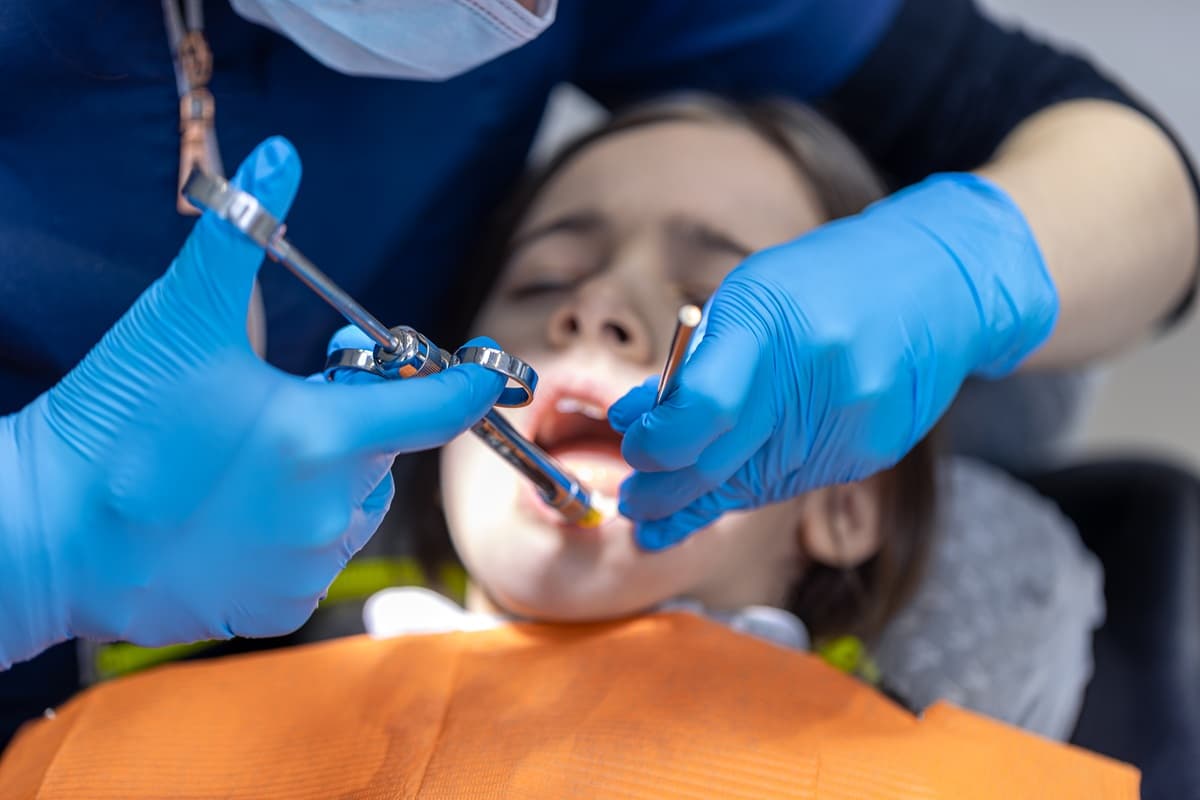
Local Anesthetic Emergencies: What Every Clinician Must Know
While stress-related emergencies account for the majority of dental office events, local anesthetic administration carries its own distinct risk profile. Dr. David Isen, who operates Sleep for Dentistry in Toronto and has delivered over 400 presentations worldwide on medical emergency management in healthcare settings, covers this in detail on Episode 595 of The Dr. Phil Klein Dental Podcast.
Allergic Reactions: The Most Likely Culprit Is Not the Anesthetic
True allergic reactions to amide local anesthetics — lidocaine, articaine, mepivacaine, prilocaine — are extremely rare. The most likely allergen in a local anesthetic cartridge is not the anesthetic itself but the preservative: sodium metabisulfite, which is added to stabilize epinephrine in vasoconstrictor-containing solutions. Plain solutions without vasoconstrictors contain no sulfite, making them the appropriate alternative for patients with a documented sulfite allergy — though working time is reduced to roughly 20-30 minutes for infiltrations versus up to an hour for nerve blocks.
For patients with a reported history of local anesthetic allergy, the appropriate protocol is referral to an allergist for testing of specific agents: articaine, lidocaine, and sodium metabisulfite. Once the specific allergen is identified, future treatment planning becomes straightforward.
Managing Allergic Reactions When They Occur
Mild allergic reactions — urticaria, hives, rash, swelling — require intramuscular diphenhydramine (Benadryl) at 50 mg for adults or 1 mg/kg for children, injected in the deltoid muscle. Critically, histamine release can continue for up to 72 hours after the initial exposure, which is why diphenhydramine is sold in three-day supply packs. Patients experiencing a reaction should be placed on antihistamine coverage for the full 72-hour window.
Anaphylaxis — distinguished from a mild allergic reaction by either airway compromise or significant hypotension — requires a different response entirely. As Dr. Isen explained, antihistamines are insufficient at this stage: "The signs of anaphylaxis, the hallmark things that we look for are either a drop in blood pressure and or the airway closes so that they have trouble breathing. Now, those patients need epinephrine. They need an EpiPen or even a deltoid injection of epinephrine." The distinction is clinically critical: knowing which type of reaction you are managing determines which drug you reach for first.
Local Anesthetic Toxicity: Articaine Requires Special Consideration
Toxicity is a separate risk from allergy and typically presents within 20-30 minutes of injection. As Dr. Isen described: "People usually feel agitated. They feel like they want to get up and walk around. They may be nauseous. They might start to sweat. Their blood pressure might go up. They might feel tingly or like tremors happening." In sensitive patients or small children, severe cases can progress to seizure and cardiac arrest.
Articaine deserves particular attention here. While it shares the same maximum dose as lidocaine — 7 mg/kg — it is a 4% solution versus lidocaine's 2%. As Dr. Isen noted, "When we inject articaine versus lidocaine, because they both have the same maximum dose, we're giving twice as much articaine as we are lidocaine." For routine operative dentistry not requiring significant vasoconstriction, the 1:200,000 epinephrine formulation offers the same depth and duration of anesthesia as 1:100,000 with half the vasoconstrictor load.
Seizure Management in the Dental Office
Seizure is one of the most alarming emergencies a dental team can face. Dr. Isen's guidance is clear: "The best response is to stop all dentistry, to call for an ambulance. And then the only thing that we can really do is maintain the airway and administer oxygen. So we should do a head tilt, chin lift to make sure that if the person is still breathing, they're able to breathe with their airway open."
Intravenous benzodiazepines — diazepam or midazolam — are the definitive treatment for prolonged seizure, but Dr. Isen is explicit that attempting this is beyond the scope of most general dental offices: "I think it's much more important to concentrate on the airway, concentrate on making sure the person has oxygen, and protecting their head if they are having a bad seizure. Those things are more important than a general dental office giving a benzodiazepine."
By the time paramedics arrive, a well-prepared team that has maintained the airway and administered oxygen has done the most important things possible.
Blood Pressure Management: Numbers Are Not the Whole Story
For patients with hypertension or cardiovascular disease, monitoring blood pressure throughout procedures is essential — but interpreting those numbers requires clinical judgment, not just thresholds. Dr. Isen's framework: "Comparing it to baseline is the way to go... I would say a 15 to 20 percent rise in that is acceptable during a dental procedure. But anything more than that... would be important to stop." Symptoms, however, take precedence over any reading — weakness, chest pain, diaphoresis, or pallor signal an immediate stop regardless of what the monitor shows.
A reading of 180/110 mmHg is a reasonable clinical guideline for deferring elective treatment, but context matters. Emergency dental care — drainage of an acute infection, management of severe pain — may need to proceed even at elevated pressures when the risk of the untreated condition outweighs the procedural risk, with appropriate documentation and informed consent.
And remember Dr. Malamed's point about endogenous epinephrine: an anxious, frightened, or pain-experiencing patient releases more cardiovascular stimulation from their own adrenal glands than from the small amounts of vasoconstrictor in standard local anesthetic cartridges. Keeping your patient calm and comfortable is, itself, a cardiovascular safety measure.
Building a Prepared Practice: Two Non-Negotiables
Dr. Isen distills emergency preparedness down to two foundational requirements:
1. A Detailed, Thorough Medical History — Every Patient, Every Visit
Knowing what is walking through your door is your primary risk mitigation tool. For a patient with asthma, the relevant questions go beyond "do you have asthma?" — when does it occur, what triggers it, what medications are you taking, when were you last hospitalized? That depth of information allows you to anticipate risk, adjust your approach, and make the judgment call to reschedule a patient who arrives wheezing. As Dr. Isen put it: "A very detailed medical history and leaving no stone unturned will mitigate or minimize or even eliminate most medical emergencies."
2. Annual Basic Life Support Training for the Entire Team
Most regulatory bodies require BLS recertification every two years. Dr. Isen recommends annually — and emphasizes hands-on simulation over classroom review: "Take your medical emergency drugs, which you're going to throw out every year, and inject them into an orange. Put on that bag valve mask. Practice taking out your oxygen tank and knowing what it looks like and how to turn it on... practice all of these things in as simulated a way as possible. And that'll make us more effective should an emergency occur."
The emergency kit itself should be reviewed and restocked on the same annual schedule. AED training should be included — your team should know where it is, how to power it on, and how to apply the pads without hesitation.
The Podcast Episodes Behind This Article
The clinical guidance in this article is drawn from two episodes of The Dr. Phil Klein Dental Podcast — the #1 clinical dentistry podcast, with 750+ episodes and 250,000+ dental professionals reached globally.
- Episode 590: Sedation in Dentistry: How Far Should We Go and How Much Training Do We Need? — Dr. Stanley Malamed, Diplomate of the American Dental Board of Anesthesiology, Emeritus Professor at USC Herman Ostrow School of Dentistry, author of 170+ scientific papers and three globally-used dental anesthesia textbooks.
- Episode 595: Local Anesthetic Urgencies and Emergencies — Dr. David Isen, anesthesia-based dentist at Sleep for Dentistry (Toronto), 400+ worldwide presentations on medical emergency management in healthcare settings.
Both episodes are available on Apple Podcasts, Spotify, YouTube, and iHeart Radio.
Clinical Disclaimer
This article is intended for general informational and educational purposes only and does not constitute medical or clinical advice. The content is based on podcast discussions with clinical experts and has been reviewed for general accuracy; however, clinical protocols, drug dosages, and emergency management guidelines evolve over time and may vary by jurisdiction. Dental professionals should consult current evidence-based guidelines, their state or provincial dental regulatory authority, and qualified medical professionals when making clinical decisions. In any medical emergency, call emergency medical services immediately. The Dr. Phil Klein Dental Podcast assumes no liability for clinical decisions made based on the content of this article.