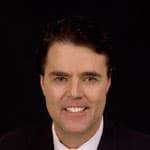
Dr. McLaren maintains a private practice limited to prosthodontics and esthetic dentistry in which he does all of his own ceramics. He is the director of the UCLA Center for Esthetic Dentistry, a full time didactic and clinical program for graduate dentists. He is also the founder and director of the UCLA Master Dental Ceramist program. The residency program is a full time master ceramist program for dental technicians featuring extensive experience with the newest esthetic restorative systems. Dr. McLaren has an appointment as an Associate Professor in the Biomaterials and Advanced Prosthodontic department. He is also an Adjunct Assistant Professor for the University of Oregon Dental School.
Thanks for joining us. I'm Dr. Phil Klein. Today we'll be discussing the myths and realities of using zirconia materials. Our guest is Dr. Edward McLaren, a Prosthodontist and Master Dental Ceramist. Currently, he is the CEO of ArtOral America, a private teaching institute based in Park City Utah, and maintains a private practice limited to prosthodontics and esthetic dentistry. He has presented numerous courses on ceramics and esthetics globally, authored or co-authored over 90 articles, and published a book titled “The Art of Passion: Ceramics, Teeth, Faces, and Places.”
Transcript
Read Full Transcript
This transcript was automatically generated and may contain errors or inaccuracies. It is provided for reference and accessibility purposes and may not represent the exact words spoken.
You're listening to the Viva Learning Podcast
Thanks for joining us. I'm Dr. Phil Klein. Today, we'll be discussing the myths and realities of
using zirconium materials. Our guest is Dr. Edward McLaren, a prosthodontist and master dental
ceramist. Currently, he is the CEO of Art Oral America, a private teaching institute based in Park
City, Utah. He also maintains a private practice limited to prosthodontics. and aesthetic dentistry
he has presented numerous courses on ceramics and aesthetics globally authored or co-authored over
ninety articles and he published a book titled the art of passion ceramics teeth faces and places
Before we get started, I would like to mention that Dr. McLaren's webinar, titled The Advantage of
GT Technology in Prime Zirconia, is now available as an on-demand webinar on VivaLearning.com.
Simply type in the search field McLaren, M-C-L-A-R-E-N, and you'll see it.
Dr. McLaren, it's a pleasure to have you on the show. Hey, Phil. Thanks for having me. Glad to be
here. Just as a little background, aesthetics became a real big part of dentistry over the last six
decades. And we've seen some pretty amazing innovations in materials. And these materials were
developed with the objective of having sufficient strength and durability so that they can be used
to replace traditional metal restoration. So in the 60s, we saw, you know, the porcelain jacket
crown. manufactured from felt spathic porcelain which was later strengthened with an alumina core
and then also in the 60s we started using porcelain fuse to metal crowns um and that remained the
gold standard for crown and bridge for for decades actually and then by the 80s we started using
glass ceramics the earliest which as we know was dicore and it's its use was confined pretty much
to anterior teeth and then in the 90s we saw sarah come out which was a major innovation uh which
is obviously we all know that's a milling machine that was designed to duplicate a resin inlay from
a solid block of ceramic and the materials that came out at that time were empress ceramics in
ceram procerra and so forth so now we're in 2023 and we're seeing a huge move towards zirconia and
that's why you're here today so when you look at current zirconia materials do you see a
significant improvement over the zirconia materials of just a few years ago Oh, my God.
Well, just like the evolution of aesthetics and ceramics that you just highlighted over the last
minute or two, it's been the same thing with zirconia, but even faster, really, okay?
Really probably over a 10- or 12-year period. It was a big-ish roughly 2010,
11, or 12 when lava came out, if I remember exactly. It might have been a little earlier than that.
I've done a lot of research on all these materials, lava, and everybody was extremely excited, as
you know, because if we can eliminate the metal core, we get some more translucency. The big
problem that people didn't realize what the real problem was, there was a lot of chipping of
porcelain. So that died, you know, sort of a natural death for a short period of time. As it turned
out, it was a simple thermal issue. Not that simple, but simple and easily solved with some
different firing changes. So that went away, I don't know, around 2010.
dated on that I was wrong was on 2005 2006 lava came out I'm sorry and then then it sort of dies
down for a little bit because of the chipping issue obviously one of the more important points that
you mentioned not only aesthetics but we need strength and durability which we weren't seeing with
that okay not that the the zirconia never was a problem that wasn't a fracturing it was just that
the porcelain was chipping and so then you know the natural evolution of all this oh you know glass
ceramics come along and are very translucent and wonderful stuff But we couldn't use them like a
PFM. I mean, the ultimate goal was if we needed to do a crown, and I think some crowns are
significantly overdone, that maybe it could have been something more conservative, but we needed to
have an aesthetic material that we could conventionally cement, that ideally we didn't have to
layer, that basically had the aesthetics of Emacs, right? Okay, but also simpler to use.
And, you know, the people involved, the ceramic engineers, have been able to, let's tweak,
to use a... of a lay term, the zirconia to make it one more translucent first by incorporating a
cubic phase. And that happened right around 2015. And then all of a sudden from 2015,
2016 to now, there's just been an explosion in use of these materials. But the interesting thing,
though, is that we were not able to or were not able to with just the addition of...
of a cubic phase of material create a gradient of translucency. While that definitely looked
better, one of the benefits of a machine glass ceramic was we could have a gradient of
translucency, a gradient of color, and also a pretty strong material. So that was still kind of the
go-to material. But recently, and give Ivoclar the most credit for this, they were maybe a little
late to the market with zirconia because obviously they were hiding something that we're all
excited about today. Understandable. Ceramic engineers came up with a way to put a gradient of
yttria in the in the zirconia so that it creates different levels of cubic phase.
So on the surface where we need it the most, the most translucency, there's more cubic phase.
For maybe the less people that understand zirconia, the more cubic phase in there, the more it
becomes like a fake diamond, okay? 100% cubic phase is a fake diamond. We obviously don't want
that, but we want a more translucent version than the original material that was a tetragonal phase
crystal. And so the uniqueness of the prime or prime aesthetics,
I kind of jokingly call it E-Prime, and my Ivoclar friends get all over me all about that. But
Prime and Prime Aesthetics, it's an absolutely, completely unique material to the market that we
not only have a gradient of color, we have a gradient of translucency and a gradient of strength.
Basically, all zirconia materials are not the same, and if you can elaborate on that. And also,
when you answer that question, tell us the difference between multi-layer zirconia and gradient
zirconia. Okay, so, I mean, you answered the question. They're all not the same. Okay, we have
three basic kinds of zirconia. Let's just start, or basically two kinds. We have a tetragonal and
then a zirconic cubic phase, and then a mix of the two, but a very finite.
mix, so it was either a 3Y, 4Y, or 5Y, had X percentage of a cubic phase,
okay, and great, okay, those were nice materials, but the higher cubic phase materials,
and here's where the big difference is, the most translucent, the so-called 5Y materials, all
right, had a strength of about a 750 megapascals, which is... okay and are very good let's say the
problem is that if you sandblast them most people did not know this and do not know this if you
sandblast them you lose about 50 of the strength like a regular glass okay so that We need to be a
little more careful using that, all right? And maybe can't use it on a second molar. We're not sure
yet because we haven't seen any clinical data. Definitely not for a bridge. Okay, the uniqueness of
the material I mentioned, Prime, and by the way, I want to tell the audience out there, I get
nothing from Ivoclar. I'm doing this for free. I don't work for Ivoclar. I just test. products, and
I talk about really good ones, and not so good ones, I maybe say that too. But this happens to be a
winner out there. So what the technology basically is, and Iva Clark created the technology,
is they were able to, in one material, create a multi-gradient of three different materials in the
same material, the three different kinds of zirconia, the 3Y, 4Y, and 5Y, plus multicolor.
Okay. There's a lot of multicolor blocks out there. Okay. And I don't want to throw any names out
there and get people mad at me about that, but everything else, everything else, but this material
is a multicolor material, meaning it has the same 3Y4Y5.
It has one of the materials in it. Okay. And it has different colors, but that does not make it a
multi-translucent material. We need multi-translucent materials, and here's why.
And that's why we like to layer over the years, because it gave us the ability to do multi
-translucent, but that's a hard skill set, and it's a dying skill set. With a multi-translucent
material that's a monolithic material, we now have something that's much more similar to the optics
of a natural tooth, okay, where we have more opacity deeper in the tooth, more chroma deeper in the
tooth we need, more translucency, less chroma on the surface where the So that's the huge benefit.
But the other huge benefit is the more, the deeper, let's say, deeper, denser color material is
also stronger, like the original 3 and 4Y materials. All right, so we have the strength where we
need it, okay, deeper in the restoration, more toward the core or in the connector. And we have the
more translucent. We don't need as high strength level on the surface. It's still pretty strong
stuff on the surface, but that's in the simplest way I could state it, the benefit and the
difference between a multi-layer, truly different layers of material, and a multi-color.
Prime is both. All the other materials are just multi-color. Is this a complete breakthrough in
zirconia material as far as where we are today in the timeline of evolution? Absolutely.
Absolutely. I mean, there's other good materials. I don't mean to differentiate. We've had a lot of
evolution, but this is a breakthrough. This is a step above. And as you might imagine, other
companies are rushing to the market with it or attempting to rush to the market. Okay. So
traditionally, I mean, zirconia has been around for a while, obviously, but for the most part, it
was used for posterior teeth where it required more strength. Maybe the patient had occlusal issues
where they needed really tremendous strength and they can make it thinner, right? You can make the
zirconia. restoration thinner because of the strength. Emax was primarily for anterior teeth for
the most part. That was the big winter product also by Ivoclar. Right. Can you use this new
zirconia for everything now? Yes. Okay. Yes, you can. And it compares with,
okay, if designed correctly, like everything, you have to do it correctly. If you fire it poorly,
like porcelain, or let's say composite, you build up porcelain. Anything that you use incorrectly
is not going to give you the result that you're looking for. So it has to be understood,
okay? It has to be fired correctly. It has to be machined correctly, like any product, right? So
yes, the answer basically is yes to your question. I would say there's probably one circumstance
with any monolithic that is a challenge, a single central. Okay,
even though I've done several single centrals and they've came out very nice. A single central,
especially a polychromatic single central, we probably will still be layering into the future.
But here's the nice thing. I can use this material, okay, that has a gradient of translucency as a
core, but just have an extremely minimal cutback. meaning just put a little thin layer of porcelain
on. When the old days, I'd have to put a very thick layer of porcelain on. The thicker the
porcelain, the weaker the overall restoration. So the goal ideally is to have no porcelain if you
could, but if you have to, have the least amount possible. So this material fills in all of those
blanks. Right. So you have to have a good relationship with your laboratory in order to communicate
that sole anterior that you would need that specific case. So the question that I had was,
what typical cases would you recommend using zirconia? But there's really no, other than what you
just mentioned, there's no real limitation to this newer material. no so any any crown case for
sure any bridge case for sure okay now the the only potential question that we haven't answered
long term yet we have some very creative ways to bond zirconia today with these chemical primers,
these MDP primers that give phenomenal early bond strength. In all laboratory studies,
you're seeing the exact same bond strength as an etched porcelain or etched glass ceramic. The
concern is we don't have any long-term data. Like when you put your pure scientist hat on,
you like to see long-term data. And the difference is the internal surface is not etchable.
You can get it a little rough with sandblasting, so you get a little bit of micromechanical
retention right there, but you don't have that classic microscopic etched surface you see when you
put hydrofluoric acid on either, let's say, Emax or porcelain. So that would be my one concern is
completely non-retentive preparation. So I would recommend to your audience out there, I mean,
obviously, if you need the strength, Bruxer or something like that, a Bruxer, sure, this would be
great. Great use for it. But I would probably put a little bit of subtle retentive elements,
even if it's just an onlay. Maybe a little small box, a little small groove, something like that,
just to help with retention, even though I was still planning to bond it. How long do you think we
need to go in the future to determine that bonding zirconia is extremely effective? I think five
years, and we're probably getting close to that. And I bet you in the next year or two, we're going
to see several clinical studies come out because people have been using this pretty extensively
since 2015, 2016, these newer versions, okay? So I would guess by literally within 12 to 24 months,
we'll have a pretty concrete answer to that. What aspects do you consider more relevant when
choosing zirconia? Talk about flexural strength, translucency, which you did a little bit, and also
just the basic composition of the material itself. Well, okay, based on this new generation
material, the prime, prime aesthetics, it's two things I'm thinking about,
okay? The beauty of this, okay, the two things for me now, if I'm doing pure posterior, I'm
probably going to use the regular prime. because it has more of the 3Y, the original higher
strength material, all right, where it's a little bit less concerning the perfect aesthetics. As we
move to the bicuspids and anterior part of the mouth, I'm going to choose the prime aesthetics when
I need the maximum translucency, okay? So between the two, if I need a little extra strength and I
can give up a little bit on the aesthetics, it's going to be more like a prime. or a 4Y material
that's out there a couple on the market. If it's going to be where I just really have to have
maximum aesthetics, it'll be the prime aesthetic. But also make sure when you design this in your
computer, it's what's called nesting, where you move around in the computer or move around in the
puck where you put your restoration. So you want to make sure your restoration's in a spot where
you still have a little bit of the 4Y, the layer that has that little bit more strength in it.
And then the other consideration is, you know, obviously the shade, right? As typically, here's
what I do, and this is my system. There's other systems that work. I would typically choose one
shade brighter material than I would normally want to use. This is a simple example. Let's say it's
A2, okay? I would choose an A1 puck. I would machine an A1 restoration, and then that gives me the
ability to custom color it a little bit. That's another beauty of these materials. I can custom
color it so I can add a little bit of chroma in the gingival third. I can add a little bit of
pseudo-translucency in the incisal third. When you do that, when you add chroma and a pseudo
-translucency, that actually lowers the value a little bit. So it turns an A1 into a more aesthetic
A2. But if I choose an A2 block and I want an A2 finish, I can't add the extra color because it'll
make it too low in value. That's a great point. Now, of course, you being a ceramist, world-class,
your background and knowledge helps you tremendously. when doing this. Now, you have an in-house
lab, obviously, in your office. Well, I mean, I'm the in-house lab now, and the other beauty of
the digital space for me is I, even though I'm sitting around a bunch of digital toys, I scan
everything today. I stopped using impression material about a year ago, and I was very digitally
resistant because I did not like the prints that I saw. It wasn't the scanner, it was the output,
the prints. Now the printers are finally caught up with, not quite stone yet, but... darn close uh
so i'm doing that then i i will upload to my lab guy named jet archibald who used to do all the
work for gordon when he worked a little more gordon christensen and uh so he does my model work and
does any frameworks for me or anything like that then he ships it to me and i take it from there i
i finally i customize it or do the final touch i like to say so that's my workflow Amazing. And
Gordon Christensen, I think, is still at it. Not to the level he was. I mean, he's practicing a
couple of days a month and obviously still doing research. And John Archibald was Gordon's
technician and still is Gordon's technician. Jed, the son, who's a phenomenal technician, he does a
lot of the research for him. He is the guy that does stuff for me. In closing, the dentist that's
out there working every day that doesn't have the skill set that you have as a ceramist, can they
do this custom stuff with their lab by communicating? Yeah, I mean, so you're going to need to
search out a lab that's using some of, there's some really nice digital toys today, okay? Digital
shade takers, things like that, that help tremendously. Just like all the digital things help us
tremendously. So you basically got to find a lab that's putting out. the output that you're looking
for, you know, that gives the final result, then obviously they're going to need the right input
from you as the dentist. And that now is just communication with what do you need? Do you need an
image, an image with a shade guide? Do you need the, you know, that kind of stuff. So that's how I
would recommend. I would tell every dentist out there that I would probably have two labs. I would
have one lab for my occlusion function that does nice aesthetics, and then I would have my artistic
lab because they're two different personalities. And what is Art Oral America, which you're CEO of?
Okay, so that was an interesting thing. My mentor, and I have two or three mentors, my ceramic
mentor has a company in Europe called Art Oral International. And he has his own porcelain that he
makes and he sells and he teaches courses. He recently just turned 80. And I just respect the guy
so much that he allowed me to use the name Art Oral. And since I'm in America, you know, he didn't
want me to say Art Oral International or just Art Oral because that might be confusing because
people, you know, know him through this. Klaus Mittertis, actually. So that's why I just call it
Art Oral America. That's your teaching institute? That's my teaching company and teaching
institute, yeah. Now, if any of our listeners want to take courses from you, they can do that by
just going to the website. What's the website? The easiest, I changed it from Art Oral because that
was confusing, just edmcclaren.com. Edmcclaren.com. Okay, great. All right, very good. All right,
well, Dr. McLaren, it's been fantastic talking to you. Really enlightening to hear your input
because you have so much experience in the dental industry. And as we talked offline, I've been
following your career path for the last, I don't know, 35, 40 years, 35 years at least.
You're dating me. Yeah, well, me too. We're on the same boat here. But you sound like you're 25 and
your enthusiasm sounds like you're 30. So you're doing really well. Thanks. Thanks, buddy. I'm
trying. You too. Yeah. Keep up the great work. Thanks so much for joining us. Thank you so much. I
appreciate it. Hope this helps your audience. Thanks.
When it comes to choosing the right material for an indirect restoration, the decision point has always come down to two things: strength vs. aesthetics. Now an...
Keywords
dentaldentistIvoclarCAD/CAM Technology and MaterialsCrown/Bridge/Veneers/Indirect