Cosmetic Dentist · UCLA Center for Esthetic Dentistry
UCLA School of Dentistry · UCLA Center for Esthetic Dentistry · F.A.C.E. Institute · Esthetic Professionals
Read full bio
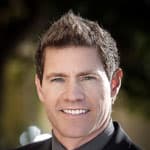
Dr. Todd C. Snyder received his doctorate in dental surgery at the University of California at Los Angeles School of Dentistry. Dr. Snyder has learned from and worked under some of the most sought after leaders in dentistry, refining his skills in comprehensive, extremely high quality aesthetic dentistry and full mouth rehabilitation. Furthermore he has trained at the prestigious F.A.C.E. institute for complex gnathological (functional) and temporomandibular joint disorders (TMD).
Dr. Snyder lectures both nationally and internationally on numerous aspects of dental materials, techniques, and equipment. Dr. Snyder has been on the faculty at U.C.L.A. in the Center for Esthetic Dentistry where he co-developed and co-directed the first and only comprehensive 2-year postgraduate program in aesthetic and contemporary restorative dentistry. He currently is on the faculty at Esthetic Professionals. Additionally, Dr. Snyder is a consultant for numerous dental manufacturing companies and has had the opportunity to research and recommend changes for many of the materials now being used in dentistry. Dr. Snyder has authored numerous articles in dental publications and published a book on contemporary restorative and cosmetic dentistry.
Dr. Snyder also founded and is CEO of Miles To Smiles a non-profit mobile children's charity that helps indigent and underprivileged children.
Should you bond your ceramic and zirconia crowns or use traditional luting cement? This fundamental decision impacts every indirect restoration you place, yet many dentists struggle with the clinical variables that should guide this choice.
Dr. Todd C. Snyder brings decades of expertise to this critical topic. A graduate of UCLA School of Dentistry, Dr. Snyder has trained at the prestigious F.A.C.E. Institute for complex gnathological and TMD disorders. He served on faculty at UCLA's Center for Esthetic Dentistry, where he co-developed and co-directed the first comprehensive 2-year postgraduate program in aesthetic and contemporary restorative dentistry. Currently on faculty at Esthetic Professionals, Dr. Snyder lectures internationally on dental materials and techniques, consults for numerous dental manufacturers, and has authored extensively on contemporary restorative dentistry. He also founded Miles To Smiles, a non-profit mobile children's charity.
This episode provides a systematic approach to material selection and cementation protocols for indirect restorations. Dr. Snyder breaks down the decision-making process based on strength requirements, preparation design, and clinical variables. The discussion covers when lithium disilicate's optical properties outweigh zirconia's superior strength, how vertical dimension changes affect material choices, and the critical role of isolation in determining cementation protocols.
Episode Highlights:
Lithium disilicate offers approximately 500 megapascals of strength with excellent optical properties, making it ideal for anterior restorations and situations where aesthetics are paramount. Zirconia provides 1,200 megapascals of strength, making it the preferred choice for posterior full-coverage crowns in heavy grinders and multi-unit bridges where structural integrity is critical.
Preparation design differs significantly between materials, with zirconia requiring only 0.8mm thickness for adequate strength while lithium disilicate needs 1.5mm reduction. When adequate bulk is achieved, both materials can be successfully cemented with traditional luting agents, but insufficient reduction necessitates adhesive protocols to achieve clinical strength through bonding to tooth structure.
Vertical dimension management creates opportunities for conservative preparations by providing space for restorative materials without excessive tooth reduction. When adequate enamel remains after VDO changes, either thin zirconia or lithium disilicate can be adhesively bonded, deriving strength from the laminated monoblock effect rather than material bulk alone.
Posterior isolation challenges significantly influence cementation protocol selection, with traditional bioactive luting cements preferred when multiple restorations make adhesive isolation difficult. Single posterior crowns can often accommodate adhesive cementation, but multiple units may require preparation modifications to accommodate traditional cements for predictable outcomes.
Modern bioactive luting cements like resin-modified systems provide 20+ megapascals bond strength to zirconia while releasing calcium and fluoride ions. These materials offer bacterial resistance and potential caries protection as an insurance mechanism, making them preferred for posterior applications where adhesive protocols may be compromised by clinical conditions.
Perfect for: General dentists placing indirect restorations, prosthodontists refining cementation protocols, and dental residents learning material selection criteria for ceramic and zirconia restorations.
Master the clinical decision-making that transforms your indirect restorations from functional to exceptional.
Transcript
Read Full Transcript
This transcript was automatically generated and may contain errors or inaccuracies. It is provided for reference and accessibility purposes and may not represent the exact words spoken.
You're listening to the Phil Klein Dental Podcast.
So if you're a dentist and you're putting in indirect restorations, you are faced with the
question, what material should I use? And usually the contest is between lithium disilicate and
zirconia. And once you pick a material, then you got to decide, do I bond it in or do I use a
traditional looting cement? To give us his perspective on this is our guest, Dr. Todd Snyder.
Dr. Snyder is a popular speaker on VivaLearning.com, a cosmetic dentist, international author,
lecturer, and consultant to dental companies. He hosts a weekly podcast, Delusional,
winning the weekly war of dentistry. You can reach Dr. Snyder at legion.dentist. Dr.
Snyder, it's a pleasure to have you back on the show. Thanks, Phil. So I don't know if I'm talking
to my audience now. I don't know how much you've been listening to our podcast program. I hope you
have been. But Dr. Snyder is a regular contributor, and he has done a series of podcasts on all
sorts of topics, including marketing, a practice, hiring, and systems.
He talks a lot about systems. So to begin this particular podcast, let's talk about clinical
applications for ceramic versus zirconia. What are we looking at as far as the materials themselves
as being different? And why would we use one over the other? Well, you know, both have unique
characteristics. So for indirect restorations, the way I view it is I'm looking at color and
strength. And at the same time, I'm looking at thickness as far as how much tooth structure I need
to reduce. So when I think of like lithium bisilicate, something like an Emax, I go, okay, strength
properties, let's call it a ballpark 500 megapascal strength.
Based on that, probably not what I want to have for a full coverage crown in the back of the mouth
if I got someone who's a heavy grinder, someone who's really heavy functionally. And so I go,
okay, well, maybe for better strength properties, instead of reducing a bunch of tooth to make my
Emacs really thick, well, then I'm going to use Zirconia, which has like 1,200 megapascals of
strength property to it. And so I'm thinking in that sense for like pressure, but then you go,
okay, well, what about like if I'm just doing like a simple inlay? Well, I don't need 1,200 MPs of
strength for an inlay. I can do something like the Emax that has, I would say for most people,
a simplification of adhesion because they're comfortable and used to it. But also at the same time,
it doesn't need the same strength and it has great optical properties. And then you go, okay, well,
in the front of the mouth, if I'm doing a bridge, well, depending on how many units that is, I need
strength. So I'm going to zirconia. And then you go, well, if it's only like a three-unit bridge,
then it's something smaller. You could do something like Emax. And then you go, okay, well, what
about like veneers? Well, the majority of people are using like Emacs, but you'd be surprised how
many zirconia products out there nowadays can be extremely thin and very translucent and yet still
derive better strength properties than an Emacs. And so you look at that and go, okay, if I got to
lengthen someone a lot or open their bite, then zirconia sometimes becomes really relevant at that
point. So speaking clinically, tell us the difference between, if there is a difference, between
the prep design for ceramic, lithium disilicate, and for zirconia and then how does the actual
cementation process differ well with zirconia it's said to have about eight tenths of a millimeter
necessary for thickness versus you know emacs lithium disilicates typically want more like a
millimeter and a half and that's for strength to be a standalone product so you go okay if i'm just
going to loot something in with the traditional cement like a resin modified glass onomer or you
know a therisem from bisco which is a resin-based self-etching type of system. You go, okay, if
I'm going to use one of these and I only have, let's say, eight-tenths of tooth reduction, then
I'm going with zirconia because the zirconia has that strength property, which requires me to take
a less tooth structure off. Now, for some reason, I'm doing a bunch of, let's say, Emax
restorations, and I have like a premolar where I've got, you know, millimeter half, two millimeters
of reduction. So I've got the strength required for that particular material and they're not a
heavy grinder or heavy occlusal problem type person. Then I go, okay, I could cement that
technically too. So both are cementable when they have the right amount of reduction,
giving them the strength to be a standalone product. You can use traditional cements. So you talked
about the reduction of tooth structure and which material is best suited for each clinical
situation. Do you sometimes manage the VDO in all of this? Yeah.
You know, we reposition the jaw and change, you know, position such that you've, what would appear
to be more space between teeth. Some people would say, you know, changing the VDO. Yeah. So when
you have more space, potentially you're taking less tooth structure away by creating space for
restorative materials. And so in doing so, you might be still on enamel in certain places.
So then it becomes fun. You go, okay, if I can loot with a... resin, you know,
adhesive-based system, whether it be light cure or dual cure, and I have a bunch of enamel to grab
onto. Well, now I can take either a thin zirconia or a thin lithium disilicate Emax because it
derives its strength now from being adhered to the tooth as opposed to just using a traditional
cement where you need to have bulk of ceramic thickness for strength. Now I don't because I'm
laminating something onto the occlusal table, and when I laminate that and adhere it, it becomes
kind of like one. Right. Kind of a monoblock type of thing. And it drives significant strength
because of the underlying tooth structure. So in that sense, yeah, opening vertical, I can get away
with taking less tooth structure off and using either material at that point. I've talked to
several dentists that like to use direct restorative on the molar area directly onto the cusps to
open up the VDO. Is that something you typically do or have considered? Well, you know, a lot of
different beliefs on how to do things, right? I can't say there's any way that's wrong with that.
But for me personally, I like to change someone's bite on something that I can reversibly change
instantly. If I have adhered composite to the occlusal table, I can't just instantly take that off
and put them back where they started. You can try, but you're always going to make things
different. So for me, I typically use some type of orthotic. a kuzal guard of sorts that I can
modify and change with acrylic resins. And if something's not working, I can just take it right out
and I'm done.
So I see people building teeth up with composite. I see people building things up with temporaries.
But for me, it's like, well, if you can't back out of that and things go sideways, you're going to
have a difficult problem. So me personally, I build it up with orthotics. So there's no doubt the
dentist needs to understand the materials. from the standpoint of aesthetics and strength and so
forth, and be able to take that understanding and parlay it into the clinical case. But part of
this whole equation is the laboratory for most of us, unless you're chairside milling. How
important is it to have good communication with the laboratory so both the dentist and the lab
could come up with the ideal material for a particular clinical case? Well,
you know, I think it's different for every office. I think a lot of times, depending on the lab,
the lab just does whatever the dentist says. um whether they approve it or not you know and some of
them may be bold enough to step out and say hey doc i think we should use something different me
personally i see them as like being my like my left hand like my right and left hand have to work
together so before i start a case i have a conversation with the lab as far as like here's what i'm
planning on doing as far as my preparations here's what the teeth look like i'm thinking i want to
do such and such type of ceramic Does this sound like it works for you or is there something better
we might be doing or things that I'm not considering that would make life better for you that you
can give me the product I'm looking for or the desired appearance that the patient's wanting? Or,
hey, if I want to use Therasem and Zirclean on a Zirconia crown,
that's my thought process versus them saying, no, no, no, you're going to have small preps. You're
going to have to be using Emacs and using full-on adhesive bonding capabilities. I want to know
and understand all that from every angle before I ever get started. So my lab and I have a lot of
communication. I would say that's probably not the norm. I would say most. time the dentist sends
something and says, just build it for me and don't give me any feedback. I just want this,
get it done, get it back fast, right? So when working with both ceramic and also zirconia,
we have a choice of using the adhesive method or typical traditional looting cementation.
What goes through your mind to make that decision to go either way? Well, obviously if I'm working
on a front tooth, I can pretty much isolate and keep things dry. So in the front of the mouth,
Really, I'm deciding on my preparation design, the material I'm using, that it should be very easy
to adhere something using resin technologies and to keep restorations thin,
whether it be zirconia or Emax lithium disilicates. I'd say where it becomes a little more
challenging is the thought process, the mental gymnastics that go into the posterior dentition,
where if you're doing one crown, it's not typically much of an issue. by itself because you can
isolate one tooth or you can use a traditional looting cement. But where the gymnastics comes,
if you're doing multiple restorations and you're going, okay, I've got numerous teeth I've got to
put in back here. Do I have enough tooth structure? How hard is it going to be to keep saliva at
bay and fluids, blood and sulfur fluid, et cetera? And you go, okay, so can I isolate? If I can't
isolate, then I'm thinking I've got to do something different in my preparation design or I've got
to use different material that I can truly cement in and know that it's going to work well. If I
know that I can't loot something in with traditional cements, then I'm going, okay, now it's going
to be more challenging. So how am I going to make this work? Do I need to make something thicker so
that I could use a cement? Or am I going to have to go to zirconia instead of like a thick lithium
bisilicate and then use cement? Or will I have the ability to, let's say, isolate the first molars
and I can use resin adhesion and take less tooth off. But let's say the second molars, there's no
way I can isolate it well. And so I've got to go back to traditional cement. So I'm kind of
thinking about all of those the day that I'm working on. I'm like, how challenging is this person
going to be when they come back in two to three weeks to deliver that final product? So I assume on
the bigger cases, you do some pre-planning with your prep design, perhaps working with models and
waxing up ahead of time. You know, anytime I'm doing, you know, full mouth rehabilitations or big
cosmetic cases, I tell everyone to always prep the teeth on a model before you ever send it in to
do the wax up. So the laboratory sees what you're intending on doing as far as your preparation
design. And you're saying, here, here's my preps. Now critique them, but also wax things up for me.
And so from there, they can say, well, we see what you've prepped, but it's not going to work well
for us. We want you to prep more in this place or that place so that we have enough fitness for our
material to do the right type of appearance that you're looking for. And so right there becomes a
huge communication change that most of us don't seem to have. And therefore, I think you run into
more problems. But for the same token, nothing is 100%. Even though you pre-prepped and you
practiced and you had communication, you get into the patient's mouth and you find that maybe on a
back molar, you thought you were going to go one way. The next thing you know is underneath the
tooth is totally gone. It's mush. And you got to take out a bunch of decay. And you're going, OK,
audible. I don't have the tooth. Just do a minimal prep here and just put something in with
traditional cements. And now I'm thinking like, oh, I'm going to have to use adhesion. Or now it's
going to be harder because. isolation in their mouth is challenging. And so how am I going to build
this up or change this so maybe I could use a cement? Do I have to put a buildup in? You know,
like, so I think no matter how much you prep, you may find things that just don't work in your
favor. But I'd say at the same token, the more you prepare, the less surprises you get when you're
doing bigger cases. So let's say you look back, Dr. Snyder, over the last five years, are you doing
more traditional looting of your crowns, whether it's ceramic or zirconia? Or do you find yourself
depending on the adhesive technique that we discussed earlier in order to cement these crowns in?
Yeah, that's a great question. I would say for ease of use in the back of the mouth, obviously
cementation becomes fast and easy. And so I want fast and easy if it truly gives me a benefit and
it helps the patient, because ultimately it's about the patient. And so I look at things like
Bisco's Therasim. and or like doxoceramir, some of these newer bioactive type looting cements that
provide, you know, really great adhesion and truly provide a benefit as far as healing to the
tooth. And so I try to use those in the back of the mouth, you know, premolars and molars. So when
I'm prepping the teeth, I'm thinking about that, having that in mind as far as my preparation
design, axial wall height, taper and all those fun things. But, you know, sometimes you take off,
let's say, an existing. you know, adhered lithium disilicate crown or partial coverage restoration,
you realize that there's not enough tooth to create ideal situation for a crown prep. And you're
going, okay, it's not ideal. So in this case, I know I'm going to have to adhere things in. And so
knowing that, okay, I can create still retention for my inlay,
onlay, poor kind of fitting restoration, you could say, and switch, you know, call an audible and
move to a resin looting cement, whether it be a light curable or dual curable product. But I'd say
the back of mouth, majority of the time I'm trying to cement because I think there's a benefit for
the release of ions that these modern bioactive cement types of things have. What's the downside of
using adhesive cementation with all the crowns that you do in your practice? I mean, I know it's a
little bit more time consuming, but I would assume there's an advantage to that. Or do you think
it's just overkill and we're not helping anything with recurrent decay? We're not really sealing up
the margins any better by using adhesive materials? in that cementation process and going with
traditional looting cement is just as effective as long as you have the right prep? You know,
that's a great question. And I don't think anyone has the answer because materials continue to
change. And we need to go back and look at things in, you know, 20 years from now and see, you
know, what worked. I will say that obviously the challenge is technique sensitivity, you know,
dealing with what part of the tooth you're working on, the substrate of it, and then what bonding
agent using, what type of resin. You know, all those intricacies have to play really well together.
And you think of like immediate sheer bond strength. Like a lot of times you can see dentists take
phenomenal materials and they get poor bond strengths. Other times they'll use it and get lucky and
get great bond strengths. You don't know what bond strength you're getting unless you're testing.
So in that sense, I go, well, gee, there's a lot of variable there. So hence I go, okay, when
resins fatigue and fail, they leak and eventually create a problem. Well, we can't diagnose those
well because radiographs don't look through ceramics really well. So with all that in mind, and
then you think of like bonding agents degrading from MMP activity inside the tooth, and you go,
well, then maybe in the back of the mouth, if it were me or for my family, I'm going to put one of
these newer, more bioactive materials that still derives, you know, 20-something megapascals,
let's say, of strength to zirconia, and it has a good bond to the tooth. But it's an insurance plan
under there, hoping that it's fighting off. you know, bacteria and potential cavities and things
that maybe it buys more time. And that's why I use those for the most part in the back of the mouth
wherever I can, because I feel it's giving the patient an opportunity for a longer lasting
restoration. Versus in the front of the mouth, it's almost always adhesion because of minimal
preparation design. Any favorite go-to bioactive cement that you really like to work with? Well,
as far as like releasing calcium, you know, and fluoride into the tooth, I like the Theracem from
Bisco. It's got some great properties to it and great adhesion to zirconia and other ceramics.
So in that sense, I think it's really well thought out adhesion that they've come up with. So I
like the science and research behind it. And so that's one of the products that I like to use. All
right, Dr. Snyder, appreciate your input and your recommendations. Thank you very much. And we look
forward to having you on future podcasts as well as webinars. I know you have quite a few coming up
on Viva Learning. So to our audience, check out Dr. Snyder, S-N-Y-D-E-R.
Simply visit us at VivaLearning.com, do a search for Dr. Snyder, S-N-Y-D-E-R,
and you can sign up for his upcoming live webinars. Thank you very much again, Dr. Snyder.
Appreciate it. Thanks, Bill. If you're enjoying this podcast, please leave a review. or follow us
on your favorite podcast platform it's a great way to support our program and spread the word to
others thanks so much for listening see you in the next episode