UCLA School of Dentistry · F.A.C.E. Institute · Esthetic Professionals
Read full bio
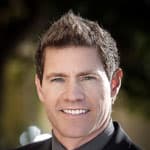
Dr. Todd C. Snyder received his doctorate in dental surgery at the University of California at Los Angeles School of Dentistry. Dr. Snyder has learned from and worked under some of the most sought after leaders in dentistry, refining his skills in comprehensive, extremely high quality aesthetic dentistry and full mouth rehabilitation. Furthermore he has trained at the prestigious F.A.C.E. institute for complex gnathological (functional) and temporomandibular joint disorders (TMD).
Dr. Snyder lectures both nationally and internationally on numerous aspects of dental materials, techniques, and equipment. Dr. Snyder has been on the faculty at U.C.L.A. in the Center for Esthetic Dentistry where he co-developed and co-directed the first and only comprehensive 2-year postgraduate program in aesthetic and contemporary restorative dentistry. He currently is on the faculty at Esthetic Professionals. Additionally, Dr. Snyder is a consultant for numerous dental manufacturing companies and has had the opportunity to research and recommend changes for many of the materials now being used in dentistry. Dr. Snyder has authored numerous articles in dental publications and published a book on contemporary restorative and cosmetic dentistry.
Dr. Snyder also founded and is CEO of Miles To Smiles a non-profit mobile children's charity that helps indigent and underprivileged children.
Are your zirconia crowns coming off, leaving you questioning your cementation technique? This frustrating problem affects countless dental professionals who struggle with the nuances of bonding to this increasingly popular restorative material.
Join Dr. Todd Snyder, DDS from UCLA School of Dentistry, a nationally recognized lecturer in aesthetic and restorative dentistry who co-developed UCLA's comprehensive 2-year postgraduate program in aesthetic dentistry. With extensive training at the F.A.C.E. institute and years of consulting for major dental manufacturers, Dr. Snyder brings unparalleled expertise in advanced restorative protocols and materials science to help solve your zirconia challenges.
This episode demystifies zirconia cementation by breaking down the critical distinction between traditional cementing and adhesive bonding protocols. Dr. Snyder explains when to use bioactive cements versus dual-cure resin systems, and most importantly, reveals the technique errors that lead to crown failures. The discussion covers preparation design requirements, contamination management, and the step-by-step process for achieving long-term zirconia retention.
Episode Highlights:
Preparation design fundamentals require 4-6 millimeters of axial wall height with 6-8 degree taper for traditional cement success, while inadequate preparations necessitate adhesive protocols with specialized zirconia primers and dual-cure resin systems.
Contamination management involves three viable approaches: pre-treatment with zirconia primer before try-in, sandblasting followed by primer application, or post-contamination cleaning with specialized zirconia cleansers before primer placement.
Zirconia-specific cleaning protocols cannot use traditional ceramic silanes and require dedicated zirconia cleansers followed by MDP-based primers, as cross-contamination with traditional ceramic bonding agents guarantees bond failure.
Technique errors account for most zirconia crown failures, including inadequate isolation, improper moisture control, insufficient curing time, and attempting to use traditional ceramic bonding protocols on zirconia surfaces.
Properly bonded zirconia restorations using correct adhesive protocols can achieve 20-30 year longevity comparable to other resin-bonded indirect restorations when manufacturer instructions are followed precisely.
Perfect for: General dentists placing indirect restorations, dental residents learning cementation protocols, and experienced practitioners troubleshooting zirconia retention issues.
Master the techniques that separate successful zirconia practitioners from those dealing with constant crown failures.
Transcript
Read Full Transcript
This transcript was automatically generated and may contain errors or inaccuracies. It is provided for reference and accessibility purposes and may not represent the exact words spoken.
You're listening to the Phil Klein Dental Podcast.
Zirconia is quickly becoming one of the most popular materials to use for indirect restorations. So
it's important to understand the process of cleaning, cementing, adhesion, and using zirconia
primers. So to tell us all about it and clarify some of the confusion is our guest, Dr. Todd
Snyder. He's a popular speaker on VivaLearning.com, cosmetic dentist, international author,
lecturer, and consultant. And he hosts a weekly podcast program called Delusional, Winning the
Weekly War of Dentistry. If you want to reach Dr. Snyder, you can reach him at legion.dentist.
Dr. Snyder, it's a pleasure to have you on the show. Thanks, Phil. Always a pleasure to be here.
Good times. So we're talking about zirconia today. What are the different ways to currently cement
zirconia? You know, if we got an hour, we got a lot to discuss here. There's obviously traditional
cements that you could use. You can use modern bioactive cements.
You can use dual-cure resin-based systems. You can use self-etching dual barrel resin cements.
And then you can also use, depending on the type of zirconia, you can actually nowadays do light
curing of resin and adhesion through them as well. So you've got a lot of options. So a lot of
confusion these days. Yeah, it seems like the more options we have, of course, it gets more
confusing. And even to add to the confusion, there's the concept of adhesion versus cohesion.
Whereas when you... through a full adhesive protocol, it's considered adhesion.
And of course, when you're just using the cement as a looting agent and you're relying on the prep
itself for retention, then it's more on the cohesion side. What are your thoughts on that? For me
personally, if I'm delivering a crown, I kind of just think I'm cementing it. And so I guess it's
to each his own on what they describe it as. Hence, I said, cementation can be using traditional
cement and cementing could be using adhesive types of materials. Because some of the adhesive
materials nowadays are so quick and easy, it's almost the same as using a cement. So it depends on
how you want to define it. I lumped in everything as one. So if some people like adhesion different
from cement, then yes, there are obviously two one way and three the other. So let's talk about the
delivery of the crown to the prep. So when you're placing a zirconia crown, what are some of the
challenges dentists typically face? You know, I'd say the number one thing I hear from people is,
you know, that their crowns come off. You know, just from lecturing all over the place, doesn't
matter if we're in Canada, America, what have you, that, you know, hey, I get zirconia crowns
coming off. And so the confusion is, well, how do I put these things on and get them to stay? And
so... simplify things, you could say, well, you know, traditional cements, if you have good
preparation design and good actual wall height and taper, you know, traditional crown can stay on
with literally like, I hate to say it, but saliva sometimes. And so if you have that good of a prep
and that good of a fit, you don't need that much, you know, adhesion. Hence, cements work extremely
well, you know, whether it be a traditional glass on them or cement or, you know, moving into newer
bioactive cements. Things like, you know, TheraSem.
Ceramere from Doxa. There's Activa from Pulp Dent. There's a few different types of cements
nowadays that you could say, okay, that's simplified enough if you've got the right preparation.
But a lot of times you might not have the right preparation, so you've got to have in your bag of
tricks some type of adhesive capabilities, and then it becomes even more confusing. So talk to us
about your thinking process when it comes to selecting the right. cement. So, you know, you're
going to be doing a zirconia crown. How do you approach this? So when you're ready to go and do the
cementation, your staff is all ready and your setup is correct. Yeah. So in my mind,
you always work from the end goal backwards. Like if my end goal is I'm going to cement this crown
in a couple of weeks with traditional cements, like glass onomer or Therasim from Bisco, you know,
like something like that. Then I'm thinking, okay, I need to have at least, you know, four to six
millimeters of axial wall height. I want a six to eight degree taper on the two. So things fit
really snugly. You know, I want things to fit so well that I almost don't need something to hold it
in place that the preparation design does that. So if I have those criteria met and I'm not.
worried about isolation being a huge factor, then I can use traditional cements. If I don't have
all those items, if I can't have the ideal situation, then it means I'm going to have to think
differently on my preparation design or my delivery is going to be different. So I'm always
thinking with the end in mind, and that determines what I'm doing on the day that I'm actually
working on the tooth, getting it ready for preparation, impressions, temporaries, et cetera. So you
mentioned that in some of your lectures, dentists say that their zirconia crowns are coming off.
That seems to be the prevailing. most common problem among dentists that are using zirconia. In
your best guess, what do you attribute that failure to primarily? Well, you know, obviously I'm not
standing there looking over their shoulder when they did the preparation design. So my assumption,
again, we're assuming here, that everything typically boils down to technique.
As much as we don't want to blame ourselves, our beliefs is that we're all amazing. Let's face it,
at the end of the day, we're dentists and we do have problems, but most of us won't admit it. And
so... What I'm finding for a lot of them is a technique error, whether it's a technique in the
preparation design, whether it's technique and using the various types of cements. You know,
there are a lot of tiny little details that go into placing things that oftentimes when I have at
least a conversation, I find something, at least one aspect that they didn't do correctly. And so
it's like, well, try that one thing and maybe it's going to hold up better the next time. What is
that major thing that you've been finding? Preparation design, I hate to say it, but I think a lot
of dentists believe that many of these newer materials are supposed to be crazy adhesively strong,
and they just think that if you just put it on, it'll work, and that isn't the case. But the other
thing is the technique of holding things in place, letting them harden for a certain amount of
time, making sure that the tooth isn't bone dry, but it's also not overly moist,
and there's not a bunch of saliva or blood contaminants. There's a lot of different things that go
into it that I think sometimes... the belief is, hey, I can just slop this in and I'm good to go.
If we're talking about true traditional cement materials, adhesion is even more challenging because
there's way more steps and way more difficulties that can happen. What's interesting, Dr. Snyder,
is I'm still hearing that from respect to dentists, that zirconia is not a great material to bond
to. But on the other side, there are many dentists who publish and know what's going on with the
research. And they say that you can achieve a really good bond with zirconia as long as your
technique is really Good. Yeah, I'd say that's a lot of it. You know, definitely technique issue is
a problem for all the dentists that believe you can't bond in Zirconi, which I still hear a lot of
that. And I think a lot of it is the understanding that, hey. In the beginning, we had a lot of
failures. We didn't understand it as well. We didn't have as many great materials as we do now. And
so because of that, the belief system is still, oh, that doesn't work. It's like, well, no, it
didn't work as well in the beginning because there was a lot of user error and not as great of
materials. But things have progressed to the point now where we can get phenomenal adhesion to
zirconia if you're having a good technique with the right materials. You can't utilize the same
material for, let's say, traditional ceramics. as you would use for zirconia.
You actually have to have a separate line of products to some extent to clean as well as to, you
know, treat the zirconia. And then you can use traditional resin cement. So there is a definite
difference that you cannot use the same technique for both. You will have failures if you're trying
to cross the same material, you know, ceramic and zirconia. Yeah. So you mentioned cleaning, which
is my next question. So I'm glad you brought that up. What type of cleaning needs to be done both
before and after? trying in the zirconia crown you know that they've shown that there's really
probably three different ways you could go that are basically the same you know so it's kind of
which way you want to go. If you want to, you know, have a sandblaster in the office and use that
for certain things, it makes a little more of a mess and whatnot. That's one way to go. You can
obviously treat your zirconia restoration with some type of zirconia primer before prying,
and then it's easier to clean. Other people would say, well, I'm just going to try the zirconia in,
let it get contaminated. and then clean the zirconia and then put my zirconia primer on there. So
you've got three different ways you could treat things. It's kind of dependent upon which way you
want to do it in your own individual practice. How do you typically do it in your office? You know,
I think it's a personal preference to some extent. Me personally, you know, my labs are going to
sandblast it for me. I'm going to put my zirconia primer on the inside of it. And that's going to
help protect it, but also create the adhesion to the zirconia. And so when that zirconia primer
gets contaminated with phosphate or phospholipids from the saliva, I can clean that off and then go
back in and cement things in. But for the same token, say, well, how about if I just put the
restoration in, keep it simple. I know I've tried it in. I know it contaminated. Let me just clean
off all the phospholipid contaminants with like a Zirclean zirconia cleanser. And then I can put my
zirconia primer on there. And then I don't have to worry about anything. It's a simple process.
Just try it in, get it dirty, clean it, put your primer on, done. I would say that's probably a
simple, fast way for most people to go, okay, it's effective and easy. Are all zirconia cleaners
pretty much the same? Or are there any particular products out there that offer more than the
other? You know, that's a great question. There's three that I know of. IvaClear has it, IvaClean.
Karare has their Katana cleanser and then Bisco has their Zirclean. And all three of them are
uniquely different in their chemistry.
Obviously, you know, I do a lot of work with Bisco, but I've tried all of these different products.
I would say kind of depends on the research you read. I'll put it that way.
And not just listening to the marketing beliefs of, hey, everyone's product does a great job. So in
that sense, I kind of like I lean towards the Zirclean from Bisco, but I really like. You know,
as a second favorite, Karari, their Katana cleanser is nice that I can use it in the mouth. So if I
have some kind of zirconia repair, I can use that in the mouth. So once you've cleaned the zirconia
with the Zirclean, what do you do now as far as the primer? Yeah. If you think of traditional
ceramics that we've all placed for many years, you know, your typical inlays, onlays, veneers, et
cetera, you know, you would typically place a silane. And so this is where I think some people have
a problem that they're using the same silane they would use for traditional ceramics. They use that
on their zirconia and it won't work. And so if anything, you're definitely guaranteeing the fact
that you're going to have a bond failure because the silane is not going to chemically adhere to
that zirconia. And so what you really need to have is some type of zirconia primer. So a zirconia
primer is kind of like the step brother to silanes that we'd use on ceramics. the stepbrother
zirconia primer can only be used on the zirconia to create that adhesion and so like for example
bisco z prime plus it's you know an mdp based chemistry that allows you to adhere to the zirconia
so you have to put that on as your first layer that primer layer that chemically connects to the
zirconia and then your resin looting agent whatever that is then will adhere to that primer that we
had just placed onto that zirconia crown So as we wrap up this podcast, Dr. Snyder, I appreciate
the input. It's been very good. Can you give us a brief overview of the steps in delivery of a
zirconia crown? Not a problem. Obviously, you want to try a new restoration, make adjustments,
polish. And then for the same token, your tooth has to be cleansed, cleaned from any debris and
contaminants. Now, you should also check from your laboratory to make sure that they're
sandblasting it before they deliver it to you. So you want to just call your lab. They probably
are, but I hate to assume. Then from there, you try it in, you contaminate it with the
phospholipids from the saliva. You want to decontaminate that surface of the zirconia that you're
going to adhere to. You're going to use some type of zirconia cleanser. As I mentioned, I use
Zirclean from Bisco. After having used that following the manufacturer's instructions, you rinse
that off. Then want to apply the Z-Prime Plus or other ceramic primer to the restoration.
And then you can start your adhesion process on the tooth and putting your resin looting agent
inside the crown. So what's your feeling on zirconia crowns based on your track record and what the
research is showing? If you stay close to the proper technique, what are we looking at as far as
how long these last? And I know that's a general question because each case is different, but
generally speaking. Well, yeah. I mean, if you think of it being chemically done the same as all of
our dual cure resins for onlays and veneers and things, I would hope to get, you know, 20, 30 years
kind of thing. So we were actually having a discussion the other day. We're kind of scared for the
younger generation that they're going to have to take off some crazy restorations that are
bulletproof in the future, that someone needs to come out with a laser or handpiece that goes
through these faster because it's going to be scary. Yeah. You'll be long retired though, right?
That's the plan. Hey, listen, if you could do dentistry. with the promise to the patient that
you'll be long retired before that thing comes off and someone's going to have to saw it out of
their mouth, then they should be a happy patient and you should be a happy dentist. There you go.
All right, Dr. Snyder, thank you very much. We'll talk to you on the next podcast. Really
appreciate it. Thanks so much. If you're enjoying this podcast, please leave a review or follow us
on your favorite podcast platform. It's a great way to support our program and spread the word to
others. Thanks so much for listening. See you in the next episode.