Certified Dental Technician from National Board of Certification in Dental Laboratory Technology 2009 USA
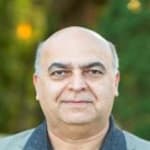
Koorosh Aghakhani is a leader in cutting edge dental technology which has advanced tremendously in the past several years. Although the scientific aspect is recognize in the industry, it's the artistic aspect of an aesthetically pleasing and functional product that fuels his dedication. His passion for creativity sets him apart from the conventional technician.
Dental podcast: Welcome to DentalTalk. I'm Dr. Phil Klein. Today we'll be discussing how to avoid the most common causes of failures of implant retained multi-unit restorations, and gain a better understanding of the variety of materials and manufacturing methods for hybrid dentures. Our guest is Koorosh Aghakhani, an expert certified dental technician and leader in cutting edge dental technology.
Transcript
Read Full Transcript
This transcript was automatically generated and may contain errors or inaccuracies. It is provided for reference and accessibility purposes and may not represent the exact words spoken.
You're listening to The Dr. Phil Klein Dental Podcast from Viva Learning.com.
Welcome to the show. I'm Dr. Phil Klein. Today we'll be discussing how to avoid the most common
causes of failures of implant-retained multi-unit restorations and gain a better understanding of
the variety of materials and manufacturing methods for hybrid dentures. Our guest is Koorosh
Aghakhani, an expert certified dental technician and leader in cutting-edge dental technology.
Before we get started, I would like to mention that Koorosh will be presenting a live webinar on
VivaLearning.com. It's titled Shock and Awe, Shock-Absorbing Nanoceramics Impact on All-On-X
Restorations. It's scheduled for Monday, June 27th at 7 p.m. Eastern, 4 p.m. Pacific.
Simply visit VivaLearning.com to register. The webinar is free, and you can earn live interactive
CE credit. Kourosh, thanks for joining us on Dental Talk. I feel it's a pleasure to talk to you
today. Yeah, I mean, with the importance of digital dentistry, it's really important for dentists
to understand what the future is with the relationship between the dentist and the laboratory. And
as we talked offline, eventually there's going to be a time when most dentists are milling these
restorations in-house. And then the question might come to mind, what's the purpose of the lab?
if we're doing this in-house. But there is, as we talk, there is a purpose to the lab. And that's
what I would like you to elaborate on in the beginning of this podcast, which is how can labs help
doctors with digital dentistry, even in the scenario when many doctors are doing the work chair
side. So let me tell you about the history of digital dentistry that I started. I started this as a
dental technologist 28 years ago. 10 years ago, I saw the first machine in a dental show,
and I was so surprised to see a machine can do the crown. But it came to my mind, one day the crown
is done by the milling machine, but the impression is going to be by another device,
which the scanner came out. So I was always four or five years ahead. So I know one day there would
be no luck as a practical or working on the cases. So what we are doing right now,
we are helping the offices. to mill their crowns in their office. We help them to choose the right
scanner. We design it for them as the role of the lab in this business. Only that we have is
designing the crowns for them. Then the next part is nesting the crown in the milling machines,
which is not easy and it's more professional. So we log into their systems. As team viewer,
we are part of the team inside the office in a long distance. So how does the compensation work?
in traditional ways the doctor sends the impression out to the lab and obviously they have to
return the restoration but in this case the restoration is being milled chair side so how does the
compensation work to your labs okay let's let me put it on the other way when the doctor prepped
the teeth then they scan we can just log in and take two pictures from the doctor and right away on
the chair the patients can see what happens in the future and a final crown. It's an STL file.
It's a real crown. It's not a Photoshop. So we talk to the doctor. We decide what to do.
The doctor recommend the type of the crown. Then with the help of the pictures,
we design it for them. They send a file to us. We design. Doctors check it right away.
Sometimes they have a printer in the office. They print it in 10 minutes to see how it looks like.
They like it. Then we help them with their milling machine. So with the help of new material that
we just got the chance to work with, like a nanoceramic material, you don't have to sinter them.
You cut the time with a sinter oven. So in 10-15 minutes, we help them to nest the files.
In the milling machine, 15 minutes milled, come out, and we help the assistants over there to how
to stain and glaze and just set in the pêchement. You're still an integral part of the whole
process of the relationship between the dentist and the laboratory in a more digital fashion,
which goes along with the digital workflow. But with all your expertise and experience in designing
these restorations, that's something that has to be taken very seriously by the dentist because the
dentist has enough to do other than design these restorations where that is really your expertise.
So it's good to hear that this relationship between the dentist and the lab will continue. even
though the format of where the actual restoration is being fabricated has changed. Regarding
implant cases, why do you prefer nanoceramic blocks and discs, specifically Grandio,
over the current zirconia rage that's going on right now? It goes back to the time that we start
doing all-on-four cases, all-on-x cases. So at first we start with the bar and acrylic teeth.
Then it was breaking, chipping, but there was a benefit with acrylic was distributing the force
between the implants and acrylic plastic. But when zirconia came out,
zirconia is a very rigid material. And if there is a premature contact, the force goes right
underneath. If there is implant in there, it might fail. And it was making lots of sounds,
especially when you have upper and lower make too much noises. The other problem was the de
-bonding from the Thai bases because cement is not very friendly with zirconia.
We have experience with all of those. We have a lot of those de-bondings. So we had one day this
nanoceramic grandiose disc in a show. We tried that one on the timber crowns.
It means we just prep the bar like individual preps and mill the crowns one by one over those.
And we had lots of comments of those. I would say 90% of doctors,
we are doing about 100 out on force a month. And I would say 90 of them are with this grandio disc
porcelain composite. No noise, very easy to adjust.
Anything happens to that one, the patient can go to other dentists. Because when patients break the
crown, chip the crown in case. If they go to other dentists, nobody dares to touch it.
because they don't want to have that responsibility. But very easily,
they can put grandiose composite on it to fix it. Or if they can't, we just mill,
or they can mill the crown, put it back in there. It's a big help. And in dental lab industry,
it changed the whole scenario. So this nanoceramic block or disc really is a game changer in a lot
of ways as far as... simplifying potential problems that may happen down the road and also just
working with the material itself. Some big advantages over the typical zirconia. As far as
adjustment, stain and glazing of Grandio in the office, tell us about that.
We have GC stain and glaze material or Shofu or Light Art.
So it's very easy. I mean, any assistant in the office can learn how to do it after they mill it.
They glaze it with GC glaze and just like a regular stain and glaze with porcelain.
Just put some blue on the top and size of brown on the necks, embrasures, light cure machine,
five minutes instead of 30 minutes in the oven and that's done. Even it can be done in the patient
mouth. They have some neighbor teeth with this coloration spots in there. The doctor can put with
the small brush, put it on there and light cure it. So what are some of the other practical
advantages of using nanoceramics over zirconia? With zirconia adjustment,
if they do any adjustment on zirconia, they have to send the crown back to the lab. So if it's
local adjustment... in town in Houston, it takes two days for my driver to bring it to the lab.
Out of state, it takes one week. And each time any adjustment, it has to come to the lab and go
back because it has to be in the oven, glazed again. And the hardness is close to Emax.
Actually, it's much better if there is premature contact. The zirconia never gets adjusted.
And all the force, it goes to the implant. And it causes the implant failure if they don't adjust
it right. Because most of the time, they don't have time to adjust it. I mean, we'll see a lot of
those. So this material, after a while, it gets adjusted by itself. Not easily,
but it will. Any adjustment, like margins, like contacts, if you want to add,
you can add Grandioso with the bonding from Voco. Because we know that each material has to have
its own bonding or stain and glaze everything. So very easy. They can add and they can.
If even we had some incident that wrong shade, even you can go from A1 to A3 with help of the stain
and glaze, especially the glaze from VOCO. So the versatility, obviously,
by using the nanoceramic system is very obvious. These types of adjustments,
the stain, the glaze, you don't need to worry about the transportation to and from the lab and get
it back to the patient. This can be all done in office, which is a huge advantage. so let's talk
about the milling machine itself do you have any recommendations on milling machines we have basic
milling machines like roland or vhf the dry machines that are able to mill zirconia i'm sorry
zirconia and grandio just uh nanoceramics so my recommendation is for the dental offices because
they don't have to invest that much money is roland or vhf at first or imsi core In the lab,
I have all those machines, Plum plus, I'm sorry, Zirconzone. Because they are from Germany,
they like each other, but German machines are better on this material. With VHF,
we mill a crown in 12 minutes. Roland, 15 minutes. With Zirconzone, it's about 20 minutes for a
crown. So in big cases, in three hours, we are able to mill all those crowns over the implants.
And with help of this material... We are doing the all-on-fours in one day,
the final. The patient comes, pulls all the teeth out. We just mill the bar, and we don't have to
sinter the zirconia for 12 hours because there is no sinter on this one. So we are able in one day
to make the final appliance. You said you've been doing this for 28 years? As a dental technician,
dental technologist. What you've seen in the last three decades, did you ever dream that...
dentistry would be where it is today regarding the digital workflow never ever if you 10 years ago
you tell me there is a machine or there is a device make the crowns i would say there is no way
remember we had to do pour the impression wax up cast the wax up in metal then finish the metal cut
it solder it then just started placing the porcelain one crown lots of time i mean there was I
would never, ever think about these things. But I love it. I do it every... I recommend all my
technicians, all the students that are going to dental school, I tell them, if you cannot go to
school, be a dental technician these days. Because digital, it's so fun. You do not believe it.
This is my, I would say, second wife. I do every day, hours in the lab.
Then when I go home, in the middle of the night, I wake up, I remember something. Let me tell you
about the story of this suffers. When we, first time we went to buy the Zirconzone machine,
we had no idea. So I sit over there, the guy asked me to turn on the computer. I said, I don't know
how to do it. Everybody over there told me, okay, go buy a scanner, start sending the work.
Then you learn it. I said, if I don't learn it today, I never learn it tomorrow. So we bought the
machine for one year. We put it over there every day. looking at it and not able to do it because
there was not that much information youtube videos how to do it so finally i got to know exocat
exocat is a very good software you can start can do everything besides dentistry it's engineering i
have a background engineering it's engineering software i learned how to do it i mean every night i
was waking up in the middle of the night learning something thinking about something and i
recommend it to all dental offices I'm not advertising for Exocad, but Exocad has an option that
you can buy the practical dongle from them. The software is about $12,000, $13,000. But with
$150, I recommend to all my colleagues, everyone, buy the practical dongle,
practice on Exocad, watch the YouTubes. There are lots of videos over there, and you can design it
around in five minutes. All your background and understanding of dentistry and being a certified
dental technician as you are, puts everything in perspective with the digital workflow. You have
all that background. How does that compare to someone who's getting out of school now that never
did it the traditional way that I remember when I was in dental school in the 1980s? At that time,
you know, we had to do everything by hand. We had to be creative on those times because there was
not enough equipment. You had to actually, you have to invent. That's what I did these days. So I
recommend them learn the occlusion, learn the morphology, learn the anatomy. Then combine it with
digital dentistry. And digital is very easy. It's very easy these days. The softwares are helping
artificial intelligence. They are helping you. But the difference between artificial intelligence,
or I would say those designers that are sitting and learning from YouTube, is we have hands-on.
We have to learn the hands-on. Put one ear in hands-on. Go wax up. Set up the denture.
It's very important. You have to have the mind of a 3D in your mind. Just like my kids at home,
we have a three-shaped scanner at home. We have a printer at home. They are making toys. They are
making lots of stuff for mom, plates, knives, everything. But they have to get the 3D idea in their
mind. If they are at school, learn scanning, learn designing.
With the help of surgical guides, if you have these days, we can have the appliance ready for the
patient right after the surgery. We need to do another podcast course on the future of dentistry,
like what we're looking at 10 years from now, because with what you just mentioned and where your
mindset was, you know, 28 years ago, 18 years ago, five years ago, and now where we are now,
it'd be great to hear what you have to say about where we're going to be 10 years from now, because
you probably have thought about that also in the middle of the night, just like you have thought
about your design work. So it's been a pleasure to talking to you. I mean, it's really fascinating
to hear it from somebody like you that's experienced it all. In the world of dental laboratory
work, being the type of dental technician that you are, you have such a passion for creativity and
you really are someone we want to talk to in the future. So thanks very much for your time and we
will talk to you soon. You're very welcome. Pleasure talking to you.
Keywords
dentaldentistVOCO AmericaCAD/CAM Technology and MaterialsCrown/Bridge/Veneers/IndirectLaboratory/Technicians