University of Bridgeport · Medical University of South Carolina · Level Up Infection Prevention · TeleDent by MouthWatch
Read full bio
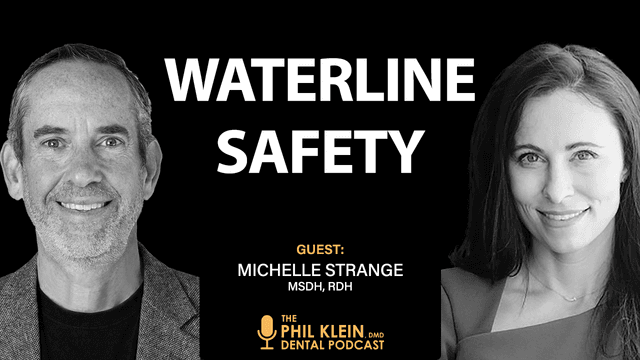
Michelle Strange, MSDH, RDH, has more than two decades of dental expertise, beginning as a dental assistant and then obtaining her degree as a dental hygienist, also completing a bachelor's degree in health science from the Medical University of South Carolina and a master's in dental hygiene education from the University of Bridgeport. She continues to invest in ongoing education, gaining relevant certifications such as her Certificate in Dental Infection Prevention and Control. Her community and global endeavors demonstrate her passion for dentistry, from volunteering locally as a dental hygienist to her worldwide missions. Currently, Michelle is a cofounder of Level Up Infection Prevention, A Tale of Two Hygienists Podcast, the client success manager for TeleDent by MouthWatch, owner of MichelleStrangeRDH, and a practicing dental hygienist.
Does your practice have someone directly responsible and held accountable for maintaining infection control protocols? Many dental offices operate without a designated infection control coordinator, leaving critical safety measures to chance.
Michelle Strange, MSDH, RDH, brings over two decades of dental expertise to this discussion. She holds a bachelor's degree in health science from the Medical University of South Carolina and a master's in dental hygiene education from the University of Bridgeport, along with specialized certifications including her Certificate in Dental Infection Prevention and Control. As cofounder of Level Up Infection Prevention, host of A Tale of Two Hygienists Podcast, and client success manager for TeleDent by MouthWatch, Michelle combines clinical practice with infection prevention education and consulting.
This episode explores the vital role of the infection control coordinator (ICC) — a position the CDC has recommended since 2003 but remains underutilized in dental practices. Michelle explains how this designated role can transform your practice's safety protocols, equipment maintenance, and staff training while potentially saving thousands in equipment replacement costs.
Episode Highlights:
The ICC serves as the champion of infection control protocols, similar to treatment coordinators or insurance coordinators, taking ownership of policy development, staff training, and compliance monitoring. This role can be assigned to existing staff members who demonstrate interest in record-keeping and education rather than requiring a dedicated full-time position in smaller practices.
Proper documentation through standard operating procedures and checklists enables any team member to maintain protocols during staff absences or turnover. Without written procedures, critical tasks like spore testing, autoclave maintenance, and dental unit waterline management can be missed during staffing disruptions, creating compliance risks.
Equipment maintenance protocols managed by an ICC protect significant investments, with suction line maintenance alone preventing $30,000+ vacuum pump replacements. Proper maintenance of digital scanners, autoclaves, and other expensive equipment through documented infection control procedures extends equipment life and prevents costly repairs.
CDC guidelines specifically include having a designated person monitoring infection control practices as a key compliance requirement. This differs from OSHA requirements and focuses on patient safety through clinical infection prevention protocols rather than just employee safety measures.
Training resources for ICC roles include digital courses covering five hours of how-to content, virtual consulting for standard operating procedure creation, and certifications through organizations like OSAP and the dental assisting board partnerships. These educational pathways provide the foundation for effective infection control coordination without requiring formal certification programs.
Perfect for: Practice owners seeking to improve infection control compliance, office managers responsible for staff training, dental assistants and hygienists interested in expanding their roles, and practices experiencing high staff turnover requiring standardized protocols.
Discover how implementing an ICC role can streamline your practice operations while ensuring the highest standards of patient and staff safety.
Transcript
Read Full Transcript
This transcript was automatically generated and may contain errors or inaccuracies. It is provided for reference and accessibility purposes and may not represent the exact words spoken.
You're listening to the Phil Klein Dental Podcast.
Infection control protocol. We hear these words all the time. The question is,
do you have someone in your office, an assistant or any other staff member, that is directly
responsible and held accountable for maintaining infection control protocol in your office?
And this involves every aspect of it, instrument processing, surface disinfection, equipment,
and so on and so forth. This employee will become essentially your practice's infection control
coordinator, commonly referred to as your ICC. Now, why is it important that you have this
designated person in your practice? To answer this question and tell us all about it is our guest,
Michelle Strange. Michelle is a registered dental hygienist with a master's in dental hygiene
education. She brings over 20 years of experience to her numerous roles in dentistry. You can get
more information, including Michelle's ICC guidebook, at levelupip.com.
That's Level Up. Michelle will be joining us in just one second, but first,
when it comes to fighting dental disease, we all understand the importance of an effective
prevention strategy. This includes patient home care compliance, regular hygiene visits,
and using the best prevention products available. That's why so many dental practices rely on
VOCO's award-winning preventive care product line. Recommended by top dental clinicians, Remin
Pro, Proflorid Varnish, Admira Protect, and Grandio Seal are truly and true products that are
effective, easy to apply, and result in successful clinical outcomes with high patient
satisfaction. Whether it's for fluoride treatment to seal pits and fissures or to treat
hypersensitive teeth, VOCO's premium preventive care products help you win the battle against tooth
decay and sensitivity. So when you're thinking prevention, think VOCO. Request your free sample
today at vocoamerica.com. Michelle, it's a pleasure to have you on the show. Thank you for having
me again. So we're talking about infection control, specifically the role in the office known as
the infection control coordinator. So to begin this podcast, tell us what that is. What is that
role? So the infection control coordinator or the ICC is a role that the CDC actually started
recommending in 2003. So it has been 20 years that this role has been out there and we've been
discussing it. But very few people in the dental industry has actually heard of this. I believe
it's a very crucial role in dental and in health care. And essentially, it's somebody that's going
to be responsible for overseeing and implementing infection control protocols. and your procedures.
I always like to compare it to your insurance coordinator, your implant coordinator,
your treatment coordinator, all of those roles that are the champions of that particular task.
So this role is vital to ensuring the safety of both the patients and the team members by
preventing the spread of infections within the healthcare setting. The ICC is typically responsible
for developing and maintaining infection control policies and doing this team training on either an
annual basis or anytime there is a new protocol or a new piece of equipment maybe. They will
monitor your compliance, making sure that you're doing all the things like the things that you
don't even think about when you're in dentistry day in and day out. And then they'll also stay up
to date with the latest guidelines and any new regulations that are coming out related to infection
control. I think one of the new ones that everybody's trying to implement is something like dental
unit water lines. And so your ICC will champion that particular change in the practice,
come up with your policies and procedures, find the products that work best for your equipment and
what your instructions for use might say. And then they just take the reins of it and make sure
that they then disseminate that information to the team. So I'm a dentist, let's say,
and I'm practicing and I have a small practice in a rural area. And I, you know,
work on not huge profit margins. And I say to you, well, we don't have a huge practice where we can
hire someone specifically like an ICC. Can't my assistant get trained in doing that?
So I save the resources to pay this person and pay their benefits when I can just kind of
incorporate that into an existing staff member. What's your answer to that? Absolutely.
Absolutely do that. I am a hygienist. I've always been the ICC in the practice. I think what's
important here is when you are establishing that person who is going to take on this role,
they want to do it. Like, don't ask me to be an insurance coordinator in any offices.
It just won't work well for anyone in the practice. None of it will because I just I genuinely
don't care. I work public health for this. I don't have to fuss with it too much. So I would say
give this role to somebody who wants it, somebody who likes to do record keeping, who enjoys like.
thinking about the nuances are of our day in and day out like will this disinfectant work for all
of our equipment or is it one that we just need to keep in this one room you know like these are
just the weird nuances that can save your office actually time and money really in the end and at
the end of the day but they are going to make sure you stay in compliance that you're preventing
infections that you're you know ordering products that are necessary and proper for everything and
then making sure They want to teach others because that's what this role is going to have is like,
hey, guys, do you guys remember that we're supposed to have a wipe in each hand? Let me tell you
why. So they're going to learn. They're going to keep records and they're going to educate.
So as long as that person wants to do that role and they're not just Judy, the assistant that shows
up every day, I think it's fabulous to have your assistant do that. OK, so it's it can be an
isolated role. The practice is large enough where it's needed to have it that way.
Or it could be a dual role, one of two or three roles in a smaller practice. But that person really
has to be kept up on all the new CDC guidelines. And like you said, new equipment,
new diseases that are being spread and making sure that the office is compliant, which is so
important. So with staff turnover being so high, unfortunately, for a dental practice.
How can an ICC help with training? In other words, you know, let's say you have a dedicated ICC
person and they, for some reason, leave the practice without much notice. And they're pretty much
the only ones that really know about what's going on with the infection control protocol and
everything you just described. What happens? What do we do? Well, I would just say first that the
only time that I've really ever seen anyone have a designated position to the ICC has been a DSO
situation, multi-practice offices where that ICC is kind of just taking on that role.
Almost everywhere I've ever been as a clinician in the last 23 years or helping offices,
it is that dual role because it's not a full-time job for your one practice. I mean,
it is in the sense. of like, hey, did you do hand hygiene today? Do we need this? Like, but it's
moments out of your day. It's not your full day. Now, when it comes to the team training, I think
you hit the nail on the head right now is what if Judy does everything in this practice?
She knows the ins and outs and Judy is sick. Judy is gone. Judy's kid now is in the hospital and
she's out for the week. What happens to our practice? Our sport tests aren't happening.
You know, our autoclave isn't maintained. or even maintenance if necessary? Are we doing our
suction line maintenance? That's so critical for the, you know, it's the guts of our practice. Are
we doing all the right things? Is it the week that we do dental unit waterline testing and shocking
and now that just doesn't get done because chaos coming back from somebody not being in is just
crazy? So the ICC in this particular case, in that situation,
would... your standard operating procedures they would create your checklist and they would have
everything kind of written out this is the protocol for our office and then insert human at that
point like everything is kind of done I Michelle the hygienist that never did the spore testing
never did the autoclave maintenance I could walk in and be like okay checklist sport test in this
cabinet. It's a mail-in. We do this. It goes on the shelf, like bam, bam, bam. That is what your
ICC could do. Also, as somebody who is a temp in a lot of practices,
I just started temping, I say just last year, was temping in a practice where we had a temp
assistant. The entire clinical team outside of the doctor was a temp, like chaos,
complete chaos. It would have been so lovely if everything had been labeled properly,
that I knew the flow of their sterilization area. I knew that,
you know, the intraoral camera and my operatory that I was using got wiped down or it didn't get
wiped down. Or if it did, it's not with the wipes that tear it up, you know, that we do suction
maintenance at the end of the day. This is where you can find it. All of that can be disseminated
via your policies. procedures, but I think even more importantly, your SOPs and your checklist.
And that will help then confirm that everyone knows how to be safe in your office.
And I say this a lot in my presentations, but just because I have two thumbs and a dental degree
does not mean I am an expert in infection control. I know how to do the procedures.
I've heard of the things. I understand the logistics of it, you know, ultrasonic package.
autoclave right but i don't know how to do that in every office i go into autoclave being paper up
paper down i don't know and then if i take all of my old knowledge that i just used in that last
practice and i bring it to this practice that's a legacy error and that's where things happen that
are breaches that are usually just little tiny errors and mistakes but those add up to more
egregious things over time We'll be right back with Michelle in a second, but first, if you're
looking to make teeth whitening a successful part of your practice, then you need a system that not
only dramatically whitens teeth fast, but also ensures little to no sensitivity. Philips Zoom
Whitespeed does both. Whitespeed's light-accelerated technology speeds up the whitening process,
clinically proven to whiten up to eight shades in one visit. And what's really impressive is that
99% of patients surveyed experienced little to no sensitivity with Philips Zoom.
Philips offers two professional whitening solutions, in-office whitening using Philips Zoom
Whitespeed, and take-home whitening, with a range of whitening gels for either daytime or
nighttime use with custom trays. For a comprehensive, tried-and-true, state-of-the-art
whitening solution for your practice, check out Philips Zoom Whitespeed. To learn more, visit
philipsoralhealthcare.com. So out of all the offices that you've worked in and visited,
which are many, and you do a lot of training, how many offices percentage-wise do you think have a
thorough policies and procedures document, a continual process where no matter who's in that day of
the week, they're all observing the right protocol, the policy and protocol, to handle the office
in the most effective infection control way? Is that something that you see often, or is that the
exception to the rule? Oh, it's not even anywhere I've ever been as a,
I actually, that's, I moved my company into that where that is an additional service because so
many people don't have the time. They don't want to, they don't know where to start and they almost
get analysis paralysis of like, how do I create this SOP? And so I now help people do that because
they just weren't there. And it, I think it wasn't really a big.
issue until the pandemic, until we started having these staffing issues and we had turnover.
We're like, please, if you have a heartbeat and opposable thumbs, come into dentistry. We need you.
And then we're like, oh, wait, how do we train these people and make sure that we are not putting
our patient safety on the back burner? From a training standpoint, what do you offer,
Michelle, from your organization, your company that could help be a solution for this?
Well, thank you for that question. So I have multiple things. My first thing that I created was
digital courses for the infection control coordinator. So if you are like Judy, the assistant that
clocks in in the rural area is wanting to be an ICC, I have about five hours of content that she
could just dive into. And it's very how to, how to do this. Like, yes, we have infection, you know,
chain of infection. We have ultrasonic testing, but like, let's talk, like, this is what you're
going to do. And it also has a bunch of downloads. loads to help with record keeping. But then I
created kind of this one on one virtual consulting thing where I will, you know,
help. guide you in your SOP creation. So I sit down with your team, you tell me what products you
already have protocols you already have, and I write your SOPs for you. And then you test them out.
Does this work? Does it sound good? Is it working with the flow? And then we have another meeting,
we adjust as needed. But so many times when I do that, people are doing things that are actually
unnecessary, like their way. time and products, and we can kind of consolidate and make it a little
bit more succinct in their protocols. And surprisingly, they were just doing too much.
They were doing a lot of unnecessary things. So you need to learn about the office. that you're
trying to provide this information for. So do you get the layout of the office, the number of
employees, the number of operatories, how many patients are coming through the door, what kind of
machines are in the office? Is that the kind of thing you look at? Yeah, but I do like to do it
where it is very much this collaborative approach because of course, like me writing it and then
you just like hoping that you do it right. So it's more of like, bring me your IFUs.
for your, your instructions for use for the equipment that you're doing, you have in the office,
tell me who is going to be your ICC or at least this designated person that's going to do this. So
I kind of tackle it that way where you're bringing me all of these things and I actually have you
read it to me. Like what does the product that you say or have right now say is the way to shock
your lines. Does your instructions for use for your actual unit say that that's okay? Then let's
create this protocol. What works in your office? Are you open or on Fridays? Do you go in and do
admin stuff? Let's do it that day. Nope, you don't. Let's incorporate it this way. So I do kind of
have that like chit chat with them beforehand and they bring a bunch of stuff to the call and then
I will collaborate with them and create those SOPs. Yeah, that's phenomenal. Phenomenal service and
a great idea and hats off to you for starting that. Thank you. Yeah, so let's talk about...
office that goes, you know, I listened to this podcast and I've heard this before and I haven't
done it, but I want to do it. I want to designate one person to be my ICC, my infection control
coordinator. How do you get started in this role? So really, there's not a formal certification out
there, just like if you decided that this is going to be your treatment plan coordinator. But there
are places like Mind Level Up Infection Prevention that does that training. OSAP is a fabulous
place to send people to get the proper training. OSAP and Danby,
which is your dental assisting board, they have partnered to create a test.
you can get certified in infection prevention protocols. So I love all of those things.
I have all of those. I like to say, go get those too,
get those education. And where I think I fit into this protocol is, let's get into the...
the dirty of it right like this is what happens in your practice it's your clinical office because
sometimes it's like people still are confused about dental unit waterline maintenance and i'm like
let's just simplify it like let's get in write these out so essentially it's just getting somebody
say this is judy judy's gonna do it you you figure out where which path is which what how much time
do we want to give judy to learn this and then kind of go from there from the standpoint of a cdc
inspection some of which are not even scheduled. They're kind of surprise inspections. Once in a
while, you might even have a disgruntled employee that sees something that they don't really think
is by the book, like you didn't check the autoclave for spores in the last two weeks,
or the person who was supposed to do it has been on vacation and the office missed it, and they
report that because they were fired. For whatever reason, these things happen. Yeah, it does. Does
it really help the practice? And it's kind of a, you know, loaded question, but does it really help
the practice to have this kind of documentation and an ICC on staff to validate the culture of the
office of being really focused on infection control, which is important to that inspector?
So actually, when you look at the CDC guidelines, there's a PDF,
there's even an app that has a checklist. It's called... dental, you know, infection prevention in
the dental setting. Part two, I think question number three is,
do you have a designated person monitoring your infection control practices?
Part one says, do you have written policies and procedures? Are they a place where people can find?
Are they updated? Are they, you know, kind of a living document that you're walking?
You know, is it this autoclave that you're actually using? Is it the ultrasonic you're actually
using? This is different than OSHA. It is, they cross pollinate quite a lot,
you know, the guidelines with them. But CDC is more of your like, I think, well, it's patient
safety and then the clinical stuff. And so that is like question one through five on that is about
guidelines, policies, written exposure control plans and the ICC. Right.
And it seems to me with the all the things the dentist has to worry about, not only the clinical
advancements that keep coming up and we're moving into a vastly different world with digital
workflow and then the business part of it with. paying the bills and the employees.
It seems to me that it behooves the dental practice to have someone else worry about the infection
control. And the dentist needs to find someone who, like you said, wants to do this because like
you said, you don't want to do the insurance part of a practice. I would have no interest in that
too if I was in the same position. That is not what I'm interested in doing. The less I work with
insurance companies, the happier I am as a person. But it seems to me that a dentist really needs
to take that. that responsibility off his plate, his or her plate,
and delegate it to someone who he or she has great confidence in to know that they're going to do
the right thing to keep the practice safe and keep the patient safe. CDC is interested in patient
welfare. And of course, OSHA is interested in employee welfare. And they do overlap, but you need
to have both. But certainly, you need to have CDC guidelines. very strictly and diligently comply
to. So I think this is one step in that direction, a major step. And I think it gets better after
that, right? Once you get an ICC that you could trust, that does the job, I think the dentist's
life is going to be a lot better and the whole practice will be happier. You agree? Absolutely. And
one part of this that I probably should bring up more because it really hits home, I think,
with a practice owner is an ICC maintains your very expensive equipment.
Because infection prevention protocols like suction line maintenance and autoclave maintenance and
how we wipe and maintain and sterilize all of those scanners and the digital things that cost us so
much money. Your suction lines alone, $30,000 plus for a new vacuum pump.
And if you're not doing it properly and it gets clogged with all the pumice, that's not Roto
-Rooter that comes out and handles that. That's busting out pipes from your floors.
something that's like, Oh God, you know, like, I don't know, it's not important, but it can save
you a ton of money on this very expensive equipment that you need and you invested in.
And I think having that somebody that is the champion of that, that's like, this is my job and I
need to maintain this equipment versus so all of us that are like, I think somebody is doing it.
I hope somebody is doing it. That doesn't equal great. I think return ROI on.
Yeah, actually, in one of your webinars, we were watching this with a group of people from Viva
Learning and a couple of our employees laughed because you said in the webinar, if you don't write
it down, you didn't do it. And I'm not sure what that was pertaining to. But basically,
you have to document what you're doing. And you can't just said I did that if you don't have a
record of it, and it's written down or it's documented, it was essentially to everybody else. in a
situation where you need to show that you did do it, you didn't do it. So this is all part of the
ICC responsibility. Well, this has been very, very enlightening as usual, Michelle. You have great
experience, great enthusiasm. I love the way you speak. We're very happy to have you on our show.
And if you want to get in touch with Michelle's company, what contact information can you leave for
our audience to reach you? They can find me at my company, Level Up Infection Prevention, and that
is levelupip.com. LevelUpIP.com. All right.
Check it out, folks. Thank you so much. And we'll talk to you soon, Michelle. Thank you for having
me. If you're enjoying this podcast, please leave a review or follow us on your favorite podcast
platform. It's a great way to support our program and spread the word to others. Thanks so much for
listening. See you in the next episode.
Clinical Keywords
infection control coordinatorICCMichelle Strangedental hygieneinfection preventionCDC guidelinesOSHA compliancespore testingautoclave maintenancedental unit waterlinessuction line maintenancestandard operating proceduresSOPsstaff trainingequipment maintenanceLevel Up Infection Preventiondental educationDr. Phil Kleindental podcaststerilization protocolsultrasonic cleaningsurface disinfectionexposure control plandental assistingpractice management