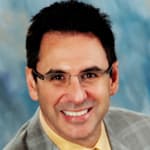
Dr. Jablow received his dental degree from New Jersey Dental School in 1986 and practices in Woodbridge, NJ. He received his Fellowship in the Academy of General Dentistry (2001) and is certified in various laser wavelengths. He is a member of the American Dental Association and NJ Dental Association. He is an attending dentist at John F. Kennedy Medical Center in Edison, NJ along with being a long time member of his county's Peer Review Committee. Dr. Jablow is president of Dental Technology Solutions a lecture and consulting company.
Dental podcast: Welcome to DentalTalk. I'm Dr. Phil Klein. Choosing the right cement for your fixed restoration is just as important as picking the correct material. Today we'll be talking about dental cements, especially as they relate to our ceramic restorations. Our guest is Dr. Martin Jablow. He's a general dentist in Woodbridge NJ and Chief Development Officer of Cellerant Consulting. Dr. Jablow has been recognized as a top speaker by Dentistry Today and has lectured world wide on dental technology and materials.
Transcript
Read Full Transcript
This transcript was automatically generated and may contain errors or inaccuracies. It is provided for reference and accessibility purposes and may not represent the exact words spoken.
You're listening to The Dr. Phil Klein Dental Podcast from Viva Learning.com.
Welcome to the show. I'm Dr. Phil Klein. Choosing the right cement for your fixed restoration is
just as important as picking the correct material. Today, we'll be talking about dental cements,
especially as they relate to the ceramic restoration. Our guest is Dr. Martin Jablow. He's a
general dentist in Woodbridge, New Jersey, and chief development officer of Celeron Consulting.
Dr. Jablow has been recognized as a top speaker by Dentistry Today and has lectured worldwide on
dental technology and materials. Before we get started, I would like to mention that Dr.
Jablow will be presenting a live webinar on VivaLearning.com titled The Final Piece of the Puzzle,
Choosing the Definitive Cement for Your Fixed Prosthetic Restoration. It is scheduled for Thursday,
July 21st at 7 p.m. Eastern Time, 4 p.m. Pacific. Simply visit VivaLearning.com to register.
The webinar is free, and you can earn live interactive CE credit. Dr. Jablow, it's a pleasure to
have you on Dental Talk. Thanks, Phil. It's always a pleasure to be here. Enjoy it a lot. Yeah, we
enjoy a lot of your Viva Learning CE activities, and they get great engagement, and we appreciate
your time. I know how busy you are. So let's start with zirconia. What is the go-to cement these
days for zirconia-based restorations? When we get to zirconia-based restorations,
which are now the predominant restoration for short bridges, even longer span bridges, and single
units, the great thing about it is because of the strength of the zirconia material,
we can basically use whatever we want. I mean, that's one of the great parts of zirconia.
As long as you have the proper resistance and retention form, you really don't need to be as
specific. In terms of the cementation, there's resin cements. There's resin modified glass ionomer
cements. There's glass ionomer cements. There's the old zinc phosphate, you know, that we used back
in the dinosaur ages in dental school. Dental schools are still using that, by the way. I was on a
podcast the other day. Yep. That's a scary thought, Phil. Yes. I don't know the name of the dental
school. I don't think I should even say the name if I knew it. But this KOL literally told me that.
He was at a dental school and they were using zinc phosphate in the clinic. That is crazy in this
day and age. I mean... this reminds me, I used to do a thing for dental students,
D3 students, and I called it from Jurassic Park to state of the art. And some of the,
I know you already ended, Don, is they were still teaching these kids just hand filing and lateral
condensation. And this was not that long ago. So, you know, with that, we always have to know that,
you know, the dental schools all move at a glacier pace and sometimes are very,
very far behind the times.
zinc phosphate was used for over a hundred years and was successful it is not the go-to cement in
2022 and it's far from it so i'm sorry to hear that but you know it is what it is so let me ask you
this so what's the story with everybody's asking can you bond to zirconia so how does that affect
the cements we use so the question is first question is do you need to bond okay So if you back at
dental school, they used to say if you had a good resistance and retention form, it didn't, you
know, it could be bird poop and you could cement the crown with it. And that was true.
If you've got good resistance and retention form, why would you want to bond this thing in? What if
you don't? Well, if you don't, then it becomes a different story. OK, because now you're trying to
use materials to withstand the forces of occlusion. Now, that may work okay on a lower first
premolar. It doesn't work as well on a second molar,
which has a lot more forces put on it. Would you want to do that on a Bruxer? I don't think so.
When we're talking about those things, all of this stuff, no matter what it is, the basic tenets of
dentistry haven't really changed. Proper preparations and things for what you're trying to
accomplish are always the important thing. Case selection is always the important thing. And then
we get into materials, and then we get into more materials. So if we've selected zirconia as our
restoration and we want to bond it, there are ways to bind it. You have to clean it first.
IvoClean is one product that does it. And then you can cement it with pretty much anything. Most of
us would use a resin-modified glass ionomer. There's a couple of different ones.
Marin Plus from Voco, Nexus RMGI from Kerr.
I mean, and 3M has theirs and JC has theirs. I mean, everybody has that.
And then, you know, we still have beyond that. We still have, you know, the other things, the resin
cements, you know, the Varolinks and other things like that, the self etch stuff. It all works.
Right. So when you have the proper retention. The prep design is adequate based on the minimum
requirements that you mentioned earlier in this podcast. just about anything's going to work with
zirconia. But if you don't... Yeah, but there are cases where you have very little tooth structure
and crown lengthening is one possibility. It's not always possible. So you do the best you can with
what you got, which we all know is trying to prep that maxillary second molar isn't easy. And a lot
of times they're short preps. And then what do you do? Well, then you want to try and bond it on.
You want to use something that's going to work better for you. And, you know, you can go to the
Panavias of the world and you can do all these different things that you... to do to try and get
you know a successful restoration that's it but like you know the bread and butter everyday stuff
where you get the right resistance and retention forms your preps are good doesn't matter so i
always say i try and minimize the stuff that i keep in my office not maximize it so you know with
that i don't need thousands of different cements for everyday use because it just doesn't make
sense if 90 something percent of my restorations are zuconia then I need a cement that's going to
work 90 percent of the time and then I may want to also look for a cement that is going to work
with what works the next the other 10 percent right on the resin on the resin modified glass on
them are you mentioned offline you like Marin plus The Marin Plus QM from Voco is what I'm using
now. I have used the Nexus RMGI from Kerr. And I've used a bunch of them, you know,
over the years, different ones. They all seem to work fairly well. You know, the only thing you
have to remember is that there is a slight expansion. And this comes back to what's the benefits of
an RMGI or the negative parts. Well, one of the negative parts for an RMGI is that they expand.
so now you have to go okay is that the thing that i want to use for an emacs lithium desilicate
crown that may not be the best choice okay because if you get if the if the restoration is thin and
the cement starts to expand What may happen? We all know. It may fracture. So veneers,
so it's not an indication for a veneer. Oh, absolutely not. What is the main indication for a resin
-modified glass on or cement? For me, it's a fixed prosthesis. It's a zirconia crown.
It's a PFM. Those would be the two, or full metal crown.
Those would be the things that I'd be looking for an RMGI cement to use. What is the benefit?
over a true glass ionomer cement well i mean they're simple to mix okay they're stable they're both
karyostatic so you know that's going to be help you do get a kind of a slight chemical bond i mean
those are things that really come into play the difference is when we get to the glass ionomers,
they've got a low initial pH, all right? So you have a greater chance that you're going,
you may get sensitivity, especially if you've got that short prep close to the nerve, you know, the
pulp. Well, now you may be injuring the pulp from the initial pH, and now you've got to deal with
that unpredictable, what I call, tooth sensitivity. The other thing is glass ionomers can uptake
water again. So you need to make sure you've got good isolation in that. You should always have
good isolation. I mean, we know we would like that. That's not always possible. But I thought the
glass ionomers were actually more tolerant to moisture, so it's less technique sensitive. Yeah, but
the thing is, they're soluble. OK, so you can start leaching them out. And if you've ever done a,
you know, when you've done a glass ionomer restoration, if it starts getting wet, the stuff starts
flowing out of it. So you need to get that isolation. You know, they're good once they're set.
They're not as good in the process of hardening. So the other part to that,
which may be good or not, depending on how you look at it, is what do you, you know, when you're
looking at a glass ionomer, you know, there's a chemical set to that. You know, it's not
necessarily light cured. So now what you got to do is you got to wait and you got to keep it
isolated versus, you know, an RMGI and stuff. A lot of them are light cured. You can you can tack
it. You can do those things to get you to the next step. Right. Tell us about bioceramic looting
cements. How popular are they right now and what are their indications and what are their down?
You know, what's the downside? All right. So the bioceramic stuff, which is Ceramere. which I've
also used for a very long time. Again, the best parts of those are they're easy to mix and clean
up. The difference between almost that to that cement and almost every other cement is that this
one has an initial high pH, okay? So you're going to get a lot less sensitivity.
It's pulp friendly at that point. You know, they're radio opaque. They help remineralize the tooth.
You know, they're not just holding on. They're trying to... to reverse some of this process and
they're good in all types of restorations obviously that's not going to work for a veneer um some
of the downsides for them are you know color issues you know they may not be able to blend as
nicely depending on what you know again if you're into an emacs crown or something very thin you
might get bleed through so it may look a little bit white and opaque um and they have longer
setting times again we get back to you know can't you can't light cure intact this.
I think there's a lot of positive to a bioceramic looting cement. All right. But it's not one size
fits all either. Right. When would you use a bioceramic cement like Ceramere?
When would you say I need to use it on this case? Okay. So if I'm going to use it on this case, one
is what was the, you know, how much of a buildup did I get? All right. You know, was I able to
protect a lot of dent, especially if it's close to the pulp? That would be a real indication for me
to go that way. If I'm using Emacs, then this is not necessarily my go-to. All right.
You know, you don't really get bonding with this and, you know, you may get bleed through from it.
So again, this isn't my go-to. For zirconia, absolutely can be a go-to.
in almost any situation same thing for you know the rmgi you know again it's kind of more universal
and that's kind of what i would like to have in my office is things that i can use in different
places when needed and i have that opportunity to select versus you know the one size fits all and
that's all i've got and you know what do you say to some dentists that only use an adhesive system
versus a looting agent they want it to be an adhesive cement Right. And so again, it depends on
what we're trying to accomplish. It always comes back to that. So if you've got, and for the most
part, we're going to look at Emacs to do that. Why? Because we're going to have greater strength
then. in the Emax restoration if we can bond that whole thing in. If you've ever cut off an Emax
crown that's been bonded in, it's not the simplest thing to do. I mean, some of this stuff has
gotten easier cutting through zirconia and Emax because now we have burrs that allow us to do those
things much more efficiently than we had previously. Yes, you know, if you've got an Emax crown,
then, you know, a looting agent isn't necessarily the one I'm... reaching for, I'm looking for a
bonding agent. So now we're looking more towards a resin cement if we're going to use that,
along with doing whatever preparation you need to the denton on the tooth with some kind of bonding
agents and things along those lines. And then we get into the whole discussions of those people who
anesthetize and don't anesthetize patients for delivery of crowns. Again, based on what we're
trying to accomplish and what the material selection is. So it always comes back down to case
selection from the start, really, then picking what material we're using and then picking the right
cement slash looting agent, bonding agent, all of those things to get us to the final restoration
that hopefully then will resist all the things that go on in the mouth.
And it's a stressful environment, as we all know, but hopefully we can get there using the right
materials. But material selection is one of those things that usually gets put off. Nobody really
thinks about it. It's more realistically always one size fits all, but it's not.
Dr. Jablow, it's been a pleasure. We know you have a bunch of webinars coming up with us. Appreciate
everything you've done for our CE and our audience. So thank you so much and have a great evening.
Thank you, Phil. Pleasure joining you and look forward to many more in the future.
Keywords
dentaldentistVOCO AmericaAdhesives/CementsCAD/CAM Technology and MaterialsCrown/Bridge/Veneers/Indirect