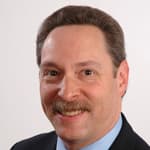
Dr. Convissar is a pioneer in the field of lasers and one of the world's foremost experts on dental laser technology. One of the first dentists to incorporate lasers into general practice, Dr. Convissar has over two decades of experience with CO2, Diode, Nd.YAG and Erbium wavelengths.
An international lecturer from London to Florence to Sydney to Bangkok to Hong Kong and everywhere in between, Dr. Convissar has written four textbooks translated into Spanish, Portuguese, and Greek, and over a dozen peer reviewed papers translated into eight languages. His ground breaking laser treatments have been featured on NBC-TV News, CBS-TV News, the WABC Radio Network, and other programs. Dr. Convissar practices laser, cosmetic and restorative dentistry in New York City with his wife and partner, Dr. Ellen Goldstein. Dr. Convissar also serves as Director of Laser Dentistry at New York Hospital Medical Center of Queens.
Dr. Convissar is also an expert in the field of oral cancer detection and biopsy techniques. He has written numerous publications and taught hundreds of dentists how to examine patients for oral cancer, and how to perform biopsies of suspected lesions. Drs. Convissar and Goldstein are among the first dentists in the world to have incorporated the unique "Velscope" oral cancer detection device into general practice.
Dental podcast: Welcome to DentalTalk. I'm Dr. Phil Klein. One person each hour of every day dies of oral cancer. Its one of the top 6 causes of deaths in the USA in males. With the introduction of fluorescence visualization devices, and an ADA code for payment for oral cancer screenings using these devices, its now easier than ever to diagnose lesions early, before they may spread. Once discovered, most dentists can easily perform a simple soft tissue biopsy. Today we'll be discussing simple biopsy techniques and the best ways to bill for it.
Transcript
Read Full Transcript
This transcript was automatically generated and may contain errors or inaccuracies. It is provided for reference and accessibility purposes and may not represent the exact words spoken.
You're listening to The Dr. Phil Klein Dental Podcast from Viva Learning.com.
Welcome to the show. I'm Dr. Phil Klein. One person each hour of every day dies of oral cancer.
It's one of the top six causes of deaths in the USA in males. With the introduction of fluorescence
visualization devices and an ADA code for payment, it's now easier than ever to diagnose lesions
early, before they can spread. Once discovered, most dentists can easily perform a simple soft
tissue biopsy. Today we'll be discussing simple biopsy techniques and the best ways to bill for it.
Our guest is Dr. Robert Convissar, a pioneer in the field of laser dentistry with over 33 years of
experience. He teaches oral cancer diagnosis and biopsy techniques both with lasers and with
conventional instruments. The author of 16 papers and six textbooks on laser dentistry,
Dr. Convissar has presented close to 400 seminars on five continents. He practices cosmetic,
restorative, and laser dentistry in New York City. Before we get started, I would like to mention
that Dr. Convissar’s webinar, titled Simple Biopsy Techniques and the Best Ways to Build for It,
is now available as an on-demand webinar on VivaLearning.com.
V-I-S-S-A-R, and you'll see it. It's an excellent webinar for every dental team member to
watch. Dr. Convissar, it's a pleasure to have you on Dental Talk. Thank you very much. Pleasure to
be here. So your webinar, as I mentioned in the introduction, did very well the other day.
You had a huge turnout, so we're happy to have you on this podcast. So to begin briefly, we have a
couple of questions we want to ask you, but to start, why is oral cancer such an important topic to
the dental practitioner? Dentists are the first line of defense. We're the first people that can
see it, that can discover it, that can diagnose it. Physicians' examinations start at the tonsils
and don't go forward of that. And most physicians, unfortunately, are not aware of what's normal
and what's abnormal in the oral cavity. Most people will go see the dentist once a year or twice a
year. And we can be the first people to discover malignancies and hopefully not malignancies,
just some benign lesions. So it's a critically important part of a dental practitioner's
armamentarium. Okay, so in light of that, that it's a critical part of what they do in their
office, especially during the initial visits, what's new in oral cancer diagnosis that we should
know about? Well... Two things. First thing is that there are some devices that help with oral
cancer diagnosis. The problem with oral cancer is that at first,
it's very, very hard to see. Oral cancer starts at the basement membrane. And when it's at the very
beginning, you're not going to see anything if you do a good bimanual examination using both hands,
one in the mouth, one outside the hand. mouth and just palpate you may be able to feel something
but you're not going to see a lump or a bump you're not going to see uh a fibroma or anything like
that at the very very very beginning because it starts at the basement membrane now things that are
potentially malignant you want to get to them as fast as possible with things like goggles which is
a fluorescence visualization aid it can help you see things before they may be noticed otherwise so
it's a real important thing that should be standard of care And in many ways,
it's becoming standard of care. We have an eminent person such as Gordon Christensen, who came out
a couple of years ago in his clinical research newspaper that said fluorescence visualization must,
must be a part of a routine dental examination and patients should...
told about it. The other thing, of course, we have is we have Journal of the American Medical
Association, AMA journal, that says that use of fluorescence visualization can decrease recurrence
of lesions when it's used to diagnose the margins of a lesion that are being biopsied.
So we've got a great new tool to use if only more dentists would use it.
And the last thing I want to point out is you can get paid for this. The ADA does have a code for
this. There is an examination code specifically for using goggles and similar devices where you can
get paid a nice amount of money for doing something that you should be doing anyway. Right. Now,
goggles is a pair of glasses. Correct. That's used in conjunction with any curing light.
Correct. And the autofluorescence will show up in the event that the tissue is,
what, dysplastic or diseased? Abnormal. Abnormal. Just say abnormal because Gockels does not
diagnose cancer. It lets you see if there's something different with that tissue.
The only way to diagnose is to do a biopsy. Biopsy, of course, is the gold standard.
So the Gockels is just an aid. It's an asset. A periodontal probe helps with diagnosis of
periodontal disease. You check the pocketing. So it's a diagnostic tool. The goggles are a
diagnostic tool. It's not something definitive, but it's something that can help you make the
diagnosis. And early diagnosis, whether you're talking about oral cancer, prostate cancer, breast
cancer, lung cancer, whatever, early diagnosis, of course, is absolutely critical for survival.
And that's used in conjunction with bimanual palpation as well as just looking in the mouth,
right? Absolutely, absolutely. And I want to give a round of applause to the American Dental
Association. They have an absolutely wonderful, wonderful little video on how to perform an oral
cancer examination. Whether you love the ADA or you hate the ADA, whether you're a member or you're
not a member, forget about all the politics that are rampant in dentistry. One of the wonderful
things that the ADA did is they put together just a beautiful video and you can watch it on
YouTube. You just go to YouTube and you type in American Dental Association oral cancer screening
exam. It'll pop up. It's just a couple of minutes and it goes over everything from A to Z,
how to do a competent exam. And it's really a wonderful video. And then you use the goggles.
You should be in great shape. Let's say we do a biopsy in the office and it comes back malignant.
What is the next step when we get a malignant diagnosis? Well, this is one of the problems with
dentistry in general. Sometimes we put our heads in the sand. We're too afraid to confront
something. We're too afraid to confront death or a terrible disease. And we really don't have to do
that. There are four possible outcomes for a biopsy. It's benign and you got it all.
Well, if it's benign and you got it all, are you finished with the treatment? No, absolutely not.
If it's benign and you got it all, the next step is recall the patient periodically to make sure it
doesn't recur. It's benign and you didn't get it all is a possibility.
Well, if it's benign and you didn't get it all, you may not necessarily have to remove it because
it's benign. You just watch it and recall the patient periodically. So if it's benign, not a
problem.
and you got it all, well, congratulations, you did a great job. Are you finished?
Absolutely not. The patient goes to an oral and maxillofacial surgery. or a head and neck surgeon
for further evaluation, a follow-up, maybe a PET scan, maybe a CAT scan, some sort of further
evaluation. If it's malignant and you didn't get it all, the patient is going to the head and neck
surgeon or the oral surgeon anyway. The only liability a dentist has is if they don't discover it,
if they don't... evaluate it if they don't notice it on examination. That's the problem that
dentists have. And that's why goggles and similar devices are so critically important.
And once again, people like Gordon Christensen say they're wonderful. The American Dental
Association has a code for it. Insurance companies actually pay for it. So that's an important
point I just want to spend a minute on. How many insurance companies do you know of,
dental insurance companies, will pay? for useless treatments? The answer, of course,
is none. Insurance companies are only going to pay for things that are useful and that are helpful.
Well, many insurance companies, not all, but many insurance companies do pay up to $150 every 24
months for patients 40 years of age and older to have an exam with goggles or other devices.
And once again, you use the ADA code, you get paid for something that you should be doing anyway.
What's the ADA code? The ADA code is an examination code. I'm not 100% certain if I'm allowed to
blurt out the ADA code on a podcast or anything. I've been told legally it's the property of the
ADA. So without getting into any sort of legal... problem here. It's on the examination codes.
It's in the same section of the ADA book as 0120 and 0150,
the exams and all that. So you can find that code and you can start billing for it.
So when you talked about the different scenarios of getting it all, not getting it all, is that
related to the biopsy or doing something after the biopsy? That's related to doing the biopsy
because If you don't have the goggles and you're just eyeballing it,
you have a lesion there, you can usually make out the margins where the good tissue ends and the
bad tissue begins, but not 100% of the time. So one of the great uses of the goggles and other
devices is that somebody that's performing a biopsy can actually use this to outline the margins of
the lesion so that they get a correct... complete lesion.
And once again, if you miss part of the lesion and it's benign,
most of the time you just leave it. And if it's malignant, the patient's going to an oral
maxillofacial surgeon or a head and neck surgeon. So the cockles helps not just with spotting
something, but it also helps with planning the margins of the biopsy that you're going to be
performing. Right. And when they read the biopsy, they could see the margins histologically. Right.
Just because they say the margins are clean, a malignant situation, they're going to go back in
their oral surgeon will, of course, or a head-neck surgeon will, and do much more removal of
tissue, right? They'll extend those margins either way because from a histologic section, you can't
be 100% sure that malignant cells are gone. That's correct. Usually when there's a malignancy,
you want a clear margin of at least one centimeter all the way around.
Right. Cancer cells could go deep and sit in tissue. Even one cell could be way down in the tissue
below. Exactly. Yeah. So how difficult is it to learn how to do a biopsy and do it simply where
it's not a traumatic thing for both the practitioner and the patient? My view, and I've been
performing biopsies for as long as I've been a dentist for decades, a biopsy is a simple,
easy, quick procedure. That is a high ticket item, which is always nice.
It's always nice to do high ticket items. And for me personally, performing a biopsy is much,
much simpler than doing a DO posterior composite on number two or 15 or 31 or 18.
A biopsy is literally a two to three minute procedure once you're trained.
And there are plenty of courses where you can get trained on doing biopsies. I personally give
many, many one-day hands-on participation courses on biopsy technique where we go over
examination, how to perform an exam, how to use goggles and other devices,
and how to perform the biopsy. And then we... end up in the afternoon part of the program with pig
mandibles or other animal mandibles, and we actually perform biopsies on the pig jaws.
The biopsy technique, does it vary based on the nature of the tissue? So if it's the inside the
cheek versus the palate? No. No, the technique is the technique is the technique. There may be
very, very slight variations, but it doesn't matter if it's the soft palate,
if it's the cheek, if it's the tongue, if it's the lip, it doesn't matter. The basic principles are
exactly the same wherever you're biopsying. Do you do any training with brush biopsy or is that not
used? Brush biopsy is something that my experience talking to various oropathologists over the
years is... uropathologists really aren't thrilled with brush biopsy for a couple of reasons.
As I said earlier, cancer malignancies start at the basement membrane and a brush biopsy doesn't
always get deep enough towards the basement membrane. So it's really a superficial type procedure
and you can miss the lesion entirely. Also, If you're doing a brush biopsy,
that's not an excisional procedure. That's a sampling procedure. So after you do the brush biopsy,
if it comes back that there's something that has to be removed, you then have to go in and do the
biopsy. So with a brush biopsy, you're putting a patient through two steps, two procedures.
I'd rather just see the lesion, go in, excise it, be done with it, one step, and we're all done.
Right. What's the liability if you do a traditional biopsy, the one you're talking about, the one
you train dentists to do? And it comes back benign. But the biopsy that was taken by the
practitioner wasn't deep enough to get it in the basement membrane. And there's cells down there. I
guess it'll reappear. That's why you have to do those recall visits, right? Exactly.
Number one, you're going to have the recall visits. You're going to check visually all the time.
You're going to palpate. Palpation is critically important. We know as dentists what the tissue
should feel like. We know that. mucosa should be nice and soft and if you're doing a bimanual
palpation and you feel something rocky something pebbly something hard below the mucosal surface
well the implication is there's something there that shouldn't be there So once again, learning how
to do a competent exam is a wonderful, wonderful thing. The goggles and other devices really help.
And there really is no liability as long as you just follow step one, step two, step three.
The liability is in not using a goggles type device or not putting down on the chart OCS,
oral cancer screening performed. That's where the problem lies. Yeah, now there's a whole new area
of liability that's developing from some of these very extravagant 3D imaging machines that are now
being presented to the offices. So these machines could pick up just about everything, but the
dentists themselves are not fully trained on how to read some of these radiographs because they
just didn't have that training in dental school. They may have not had it in grad school.
because the machines weren't available. So now they're putting these in their office or they're
going out to centers that have these machines. They're getting the x-rays back and there could be
stuff there that they don't even know what it is that's cancer. So that's a whole nother opening to
a new area where there'll be services that read those radiographs for the dentist.
Absolutely. Yeah, which will help them with interpreting things on that x-ray, but also protecting
them from liability issues. Absolutely. And that, once again, that's a problem with our,
Delivery of care. Those devices, cone beam type devices, they can be six figures.
They can be $100,000 or more. It's not a type of device that you call Benco or Shine or Patterson
or whoever, and you say, okay, bring it in, install it on Monday, and you're going to start taking
cone beams on everybody on Tuesday. You need training in advance. radiology interpretation,
something that, as you said, many dentists do not know. These days, more and more endodontists are
using them to find cracks in teeth, to find fourth canals. So they're really very valuable.
But a tool is only as good as the person that's using it.
And if you don't have the advanced training, you don't have the knowledge of radiographic
interpretation of these very sophisticated images, it's not going to be useful.
So you've got to make sure you know how to interpret these or let a radiologist send you a report.
In closing, just to wrap up everything, when you do these biopsy procedures, Dr.
Convissar, do you use a blade, a number 15 blade, basically, to remove the tissue? I personally
don't. I'm a laser guy, so I use lasers for virtually 100% of the biopsies.
But before I got involved with lasers, I would use a blade. You could use electrosurge,
you could use a punch, you could use any number of things. The technique is important. The
instrument you use is less important. The only important thing about the instrument is that you
must be trained to use it. If I have somebody that I've trained in a laser biopsy technique,
I know they're gonna have a perfect laser biopsy. If I train somebody in electrosurge biopsy
technique, I know they're gonna have a perfect. biopsy result. So it's a matter of just whatever
you're using, electro surge, blade, punch, it doesn't matter.
You just need to be fully trained in how to use that device, that instrument.
Training is critical. And for a dentist to find that training, they just go online and look for
biopsy technique training, type in laser dentistry, something like that. Best thing to do,
they can email me, laserbobdds. L-A-S-E-R-B-O-B-D-D-S,
laserbobdds at gmail. And I also have a website up, full spectrum seminars,
because I teach the full spectrum of laser devices. And my biopsy technique courses are not laser
specific. I teach a lot of laser courses. I also teach biopsy courses where we go over using a
laser. and using a 15 blade and using electrosurge and using virtually any modality.
So if anybody wants to learn biopsy technique, no matter what instrument they're using, they can
email me or they can go to full spectrum seminars, see where my courses are, and we can get you
trained right off the bat. Thanks so much, Dr. Convissar. Great insight into this whole topic of
biopsy, which is so important. Oral cancer, as I mentioned in the introduction. Every day, a
person, every hour each day, a person dies of oral cancer. So certainly the dentist could do a
great service to the patients and their families and their loved ones to get that diagnosed early
through what you teach. Thank you so much. We look forward to having you on future podcasts and
webinars on Viva Learning. Thank you. My pleasure. Have a great one.
Every hour another person dies of oral cancer. The question is, what are you doing to ensure that your patients do not become part of this horrific statistic? I...