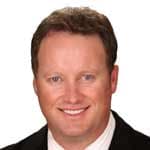
Jon Caulfield, DDS owns and operates Epic Dentistry in Littleton, Colorado where he takes an integrated, whole health approach to dentistry, specializing in the areas of Sleep, Airway and TMJ. He has been fortunate to work alongside world leaders in neuromuscular occlusion and pneumopedics and is now paying it forward, teaching hundreds of dentists worldwide how to integrate solutions for sleep, airway and TMJ into their practices. Dr. Caulfield is an instructor at the Institute for Craniofacial Sleep Medicine and leads the Clinical Advisory and Advocate Program at Vivos Therapeutics. A graduate of University of Minnesota School of Dentistry, Dr. Caulfield also holds an advanced graduate degree with Occlusion Connections and a diplomate status with the American Sleep and Breathing Academy.
Dental podcast: Welcome to DentalTalk. I'm Dr. Phil Klein. Today we'll be discussing the most common signs and symptoms related to Sleep, Airway and TMJ disorders. Our guest is Dr. Jon Caulfield, who owns and operates Epic Dentistry in Littleton, Colorado, specializing in the areas of Sleep, Airway and TMJ. He is an instructor at the Vivos Institute and leads the Clinical Advisory and Advocate Program at Vivos Therapeutics.
Transcript
Read Full Transcript
This transcript was automatically generated and may contain errors or inaccuracies. It is provided for reference and accessibility purposes and may not represent the exact words spoken.
Welcome to The Dr. Phil Klein Dental Podcast. I'm Dr. Phil Klein. Today we'll be discussing the most common signs and
symptoms related to sleep, airway, and TMJ disorders. Our guest is Dr. Jon Caulfield,
who owns and operates Epic Dentistry in Littleton, Colorado, specializing in the areas of sleep,
airway, and TMJ. He is an instructor at the Vivos Institute and leads the clinical advisory and
advocate program at Vivos Therapeutics. In fact, he's actually doing this podcast from the backseat
of his automobile because where he was originally, which was in a coffee shop, was a little bit too
loud. So Dr. Caulfield, thanks for being so versatile here and getting into your car to do this
podcast. Phil, I could say the same for you. Thanks for having me and for being a little flexible.
I'm glad we got it worked out. So this is really exciting. that you're a dentist you're involved
with sleep airway and tmj treatment and um just to begin as a dentist how did you end up
specializing in sleep airway and tmj disorders yeah you know that's a great question because our
careers can take us down so many paths but uh as i started fixing teeth which is what we all go to
dental school for right we think about teeth and all the many things we can do to help patients
with their teeth I started realizing that I was fixing teeth in a broken system. I was like,
I keep fixing these teeth, but they keep getting broken, right? Like, what's the problem? It wasn't
usually decay or periodontal disease. So I started asking myself some more questions.
You know, why are these teeth breaking? Why do teeth that we fix continue to break, right? Our
porcelain chips, our composite leaks, we get all these restorations that don't fully restore the
tooth and restore the health the way I wanted them to. So I started in about 2004, 2005,
looking for some answers. And I found a lot of it within neuromuscular occlusion, TMJ or TMD
treatments. When I started fixing the biting system, when I started fixing the occlusion, now I
started having great results. My dentistry was holding up. And lo and behold, my patients were
telling me they were getting less headaches. Their necks felt better. They were feeling like their
lives were just getting easier. They had less muscle tension. less problems. And so as I started
going down that journey, the only patients that weren't responding the way that I was hoping to, I
was getting joint noises to recede and be better. I was getting people feeling better and
functioning better. But a lot of my, like 25% of my patients were saying, you know, I still wake
up with a, you know, like this brain fog or this kind of low grade headache. I'm still exhausted
during the day. You know, I feel better, but I still feel tired.
I started seeing a whole nother set of symptoms that were coming through. And then I started
hearing stories like, you know, I never used to snore and now I'm starting to snore. My bed
partner, my spouse is telling me that I'm snoring now and I never used to do that. And so
ironically, I was helping people with their TMD and relaxing their muscles, but causing now the jaw
and the airway to collapse and causing some sleep issues, causing some sleep disorder breathing.
That's when I started looking at their airway. And then once I started realizing I could help their
airway, fix the airway, that would help them sleep better. And then also help prevent or treat a
lot of the TMD that I've been seeing. So basically you had a practice that had a good number,
a swath of patients that had TMD and you treated them. So you were treating those patients.
And what were you treating them with that you think subsequently caused the snoring and the sleep
problems? Yeah, so I was using a neuromuscular approach. So I'd use a TENS machine. It's a medical
grade TENS machine that would actually relax the muscles, decompress the joint,
allow the lower jaw to go to a more comfortable, less stressed, less muscle spastic position.
And as they started getting to this better position, it helped relax their headaches, relax their
central nervous system. It started just, you know, in general. getting more jaw relaxation,
getting more joint decompression. But because of that, when they'd lay down, now they used to
clench and grind all night to keep their airway open. And all of a sudden, their jaw would start to
relax. They'd sleep and get into deeper levels of sleep, go unconscious, and the jaw and the tongue
would fall back and start to block the airway or obstruct or at least cause some airway resistance
through their sleeping and breathing. Wow, that's very interesting. So then you went ahead to learn
more about airway obstruction. Right. Tell us a little bit about that. Exactly. Yeah.
So then now I had a whole set of problems, right? Like, okay, I've got their jaw better. I got
their joints better. And now we've got snoring, sleeping, breathing, sleep apnea issues that were
starting to come up. And so I started looking into a device that could actually hold the jaw
forward, grow the teeth, grow the intraoral tongue space, expand the palate,
expand the intraoral tongue space. Give the tongue a better place to go than back into the airway.
What are the most common signs and symptoms that you see in your practice of airway obstruction and
also the related TMD stuff, the TMJ disorders? Yeah, and I'm going to just apologize right now to
all the listeners because what I'm about to describe is going to start people really thinking about
what they're seeing, you know, in their practice the next time they go in. But what we're looking
for, what we typically see would be the number one would be like the scalping of the tongue. That
is an indication the tongue is trying to get out of the airway. It's pressing so hard on the teeth
to get out of the airway that we're literally leaving marks on it that last all day long until they
come into your office. We would see inflamed and red swollen uvula, tonsils,
narrow pharyngeal arch, narrow throat and palatal tissue. Linea alba,
like this line along the outside of the cheek where the teeth are suctioning up against it as
they're, again, fighting to keep their airway open, fighting to breathe while they sleep. We start
to see wear on the teeth from the clenching and the grinding that allows the airway to function
better and to get more air. Abfractions, recession, those are all really key indicators that we've
got somebody who's struggling to breathe at night. And then typically, ironically, these are some
of the same TMD signs and symptoms that we see as well. You found a really exciting kind of sector
of practicing dentistry. You still do the restorative stuff. Absolutely. Okay. So you haven't
changed your focus of your practice as far as restorative dentistry. You're a general dentist?
Yep. I do implants. I do restorative. I do all kinds of things. What percentage of your practice
time is dedicated towards the sleep disorders? Yeah, I mean, at this stage of my practice between
the TMD and the sleep, you know, about 60 to 70 percent of my practice is designated for those
treatments. And then I'm in the process of looking at some associates to come in and do more of
just the general dentistry. But yeah, a lot of my day is focused on really seeing less patients,
but seeing them more comprehensively looking at airway, looking at sleep, looking at their jaw
health. and really getting each person back to their maximum medical or dental improvement. You
know, you kind of branched off into this, and then I guess you grew that part of your practice
because from word of mouth, and then are you getting referrals from other general dentists? I am.
I'm getting a lot of the general dentists in my area know that I, you know, when they get TMD
problems, TMJ problems, airway and sleep, they know that this is something that I've done a lot of
research with, have a lot of experience with, and I'm also getting referrals from my ENTs. I'm
getting referrals from... sleep physicians now that know that I'm able to help their patients with
an oral appliance that can actually grow the jaw, grow the tongue, grow the space for the airway
space. And so I'm getting a whole level of both. professional and then obviously personal too.
We're getting, you know, patients bring in their child or their spouse and they say, wow,
you're helping them. Could you help me? Or I know someone else that needs this help. And so the
word of mouth is really kind of catching like a wildfire. And all of a sudden, you know, it's all
the friends and family of everybody you treat start to realize that we're treating a bigger issue
here than just a tooth or even than just a joint. We're really treating the entire health system,
the entire human system. And helping people breathe better and sleep better is probably the most
important thing you can do for someone. Yeah, it sounds like it's very satisfying to you.
Absolutely. Yeah, how you've moved in this direction. And from the time you first started doing
this kind of treatment, how many years has it been for you to get to this level of being 60% of
your workload right now? Yeah, so I started with TMD and the neuromuscular back in 2004,
2005. And then in 2008 and 2009, I started looking at the...
jaw and growth and development of the airway. And so I would say, yeah, over the last 15,
you know, 15, 14 years, it's been slowly escalating. In the last three or four years,
it's really blossomed to where I'm teaching other dentists how to do this. I'm teaching other team
members how to do this. I instruct for a company called Vivos where people can come and learn.
how I've done these techniques, what kind of results we've gotten, see cases that have been
successfully treated and start to see that they could do this in their own practice, see this in
their own patients and do similar life-changing and life-saving treatments like this.
What is something a dentist can incorporate into their practices like right away to start
addressing these signs and symptoms of sleep, airway, TMD, if they're not already doing so?
Yeah, and that's a great question because we we want to help right and the first thing you can do
is just to see it right if you don't see it you can't treat it um and i would say too my hygienist
is indispensable to me because she spends more time in the mouth more time with the patient gets to
ask some some deeper questions that we weren't always asking and so you know better screening
process both in you know asking some different questions do you snore do you ever wake up choking
or gasping You know, finding out if the patient has any sense that they may have a problem with
their sleep. And then again, letting the hygienist look for some of those dental clues we talked
about, the scalp tongue, you know, the linea alba, the way that the tongue looks too big for the
mouth instead of the mouth looking big and developed, like the tongue should have done. And so
starting there, but knowing that, you know, when we put something in a mouth, we can actually take
away tongue space. And so, you know, really being careful about. A lot of dentists want to just do
a night guard. They say, you know what, I'm going to put a guard in there, protect the teeth. And
although that can be a very helpful thing for the teeth, it can actually take away tongue space.
Much like I was helping people to become snorers and sleep apnea, you can actually turn off their
clenching and grinding, but let them fall back and start having more obstruction and more issues.
So to get the proper training, the proper education is one of the things that I'm really big about
because. Once we learn more, we can know more and we can do more. Tell us about Vivos Institute and
Vivos Therapeutics and in relation to how dentists can learn more about this.
And, you know, what do you recommend as far as learning about a multidisciplinary approach to
treating sleep apnea? Yeah, that's, again, a great question because we want to talk about what are
the resources? Where can I get this information, this education? And Vivos was formed about three
or four years ago here with technology from Dr. David Singh. And utilizing this technology,
we've been able to not only hold the jaw forward and the tongue forward with a manual advancement
device, but also grow the intro tongue space, grow the possible airway that that patient has
available to them to get the tongue out of the airway and to keep the airway open all night. Vivos
is... What's powerful about it is it's a product, but it has a process attached to it.
And so what I love about it is that they actually work with my team, that each of my team members,
whether it be my hygienist, my assistant, my front desk people, you know, people using medical
billing, questions about that. They're a constant resource and a constant partner in this process
so that we can diagnose patients correctly, design the treatment objectives and the treatment plan
correctly. and then deliver that treatment so they've really kind of packaged the whole process up
into a nice package where any dentist can bring this into their practice and do it as much or as
little as they'd like to do vivos by the way uh and i'm just talking to the audience now is v-i-v
-o-s that's v-i-v-o-s totally different than viva for viva learning which is what the program
you're listening to now um vivos therapeutics what does that name represent Is that the name of a
company? Yeah, that's the name of the company. It's actually on the stock market now.
It's actually, they went public here last fall. And so the VVOS, I think,
is the ticker symbol. But yeah, it's a public traded company now because they're seeing all this
hope and all this improvement and what we're experiencing for our patients and for...
their families and the kind of changes that we're making. And so Vivos Therapeutics was formed.
They took the technology that Dr. Singh had come up with and said, we have got to get more dentists
doing this. And they were able to take sort of a business model of his scientific process and
really combine the two so that it can become highly adaptable and highly implementable for dentists
to bring it in in sort of a packaged state to the practice. And really get the right education,
get the right support, get the right sort of team members. There's clinical doctors that work with
other doctors to help them answer tough questions. There's appliance design team members that help
explain how to design the appliance to accomplish the goals of the treatment. And then there's also
these practice advisors from Vivos that will come in and say, hey, let's find other doctors in your
network. Let's find an ENT. Let's find a sleep physician. pulmonologist. Let's find a pediatric
doctor. Let's get some people to understand what you're doing, make some more networking and
connections for you so that we can all work together to help these patients sleep better and
breathe better and be better. Yeah. So again, talking to the audience, vivoslife.com is the
website, vivoslife.com. So what's the timeframe for a dentist who decides,
you know, I'm ready to get this education. And along with his education, there's a system that I
could incorporate for someone who's done a little bit of this stuff in their office, whether they
just use a night guard and they just do the basic stuff. What are we looking at as far as someone
who's ready to start implementing some of this technology and protocol into their practice?
Yeah, well, good news. There was a positive effect of COVID. Because of COVID,
we've all had to shift and pivot.
high complements for this. They were able to, you know, they brought in, we started to record all
the training, record all the learning, record the basic courses so that somebody at the comfort of
their own home can start that process. And then, you know, another thing about, you know, opening
up is that we're going to begin doing live training again. So a lot of the core education, the core
information can be consumed and observed and learned in their own time.
And then we all, live courses again out of a large training center that's being completed right now
in Denver so that dentists can then come hands-on and actually either be a patient or bring a
patient to start learning this process and walking their first case with the entire Vivos team,
with clinical doctors, with some of the business management and business team leaders,
with their team. They can bring assistants and hygienists. office managers, so that everybody can
learn together in cooperation their roles and responsibilities to how this can become highly
successful so the whole dental practice can participate and the whole dental practice can help
their patients. Yeah, phenomenal stuff. I mean, there's no question that something like this
requires very keen, focused education in a very... organized manner.
Apparently, Vivos Institute has figured all that out. You're singing to the choir about education.
That's our whole business, Vivo Learning. Exactly. Yeah. And we do it all on the internet.
We don't have a live venue yet. We're thinking of actually doing some sort of symposium maybe once
a year now that the pandemic is certainly waning to an end. But this is very exciting stuff,
Dr. Caulfield. It sounds like you have got to the point where you have this passion for treating
these kinds of conditions, which worldwide is over a billion people suffer from airway disorders.
And this is according to your website, which I looked at briefly before the podcast. And so I'm
sure there are plenty of dentists that would be interested in this and really want to take it to
another level. And I think your operation over there that you're involved with is just perfect for
them. So I'm glad we had the opportunity to do this podcast. And thanks so much for doing it out of
the backseat of your car. Is that a rental car or is that your own car? No,
it's a rental car, but it worked. It did the trick. I didn't know that this was going to be one of
the aspects, right? Of being able to rent this car and be a little bit of a mobile studio. Yeah,
amazing. I really appreciate you, Dr. Phil, for what you're doing. I'm sure you get the Dr. Phil
thing quite a bit, right? Yeah, sure. But I love that you've got listeners that are taking their
time to educate themselves, to find out more. I will say that what I love about Live is that we get
so many great questions. so many great um you know cases that get presented that are that we've not
seen as much of and so there's so much more back and forth and talking about you know what do we do
here and how would you handle this and so sometimes it's that live interaction that's so powerful
so it's great when we can have a hybrid right where we can learn so much on our own but then coming
together is so much stronger and i love that you've got so many listeners that are working together
hearing this information being able to then spread that out and you know i was helping hundreds and
hundreds of patients in my practice and now helping all these other doctors to help other hundreds
and hundreds of patients i think about the amplification of what you're doing and what we're doing
where we can meet reach so many more people exponentially and help so many more people
exponentially by doing this so thank you for having me on today and doing what you're doing Yeah,
our pleasure. And keep us up to date, Dr. Caulfield, and how things go down the road. We'll have
you on a future podcast so you can update us. And have a great weekend, and thank you very much.
Thank you very much. You as well.