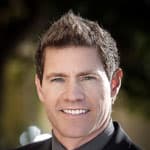
Dr. Todd C. Snyder received his doctorate in dental surgery at the University of California at Los Angeles School of Dentistry. Dr. Snyder has learned from and worked under some of the most sought after leaders in dentistry, refining his skills in comprehensive, extremely high quality aesthetic dentistry and full mouth rehabilitation. Furthermore he has trained at the prestigious F.A.C.E. institute for complex gnathological (functional) and temporomandibular joint disorders (TMD).
Dr. Snyder lectures both nationally and internationally on numerous aspects of dental materials, techniques, and equipment. Dr. Snyder has been on the faculty at U.C.L.A. in the Center for Esthetic Dentistry where he co-developed and co-directed the first and only comprehensive 2-year postgraduate program in aesthetic and contemporary restorative dentistry. He currently is on the faculty at Esthetic Professionals. Additionally, Dr. Snyder is a consultant for numerous dental manufacturing companies and has had the opportunity to research and recommend changes for many of the materials now being used in dentistry. Dr. Snyder has authored numerous articles in dental publications and published a book on contemporary restorative and cosmetic dentistry.
Dr. Snyder also founded and is CEO of Miles To Smiles a non-profit mobile children's charity that helps indigent and underprivileged children.
Dental podcast: Welcome to DentalTalk. I'm Dr. Phil Klein. Today we'll be discussing provisionalization in creating a new smile design. Our guest is Dr. Todd Snyder, a popular speaker on Viva Learning.com, a cosmetic dentist, international author, lecturer and consultant to dental companies. Dr Snyder owns a software company, a marketing company and an online dental training program, Legion.Dentist. He practices Cosmetic and Restorative dentistry in both Laguna Niguel, CA and Las Vegas, NV.
Transcript
Read Full Transcript
This transcript was automatically generated and may contain errors or inaccuracies. It is provided for reference and accessibility purposes and may not represent the exact words spoken.
You're listening to The Dr. Phil Klein Dental Podcast from Viva Learning.com.
Welcome to the show. I'm Dr. Phil Klein. Today we'll be discussing provisionalization in
creating a new smile design. Our guest is Dr. Todd Snyder, a popular speaker on VivaLearning.com,
a cosmetic dentist, international author, lecturer, and consultant for a variety of dental
companies. Dr. Snyder owns a software company, a marketing company, and an online dental training
program, Legion.Dentist. He practices cosmetic and restorative dentistry in both Laguna Niguel,
California and Las Vegas, Nevada. Dr. Snyder, it's a pleasure to have you on Dental Talk. Thanks
for having me, Phil. Always a pleasure. We certainly appreciate your time, Dr. Snyder, and thank
you for joining us today. So we're going to be talking about provisionals and how it relates to
smile design. But before we get into the meat and potatoes of this podcast, if you would... clarify
what smile design is in your mind. Yeah, in my interpretation of smile design,
and it might be slightly different for everyone, but my interpretation is I have a blank canvas
here of a new patient and they have some level of disorder, unhappiness with the appearance of
their smile and their teeth. And so I'm going to take photographs. I'm going to take models and
utilizing these and occasionally software, we're going to alter the appearance of the teeth and the
smile, trying to make it more pleasing to the patient. Now, me as a dentist, I have certain metrics
and analytics and things that I'm going to walk through as far as trying to make this ideal to
follow all my criteria. But at the same time, the patient has perceptions of what they find
appealing also. So if I think they should have these long kind of rounded teeth and they want this
squared kind of Hollywood white Instagram chicklets, then we're not on the same page. So part of
smile design is creating this new appearance, but it's an appearance that they're happy with, but
also is something that you can create and maybe follow some of the metrics that we talk about
within dentistry. And could you show them examples of what their teeth might look like before you
get to provisionals using software? Exactly. So there's a number of different softwares out there
in which you can do significant amounts of manipulation to make a new appearance.
And there's other ones where you can just take a library of teeth and just drop in a new smile
literally into someone's picture. You can do both of those for the same token. You know,
you can't show it in a software, but to extrapolate into a wax up once you have that digital kind
of representation to duplicate that into a three dimensional format, whether it be through computer
printing or through someone waxing things by hand. But yes, the software derives that kind of
appearance for someone to say yes or no. And that can then extrapolate into a model based version
of it. So talking about provisionals now, how do they connect to this whole process and how
important are they? to promote case acceptance yeah you bring up a great question and so there's a
lot of different ways in which we can provisionalize so back in the late 80s and early 90s we used
to provisionalize a tooth with for a veneer by hand using composite and we would literally you know
manipulate each individual tooth with composite which you know if you're good take you five six
minutes a tooth so you can still use that technique to mock up someone's existing teeth on their
person when they're not numb to show them what's possible but it's time consuming and some people
don't have the hand skills to create that so the beauty of provisionals is if you get a diagnostic
wax-up derived from the smile design you had created, this three-dimensional model, you can take
an over-impression of, and that over-impression you can fill with some type of modern bisacryl,
provisional material, and push that over their existing teeth, provided their teeth aren't too,
you know, flared out lingually or labely or what have you. And you can show someone on their person
before ever working on them what they could look like by doing this mock-up, this provision.
mock-up. Now majority of time we think of provisionals we think of hey I've already prepped the
patient's case and now I'm putting provisionals on them to hold teeth in place and keep them from
being sensitive. Well you can do the same exact thing with that over-impression from that wax up.
So one you're using before ever starting to show someone what's possible you know for certain cases
that allow that. For other cases, you're doing it to show them, hey, after I've worked on your
teeth, here's the new smile we're thinking of doing to show you what you saw in a photograph we've
extrapolated onto your person. And now when you smile on your person, you can see it, which is a
little bit different than just looking at a photograph. And you could do that without any tooth
reduction? That's why I said certain cases, you can do it without tooth reduction, which makes it
wonderful to show someone where we can go. But the other beauty of it, it allows you to do depth
cuts through the provisional material, and you may not even touch the tooth structure. So you can
recognize maybe on that part of the tooth or that specific tooth, you can do a no prep technique
and maybe a tooth that's slightly more rotated. or slightly more labially positioned,
you may recognize that, oh, I cut about three tenths into that tooth when I was cutting through the
provisional. So that tooth, I only have to take about three tenths off to get it to look right. So
you learn a lot and you take less tooth structure away by doing it on certain cases ahead of time.
So that's extremely beneficial in that sense. But for both cases, either way, it's beneficial to
show someone what's possible to get their input where you can still have time to change the
provisionals if necessary. And what part of the visit process do those provisionals go on,
the technique you just described? Well, there's three different times and places. So if I have a
new patient coming in and I have enough time to freehand some composite onto their teeth to show
them what's possible, that would be one instance. Another instance would be, hey, let me show you
what's possible. You're a good candidate for me to do a mock-up, a provisional mock-up. So I need
to take models, send it off for a wax-up. Duplicate the wax up and then push this acrylic over
your teeth to create that that new appearance. And so we can do that like, you know, two weeks
later. So we're waiting for the lab to do their part. Right. The other one would be, OK, we've
actually cut the teeth. We already had the wax up and now we're putting the provisionals on your
person. And we never did maybe a mock up because the teeth were too flared out or something. So
really, you've got three different techniques in which to approach this smile design kind of using
provisionals. You kind of covered it a little bit about the technique. Can you go over in a little
bit more detail about how to create a provisional in any one of those circumstances you just
described? Definitely. So the one that I use 99% of the time, I have coined a bead line
provisional technique. And so this I came up with back in the 90s. And so where you have an
existing wax up that has been approved and liked by the patient, I duplicate that wax up into a
stone model. The reason we duplicate it is we don't want to damage the wax up. Now on the stone
model where the new tooth shape meets the gum line, if it's a veneer,
obviously on the facial aspect, we're going to carve a half millimeter to millimeter groove or moat
into the tissue and tooth along the gum line. Reason for the doing this is we're creating a
negative into the cast. When I take an over impression of the cast, there's going to be a positive
in my impression. So when the teeth are prepared and I fill my over-impression, this bead line
over-impression with provisional material, and I force that up over the teeth, that bead line,
that positive, is actually going to put an indentation on the gum tissue and where your margin is,
such that it cleaves the acrylic away. So when I pull off the over-impression, my provisionals
look amazing, and there's usually minimal to no cleanup because of that bead line having been
placed. So it works both for the mock-up. as well as someone who's been prepared very clever
actually very well described considering that there's no visuals on a podcast um no i like it and
that was something you did in the 90s yeah so back when i was teaching at ucla i was tired of the
big hockey puck things we'd stick in people's mouths you know the siltech putty kind of thing and i
said got to be a better way. And so there's a lot of different ways we've tried things over the
year, over the year, sorry, but this is the one that has worked best for me. And it's amazing how
literally a couple minutes and you're done, no cleanup. What materials do you currently utilize in
your office to fabricate provisionals? Well, you know, as obviously an evaluator for many
organizations, I've tried them all. They will all work obviously, but my personal favorite is DMG's
Luxatemp Ultra. I love the coloring. I love the fluorescence, the translucency. In my mind,
it's the most aesthetically appealing material out there. And so for my cosmetically demanding
patients, that's what I give them. And the beauty of it is should I have a void or a little
indentation or flaw, I can take the ultra flow that comes with it and use that as a filler,
right? So if I have a void, I can instantly fill it without having to use a bonding agent or all
these other extra steps. So they've got a very simplified system that looks amazing. Patients love
it. Yeah, and it seems to me DMG has led the way in provisionalization for decades. Am I right with
Luxatemp? Has that not been the standard product? You know, it sure seems like it has been. I don't
know for sure, but man, it's been around a long time. And most of the big cosmetic people, that's
the one they grab. They've done a great job. And that's probably one of their benchmark products
that made their name. Yeah, certainly the gold standard for temporization. All right. Well, listen,
any closing remarks before we wrap up this podcast? No, I appreciate it. Thank you so much, Phil.
All right. You have a good one. Thanks a lot, Dr. Snyder. Take care.
Keywords
dentaldentistDMG AmericaCAD/CAM Technology and MaterialsCrown/Bridge/Veneers/IndirectTemporization