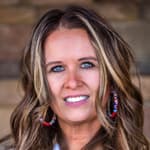
Crystal Spring, RDH, BS, LAP, has spent the last 23 years practicing as a clinical dental hygienist, serving in dental hygiene leadership, and advocating for access to care. She has a diverse resume, including starting a mobile preventative dental non-profit, mentorship program, consulting, grant writing, and interprofessional education. Crystal is passionate about medical-dental integration and access to equitable care. She has spent the majority of her career working to improve oral health disparities in vulnerable populations. Her unique experience caring for patients in varying mobile and public health settings has empowered her vision to help others to take the leap into untraditional dental settings. Crystal and her team (Smiles Across Montana) focus on a whole health approach to preventative services and work hard to advance the use of medical-dental integration into the healthcare system. Crystal works with several nursing schools to add intraoral imaging, oral cancer screening, interprofessional communication, and preventative oral health services into their curriculum. Crystal is a past president of the Montana Dental Hygienists Association and has served on the ADHA Board of Trustees. She is a national award-winning RDH receiving the 2017 ADHA/HuFriedy Master Clinician Award, the 2019 Sunstar RDH Award of Distinction, the 2020 Today's RDH Honor Award, and the 2021 Dimensions Six Dental Hygienists You Want To Know. Crystal also serves as a Key Opinion Leader in the dental industry and has been featured on dental podcasts and articles. She currently serves on the RDH editorial advisory board as well as writing articles centered around medical-dental integration, prevention, access to care, and public health. Crystal's spirited approach to leadership and advocacy has allowed her to share her passion for improving oral health, overall health, and equitable preventative services for everyone. Areas of Expertise: Public speaking, Mobile and Teledentistry, Public Health, Medical/Dental Integration, and Advocacy.
Minimally Invasive Dentistry are more than just buzz words. In fact, today we can do amazing things to treat decay and save a tooth without doing any drilling at all. To tell us all about it is Crystal Spring. She is a registered dental hygienist who spends her life operating her mobile dental practice throughout the state of Montana. She has had amazing success with arresting, regenerating and saving teeth through noninvasive means. We are very happy to have her share some of the work she is doing in the area of prevention and minimally invasive dentistry.
Transcript
Read Full Transcript
This transcript was automatically generated and may contain errors or inaccuracies. It is provided for reference and accessibility purposes and may not represent the exact words spoken.
Minimally invasive dentistry are more than just buzzwords. In fact, today we can do amazing things
to treat decay and save a tooth without doing any drilling at all. This is particularly relevant to
cavitations in primary teeth or young permanent teeth with incipient decay. Someone who has learned
how to get the most out of minimally invasive dentistry using materials like SDF and glass onomer
is Crystal Spring. She is a hygienist who spends her life operating her mobile dental practice
throughout the state of Montana. She has had amazing success with arresting, regenerating, and
saving teeth through non-invasive means. We're very happy to have her share some of the work she
is doing in the area of prevention and minimally invasive dentistry. Crystal, it's a pleasure to
have you on the show. Hi, thanks. It's awesome to be here. So tell us about your mobile dental
unit, how you go through the state of Montana, beautiful state, and provide dental care, and how
your practice is so centered around minimally invasive dentistry and prevention. Definitely.
So I founded a nonprofit called Smiles Across Montana, and we...
throughout the entire state of Montana, which is a pretty big state, bringing preventative services
throughout the entire state to schools, nursing facilities, Head Starts. We partner with Montana
State University Nursing Department to help with medical dental integration. We teach nurses how to
use things like silver diamine fluoride to apply fluoride varnishes and just to really help educate
their patients about. um oral health because we know that your oral health is connected to your
overall health so we do a lot of that work and we actually just hired our first full-time dentist
we're going to be doing some restorative because we've actually saw that even though we have this
awesome referral system we're still having patients that aren't able to get into a dentist very
easily and Now our mobile program will actually be able to bring restorative services.
So tell us, Crystal, how you got into using specific products that work really well in the area of
low impact on the teeth, minimal drilling, the arrestation of caries, and prevention.
How we got into using some of the innovative products that we're using right now, we use a lot of
glass ionomers, we use a lot of silver diamine fluoride, and we've been using Cure Not Repair,
which is, these actually help to heal a cavity once it started. I think that's just a different way
of thinking, and we use primarily glass ionomer sealants. And we also use them for restorative when
our dentists are working. What kind of unit do you drive around in? What is this mobile unit look
like? Yeah, so we have one fully mobile unit. Actually,
I have to drive a pretty big truck, and we drive it across Montana. And it essentially looks like a
big camper that is actually a dental office. There's some pictures online. If you go to
smilesacrossmontana.com, you can see some of the things that we do. But it has two operatories.
It could have three, but we wanted it to have some more space. So you essentially come into this
mobile camper. And it looks like a dental office would. It actually kind of smells like one too.
That's some feedback we get that people laugh about. It actually even smells like a dental office.
And the same with our... practice. So we have, there's 26 people who are working for us right now.
And actually, we have these big towers that we kind of wheel into each facility.
We go into a lot of schools, I said, and Head Starts and places like that. And we actually can
bring the entire dental office, everything a hygienist and most of the things that dentists would
use in an office, we actually wheel it into the facility. So share with us your thoughts, Crystal,
about how you're so focused on managing decay in primary teeth and incipient decay in some young
permanent teeth without the use of a dental drill and really relying on the materials themselves.
Yeah, so I've been working in mobile and portable since about 2014. So I can't even believe it's
been 10 years. And we work with dentists. We just can't have them on site all the time.
And so that's why we're adding a dentist full time. But it's probably about... Eight or nine years
ago is when I started using glass ionomers to help just alleviate some of the issues that our
patients were going through. For instance, we would find kids that had like a pretty large
cavitation. And the next time we came back, we referred, we tried as hard as we could to get a
child into an office. the hole would just be bigger. So using silver diamine fluoride and glass
ionomers, it was really, really helpful for us to be able to at least cover up some of what was
going on because what we would see is a child would have, they would eat breakfast and then food
would be packed in this area. And they would be in pain or then they'd come back and eat lunch.
And, you know, we did a lot of things like let's give the school nurses toothbrushes and toothpicks
and a million different things. But when we started using glass ionomer, we actually were using
Fuji triage and only Fuji triage at that time. We would actually be able to alleviate some of the
issues that the students were going through. And glass ionomers are pretty innovative. in this
approach you you don't have to do any drilling you know we obviously clean the area out but it
actually helps to absorb the fluoride into the tooth just to help it make it make it stronger and
there's a chemical bond that we would see kids who would have had to have surgery but they were
actually their teeth were exfoliating with the glass ionomer in the teeth so that was pretty
awesome Give us an example of how you excavate decay when you see it. You said there was a cavity
that was present and food was caught in there. What do you actually do clinically before you place
the glass ionomer? yeah so traditionally we weren't excavating decay we were using silver diamine
fluoride which actually helps to arrest decay it's going to stop it and harden it over time and
then the glass ionomer you know actually is placed to keep bacteria from coming in the teeth it's
not like a normal resin sealant it actually absorbs fluoride and helps deposit it into the tooth
and also you're not going to have problems with leakage and things like that.
We use what's called the smart technique. You actually use your finger to place glass ionomer and
you kind of just push it into the lesion. Yes, of course, it's optimal for all situations.
But when we were in places where, you know, a child couldn't be seen by one of our dentists or we
just couldn't get him into anywhere, that has been, you know, something that's worked really great.
The 2016 guidelines say that, you know, it's better to seal over decay than to leave it open.
Obviously, these aren't huge, huge areas where the pulps are involved or anything like that.
We, you know, we're very careful about that stuff, but smaller cavitations. areas like that we were
able to really just help alleviate these issues instead of just watching something get bigger we're
able to use these materials um so traditionally a dentist would do what's called an itr it's an
intermediate therapeutic restoration and that's what these are used for i was just amazed myself
that they stuck around and you know especially with some of these baby teeth like these kids would
have They needed surgery. We had no idea what to do with them. And we were actually able to be
like, wow, you know, that area has made it so that it's not getting bigger. They're not in any
pain. You know, we've never had anyone. in any pain after anything like this. We still refer them
to see a dentist, but they're actually working really, really well. So tell us, Crystal, how you
use a combination of materials to achieve your goals in stabilizing the tooth, especially primary
teeth. They could stay in the mouth as long as they need to until they exfoliate. And for the most
part, they're asymptomatic, even with decay present. We do use glass ionomers on,
you know, obviously something early decay, things like that, not big cavitations. But that is how
we started doing it. We'd see like, wow, that we have to do something to help these children. And,
you know, that was like nine years ago. And we were working with tribal system and IHS to learn how
to do some of those things. And IHS is Indian Health Service. We worked with some of those programs
quite a bit to actually learn about some of these materials. And right now we use a lot of silver
diamine fluoride, which actually arrests decay, but we're also using Cure.Repair. And I have to
totally say the name of the product because that material is the only material that actually
remineralizes. The new code for it actually just came out in January.
What is the name of that product and who makes it? it's cured on repair fluoride plus and it's by
vivardis we've been using that for about eight or nine months if you haven't seen any information
on that that's it's actually amazing it's a big time game changer and the other really great part
about that product is you don't get any staining from it So we don't use silver diamine fluoride on
front teeth because we don't want to make a cavity even darker. So silver diamine fluoride will
turn a cavity black. If you have a cavity and it's already dark in color or not in color at all,
if you have a cavity, it will turn it really dark. Keridont repair doesn't do that. But keridont
repair is a little harder to use in some aspects because you actually have to etch before you...
you know, and get the tooth ready. And then it has to stay dry for about five minutes after. And
for some of our really small and young patients and people with behavioral issues, it's just a
little bit harder. So where does the glass Anomer come in with all these products? And that's the
one that you mentioned from GC America. We use it for all of our sealants.
And then... Our dentists actually use it to do what are called smart fillings,
where you use a glass ionomer. It's pretty much the same material. It's usually a glass hybrid is
what it's called. It's a little bit stronger than just their Fuji triage. Fuji triage is awesome
for sealants, but we don't use it for restorations. So this is like a glass hybrid, and we use
those for restorative, so you're not having to do any drilling. And then we also use it for...
Our dentists use it for what are called hall crowns, where you can actually use glass ionomer as
the material that you place in the crown. And it works pretty slick,
especially with pediatric patients. So what kind of feedback are you getting from the patients?
Well, their kids, their young kids, I don't know how much feedback they're going to give you, but
their parents, what are they saying about all this? yeah so when i first started using silver
diamine fluoride in particular i was really really concerned it was like no one's gonna want you
know a black spot on their child's tooth and actually what we found is parents are really open to
that they you know dentistry doesn't have to be traumatizing it can be a lot of fun and we get a
lot of really good feedback the parents are very happy that their child had a good visit that
they're not in any pain and You know, usually when we're using silver diamine fluoride,
we like to place it more than once before we, you know, use any sealant material or restorative
material over something like that. We try to use it at least three times. And so parents,
I was really concerned that they would be concerned. And they're actually really happy with the
products that we're using and what we're able to do for their kids. So as I'm hearing you talk
about this, Crystal, I'm wondering whether being in Montana, where there's a lot of people,
especially these young children, that don't have good access to dentists. And because of that,
you really didn't have much of a choice but to treat these cases without your typical drill and
fill. And then you started to realize that these materials actually provided a solution that
actually surpassed your expectations. Is that kind of how it evolved? I actually wish I could say
it was just because we're in Montana. A lot of the, I mean, a lot of different groups are using
these materials. Dentistry is changing. I think that's how we came about using it.
I would like to say that... It's only really rural areas. But if you look at the health provider
shortage areas, like it's all across the nation. Our areas are a little harder to get to.
For instance, I grew up in northeastern Montana. So I'm kind of like by North Dakota and Canada.
And the nearest pediatric dentist at that time was like 300 miles away. So that's a way harder.
um place to get to and when you're thinking you know winters in montana and the reliability and a
million different things but i would like to say that it was just because of that but you're seeing
this all across our nation and we work with so many amazing local dentists in the town that's that
we're in and they will take our referrals but we there's so many reasons why there's access to care
issues that they that the patient, even if it's just a few blocks away, will not get into a dental
office, and it's us coming to them. You know, that's not the norm, but that happens a lot.
Yeah. So silver diamine fluoride, that's something that you think is irreplaceable and something
that you must have as an armamentarium and a dental practice arena for kids,
for primary teeth, for sure, to avoid the surgery. And what about for permanent teeth,
you know, incipient lesions where you don't want to pick up a drill and start removing tooth
structure? Tell us about that non-invasive concept that you're a big fan of. Definitely. I get so
excited about this because SDF, glass ionomers, you know, cure-dont repair,
these aren't just things that are good for public health or mobile dentistry. These are things that
are really... anyone in your office can be working with so and you know they're not even technique
specific when you're using like glass ionomer for a sealant it's pretty easy to use so that's
that's a great thing and you can really have a non-fear-based practice when you're using these
types of materials you know one of the things silver diamine fluoride you can see it working in not
immediately but you see it working right after you placed it and something that was good for us is
when our hygienists and the clinicians would be using it they could actually use their probe to tap
on the tooth they could tell that it was had gotten harder from the last visit so we use a lot of
silver diamine fluoride for incipient carries but we actually use a lot of the cure not repair just
depending on you know They do a lot of the same things. But if we're able to behaviorally able to
place cure not repair, we'll do that. Most of the time, it is more expensive to use than SDF,
but it's not going to stain. So if someone had like interproximal decay and they didn't have a
cavity in their whole mouth, like I'd be a little skeptical of using SDF if I had periodont repair,
because I'd rather not put any stain in an area where there was no stain. We're just always
thinking about what's best for the patient, even if it is more expensive. And then I just think.
glass ionomers are like magic. The retention rates that we're seeing, you know, you do need to
obviously prep. and use a conditioner before you get started.
That's going to help you have better adherence. But we're having really, really good luck with this
product, especially, you know, there are some other hybrids of glass ionomers and different
companies that they're using. But I would probably never use just a regular resin sealant ever
again. Yeah, I was going to ask you about sealants. So typically, resin sealants were always very
popular. Talk to us about the glass ionomer sealant. and the methodology that you use what is the
product and how do you apply it yeah so Something I just want to say really quickly.
I love sealants. I love sealant programs. But if you have any leaky margins around a sealant,
you can get decay under the sealant. And we see it all the time. Some dental offices don't even do
sealants because they've seen enough of that. But with glass ionomers, we essentially use a prophy
brush to really clean out. We polish off the tooth. We clean out the area.
And then we use the conditioner. And it takes about... 10 to 20 seconds to do that portion.
And then we use a triturator to mix it. If it's a really small child, I think they might be afraid
because the applicator, it makes these little clicky sounds. And, you know, it looks kind of like a
bigger piece of equipment in your hand. And a lot of times you come at a small child with something
like that, they can be a little freaked out. So I actually squeeze it onto my finger. And sometimes
I even do it turned around, squeeze it onto my finger. I'm like, I just want to. you know wipe this
little bit of paste on your tooth and keep their tongue away from it because it does have like a
bitter taste a little bit and you know we just wipe that on and then essentially we're pretty much
done what is the name of that product that you were talking about Those are glass ionomers.
We use a lot of Fuji triage. Yeah, I must say, Crystal, it's very impressive that you started this
nonprofit. You have 26 people working for you and you just hired a full-time dentist. It's just a
fantastic service that you're providing these individuals, these mostly children who don't have
access or easy access to dental care. And you're making their lives so much better. And you also
get to see beautiful Montana. so i i grew up born and raised in montana so yes i definitely do and
i am so thankful for you know dentistry as a whole just really coming alongside of us we actually
have five dentists that work with us but this will be our first full-time dentist working with our
program and you know i wish we didn't need it but we we do but we're so excited and just so many if
people want more information Somebody I just heard speak and I'm just such a fan of and love to
call him friend is Doug Young. He's done a lot of research on glass ionomers and I've learned so
much from him. And, you know, I think people should also, you know, reach out to some of these
other people or try to attend some of their courses. Really just want to be able to urge people not
working in mobile or public health, but, you know, in your regular general dental office.
to start using glass ionomers and just kind of utilizing some of these different technologies that
you can to keep your patients in your office and keep them away from surgery. Yeah,
for sure. What's the best way to reach you? Our website is milesacrossmontana.com. And a good
email would be smilesacrossmontana at gmail.com. Crystal, thank you very much for your time.
Really, as I said, tremendous work that you do for the community, for young kids that are needing
this care, that don't have access to it. And it's just great to hear the minimally invasive
approach and the prevention approach that you run your whole business off of. Thank you so much for
your time. Thank you. It was awesome, Phil. I appreciate it. If you're enjoying this podcast,
please leave a review or follow us on your favorite podcast platform. It's a great way to support
our program and spread the word to others. Thanks so much for listening. See you in the next
episode.