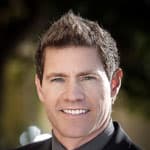
Dr. Todd C. Snyder received his doctorate in dental surgery at the University of California at Los Angeles School of Dentistry. Dr. Snyder has learned from and worked under some of the most sought after leaders in dentistry, refining his skills in comprehensive, extremely high quality aesthetic dentistry and full mouth rehabilitation. Furthermore he has trained at the prestigious F.A.C.E. institute for complex gnathological (functional) and temporomandibular joint disorders (TMD).
Dr. Snyder lectures both nationally and internationally on numerous aspects of dental materials, techniques, and equipment. Dr. Snyder has been on the faculty at U.C.L.A. in the Center for Esthetic Dentistry where he co-developed and co-directed the first and only comprehensive 2-year postgraduate program in aesthetic and contemporary restorative dentistry. He currently is on the faculty at Esthetic Professionals. Additionally, Dr. Snyder is a consultant for numerous dental manufacturing companies and has had the opportunity to research and recommend changes for many of the materials now being used in dentistry. Dr. Snyder has authored numerous articles in dental publications and published a book on contemporary restorative and cosmetic dentistry.
Dr. Snyder also founded and is CEO of Miles To Smiles a non-profit mobile children's charity that helps indigent and underprivileged children.
Dental podcast: Welcome to DentalTalk. I'm Dr. Phil Klein. As we all know, zirconia is becoming one of the most popular materials in indirect restorative dentistry. Today we'll be discussing some of the important considerations and nuances in the management of Zirconia restorations. Our guest is Dr. Todd Snyder, a popular speaker on Viva Learning.com, a cosmetic dentist, author, international lecturer, researcher and instructor at various teaching facilities. Dr. Snyder is a consultant for numerous dental manufacturing companies and has had the opportunity to research and recommend changes for many of the materials now being used in dentistry. You can reach Dr. Snyder at: www.legion.dentist.
Transcript
Read Full Transcript
This transcript was automatically generated and may contain errors or inaccuracies. It is provided for reference and accessibility purposes and may not represent the exact words spoken.
You're listening to The Dr. Phil Klein Dental Podcast from Viva Learning.com.
Welcome to the show. I'm Dr. Phil Klein. As we all know, zirconia is becoming one of the most
popular materials in indirect restorative dentistry. Today we'll be discussing some of the
important considerations and nuances in the management of zirconia restorations.
Our guest is Dr. Todd Snyder, a popular speaker on VivaLearning.com. a cosmetic dentist,
author, international lecturer, researcher, and instructor at various teaching facilities. Dr.
Snyder is a consultant for numerous dental manufacturing companies and has had the opportunity to
research and recommend changes for many of the materials now being used in dentistry. You can reach
Dr. Snyder at www.legion.dentist. Before we get started,
I do want to mention that Dr. Snyder has an excellent webinar on VivaLearning.com titled
Fundamentals to Delivering Indirect Ceramic Restorations. Simply go to VivaLearning.com,
type in the search box Snyder, S-N-Y-D-E-R, and you'll find that webinar.
Dr. Snyder, it's a pleasure to have you back on the show. Thanks so much, Phil. Yeah, we want to
thank Bisco for their continued support for... this series of podcasts by Dr. Snyder which gave us
episodes light cured resin cements adhesive cement versus bioactive cement when and why and then
the first of the series was bonding simplification with direct and indirect restoration so today
we're going to be talking about zirconia there are a lot of questions as to how to manage zirconia
restorations and the most popular one that i know of is can we really bond to zirconia Depends on
what you're talking about. So if you say resin adhesive cements, yes, we can bond to zirconia if we
do our protocols properly and we use the right materials. But for the same token,
certain bioactive cements surprisingly can get a very good adhesion to zirconia.
The resin being better, obviously it's a lot higher, a lot stronger, but you can get some micro
-mechanical interesting adhesion from some of these newer bioactive materials as well. So what kind
of bond strength are we talking about? compared to emacs or something like that you know i would
say your bond strength can be comparable uh you know in regards of feldspathic uh lithium
disilicate lucite zirconia i didn't get very comparable to any of those nowadays with the
chemistries we have available there's no question that zirconia is becoming a more and more popular
material to be used in indirect restorations not only posteriorly but even some dentists are using
them anteriorly Could you briefly go over the clinical steps that we absolutely need to take in
order to get the best bond to our zirconia restorations? Yeah, definitely.
So there's a lot of steps involved. The first thing is you have to have the right products as far
as the chemistries. And then you have to manage or handle things well. So obviously you're going to
get a zirconia veneer or crown, whatever it is, back from the laboratory. Now it should come from
the laboratory pre-sandblasted.
just creates more surface area for you to grab onto. Now, you're then going to go ahead and try in
your restoration. Obviously, you check the fit, check the bite, check the color, all those fun
things, make adjustments. Now, by having tried it into the mouth, unfortunately, you just create a
problem for yourself. So by trying into the mouth, you've just contaminated the inner surface of
that zirconia. You've contaminated with the phosphate lipids and the saliva. And these are going to
react with the surface of that zirconia. them reacting with it you actually have less bonding sites
available so in other words there's not as much surface to grab onto now because they're
contaminated so the bonding mechanism is not going to be available you're going to be doing like
micro mechanical adaptation at this point because everything's kind of contaminated right so by not
having these sites for your bonding you've you know, ruined your ability to adhere with resins.
Now that's fine if you wanna go to like a bioactive cement that doesn't use a resin interface. It
does like the saliva, you know, debris that's left behind. But since we're talking about resins
right now, you have to strip off this phospholipid saliva contaminant to open up the bonding sites
again for your resins. And so to do this, you need to... some type of product. I would say one of
them out there that we've probably all heard of is IvoClean by Ivoclar. Bisco has their Zirclean,
which was formulated specifically for zirconia, which is what I'm using. And so I literally take
this syringe of Zirclean, squirt it inside the veneer or crown, allow it to do its magic,
follow the time and everything that the manufacturers say, and then rinse it off. And so by doing
so, I've cleaned the surface. And so... By the Zirclean reacting with the surface,
it's clean things and allow me to have a new proper cleanse bonding site for me to grab onto.
The next step goes, okay, I've decontaminated, so now I'm back to kind of square one of being able
to bond to it. What do I do next? Well, the next thing you have to do is you have to have some type
of ceramic primer. Now, ceramic primers nowadays have to have typically some type of acidic
adhesive monomer, such as MDP. chemical basically is inside of this ceramic primer,
which allows us to bond onto zirconia. And so it has a phosphate ester group that's acidic that
basically allows us to bond to metal oxides and zirconia. Now, zirconia,
as I mentioned earlier, it's resistant to traditional acid etching, unlike silica and glass-based
ceramics we've used in the past. The only reason I said in the beginning was to aerobrate it,
was to create a little more surface area. But you can't bond to that. So you have to have a ceramic
primer made of MDP to basically grab onto the ceramic. And at the same time,
it's going to grab onto the resin that's holding things in place. So to some extent, it's coupling
organic and inorganic materials together. So it's kind of this go-between. So first, you use your
Zirclean to strip off the fluid, the salivary contaminants. Then you're using like the Z Prime
Plus, which has an MDP in it, ceramic primer. And after applying that onto the Zirconia,
now you can finally go in and add either your light-cured resin or your dual-cured resin based on
how thick that ceramic is and your ability for light to penetrate through that ceramic. So I assume
you're primarily using a dual cure cement? You know, I would say the majority of time I'm using
zirconia, I'm going for something with strength. And so, yeah, it's like it's either a crown or a
bridge in the back of the mouth. And yes, so I would typically use a dual cure because I'm not sure
if the light's going to penetrate through that well. But I will say there's certain multi-layers
zirconia materials nowadays that are super translucent, high translucent. And depending on how
thick they are. I can use a light cure for those situations where it's like an anterior veneer or a
very thin crowned anterior, and I used a very translucent material. And we knew what material we
used, but we also could see that light penetrates very easily. But I would say majority of time,
yes, it's dual cured. Do you think the future is zirconia for indirect restorations as kind of a
universal ceramic? You know, to some extent, where it first came out,
it was very opaceous, and we only wanted it at the back of the mouth. It definitely made huge
strides in making it really pretty. But at the same time, when you get that pretty aspect, you
typically lose strength. So hence you get a drop-off in the strength properties. So yes, I agree.
I see from looking at laboratory numbers that yes, zirconia is by all means taking over in many
ways. But do I think we need something that strong? Not necessarily, because we know with
adhesives, we're laminating some type of ceramic onto a two-structure foundation that...
of the two being laminated together, it derives great strength. If you think of Oldsfeldt's pathic
porcelains, which I still do, for veneer. or inlays, if they're laminated well, they actually
become very strong. Now, strong is many different things. You've got neup hardness,
you've got fracture toughness, you've got flexural strength. And so really, when you say something
strong, that really doesn't mean anything. There's other aspects to it. But I think zirconia, as
versatile and great as it's become, doesn't necessarily mean we're getting rid of some really nice
things like feldspathic lithium disilicates that are weaker. that they have their place and all of
them can work well based on where you're putting it and how you put it into the mouth. Yeah, no,
good answer. And last question to wrap up this podcast, and it was very interesting. Where are we
right now with chairside milling as far as indirects in this country? Do you think dentists are
starting to move in that direction where the laboratory is not, you know, the only place they need
to go to get these indirects? You know, I think that's where people are going. I don't know how
long it'll take to adapt to become, you know, like 50% or more. But, you know, if you look at all
the marketing push, if you look at the magazines, I mean, everyone's talking about scanning,
milling, machining, printing. It's kind of the way, you know, technology is going that you can get
something faster than you could previously. And so if that is your singularity,
your unique marketing angle that you can deliver something quickly in a day or two days because
you're doing it yourself, that becomes interesting. Do I think it's the catch-all? Not
necessarily. I think it depends on how you're practicing it. If you've got a big group practice, I
think it would make sense to have someone in there and the ability to make something quickly. I
think if you're a solo practitioner to spend all that money on those devices, you're spending a lot
of time chair side milling and machining and doing things. You're playing lab technician. Your
system potentially doing it that way, you're not going to make as much money in my mind because
you're not being productive as a dentist. You're now playing lab technician. But, you know, hey,
anyone's willing to do it or ready to do it any way they want. But I think at the end of the day,
for me, I look at things financially. For me, as a solo practitioner, it doesn't make sense
financially. But for a group practice, yes. As far as turnaround time, I can get a crown turnaround
in a couple of days. Do I need something the same day? Really only for someone who's going out of
town or has a big problem. I don't see it really there for me yet. But I think the majority of
people are interested in the technology and where it's going and want to be a part of that. And so
I see it growing quickly. The digital scanning side of the whole workflow is catching on. Oh,
definitely. probably going to be replacing impression materials fairly soon,
I would think, right? It seems like they're getting closer and closer with the scanning
capabilities. They're obviously getting faster. For individual units, I think it's phenomenal. For
doing a full mouth, I don't think it's there yet. But definitely, if you can scan something
quickly, get it over the lab, patients aren't gagging on materials, you can see your margins. I
think there's a lot of benefit there, but you still have to manage tissues and bleeding and saliva.
So that's the one component if they can get rid of, then I think it would take off and everyone
would have one. But the great thing is they have come down in price dramatically, where I think...
You know, just for doing aligners, how easy that is nowadays. I think there's a definite place for
them now because of the price point and what you can do and the fact that technology has made them
that much better than they once were. All right. This concludes Dr. Snyder's four-part series
sponsored by VSCO. We really want to thank him for his great insight. Check out his podcast called
Delusional, and you can always reach him at legion.dentist. Dr.
Snyder, it's been great. Thank you so much. Thank you.
Keywords
dentaldentistBiscoCAD/CAM Technology and MaterialsCrown/Bridge/Veneers/Indirect