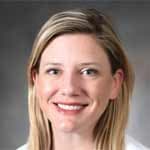
Dr. Ashley Clark is an Associate Professor and Division Chief of Oral Pathology at the University of Kentucky College of Dentistry. She earned a DDS from Indiana University and a certificate in Oral and Maxillofacial Pathology from The University of Florida. Dr. Clark has previously worked at West Virginia University (WVU) and University of Texas at Houston School of Dentistry (UTSD). At WVU, she was the oral pathology laboratory director and was nominated for the Early Career Innovator Award. At UTSD, she earned the John H. Freeman Award for Faculty Teaching and the Dean's Excellence Award in the Scholarship of Teaching; she also earned a Fellowship in Health Education during her time at UTSD. Dr. Clark has published over 40 papers and abstracts, authored the oral pathology sections of both Dental Decks and Dental Hygiene Decks (2014 editions), and is on the Professional Board for Digital Dental Notes. She is a Fellow in the American College of Dentists, serves on the Commission on Dental Accreditation review board for oral and maxillofacial pathology programs, and is on the Advisory Board for Oral Cancer Cause. Her biopsy service offers free biopsy kits; please contact opath@lsv.uky.edu or call 859-323-6333.
Dental podcast: Welcome to DentalTalk. I'm Dr. Phil Klein. Today we'll be discussing how to spot potentially malignant disorders (PMDs) and how to manage them. The goal is to remove PMDs to prevent transformation into oral squamous cell carcinoma. Our guest is Dr. Ashley Clark, a Board-Certified Oral Pathologist currently serving as the Vice President of CAMP Laboratory after a nearly decade-long career in academia. Dr. Clark has won several teaching awards, has provided over 100 continuing education courses, and has authored more than 40 publications and book chapters.
Transcript
Read Full Transcript
This transcript was automatically generated and may contain errors or inaccuracies. It is provided for reference and accessibility purposes and may not represent the exact words spoken.
You're listening to The Dr. Phil Klein Dental Podcast
Welcome to the show. I'm Dr. Phil Klein. Today, we'll be discussing how to spot potentially
malignant disorders and how to manage them. The goal is to remove them to prevent transformation
into oral squamous cell carcinoma. Our guest today is Dr. Ashley Clark, a board-certified oral
pathologist currently serving as the vice president of CAMP Laboratory after a nearly decade-long
career in academia. Dr. Clark has won several teaching awards, has provided over 100 continuing
education courses, and has authored more than 40 publications and book chapters. So before we get
started talking with Dr. Clark, and we're excited to do so, I would like to mention that Dr.
Clark's webinar, titled Potential Malignancies in the Oral Cavity, What You Need to Know,
that webinar is now available as an on-demand webinar on VivaLearning.com. To find that, just go
to VivaLearning.com, simply type in the search field Clark. C-L-A-R-K, one of the easier names
to spell that I mentioned over the years. If you are interested in learning more about how to lower
the rate of oral cancer in your practice, I highly recommend this webinar. And it was very well
attended. We had over 1,600 people on that webinar from start to finish. Almost 3,000 people
signed up for it. So it was very successful. Dr. Clark, it's great to see you again. Hi, yeah.
Thank you for having me again. It's been about a year since I've seen you, so. Yes, we did this
podcast or similar one to this almost a year ago to the days, which I find very interesting.
So what are the most common ways in which potentially malignant disorders present?
So that's a great question. The most common ways in which potentially malignant disorders present
are as flat white patches. So I'm saying. potentially or we're saying potentially malignant
disorders instead of pre-cancer so that's sort of the new term but really we think of these as pre
-cancers and in the case of hpv negative squamous cell carcinoma in theory a hundred percent of
those will have a potentially malignant disorder like leukoplakia present before they turn into
cancer. So that's why it's really important to know how these potentially malignant disorders look.
And they look like flat white patches. And typically, how can the dental team best recognize them?
And we're talking mostly about GPs now, right? Yeah. So GPs and hygienists do this a lot too,
do an oral cancer screening. So what a lot of offices do is they do their visual examination.
So you should always look. first with the overhead light. If you want a little bit of extra help on
a screening exam you can use autofluorescent technology something like goggles and what that will
do is it has a really high sensitivity so if you are seeing something that's dysplastic it will
lose fluorescence seeing something that's cancerous it will lose fluorescence. So if you're seeing
something that loses fluorescence on your exam, go back and look with your eyes and make a
determination about what you want to do. So if it's a red patch, absolutely,
it gets sent for biopsy. But if it's geographic tongue, let's say. then that's okay because things
with inflammation will lose fluorescence too so that's what we want to do we want to make sure we
look at the lateral borders ventral borders of the tongue and floor mouth especially because that's
where cancer most often occurs and don't overlook gingival lesions that aren't responding
appropriately to therapy Because gingival carcinomas can masquerade as benign lesions,
as reactive lesions, as periodontal disease. So treat it how you've clinically diagnosed it.
But if it doesn't respond appropriately to therapy, I would recommend a second glance at your
diagnosis. So when a patient bites the side of their cheek, or there's some trauma that's typical,
just from chewing, we all do it. What does that look like? compared to something that could be more
dangerous. Are they very similar, the actual visual representation of cheek bites,
for example? Yeah, that's a good question. So in cheek biting, it could clinically appear as what
might be called erythroleukoplakia, so red and white. But what you won't see in cheek chewing...
is sharply defined borders with a homogeneous lesion so with leukoplakia it should be fairly
homogeneous maybe wrinkled a little bit maybe some spots of red in there but you should be able to
tell exactly where the white ends and the normal begins and then there's like a solid lesion.
With cheek chewing, it's kind of shredded red and white appearance. And other things can do that
too, to your point. For example, lichen planus can look red and white and even ulcerated,
but lichen planus will not be sharply demarcated. And also with trauma or lichen planus,
those lesions will come and go. With true leukoplakia, it will not do that.
It'll be set. So just curious. It won't come and go. Yeah. Just out of curiosity, how is the GP
doing compared to even five to 10 years ago? Because as far as recognizing early signs of dysplasia
or what we're calling in this podcast, potentially malignant disorders. Yeah. It's hard for me to
tell. So I only have my own personal information as far as like an opinion based.
But I would say the closest thing to a study that we have about this,
it will say that we have not improved. Because they went back and looked at thousands of patients
in California over an eight-year span of people who had squamous cell carcinoma, and fewer than 5
% had a documented pre-cancer or dysplasia or potentially malignant disorder,
when in theory, all of them did. So either we're not screening properly,
or I think this is probably more likely patients aren't getting in to be screened as frequently as
they should be. So that's what you think is the main reason is that they're just not showing up to
the dentist for us to take a look at them. Yeah, I think only, what, 42% of Americans see a
dentist every year. So we're going to miss a lot if they don't show up. Or they do show up,
but in later stages. Or they do show up when it's painful, right? So they'll have an ulcer on their
tongue and they don't really worry about it because it doesn't hurt. And a lot of people associate
pain with malignancy. But as we all know, as dental professionals,
the early stages of squamous cell carcinoma are not painful. So by the time that ulcer becomes
painful, it's invaded the nerve. So that's a big misconception too.
Of course, we all know catching this stuff. in the early stages, the prognosis improves
dramatically. Exactly right. What are the numbers on that? What are the stats on early detection?
So if we catch it in its dysplastic phase, like let's say we catch a moderate dysplasia and we...
destroy the tissue, either by laser or scalpel, we will reduce that person's risk of getting a
cancer by 50%. So we don't eliminate it, but we greatly reduce it. And the reason we don't
eliminate it is because these things have a tendency to recur and maybe even get a...
area of leukoplakia in a different spot. So you have to follow these patients long-term.
So this is something that wasn't, I shouldn't say it wasn't taught to me. I'm sure it was taught to
me. This is something I don't remember being taught, is how long for a follow-up we're supposed to
do. And really we're supposed to reevaluate these patients every six months for 20 years,
if they have leukoplakia or erythroplakia. So that's quite an intense. rigorous follow-up regimen.
Yeah, it's one way to keep patients coming to your practice, right? I mean... And it's one way to
keep patients coming to your practice. Exactly right. But it's also literature evidence-based.
Right. No, interesting. I'm wondering if, you know, GPs, when they talk to patients,
when they first see them, you don't want to scare them or, you know, frighten them in any way, but
maybe it should be discussed how prevalent oral cancer is. It's something that... we, you know,
we don't like talking about and it's unlikely that you'll have it, but it's good for you to come in
not only for your teeth and your gums and the health of the rest of your mouth, but also to screen.
And I don't, I don't think that's really brought up too much at these visits. You know what? That's
a great point. I'm sorry I interrupted you, but I, my wheels are turning. Like, that's really a
good point. Like, Hey, we need to see you in six months for your prophy and cancer screening.
so we could just add that in there um you know it's sort of like women get mammograms every year or
you know what have you like this is just normal part of daily conversations whenever you go to the
doctor have you had this screening test you know have you had your colonoscopy once you reach a
certain age So that could definitely become part of our routine visits. Like, okay,
when's the last time you had your oral cancer screening? If you're a new patient, and they'll say,
I don't know, because most of them don't know that you're doing it really. And I would tell them
like, hey, I'm going to do an oral cancer screening for you now. So that way they know they're
being checked. There is a component to this that the GP doesn't feel completely competent in.
This area. So by having a patient come back every six months, and this is the flip side of this,
you know, we're talking about one way to get the patient come in every twice a year. But the other
side of the coin is that, you know, then that patient is relying on this GP to recognize and
identify potentially malignant disorders. And if they don't, then there's a liability issue saying,
hey, I came in every six months. You said this was the purpose of this was partly. for my cancer
screening and now I have cancer. That might play a role in not having the GP stress that.
Yeah. And I would argue that it's our responsibility. I mean, it's our responsibility as dentists.
I mean, a lot of hygienists catch it, but we're the doctors and it's our responsibility. This is
part of being a doctor is that you have to know how to spot potentially malignant disorders and
malignancy in the oral cavity or else, you know, what are we doing here? Yeah, I couldn't agree
with you more. I couldn't agree with you more. So what should the oral health care provider do when
a potentially malignant disorder is discovered? So now I'm going to say this is based on what I'm
about to say. Everything, what I said, except for, you know, if I disclaim it as opinion, is based
on literature. And what I'm about to say, what they should do, that comes from Mark Lingen and his
colleagues in 2017. put out um i say his colleagues they're my colleagues too um just i hold mark
or dr lincoln in such high esteem but um they put out uh via the center for evidence-based
dentistry these clinical practice guidelines and if you see something that you think could be
dysplastic or malignant you should biopsy it yourself that day or refer for biopsy that day So I
think a lot of us have in our heads that we should wait two weeks to do anything, and that's not
accurate. So if we see an ulcer and it's indurated, so it means it feels hard,
and the patient said it's been there for a while, do not recall that patient in two or three weeks
to see if it's still there. Immediately refer that patient for biopsy if you don't do your own. And
I know you have a free biopsy kit. our company provides free biopsy kits and we are based out of
indianapolis indiana but we distribute these free kits throughout the country and we are in network
with almost every single medical insurance except for in-state medicaid i don't like if you're in
a different state i don't think we can take that specific medicaid i've had some things to do this
morning there's a pile of like 70 cases sitting for me to sign out. And I'm going to do that this
evening. So I have a very quick turnaround rate as well. In order to get that kit, talking to our
audience now, just email Dr. Clark's laboratory, aclark,
A-C-L-A-R-K, at camplaboratory.com. Very simple,
camplaboratory.com. It's a friendly name. for a laboratory that's doing some serious stuff over
there yeah i partner with two dermatopathologists so it's cutaneous and maxillofacial pathology
laboratories what camp stands for and it's really nice having a dermatopathologist in-house as
well because i do sign out skin lesions so if i ever want a second opinion or if any doctor ever
wants one i have one sitting to my right that i can have them take a look as well So what is the
appropriate follow-up care for our patients who have a potentially malignant disorder, which was
biopsied by someone else? Great question. So if you are the person who does the biopsy,
you are responsible for the definitive treatment. If it's dysplasia or for telling the patient at
least. If it is mild dysplasia and if you're the referring doctor,
you're their main... dentist or hygienist or whatever you need to make sure this is happening as
well if it's mild dysplasia it's okay to watch that i do not recommend it because like i said we
can decrease the risk of getting a cancer by 50 if we remove it so why wouldn't we remove it also
if you know something in your mouth is dysplastic i'd want it gone so i wouldn't want it to just
sit there and you know roll the dice if it's mild dysplasia we can laser it off if it's moderate
dysplasia or severe dysplasia or i mean carcinoma in situ i'd probably kick to someone who does
these sort of surgeries but moderate and severe dysplasias i would take a scalpel and get margins
so put a suture in it and send me the tissue to make sure there wasn't a squamous cell carcinoma in
there that we missed and then the follow-up for the general dentist even if it's a cancer and
they've had their cancer surgery all of these patients require or should have six-month follow
-ups every for 20 years, every six months for 20 years to make sure they don't get a recurrence.
And anytime they do get a recurrence, it requires a new incisional biopsy because that means the
lesion has a new diagnosis. One example there is hyperkeratosis.
So if I call something hyperkeratosis in the setting of true leukoplakia, That tissue doesn't need
to come out. You can watch it, but you have to watch it closely. And if it changes in any way,
becomes, you know, expands, gets surface irregularity, something,
then the diagnosis has changed and it needs another biopsy. So these patients all require a long
-term follow-up, regardless if you're the one welding the scalpel. So in your biopsy kit,
is it something that's pretty simple to use? I would hope that most GPs can do these biopsies,
but some may feel uncomfortable. doing so. They would probably refer to an oral surgeon who would
do this in their sleep, right? Because they do this, that's all they do is oral surgery. But what
does your kit actually have in it? Oh, that's also a good question. So I refer, yeah,
oral surgery, periodontist, those people do, those specialties do the bulk of the surgeries.
I would do my own biopsies, but I was lucky enough to have oral surgery in the next suite over.
It gave me, you know, the confidence to do that if you want to learn how to do your own biopsies i
think i think the best way is to go shadow an oral surgeon because they're fairly simple if you're
selective about which ones you do so we will send you kits and then we will pay for free well free
to you we pay for it expedited shipping back to our lab and you just stick the thing in the
formalin you fill out all the paperwork you send their medical insurance because we'll bill medical
and that's how it works now if you needed a biopsy like to make your own someone asked me on
facebook the other day but i want a kit in my office what do i need it's hard to tell because
different people have different preferences i loved using a punch um i rarely used a scalpel to
biopsy so i had a four millimeter punch I always had silver nitrate available in case I needed to
stop bleeding. I always had hemostatic dressing and gauze, sutures available.
So there's a lot of different variables that go into what you need to do a biopsy.
But I am a firm believer that if I can do it, you can do it because you all are artists and I am
not. So I think that would be a great skill to teach yourself. If you aren't doing your own
biopsies, because it not only is profitable for you, but it saves your patients money because they
don't have to take another half day off work and go to the surgeon or periodontist. And it saves
their lives in some cases, right? Exactly right. Because sometimes they're comfortable with you and
no one else. Yeah. No, that's been very helpful. So you did mention GACO. So if anybody's
interested in that product, that's from Perel, Perel Pharma. GACO is G-O-C-C-L-E.
S, I believe. Is that right? That's right. Yeah. Gockels. You can Google it and you'll find more
information about it. Apparently, that's a great device that you really don't need more than, I
think, a curing light. Is that right? That's right. Yeah. It's portable like that. Well, thank you
very much, Dr. Clark. I think you covered everything really, really well. Again, congratulations on
an amazing webinar that you did that's now on demand on VivaLearning.com. Again, just type in
Clark, C-L-A-R-K. There may be a couple of Dr. Clarks. on our system, but you'll see the one
where it talks about potential malignancies in the oral cavity, what you need to know. Great
webinar, and we look forward to having you on future webinars going forward. Thank you so much for
your insight. Yeah, thanks for having me.
Keywords
dentaldentistPierrel S.p.A.Oral MedicineOral Surgery