General Dentist & Laser Technology Expert · SUNY Buffalo School of Dental Medicine
SUNY Buffalo School of Dental Medicine · Academy of Laser Dentistry · ADA Standards Committee on Dental Informatics · The Journal of Practical Hygiene · The Journal of Practical Procedures & Aesthetic Dentistry
Read full bio
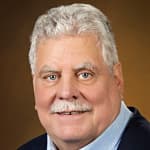
Dr. Scott Benjamin is a native of the Tri-County area and is a graduate of SUNY Buffalo, School of Dental Medicine and has been in full-time private practice in the Tri-Town Area for over 25 years. He has been a leader in computerized dental practice management since its' infancy. Dr. Benjamin has presented internationally at major dental meetings, universities, workshops, study clubs, and user meetings and has published more than 100 articles on dental technology in over a dozen publications on topics ranging from computerization, and the Internet to micro air abrasion, diagnostic modalities, and lasers. Dr. Benjamin is presently the Technology Editor of "The Journal of Practical Hygiene" (JPH), the Section Editor of Advanced Technologies for "The Journal of Practical Procedures & Aesthetic Dentistry" (PPAD), and is on the editorial board of "The Journal of the Academy of Laser Dentistry" (JALD). Dr. Benjamin has been appointed as a member of the Presidential Task Force on the National Healthcare Information Network (NHIN). He is also a member of ADA Standards Committee on Dental Informatics (ADA-SCDI), and is the Working Group Chair for three sub committees: Data Redundancy, Archiving, and Storage; Digital Photography and Imaging; and The Electronic Patient Dental Record. He is also a member of the ADA Standards Committee on Dental Products (ADA-SCDP) and is on the Board of Directors for the Academy of Laser Dentistry (ALD), a member of the National Dental Electronic Data Interchange Council (NDEDIC) Board of Trustees, President of the Tri-County Dental Society and Vice-President of the Sixth District Dental Society of the New York State Dental Association (NYSDA). Dr. Benjamin also is a Visiting Professor at the SUNY at Buffalo School of Dental Medicine, participated in the World Health Organization's (WHO) Collaborating Centre for Oral Cancer and Precancer 2005 Closed Session Working Group on "Potentially Malignant Oral Mucosal Lesions and Conditions Terminology; Classification; Diagnosis and Prognosis". Dr. Benjamin's interest in technology and advancing computerization in dentistry began with his first practice management system, in the early 1980's, and was instrumental in the development and implementation of electronic insurance submittals, in the mid 1980's while serving as an advisor to several dental technologies companies, and is continuing to assist in the progression of digital electronic patient records into mainstream dentistry. His interest continues today on a much broader scale with his involvement in the development of clinical screening, diagnostic, and treatment modalities and incorporating the appropriate utilization of advanced technologies into the everyday clinical dental practice. Dr. Benjamin is a consultant and advisor for many dental practices and several dental technology companies utilizing his expertise in clinical dentistry, digital radiography, imaging, practice management, dental computerization, and workflow.
Could a single technology transform your endodontic success rate while cutting appointment times in half? What if you could confidently tackle challenging molar cases that you might otherwise refer out?
Dr. Scott Benjamin brings over 25 years of private practice experience from rural upstate New York, where he has become an internationally recognized authority on dental lasers and advanced dental technologies. A graduate of SUNY Buffalo School of Dental Medicine, Dr. Benjamin holds faculty appointments at several universities and serves on editorial review boards for prestigious dental journals including The Journal of Practical Hygiene, The Journal of Practical Procedures & Aesthetic Dentistry, and The Journal of the Academy of Laser Dentistry. He is a member of the ADA Standards Committee on Dental Informatics and serves on the Board of Directors for the Academy of Laser Dentistry.
This episode explores Dr. Benjamin's revolutionary approach to endodontic treatment using Erbium YAG laser technology. He explains how photoacoustic streaming creates dual bubble formation that disrupts organic material through shock waves and negative pressure, enabling thorough decontamination of the entire endodontic system. The discussion covers his clinical protocol, instrumentation philosophy, and how this technology has enabled him to complete over 95% of molar endodontics in single appointments with unprecedented confidence.
Episode Highlights:
Dual bubble technique creates shock waves at 50-25 microsecond intervals that disrupt organic debris, followed by bubble contraction generating negative pressure to remove material from accessory canals that traditional irrigation cannot reach effectively.
Clinical protocol involves minimal instrumentation to size 20/.04 taper, followed by laser activation in 30-second intervals using sequential irrigation with distilled water, sodium hypochlorite, and EDTA, with the laser tip submerged 3mm into the irrigant reservoir.
Treatment outcomes show radiographic evidence of sealer penetration into previously undetected accessory canals, including MB3 canals in maxillary first molars, with completion of 95% of molar endodontics in under one hour single appointments.
Investment considerations include Erbium YAG laser systems ranging from $50,000-$100,000, with highest water absorption coefficient being critical for effective photoacoustic streaming, making this the only laser wavelength suitable for endodontic applications.
Rural practice implications demonstrate how laser-assisted endodontics addresses specialist shortage challenges, enabling general practitioners to retain complex cases while achieving predictable outcomes comparable to specialist care.
Perfect for: General dentists seeking to expand their endodontic capabilities, rural practitioners managing specialist access challenges, and clinicians evaluating laser technology investments for enhanced treatment outcomes.
Discover how one piece of technology transformed a rural practice's endodontic success rate and could revolutionize your approach to root canal therapy.
Transcript
Read Full Transcript
This transcript was automatically generated and may contain errors or inaccuracies. It is provided for reference and accessibility purposes and may not represent the exact words spoken.
where the laser actually creates a very small bubble. And then before that bubble collapses, it actually will fire again and create a secondary bubble. And those shock waves are what disrupts the organic material. Then the contraction of that bubble actually creates a negative pressure that'll then remove it out of the accessory canals. Welcome to the Phil Klein Dental Podcast.
Today we're going to be talking to a general dentist who has found a way to increase his success rate with endodontics using an Erbium YAG laser. And he talks about how he uses it and what it has done for his practice. He doesn't like referring out to endodontists because he has to send his patients quite a distance because he works in rural New York. For him, using a laser has given him the confidence to tackle molars, difficult canals, and he goes over it pretty clearly in this episode, so we're really happy to have him on the show.
Dr. Benjamin has faculty appointments at several universities. He's been in private practice in rural upstate New York for over 40 years. He's an international recognized authority on dental lasers and advanced dental technologies.
He currently serves on the editorial review board for several prestigious dental journals. Dr. Benjamin, always good to see you again and a pleasure to have you on the show. Well, thank you very much, Phil, for the invitation. So to begin, give us a very, very brief overview of how you use the laser in your endodontic therapy, specifically the Erbium YAG laser. Well, I'm using the laser basically to try to decontaminate the entire endodontic system by submerging it into the same arrogance we're presently using.
and literally causing some shock waves that do both expansion. And as that bubble contracts, actually causing negative pressure to bring it out of the canals. So prior to this podcast, we talked about the kind of laser that's necessary to do endodontic treatment. And it's not inexpensive. It could be $50,000, $60,000 or more. And I know you paid over $100,000 when you bought your laser. But again, you've told me many times it was the best return on investment you've ever had. The only type of laser that works
appropriate in this is an erbium YAG laser and the reason is that has the highest absorption in water
which is the primary component of all of our irrigants, because we need that very short, and it has to be a very, very short bubble. We're talking about using 50 microseconds and 25 microsecond bubbles. If that bubble is too big, then the contraction is going to draw in the air rather than literally move the fluid around. There are some available today that have been designed specifically for this endodontic technique that are...
that are a little bit less expensive. You're now talking possibly in the $50, $60 range. And those are the ones that we see the endodontists are getting into because, again, that's their need. We'll be getting right back to our guest in a second. But first...
Thanks to GC America, we're now able to incorporate all the advantages of glass ionomer into a beautifully aesthetic, strong, long-lasting restoration. That's a great reason to try GC Fuji Automix LC. You'll love the convenient automix delivery system and ergonomic dispenser.
which allows precise placement into the preparation. And GC Fuji Automix LC is bioactive, allowing for a high rechargeable fluoride release, which is ideal for high caries risk patients. And because it forms a chemical bond to tooth structure, even in the presence of saliva, there's no need for etchant and adhesive bonding.
This saves steps and is ideal for challenging patients where access and isolation are difficult. And the small filler particles in the material allow for superb polishability and excellent aesthetics. So when you're thinking glass ionomer for your clinical cases, think GC America, a world leader in dental materials. To learn more, visit gc.dental. But being a GP that you are, Dr. Benjamin, you did mention that you really can't live without a laser.
this particular laser and it's the best return on investment that you've ever made. Exactly. I mean, the fact that I do 90 plus percent, probably closer to 95 percent of my molar endo in a single appointment in less than an hour with confidence. And that's the underlying word is with confidence. The only ones that I don't do in a single appointment are the ones that I cannot stop the using coming in through the terminus.
And those are the ones that I will medicate and bring back. Other than that, that is basically my description of whether I'm going to complete it in that appointment. If I cannot appropriately dry the canals, then that's one I'm going to bring back. So let's talk about the files. You mentioned to me offline, you don't really go too wide with the files. You take it up to a size 17 or 20, maybe an 04 taper for some of your molars. And you really rely on the laser to remove a lot of the organic debris after the initial debris is removed.
with a brooch or your initial instrumentation? The role of the instrumentation is literally to create a pathway to allow the organic material to be basically bubbled out of the, for lack of a better term, bubbled out of the canal. And sometimes I'll open it up as much as an O4. I very rarely will go over an O4 unless I'm doing something like a wide open canal where I just want to get using it more almost like a bar brooch. So using tooth number 30 as an example, take us through the process.
of your molar root canal treatment with of course integrating the laser into the whole process i open the tooth and after i find my canals i'm using a rotary instrument with a built-in apex locator on it and i'm taking that down and the most i ideally like to open one up to is a number 20 tip at the appropriate working length of the millimeters that we need
I like to keep it as narrow as I can. Sometimes I'll go to 104 so I can use a single point and go to perch it to obturate with. And then after I've got to the apex or if I'm binding, sometimes what I will do and can't get to the apex, I will actually in turn use the laser to get the irrigation. There are some clinicians that believe you don't need an instrument at all, which I disagree with.
I believe that instrumentation is important because the role of instrumentation is literally to give a pathway to literally flush out the organic debris. So once you've negotiated your canals down to the apex with your last file, tell us how you use the laser at this point to continue on with the root canal therapy. Yeah, when we're using the laser, as in all endodontic procedures, we always place a rubber dam. And we actually seal around the rubber dam with some sort of liquid dam material.
with the idea that as we irrigate, we don't want the patient to taste any of the obnoxious flavoring of our materials. My first pass I will take with a laser, and the position of the laser is the same for all of it. We'll submerge it approximately three millimeters into the solution.
which is staying with inside of the chamber, not going down into the canals. If I cannot get it three millimeters into the chamber, I'll actually build the tooth up with some composite material to make a three millimeter reservoir. And that arrogant that's sitting in the reservoir, I assume, is sodium hypochlorite?
Well, we use a variety of materials. The first pass I always do is just plain distilled water. And the purpose of that, I want to make sure I get a good seal. If the patient feels the water coming out underneath, then there's a good chance that they're going to taste the EDTA and then the sodium hypochlorite. Are you getting a lot of spatter around the rubber dam when the laser is activated once the tip is submerged in the reservoir of irrigant?
Well, it's not so much spatter coming out of the canal because we have the bubbling action to submerge, which is why we're in a depth of three millimeters, as if there is a crack in the tooth, an open margin, and a restoration. Having it squared out underneath that is more what my concern is. The splattering is minimal to none. So you're combining using a laser with mechanical debridement. What determines that you're done with mechanical debridement?
instrumentation you no longer need to use the files I like going to a number for a taper and the reason I use a number for your taper is because it matches the size of the gut approach that I'm going to use to operate with you know now various systems now I have various ways of numbering their files and numbering their gut approach so it's important that you make sure that what your instrument doing that you have an adequate gut approach that's going to fill up the canal as much as
reasonably possible. We know canals are not ice cream cones. They are all sorts of different shapes. We're sealing the canal with a very thin sealer that's going to enable it to get into all these accessory canals that we're now cleaning out, that in the past, the majority of them were left behind. So tell us more about the sequence of irrigation material that you use. What's the process? Do you have a specific order that you use? Does it matter? Or is it just important to have that laser submerged in the solution?
to cause that bubbling effect to remove the organic debris. Yeah, well, what we're doing with the laser, it's sitting in the, we're putting it into the ear again, which some passes are with water, some are with sodium hypochlorite, and some with EDTA. And everybody has a different philosophy on what the order should be. Most endodontists I talk to feel that you should use the EDTA at the end and not use it in the beginning.
Other people say I like to use it as a chelating agent in the beginning to open things up. There's a discussion whether that'll weaken the tooth or not. That might be more of an esoteric discussion than anything else. But it is a consideration. So the laser tip is immersed in the irrigation material about three millimeters in depth. And what is actually happening around the canal system at that point? We'll be getting back to our guest in a second. But first, are you looking for an air-driven handpiece that rivals the power and torque of electric?
Well, I have good news. It's finally here. It's called the T-Mac Z and it's from NSK, a company we all know and trust as a world leader in dental handpieces. In addition to being lightweight and ergonomic, this revolutionary air-driven handpiece delivers unprecedented 44 watts of power, allowing it to cut through tough zirconia smoothly and quickly. In fact, the T-Mac Z reduces overall cutting time by 30%.
That means less chair time, reducing the burden on you and your patient. Take a test drive of the TMAX Z air-driven handpiece from NSK. For a free 10-day trial, go to nskdental.com and find your local rep to inquire. Experience the power and excitement of the TMAX Z series. Well, what's happening with the best technique is we're actually using what is referred to as a dual bubble technique, where the laser actually creates a very small bubble.
And then before that bubble collapses, it actually will fire again and create a secondary bubble. And those shock waves are what disrupts the organic material. And then the contraction of that bubble actually creates a negative pressure that will then remove it out of the accessory canals. So we're making several passes, you know, with the solutions until we see completely clean solution. I'm doing a minimum of three passes of 30 seconds in length.
with sodium hypochlorite, and a minimum of one pass with EDTA, and intermixing a pass with water in between those. So essentially the tip of the laser could easily be 20 to 25 millimeters away from the terminus of the canal. And things like canines, oftentimes it is. So what is research showing regarding the effects of this bubbling activity that far away from the tip of the laser?
How effective is it and how much debris is being removed? And what does the surface look like of the dentin? Looking at the research that has been done with clarified tooth and anatomical models, they've actually shown the ability to the contraction of the bubble of actually removing the debris from there. Because it's the same action going on at the terminus, where oftentimes you don't have a single port of exit. You have a multiple port of exit.
And as the accessory canals, the studies have actually shown of actually drawing the material up out of that area. So you're running that laser for about 30 seconds using sodium hypochlorite, and you do three passes. When you look at the sodium hypochlorite that's coming out of the canals after the third pass, it must be pretty clean. Exactly. After each 30-second pass, I'm using a needle tip aspirator to go down and suction out as much of that solution as we can.
and then doing the additional passes with the corresponding vindicament that would be next in the sequence. And so that I'm always using fresh material, again, to break down the organic material. Because the goal is to get all the organic material out of the entire endodontic system, and then to seal it up with a very thin sealant, and the gut approach is being used more as a plunger than it is actually anything else.
They'll literally force the sealant into all these very narrow canals. And there are some canals that we're actually seeing the sealer being squirted out into the PDL. The accessory canal is so fine. We've seen a lot of advancements in endodontic sealers. Back in the day, we were always worried about washout. We had to use a lot of gutta percha and a very, very thin layer of sealer.
just to fill the void between the gut apercha points. Then we went into soft gut apercha techniques, warm gut apercha techniques, etc. So tell us about the actual advanced sealers that are out there today. Some of them are bioceramic. There's some very good bioceramic sealer on the market. Some of them are resin-based. The idea is you want to make sure that it is extremely thin because if it's not thin, it will not get into those accessory canals. And I always boil down to endodontics in principle is extremely simple.
We get all the crap out of the endodontic system and then we'll seal it up so it can't get back in again. So you've been using a laser for root canal therapy for a long time. You're a rural dentist. You decided that you needed to keep some of this root canal in-house. Your patients just weren't willing to travel 40, 50 miles to the closest endodontist. And you implemented lasers. It really boosted your confidence, your success rate. And you're seeing radiographically, postoperatively, a sealer filling.
lateral canals that you never saw before you implemented lasers into your practice. So tell us how it's been a game changer for you. I think failures are now, I can never say are going to be completely eliminated, but the idea is now we can actually radiographically see the accessory canals that have been filled. My confidence level significantly goes up.
that I've cleaned out the entire endodontic system, not the canal, but the entire endodontic system. And then again, I've obturated it and sealed it up to hopefully to keep it from getting reinfected. And that's the basic concept of the whole goal here. The amount of time it takes to do the laser part of the process is usually somewhere around 10 minutes out of the entire appointment.
Again, the hardest thing is finding the major canals. We're actually seeing upper first molars in particular where you have the MB2s. We're seeing canals that when we go to obturate that we are actually seeing the sealants coming out of these canals we didn't even know existed. And it's very common, especially in an upper first molar, to see an MB3, et cetera, actually coming back out because of the thinness of the sealer and the fact that...
The laser activation, the photoacoustics streaming that's going on has actually cleaned out an area that we haven't instrumented at all. One of the biggest misconceptions people have is that the light energy is actually doing the work. And what's actually doing the work is the fluid mechanics that are being created by the light energy itself. Light travels in a straight line. We don't have any problems at all cleaning out a nice straight area. It's all the things that are...
The anastomosis is between the canals, the accessory canals. When you look at a good cross-section of a tooth, seeing all these things that are, I call them the ice cream cone-shaped canals, just never accomplished. So where do we stand in the profession as far as the breakdown of who's using lasers for endodontic treatment? Is it primarily endodontists? The majority of these lasers are now being bought both by the endodontic community.
you know, for this is to supplement their technique, as well as by general dentists to keep more of their endodontics in-house. We have a shortage of specialists, you know, all the way through the community. You know, endodontists in particular, oral surgeons, periodontists, it's reaching an, I'm going to say, an epidemic crisis is that trying to get patients into a specialist today, it's getting more and more and more difficult because there's just not enough of them. Our population has grown.
And the number of clinicians really hasn't. Are you talking about specialists or GPs? Both. Up until three years ago, the largest graduating class from dental school was back in 1978, where we actually produced 5,800 dentists. And then there was a decline in until recent years. And it's just been in the last two or three years that we've actually produced more than 5,800 dentists a year.
And again, with those of that generation, the majority of those that were being produced in the late 70s, early 80s are now at retirement age. And, you know, we had all the dental schools that closed in the mid 80s and a variety of things that went along. Now we have the uptake of all these new dental schools that are helping fill this need. And unfortunately, as we discussed in a previous podcast, is that the need oftentimes are in an inappropriate location.
We have a huge need for GPs and specialists in rural and small cities. Yeah, and I'd like to remind our listeners that Dr. Benjamin did a fantastic podcast on practicing in rural America. The name of that podcast is called Beyond City Limits, Dentistry in Rural America. I certainly encourage everybody to have a listen to that, especially if you're looking to move to a rural part of our country.
That podcast, by the way, is available on VivaLearning.com. You can also get it on Spotify, Google Podcasts, Apple Podcasts, or any platform that you like to listen to your podcasts. Excellent podcast. Thank you very much for sharing your experience with a Erbium YAG laser to make your root canals more efficient, give you confidence, increase your success rate. Thank you. And hopefully you can join us for another podcast soon. Phil, it's always a pleasure. And anything I can do to help move our profession forward, I'm always willing to do. Thank you very much.
If you've been enjoying our podcast, we'd love to hear your thoughts and feedback by leaving a review on your favorite podcast platform, whether it's Spotify, Apple, Google or any other platform you listen on. Leaving a review is a fantastic way to support us and help others discover our show. Thanks for listening. See you next time.