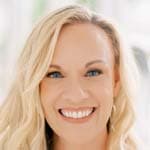
Kelly Tanner, PhD, RDH earned her Bachelor of Science in Dental Hygiene and her Master of Science in Dental Hygiene from Old Dominion University. She found a love specializing in management and administration within her Master's degree, and continued her doctoral education at Regent University in Virginia Beach University in Business & Organizational Leadership. Kelly's Ph.D. focused on organizational metacognition, in-depth study of group dynamics, and how to elicit permanent organizational change.
She is also certified John Maxwell Leadership Coach and is also certified in the science of emotional intelligence (EI). Kelly teaches organizations how to leverage their productivity and teams utilizing EI and other customized assessments to make changes that LAST and teams that THRIVE. Through measured assessments and interaction, Kelly can help teams of any size create sustainable systems for personal and professional accountability by increasing ownership and synergy within the organization. Kelly's proven methods will enhance team interaction, case acceptance, digital adoption, and workflow efficiencies.
Tanner has a published chapter in forensic odontology for dental professionals, and also multiple publications in topics regarding telehealth for dental hygienists. Kelly recently published her dissertation titled: Identifying Leadership Development Needs of Dental Hygienists Using an Online Delphi Technique
Kelly has served as a mentor, clinician, consultant, researcher, and also as a dental hygiene educator and clinical director. Kelly has served as past president of the Virginia Dental Hygienists' Association and also as Chair of the ADHA Council for Public Relations. She has been recognized for her outstanding leadership within health care and university settings, and is a recipient of the ADHA and Johnson & Johnson Award for Excellence.
Kelly has dedicated her career to leadership, education, and mentoring. She has dedicated her time in the dental hygiene profession to understand to how to empower dental hygienists and transform their possibilities. Kelly's passion is helping individuals connect with their passion, and working to make it a reality. She has the ability to envision and assist individuals with a path and help them intentionally build a path based upon their passion.
Dental podcast: Welcome to DentalTalk. I'm Dr. Phil Klein. Today we'll be discussing infection control and how to decrease the risk to practitioners and patients. Our guest is Dr. Kelly Tanner, a visionary leader who helps dental teams achieve personal and career growth. Dr Tanner has earned both a RDH and Ph.D, she lectures extensively and has impacted more than 100,000 people with her speaking engagements.
Transcript
Read Full Transcript
This transcript was automatically generated and may contain errors or inaccuracies. It is provided for reference and accessibility purposes and may not represent the exact words spoken.
You're listening to The Dr. Phil Klein Dental Podcast
Welcome to the show. I'm Dr. Phil Klein. Today we'll be discussing infection control and how to
decrease the risk to practitioners and patients. Our guest is Dr. Kelly Tanner,
a visionary leader who helps dental teams achieve personal and career growth.
She lectures extensively and has impacted more than 100,000 people with her speaking engagements.
Before we get started, I would like to thank our sponsor, Action Group. Action is a leader in the
dental industry based on its technical innovations in x-ray and digital imaging,
high-frequency ultrasonic technology, pharmaceuticals, and precision instruments.
So thank you, Action, for your continued support with Viva Learning CE webinars and podcasts.
Dr. Tanner, it's a pleasure to have you back on Dental Talk. Oh, thank you. It's a delight to be
back. Yeah. And for those of you who missed Dr. Tanner's previous podcast, it was on implant
maintenance. And there's some really good points that she covered regarding the various devices,
equipment, techniques, and protocol that all dental hygienists should be considering when treating
patients that have implants. Very important topic. So getting to infection control. How has the
pandemic changed the way you approach infection control when practicing? Once you take microbiology
class, I think that everyone here listening to this, like once you see it, you can't unsee exactly
what's floating around, what's on surfaces. And truly how I've rethought about it is when the
pandemic occurred, the most important thing that stuck with me is, oh my gosh, this is exactly what
we were taught. in dental hygiene school. And I need to go back to the way that it was being done
because that's what was tested. That's what was proven. And it passed the litmus test back then.
And so why wouldn't it even be passing now? So rethinking, okay, what did I learn?
What do I know? And then how do I go to reintroduce that into what it is I'm doing?
Because I think that we have this habit. And I think that maybe I'm talking to you if you're
listening to this. You know, we don't think that we get cavities. We think that we're immune to
them. We don't think that we need to floss all the time like we tell our patients. And I think also
we think that we're somewhat immune to some of the aerosols and things that we're spinning in the
air and we're not. And so we need to get back to the original way that it was taught to us and to
rethink what it is we're doing to produce those aerosols and to also keep our patients safe. Yeah,
that point you made about taking microbiology is so true. Based on the education we get in dental
school, hygiene school, and college or wherever you are where you take science classes, the reality
is you can't see these bugs and they survive for long periods of time and they transfer from one
surface to another. And washing hands is so important. We do so much stuff on Viva Learning on hand
hygiene. Hand hygiene is just so critical. And I know that everyone is probably so over listening
to some of this topic. There's some big gaps in what we're still not doing. For instance, this is
something I teach at a dental hygiene program that I started at 12 years ago in Virginia and
cleaning and disinfecting our operatory with latex gloves on. and not using our utility gloves.
Those gloves are not meant for disinfecting the operatory because it's a permeable material.
So it affects our kidneys. And are we truly protecting ourselves in that way? It's the little
things that we're not following. And so we need to go back to our guidelines. Take a course,
you guys. There's so many out now. There's some great folks, very engaging speakers speaking on
these topics. And while it seems like Charlie Brown, wah, wah, wah, wah. It's about the guidelines.
The guidelines are in place for a reason to protect us, our, I mean,
a lot of things, right? Our patients, the families of our patients, our families. And so also to
what I have been leaning into since the pandemic and even before, because. Gosh knows if you guys
have been in the profession, the whole holding the suction to try to reduce aerosols. And as a
hygienist, I'm not really good at the high evacuator tip. I mean, I will suck a tongue up in a
second, even though as a dental assistant, I know it's physics, but looking at devices that reduce
or eliminate aerosols, things like the Zyrus Isovac or the Zyrus Isolite,
and then also to the ultrasonic that you're using and the type of, not just the type,
but the quantity of. water and irrigation that you're using? And how are you managing that?
And of course, just filters and all of that, but what is it that you're doing that you can prevent
just by what it is that you're introducing into the environment? What do you see as the most common
drawback in a dental office where the highest risk occurs as far as spreading disease?
People are following the rules. It's the little things, the cross-contamination between the
patients. Think about what you're touching, first of all, okay? So I'm a coach. I work chair side
in offices. I do a lot with workflows, implementing technology, getting the team to value,
not getting them to, but having them understand why it helps them, creating that value, and then
helping them work through that. The things that they're doing to touch, they'll touch one surface,
they'll put their gloves in someone's mouth, then touch their loops, their loop string. It's just,
it's cross-contamination all the time. And it's so natural that they're not thinking about it
because when, I know that when I left dental hygiene school and that when my students leave dental
hygiene school, they no longer have us there to say, eh. You just touch that, take your gloves off,
that's 10 points off. That's cross-contamination. That's infection control violation. Yeah, so
it's a behavioral thing. It really is. When you have a doctor who does surgery all day, there's
such tight protocol. When they're scrubbed down and they do their procedures, no one's touching
anything else other than what they need to do. for the surgical procedure. And all the disinfection
that takes place beforehand, when they're scrubbed, it becomes a behavioral systematic approach
toward good infection control protocol. And if you don't have that repeatedly in your brain to do
this the right way, you stray. And when you stray off, that's where the issues occur. That's always
the weakest point. That's where we get the spread of disease. So when we talk about spreading
disease between patients, what can clinicians do to reduce the risk? of cross-contamination
between those patients that are coming to see you. Right. It's, of course, proper sterilization.
And I'm not sure how many of you all are keeping a sterilization log. I'm sure that you all are
because we're rule followers, right? There is a company that's called Sterilog that I have learned
more about this year that's amazing, that automates all of that. So I think it's Sterilog.com that
you can go to that eliminates any human error. because as fast as environments and reduced
workforces that we've had that's one that's one way to make sure that everything is tightened up
and buttoned up on your infection control and then you know again back to the point of thinking
about what you're touching because that's cross-contamination between patients and then Think
about elimination of aerosols, which we talked about in terms of I use it. I like to use a piezo
because it uses less water or whatever type of medicament that's in the chamber.
It's like 50% less water. So I'm not creating those aerosols that are going into the air.
And then also, of course. decontaminating your dental water unit lines that's a huge one the things
that we've learned about in the last two years because that in itself is spreading infection and
then two i don't know if you guys know about this or not okay but hear me out. Have you ever
researched, if you go online, like if you're driving, don't go online, but the air water syringe
tip, the bio burden, like a non-disposable tip risk, and then you will see all of this bio burden
that accumulates on the inside of that air water syringe tip over time. And I'm going to let you
decide what you should do with your tip. So what I have discovered in the last two years as well,
there is this disposable tip. Not only is it disposable as in what I just stated,
but it also keeps the air and the water separate while you are working.
It keeps your dry field. And also too, it makes it so the tip doesn't projectile,
it locks in. So there's like a little adapter that goes with the tip. And it makes it so when you
press the air or the water, the air water syringe tip doesn't go flying. And it's always seated
exactly how you want it to. So this tip, it's disposable. It locks in so it's staying where it's
supposed to. And also, too, when you're working in a procedure and doctors, you know that the
highest failure rate is when you have moisture control issues with composite bond or something
you're bonding. Your water is separate from your air. Your air is separate from the water. You're
not getting those spittles. of that contamination in your procedure either. So these,
I think, they're the little things that lead up to the big things in our efficiency and our
workflow, and they're truly helpful. Where are those tips available? So risk control, it's funny
the way it's spelled. So risk is R-I-S-K, and then it's the K is used on the control.
Risk control, all one word, one K in the middle. And they are available through Action as well. The
reason why I keep bringing Action up, they do such a good job at workflow, and they do a really
good job at... paying attention to what the operator is needing, what this patient's needing,
that's thinking forward on that workflow, reducing contaminants so it makes your job easier.
It's protecting you and the patient. As we wrap up this podcast, Dr. Tanner, tell our audience
about your training program, Know Your Flow. Know Your Flow program is about different devices that
you can use, and it's not specific to one manufacturer. I think it's always fair to bring in other
things, and I can only speak from, of course, my own personal experience, but it's what we're using
in that decision-making every day that we know are the primary tools that we're going to utilize
for every day. type of patient that we can think of. What's going to be the commonality between the
devices that we're choosing? You know, how's it going to benefit every patient? And then how it's
increasing our efficiency, how it's increasing our value that we're providing and taking that
ergonomic burden, you know, making sure we're staying in that. correct posture. So it's not
pulling, not creating any extra forces on us throughout the day. And so it's protecting us,
protecting the patient, protecting your standard of care. And so that's what I'm, when I go
shopping for things and talk to hygienists. And doctors, because hygienists have a lot of input
also on the purchasing and the practices. What is it that's going to make your life easier based on
what you know? Okay, have you looked at everything? Have you looked at every piezo? Have you, do
you know the manufacturers that are involved? So give them three choices to say, okay, based on
this, what is it? Who is it that you need to visit at this meeting or who you need to contact? Get
that information. Say, okay, I want to try this out. Some will actually come in to give you a demo
unit. They'll let you use it for a week or two to see if you love it. If you don't love it, you get
to try something else. So I encourage for folks to. Use these devices, figure out what's going to
work for you. And so when we talk about know your flow, think about all the different steps that we
do. I know in dental hygiene, it's assess, diagnose, implement, plan, evaluate to make sure that
it's what we've done, what we did, what we think that we did is what we actually did and how that's
setting up that patient for success. So what in your workflow system that you're using makes it
easy for you is a no brainer to just create those habits of standardization.
throughout your practice, throughout every single appointment time and every single patient. Yeah,
very well said. And so important to make the right purchasing decision. And listen, the information
is out there. You can Google it, but then you're not really talking to someone that has the
experience and that potentially has already made that mistake that you don't want to make. You want
to keep your inventory low, right? You don't want to clutter up your office with things that you're
not going to use or that doesn't improve efficiency in your workflow. What is your website so our
audience can check it out? Absolutely. It's drkellytanner.com. And I also own Next Level Dental
Hygiene as well. So I'm a speaker. We have also online classes available for a variety of topics,
not just for dental hygienists, but also for teams and leadership. That's what my background is in
behavioral change and also leadership and drawing you to make the right decisions for your
patients. Thank you so much. And we'll see you on the next podcast. Thank you so much. My pleasure.