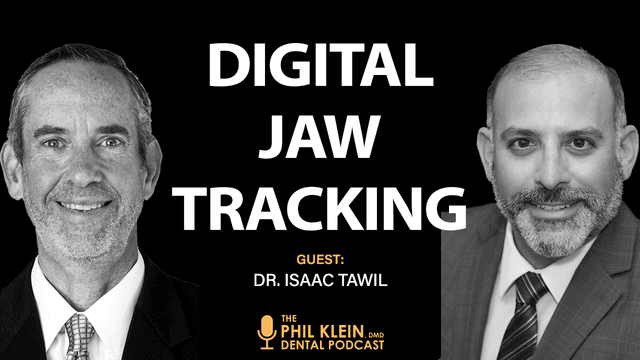
Dr. Tawil is a MINEC Ambassador (Megagen International Network of Educators and Clinicians), a member of MINEC USA and sits on the Digital Dental USA Society board of directors, a Diplomat of the International Academy of Dental Implantology and the International Academy for Dental Facial Esthetics. He is a Fellow of the International Congress of Oral Implantoloy. He is one of Dentistry Today's top 225 leaders in CE, a faculty member of the Osseodensification Academy, Brighter Way Educational Director (Phoenix, Arizona), and Digital Director of Guided Smile. Additionally Dr Tawil is an Ambassador for the Slow Dentistry initiative and a Fellow of the Advanced Dental Implant Academy. A recipient of the Pierre Fauchard award for outstanding achievements in dentistry and the Presidential Service Award for outstanding achievements in dentistry. He is the Founder and Co-Director of Advanced Implant Education, a Partner in TBS instruments, and Universal Shapers LLC. He is a new product consultant for several dental companies. Dr Tawil has held main podium sessions and hands on workshops world wide and enjoys a private practice in Brooklyn, New York.
There is no question that digital dentistry has revolutionized our profession. The impact of digital scanning and printing has enabled clinicians to provide faster, better and more affordable high end dentistry. Today we'll be discussing digital solutions specifically for implant dentistry. Our guest is Dr. Isaac Tawil, who has an extensive history in the dental field and is a recipient of two coveted awards: the Pierre Fauchard award for outstanding achievements in dentistry and the Presidential Service Award. He is the Founder of Advanced Implant Education and is a new product consultant for several dental companies.
Transcript
Read Full Transcript
This transcript was automatically generated and may contain errors or inaccuracies. It is provided for reference and accessibility purposes and may not represent the exact words spoken.
You're listening to the Phil Klein Dental Podcast
Thanks for joining us. I'm Dr. Phil Klein. There is no question that digital dentistry has
revolutionized our profession. The impact of digital scanning and printing has enabled clinicians
to provide faster, better, and more affordable high-end dentistry. Today,
we'll be discussing digital solutions specifically for implant dentistry. Our guest is Dr.
Isaac Tawil, who has an extensive history in the dental field and is a recipient of two coveted
awards, the Pierre Fouchard Award for Outstanding Achievements in Dentistry and the Presidential
Service Award. He is the founder of Advanced Implant Education and is a new product consultant for
several dental companies. Dr. Tawil continues to lecture and run hands-on workshops worldwide and
enjoys his private practice in Brooklyn, New York. Before we get started, I would like to mention
that Dr. Tawil’s webinar titled Digital Implantology, Advancements and New Techniques is now
available as an on-demand webinar on VivaLearning.com. Simply type in the search field Tawel,
and that's spelled T-A-W-I-L, and you'll see the webinar. If you want to learn a few things
about cutting-edge dentistry as it relates to implants, I highly recommend this webinar. Dr.
Tawil, it's a pleasure to have you on the show. Thanks. Pleasure to be back here. So as one of the
foremost experts in dental implants worldwide, and I've known you for a long time, Dr. Tawil, and I
both actually, we're both New Yorkers. I'm not a New Yorker anymore, but I was at one time. I'm in
Austin, Texas now, but nice to see you're still in Brooklyn. You know, you've really had...
and years of experience in implants. And now digital workflow is really playing a big impact on
this whole thing. I mean, the efficiencies, the diagnostic information,
the accuracy of placing implants, the treatment planning, just about everything. And we'll even get
in later on in this podcast about facial scanning, which is something we've talked about off the
air, which I want you to go over. And that's been a game changer. So to begin this podcast, If you
would, let's talk about the impact of intraoral scanning and how that has affected you as an
implantologist and your practice of implant dentistry. Certainly. Thanks for that introduction.
It truly is remarkable how much dentistry has come along the way. And my only 20 years of
practicing, it's incredible what has actually compiled in the digital realm, just from starting out
from two-dimensional. x-rays that we had on paper, then we went to digital, and now it's CBCTs,
and then intral scanning came out. And intral scanning was out while I was in dental school. Go
back to the CERAC red cam and blue cam, but it wasn't really at the level where a practitioner
could utilize it in any kind of meaningful way, unless they were going to take a whole day to make
a crown and scan a patient. Typically, people would just rather have a standard impression,
and then you could digitize that. There were desktop scanners out there that were possible. You
could digitize models. But to have something that's really unique in your hands, a magic wand,
so to speak, that you can walk around the mouth, capture everything you need to capture, and have
that on record, whether it be on your computer or in a cloud-based system, you have access to that
wherever you may be. I could be traveling, giving a lecture, and I could log in, see the patient's
tooth that we're talking about, see their x-rays. see the teeth in 3D, and even make a plan for
that tooth, whether it's going to be on the software or it's going to do guided surgery. It really
is remarkable what we can actually have at the palm of our hands. In my practice now,
we've accumulated 13 intral scanners, so it's tremendously impacted us. We've gone and done some
demos, and we've gone and used some as our standard on our practice of care, such as the Iteros,
the Trios, the Medits. the more recently edition of the Shining 3D internal scanner into our
practice. And it's been truly revolutionary because at a 30-second scan time,
we can capture an arch, and then we can have a meaningful conversation with the patient and go over
and highlight what the patient may need in detail, not just from a 2D dimensional x-ray that a
patient can't understand, or even a 3D dimensional x-ray like a CBCT that the patient can't
understand, but they certainly can understand looking at the mouth, looking at rare facets that you
can point out to, looking at fractured cuffs, leaky margins on fillings, all these things that we
can capture that we just can't get in a two-dimensional picture. We really can only get it in a
three-dimensional manner. So if you would, could you tell us where you find the most value in an
intraoral scanner? And that includes onboarding patients and also specifically for implant
procedures. Well, every patient gets an intro scan that comes into our practice, whether it be for
diagnostic purposes or whether we're going to do treatment. It certainly is a valuable tool for
that, and it's great to have something on record. If someone was to break a lingual cusp of a
tooth, you can print a 3D model, make a temp, do whatever you'd like, get them back into that
design right away. As far as for implants, it has been truly, truly revolutionary because one of
the things that patients can't stand is having the gook in their mouth for an impression. material
and also having the ability to capture that part of the problem was that we used to do closed
impression trays we'd place a impression transfer into the mouth and we flow some material around
it while you were painting the tray while you were getting everything ready the tissue already it's
always trying to creep back over so you've lost a lot of that that sulcus that we were trying to
capture around the around the implant so we it really did hinder us we've come up with lots of
different fancy ways like open tray impressions and in composites around impression transfers to
try to hold back that tissue but the reality is if you could just unscrew the healing cap and
simply capture with a with the magic wand with the i like to call harry potter wand when i talk to
my patients we literally can capture it like magic instantaneously and get all the little nooks and
crannies that we want to capture if we find an area that we didn't capture well, we can erase it
and recapture that area. If we have half the arch, we can stitch it to the other half of the arch.
It's really remarkable what we can actually get away with. When it comes to full arch scanning,
more recently, some newer scan bodies have come out that allowed us to... really perform even full
arch dentistry with full arch scanning. So it really did become a wonderful thing because now we
can go from impression to final just a matter of a couple visits instead of the traditional more
seven to eight visits that it used to take us to make these restorations, which is really
beneficial both for the clinician trying to earn a good amount of income because obviously chair
time is leading towards costs and expenses. And also for the patient who is constantly coming back
and forth several times to do try-in after try-in or impression after impression, pick-up after
pick-up, looting after looting. It's just a lot of chair time that we can now skip because we have
the ability to have this three-dimensional technology in the palm of our hands. Yeah, so it seems
to me that there's a huge trend in GPs. moving into digital scanning and it's not that they're
giving they're not completely giving up their traditional impression material because they for some
cases they need to do that there's no question about it but there's more competition now in the
scanning in the intraoral scanning business which always helps the consumer so I'm not really sure
why you have 13 scanners. You mentioned you did. We did a lot of demonstrations for a lot of
articles were written and we do a lot of beta testing for some companies that really,
really accumulated in the office. And we have fun with all of them. It's nice to know that they're
there. How does one scanner... differentiate from another. And you talk about price too.
Price, oh yeah, without a doubt, we'll talk about that too. But the biggest, most important thing
to me is that I want to be able to capture everything in an arch. I want to be able to use
artificial intelligence to block out the lip and cheek. If I have the tongue captured,
it should automatically erase it so I don't have to worry about that. Some of the scanners, because
of their software, have that incorporated. The ability to scan metal. is very,
very important. Most of our patients presenting for implant therapy are going to have a lot of
metal in their mouth, and we need that interval scan to merge it with the CBCT data so we can make
really accurate diagnosis, especially if we can use a surgical guide. And then, of course,
in terms of the ability to have tracking, for example, if I'm scanning on the right side of the
mouth and I move over to the left side of the mouth and I want to jump back to the right because I
see that there's something off, I don't want to wait. 30 seconds for the scanner to try to find it.
It should be instantaneous where it just picks off where it left off. And some of the scanners can
do that, some can't. The newest one that we're using, the Shining 3D, really has amazing tracking
ability. And really scary thing about it is that it's one of the most affordable scanners I've ever
used. Really putting the stress on the competition to lower their pricing.
So to me now, in today's market, There's really no excuse for a dentist not to be able to afford to
have these digital technology if they so desire to. Yeah. What is that particular scanner called?
That's the Shining 3D Aural Scan. They have a wireless and a wired version. And it's about some $10
,000 for a scanner, which is really incredible. For a scanner that is as good as any other scanner
I have used in my practice, of which we said we have many here. So to me,
it's my favorite one. currently. I don't know if it's just because it's new. It's also wireless,
which I have a few wireless, but it's really accurate and my restorations are fitting really,
really well. That has a lot to say about the laboratory as well, not just the scanner, but when I
compare apples to apples, I am thrilled with this. I really can't believe that it's that
affordable. That kind of is the eye-opening part of it to me. It's not the only wireless unit
available. Oh, no. We have in our office alone here, we have the Trios wireless. We have the
CareStream now, Dexus wireless scanner. I have the Medit scanners,
all great scanners. They all do very, very nice jobs. They're all a lot more expensive than this
scanner, which is one of the reasons that it was so shocking to me that we were able to get a
scanner at such an affordable price. And of course, that's especially important to someone like you
who has an education business where you need lots of operatories. You have lots of people come into
your training center. So obviously having multiple scanners is important. And if you can get a
quality scanner, that's a lot less money. That's reliable. Why not? Tell us about 3D printers.
How have 3D printers been helpful to you as an implantologist? And how might 3D printing help
general dentists in the area of implants? I think for any GP at this point,
having a 3D printer can be very advantageous because we can print models whenever we want. We can
print surgical guides. We can print bite splints, occlusal guards. We can even make teeth,
and that's been the biggest advancement. One of the things that I really like to do is print 3D
surgical guides so that I can perform my implant therapy for my patients under a controlled
environment. Sometimes my cases are under sedation and patient may move around. It's nice to have
control using a surgical guide where we can get the, if not perfect, but as close to a perfect
position of where our original plan was to put those implants. So we utilize that technology
tremendously and print those surgical guides same day if need be. For that to be done,
we need an internal scanner and then a 3D printer along with the CBCT. Right. Now, these different
technology devices, they don't have to all be by the same manufacturer for them to work together,
correct? Everything should be open source at this point. If you're living in an ecosystem that
requires you to be within a certain company, I would think twice about doing that. Sometimes it's
advantageous to have a company that gives you that seamless digital workflow. This company,
Shining 3D, that we're working with now does have the intro scanner and the 3D printer, so they
talk to each other very, very well. So it's nice to know that you have the software that's there to
do it. So we've been printing both surgical guides. And what's been even more important to me is
previously I used to fabricate teeth in advance and do some type of alluding to the actual implants
to our prefabricated teeth. And that would take some time and a workup. It might take us a month,
month and a half to get these teeth in the office to do these cases. Now what we can do is have a
plan. print the surgical guide, same day, next day. It might take us a few days to actually make
our plan. And then we can actually have a set of teeth that we have a design for,
but we don't utilize until after we place the implants. Once we place the implants, we then re
-scan the mouth, compare it to our original scan, and then import that design and align it with
where our current implants are. So we can do same day or next day printing. which looks a lot
nicer. We have much nicer anatomy because we don't have to grind down so much on the occlusion. We
have very nice prosthetics. And it's all happened more recently because the materials in the 3D
printer, the resin, has gotten dramatically better. And also the curing process has gotten
dramatically better. We have all different types of curing machines these days, including pressure
cures, where you cure not just with light, but with pressure. And that enhances the strength of our
restorations. And more recently, we've actually been introduced to what we would like to say are
printed final crowns. There are now resin ceramic and resin beaded crowns that we can utilize as a
final restoration. Let me just ask you this, Dr. Tawil, using 3D printers for crowns,
where are we with strength? Is it as strong as, let's say, zirconia? No, it's not. We're not at
that level yet. It is coming. And there's a few things that I guess I can't talk about because
obviously I have some NDAs and things like that. But for those things, they are around the corner.
So there are materials that are out there that are approved, actually. Insurance code approved for
us to be used as final restorations on teeth. And we're getting to that point around implants as
well, which is really great because let's say we even if we don't. want to make a final
restoration, but we don't want to charge as a final restoration, it's nice to know that we can
reprint something in a matter of an hour. So if a prosthetic breaks, we can just have another one
made or we can have it made, we can have a few copies of them because the printing is so much more
affordable than milling when it comes to these materials. Dr. Tawil, as usual, great discussion.
Thank you so much for your time. Great insight on using these new technologies for implants. for
both your practice and GPs as well. And we look forward to having you on future podcasts very soon.
Thank you so much. Thank you all. Appreciate it. If you've been enjoying our podcast, we'd love to
hear your thoughts and feedback by leaving a review on your favorite podcast platform, whether it's
Spotify, Apple, Google, or any other platform you listen on. Leaving a review is a fantastic way to
support us and help others discover our show. Thanks for listening. See you next time.
Digital dentistry has revolutionized our profession. In fact, if you are doing implants without taking advantage of today’s digital technology, you’re missing o...