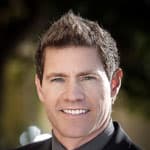
Dr. Todd C. Snyder received his doctorate in dental surgery at the University of California at Los Angeles School of Dentistry. Dr. Snyder has learned from and worked under some of the most sought after leaders in dentistry, refining his skills in comprehensive, extremely high quality aesthetic dentistry and full mouth rehabilitation. Furthermore he has trained at the prestigious F.A.C.E. institute for complex gnathological (functional) and temporomandibular joint disorders (TMD).
Dr. Snyder lectures both nationally and internationally on numerous aspects of dental materials, techniques, and equipment. Dr. Snyder has been on the faculty at U.C.L.A. in the Center for Esthetic Dentistry where he co-developed and co-directed the first and only comprehensive 2-year postgraduate program in aesthetic and contemporary restorative dentistry. He currently is on the faculty at Esthetic Professionals. Additionally, Dr. Snyder is a consultant for numerous dental manufacturing companies and has had the opportunity to research and recommend changes for many of the materials now being used in dentistry. Dr. Snyder has authored numerous articles in dental publications and published a book on contemporary restorative and cosmetic dentistry.
Dr. Snyder also founded and is CEO of Miles To Smiles a non-profit mobile children's charity that helps indigent and underprivileged children.
Dental podcast: Welcome to DentalTalk. I'm Dr. Phil Klein. Today we'll be discussing how we can keep things simple in our office while maintaining a high level of workflow efficiency. Our guest is Dr. Todd Snyder, a popular speaker on Viva Learning.com, a cosmetic dentist, author, international lecturer, researcher and instructor at various teaching facilities. Dr. Snyder is a consultant for numerous dental manufacturing companies and has had the opportunity to research and recommend changes for many of the materials now being used in dentistry. You can reach Dr. Snyder at: www.legion.dentist..
Transcript
Read Full Transcript
This transcript was automatically generated and may contain errors or inaccuracies. It is provided for reference and accessibility purposes and may not represent the exact words spoken.
You're listening to The Dr. Phil Klein Dental Podcast from Viva Learning.com.
Welcome to the show. I'm Dr. Phil Klein. Today, we'll be discussing how we can keep things
simple in our office while maintaining a high level of workflow efficiency. Our guest is Dr.
Todd Snyder, a popular speaker on VivaLearning.com, a cosmetic dentist, author, international
lecturer, researcher, and instructor at various teaching facilities. Dr. Snyder is a consultant for
numerous dental manufacturing companies and has had the opportunity to research and recommend
changes for many of the materials now being used in dentistry. You can reach Dr. Snyder at www
.legion.dentist. Before we get started, I'd like to thank our sponsor, Sycan.
a world-renowned company that provides a complete range of infection control solutions for dental
practices. So if you're looking for equipment or products in the area of infection control, look no
further than Sycan, known as the maker of the Statum cassette autoclave, the fastest cassette
autoclave out there for sure. Sycan offers cutting-edge solutions for efficiently washing,
disinfecting, and sterilizing dental instruments. A really phenomenal company. Great products.
You'll see it at the dental shows or showrooms and so forth. Super cutting edge stuff. They make
any stereocenter stand out. So we thank SICAN for their support for this podcast series with Dr.
Snyder. Dr. Snyder, it's a pleasure to have you back on the show. Thanks for having me again, Phil.
So those of you who have not tapped into Dr. Snyder's previous, actually they're going to be four.
By the time you hear this podcast, there'll be four. But right now we're in the middle of recording
it and there's two. Making More by Doing Less was one episode, which was very good.
And then Profitable Ways to Cutting Overhead was the second episode. This is the third of four
episodes called Dental Office Simplicity and Workflow Efficiency. So my first question to you, Dr.
Snyder, is what does it mean in the world of a dentist to simplify your practice? You know,
that could go a lot of ways based on each person's business model, if they have a model. You know,
you've got the large... I'll call it group practice where you have numerous different dentists and
numerous employees. And, you know, to simplify would be, okay, how do we streamline systems?
And part of it, streamlining is going into one building and being all in one place. So you have
less overhead as far as your rent. Now you can say another thing as far as simplifying would be,
you know, how can I reduce certain man hours so I don't have to pay as many people? And we talked
about that in one of the previous podcasts, as far as the sterilization center, using some of the
SICAM products to make it more efficient. So you're not paying for an employee. For me personally,
the way I identify with simplifying my practice is I want to work less days. And so I mentioned
previously the pickle jar, where if I'm working less days, then I have less hours to make money.
So I need to make sure during those hours I'm substantially more profitable. And so simplifying
means, okay, we're going to make it such that we only do the big procedures, which I mentioned were
the rocks that say go into the pickle jar, right? They take up a lot of space. That's where you
make most of your money. From there, I said, okay, well, if you've got gravel to fill in some of
the spaces between the big rocks, then you go, okay, well, in my practice, if I'm doing the big
stuff, I'm going to have some holes here and there, put some gravel in there, you know, give me a
couple of those procedures of gravel. And then you go, what about like cleanings and exam? Well,
those aren't as profitable. Those are the sand that now fills in between the gravel and the rocks.
And so my simplicity is I'm not trying to be all the sand and all the gravel. I'm trying to be the
big rocks. I'm doing the big stuff at the beginning of the month to be profitable. And so for me,
simplifying is how do I set up systems? How do I set up procedures? How do I set up employees so we
can work the least amount of days and be the most profitable? So that's one business model as
opposed to the model of let's see everyone and do as much as possible. And if you had that model,
then it'd be like, all right, well, if I'm the dentist, I'm gonna try and get more associates to do
all the heavy lifting. And I'm gonna be the guy that kind of oversees everything. So again, it's
simplifying by getting more people to do stuff. But now they got to do more things. They have to do
more gravel, more sand. So what do you say to a dentist, Dr. Snyder, that says, you know, in my
practice, every patient I treat equally, whether it's a big case or a small case, you know, I'm the
community dentist. I have Mrs. Jones coming in and she comes in a lot for very small little things
and she takes up a little bit of my time. And then I have these big cases, of course. So that's
their culture. in that practice is that something what do you say to that is that a bad thing or is
it no it's a great thing i think i mean i think there's a lot of that personal attention uh going
away in medicine in general not just dentistry and so yeah i treat everyone like it's family i'm
going to give them 120 percent And so I don't side book. I don't overbook. I don't have my
assistants do anything. I do everything myself. And you go, wow, like if you don't have RDAs and
people doing stuff, you can't make as much. You can't jump room to room. That's right. I can't, but
I'm not on insurance and I do big procedures. Now, it doesn't mean I can't do simple exams and
spend time with patients, you know, or if I've got to do a sealant or a buckle pit or something
easy, we do. But again, I schedule specifically. So systems, make sure I've got the time in place
that I've got. got big cases that they're treated, right? Doesn't mean I still can't fill the rest
of my day in or the rest of my week with little stuff, but we hold those big spots as far as
putting the bigger cases in. And we know when they're coming, right? Because we've either done a
consult already or we've done a wax up. So we know where they're at. And so we stack those
purposely. And then all the little stuff falls in between. Scheduling is a big part of this.
Exactly. So it goes back to the pickle jar. You put the rocks in first and have the rest. Right.
Yeah, so the pickle jar analogy may not have been clear to some of our listeners on this podcast,
but if you go back to the podcast on making more by doing less, Dr. Snyder goes into it fully about
what this pickle jar story is, and it came from the author Covey.
Covey used it. I think a lot of people have used it. Who brought it up originally? Right. Yeah. The
seven habits of the most successful people, something like that. It was a famous book. Yeah. Seven
habits of highly effective people. Right. There you go. Your habits are in there. I'm sure you got
all seven of them, Dr. Snyder. I do not doubt it. There's a bonus eight. Right. So let me ask you
this. What are some of the immediate benefits of simplifying the practice? Well, you got to imagine
that stress and frustrations are pretty high these days with just the state of the world. And
trying to run a business and have all the stresses on top of that and taking care of your employees
as well as your patients. By simplifying the practice and making it easier that you're not being
pulled in as many directions or you can do more in less time, that simplification lifts a burden
off your back. And so instantly you're feeling better, you're treating people better, you're coming
in happier. And so the whole team can play at a different level. They can play at a higher level
because of how you're feeling. And that relates to everyone on the team. So I'd say simplification
makes life a lot easier for everybody. A dentist opens up an office and they start to grow. When
does it become complex? How far into the curve of a doctor owning a practice does it get to the
point where they now have to look and evaluate everything they're doing so that they should be
simplifying? Is it possible to stay simple through the growth period or does it have to go into the
complex area and then we have to go back and simplify?
I think you bring up a great point because I think the whole process can be simple if it's planned
accordingly throughout all the steps and you have like a CPA involved and other individuals to help
train you and give you knowledge. I think you can have the whole system simplified. I think where
people go wrong with it is that sometimes they try to grow too fast or build things too quick and
buy a bunch of stuff without truly looking at where they're trying to get to and then to reverse
engineer where they want to be. and figure out oh here's all the things i have to do most people
say well i think i need to do this and they just start to do things creating more complexities and
problems only to identify later on oh i made a mistake i went down the wrong road and and so really
it's it's time management and foreshadowing of where i want to be and then reverse engineering the
success that's where i would say you you can actually be beneficial in simplifying the practice the
whole time if you look at it properly okay so it's almost i mean it's very analogous to health.
You want to eat healthfully and take care of yourself and exercise and maintain good health. You
don't want to get to the point where you're not in good shape and you're ill, and then you have to
go back in time and say, let's try to fix this. Let's try to take the right steps to make myself
healthier when you've kind of abused your body a little bit for the last 10 or 15 years. That's a
great analogy. Well, again, I think that's where you need mentors. And we're, you know,
hiring attorneys and CPAs and things like that to help guide you when you're making certain
decisions. Because let's face it, as dentists, we don't have any business training background
typically. And so I think oftentimes we learn by failures. And so rather than to learn by failures,
which isn't a bad thing, you know, we do it every day. But I think you could speed things up for
someone who's already helped other people, other dentists through the same pitfalls or talk to
colleagues that have, you know. gone through the same errors and trying to help you sidestep those,
I think all of that becomes beneficial versus just saying, well, I'm going to try this and see what
happens. And I mentioned earlier, think of where you want to be. What's the goal for this year,
two years, four years, five years, and then reverse engineer every step that has to be done. And so
I think thinking ahead and planning for success as opposed to hoping for success and just.
buying things randomly or doing things randomly, thinking that maybe this will be the thing that
works. And if it's not, I'll just try something else. That creates a lot of stress and frustration.
For sure. So on your program, Legion.Dentist, that's Legion, L-E-G-I-O-N.Dentist,
do you work with dentists on a personal level to help them get through these kinds of challenges?
You know, that's the unique thing about my program is depending on how long you stay in it. Yeah,
it's personalized every day. You've got access to me every day. 24-7. So we go through a ton of
different things and we talk one-on-one as well as in groups. And we share a lot of concepts to
help dentists sidestep problems and get places faster. So that's something that I'm talking to our
audience now. Look into that if you're interested in figuring out where you are, if you have any
conundrums that you're trying to sort out. It's always nice to talk to somebody that has a lot of
expertise in this area. you know, it gives you confidence in making the right decisions down the
road as you grow your business. So there's nothing wrong with building some confidence by talking
to someone like Dr. Snyder. So I'm giving you a little bit of a plug, Dr. Snyder, but it's genuine.
We are friends, but I have known you a while and the knowledge that you have is certainly something
that would be... Very, very good to share with some of the individuals out there that are looking
to succeed in their practice. So thank you very much for joining us on this podcast. We look
forward to your next one, Staffing Secrets for Success. That'll be coming up next. And in the
meantime, have a great day. Thanks again, Phil.