University of Michigan School of Dentistry · Academy of General Dentistry
Read full bio
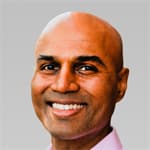
Dr. Gupta after completing a one-year GPR in Cleveland, started a practice from scratch in 2005. Armed with what he considered adequate knowledge, hand skills, and a personable demeanor, he watched as his practice floundered, finances became un-predictable, and his lower back and spirit toward life became worrisome. Rather than continue the trend, he made a guinea pig out of his office, family, and self; attempting any and all personal and professional "experiments" in self-improvement. More than a decade later, he enjoys excellent new patient numbers and case acceptance, a solution oriented dental team; and most importantly, a meaningful and positive identity. He happily shares the failures and successes with dental and community groups throughout the country, always ending his presentations with practical, implementable, step-by-step ways to be better.
How can busy dental professionals maintain physical health without adding hours to their already packed schedules? Many practitioners postpone fitness, believing they lack time for gym memberships or structured exercise programs.
Dr. Ankur Gupta brings a practical perspective to this challenge. After graduating from the University of Michigan School of Dentistry in 2004, Dr. Gupta established his practice in North Ridgeville, Ohio, from the ground up. Through years of trial and error, he discovered sustainable approaches to maintaining physical health that fit seamlessly into a dentist's demanding routine. As a certified AGD/PACE provider and sought-after speaker, he shares evidence-based strategies that require no additional time commitments while delivering measurable benefits for career longevity.
This conversation explores how small, strategic modifications to existing daily routines can significantly impact long-term physical health and practice sustainability. Dr. Gupta demonstrates that effective ergonomic and fitness solutions don't require major lifestyle overhauls—they require smart integration of health practices into activities we're already doing. The discussion covers practical ergonomic innovations, exercise strategies that work within tight schedules, and the critical importance of building strength reserves before age-related decline begins.
Episode Highlights:
Ergo loops revolutionize dental ergonomics by using dual-plane vision systems that allow practitioners to maintain proper head and neck alignment while viewing the treatment area. These optical devices redirect vision through mirrors, enabling clinicians to look straight ahead while seeing downward into the patient's mouth, eliminating the chronic forward head posture that plagues most dental professionals.
The double chin exercise can be performed during daily commutes to counteract forward head posture common in dental practice. By pushing the chin backward to create tension under the jaw for one minute during a 10-minute drive, practitioners can strengthen posterior neck muscles and improve cervical spine alignment without dedicating separate exercise time.
Television watching time transforms into core strengthening opportunities through 10-12 minutes of floor exercises targeting the lower back and abdominal muscles. This approach maintains existing relaxation routines while incorporating essential stability work that prevents the lower back spasms and chronic pain commonly experienced by dental professionals.
Lunchtime walking protocols provide cardiovascular benefits within existing break schedules, requiring no additional time commitment beyond normal meal periods. A 15-20 minute walk after eating lunch utilizes the remaining break time effectively while improving circulation, mood regulation, and overall cardiovascular health throughout the workday.
Weight training becomes essential after age 40 to counteract the 10% muscle loss occurring each decade, particularly for practitioners who primarily engage in cardiovascular activities. Building muscle reserves through resistance training creates a buffer against age-related strength decline, ensuring practitioners can continue performing fine motor dental procedures and maintain physical stamina throughout their careers.
Perfect for: General dentists, specialists, and dental team members seeking practical ergonomic solutions and time-efficient fitness strategies that integrate seamlessly into busy practice schedules. This episode is particularly valuable for practitioners experiencing early signs of physical strain or those proactively planning for career longevity.
Discover how small daily modifications can transform your physical health and practice sustainability without sacrificing productivity or family time.
Transcript
Read Full Transcript
This transcript was automatically generated and may contain errors or inaccuracies. It is provided for reference and accessibility purposes and may not represent the exact words spoken.
These are loops that have two planes of vision. There's like a mirror coming out of the first ocular that directs your vision to the second ocular that's actually pointed down. And so what that means is in order for you to look inside of a patient's mouth, that patient's mouth that is below you, that's kind of at the level of your abdomen, what you need to do is actually be staring straight forward. So your head, neck, shoulders.
are as if you're staring right at your dental assistant or right at the wall across from you. But what you're seeing is the patient's mouth. Welcome to the Phil Klein Dental Podcast.
As dental professionals, we all strive to enjoy long and fulfilling careers. However, the reality is our profession makes us susceptible to musculoskeletal injuries that can impact both our professional and personal lives. When we're young, we often feel invincible and are busy building our practices and starting families, often leaving little time for fitness. Joining a gym might not be feasible, but there are ways to maintain ergonomic health without extra time or effort.
To tell us all about it and share some really amazing tips that focus on fitness and career longevity is our guest, Dr. Ankur Gupta. Dr. Gupta graduated from the University of Michigan School of Dentistry in 2004. He is in private practice in North Ridgeville, Ohio, and has become a sought-after speaker and lecturer on many aspects of how to build an extraordinary dental practice. We'll be getting to our guest in a second, but first, are you looking for an air-driven handpiece that rivals the power and torque of electric?
Well, I have good news. It's finally here. It's called the T-Mac Z and it's from NSK, a company we all know and trust as a world leader in dental handpieces. In addition to being lightweight and ergonomic, this revolutionary air-driven handpiece delivers unprecedented 44 watts of power, allowing it to cut through tough zirconia smoothly and quickly. In fact, the T-Mac Z reduces overall cutting time by 30%.
That means less chair time, reducing the burden on you and your patient. Take a test drive of the TMAX Z air-driven handpiece from NSK. For a free 10-day trial, go to nskdental.com and find your local rep to inquire. Experience the power and excitement of the TMAX Z series. Dr. Gupta, thanks for joining our show. It's a pleasure to be back here. Thank you so much for having me, Dr. Klein. And I want to say, Dr. Gupta, before we get started, we really appreciate...
your contributions to Viva Learning over the years, you've done webinars and podcasts, and you've brought some really great thoughts and insights to the forefront that are very relevant to clinical dentistry and also practice management. Both of those are very tightly intertwined and you need to do both to have a successful practice for sure. So today we're going to be addressing the issue of staying fit.
being in shape so that we could withstand the demands, the high demands of a dental practitioner. And there are physical demands that require strength, flexibility, good posture and good ergonomics. Otherwise, you're headed down the path where your career will face obstacles such as injuries and pain, discomfort, stiffness, lack of mobility.
and so forth. And all of these obstacles will hamper your ability to practice dentistry, certainly in an environment where you're enjoying it on a day-to-day basis. But even though we know this as clinicians, that it's important to stay fit and practice regimens of exercise and so forth that will keep us better conditioned to do what we do in our office every day, some of us say, I just don't have the time between business and family to go to the gym.
is just a luxury I can't afford right now. I need to get my practice going. I'm young. I'm in good shape. I'm not feeling any pain. What do you say to those dentists that are resistant to implementing exercise and fitness early in their career because they're just so wrapped up with so many other things? Yeah, and I think that's very understandable. I've never enjoyed getting advice from somebody whose situation in life is completely different from mine and being expected to
compete completely emulate that person um everybody who's listening to the show it has a very diverse set of responsibilities at home and at work and and so even though i'm in a position now my kids are older um where i can devote more time to um i guess physical health i don't want that to be the standard that everybody has to follow instead i like to think of a daily routine in terms of physical health
as if it were something that didn't require any additional minutes per day and this is what i mean of course it's great if you can like join a gym or join a yoga studio and devote an hour an hour and a half every day but i think that's unrealistic for a lot of people who might be listening so instead i like to think about what we're doing anyway every day
And how we can modify what we're already doing so that it elicits a little bit of increased stability and longevity. So, for example, I've been told on numerous occasions by different physical therapists and chiropractors that as dentists or just, I guess, as humans in general, because we are constantly in a position where our head is forward on our spine based on where it should be.
that we should do exercises to counteract that. So everybody who's listening, including you, just kind of get an idea of where your ears are in terms of your shoulders. Ideally, your ears should be right above your shoulders. But I think that that's not the case for most of us because we're dentists. We're used to our ears being a little bit forward. We then go on our computers where our ears are a little bit forward. Then we go on our phones where our ears are a little bit forward. So what we do to counteract that is try to...
Give yourself a double chin. So you basically push your chin back so that you get that fatty, fleshy accumulation right underneath your chin. And you do that for, say, I don't know, five times, maybe one minute of doing that, of just kind of pushing your chin back. Now, already there's people listening that are like, dude, that's great, but I don't really have time. I don't know what I'm going to do that. I don't have time. My life is very busy. But all of us drive somewhere. All of us.
drive to work, drive to get groceries, drive to pick up the kids. And this is something that we can do regularly on the drive. So what I did is I took a selfie of myself with that nice, sexy double chin, okay? So I gave myself that double chin. I pushed my head back. I took a selfie, and then I printed out that selfie, and I hung it from my rear view, from my rear camera in my car.
And so then when I was driving, I would see this stupid picture of myself with a double chin hanging there. And that would just remind me, oh, I can do my exercises right now. And what I noticed was that in my 10-minute commute to work, I was devoting maybe a minute of those 10 minutes towards that double chin exercise. Now I do that regularly. I mean, it's a regular part of my...
normal routine just like brushing my teeth is a normal part of my routine just like putting on my contact lenses putting lotion on my face after I take a shower doing the double chin is a regular part of my routine because it's something that I'm reminded of every single time I get in the car right so yeah but so talking about that particular exercise the idea is to line up the ears with the shoulders and that's a whole postural thing but the question is can a dental clinician
operate effectively in that position? You know, in other words, practicing it in the car on the drive is great. It helps align you to some extent and get you thinking in that mode, almost like a habit of how your posture should be. It brings awareness to where you should be at. The question is, can a clinician operate effectively with that posture? Isn't that another challenge? Yeah. So I used to think the answer was no.
And so I would go and I would lecture at my different lectures and I'd be like, yo, man, our posture is so crappy all day when we're doing dentistry, when we're actually doing this productive thing that pays the bills. So we better do all these other exercises to counteract our crappy posture. Until I realized, and I think it was about three years ago, that I realized that ergo loops existed. I mean, I didn't even know those things existed.
What I did was I got Surgitel loops 21 years ago when I was in dental school. And then when those broke, I got a new set of Surgitel loops and then a new set. And that's what I always thought I was supposed to do. And it wasn't until I attended an educational session where there was a company there that sold Ergo Loops that I realized that this completely revolutionary thing even existed. And what Ergo Loops are is these are loops.
that have two planes of vision. There's like a mirror coming out of the first ocular that directs your vision to the second ocular that's actually pointed down. And so what that means is in order for you to look inside of a patient's mouth, that patient's mouth that is below you, that's kind of at the level of your abdomen, what you need to do is actually be staring straight forward. So your head, neck, shoulders.
are as if you're staring right at your dental assistant or right at the wall across from you but what you're seeing is the patient's mouth so i got excited when i went to that course i actually bought the 10x magnification loops which were which took me a little while to get used to actually i'm curious you as an endodontist dr klein you probably worked through looking at a mag right a magnification um i actually i actually
stopped practicing endodontics right when the microscope was coming out. So I used the microscope in the educational setting, but not in private practice. Interesting. So here's what I realized. I would talk to endodontists, maybe endodontists who had already adopted the microscope in their practice, and they'd be like, Dr. Gupta, when you are staring through a microscope, you're head, neck, and shoulder. You are upright.
But I thought to myself in my office, I have eight ops. I have, you know, in any given hour, I might be doing three hygiene checks and I might be seating a crown in one room, doing a denture adjustment in another, and then, you know, prepping for some fillings or something. And I thought there's no way I could wheel around a microscope. It would just, it would just become this incredibly expensive dust collector. Basically, ergo loops are a poor version of a microscope.
They're completely mobile because they're attached to you. And maybe they're not going to give me the same type of magnification that a microscope would. But I don't even know if that's something that I necessarily need. 10x is pretty hardcore. So let me ask you this, Dr. Gupta, how steep was the learning curve when using those ergo loops? And also, what was the optimal position of the patient, I assume, fully reclined in the chair? I'm going to answer the second question first, because it's the easier answer.
That is, you don't do anything different with the patient positioning. Patient positioning with ergo loops is the exact same as patient positioning with your regular loops. Because your regular loops just require your neck to look down, okay? The ergo loops keep your neck up, but you're looking at the exact same view. And so there was a zero learning curve there. Patients were positioned exactly the same as they've always been, okay?
Now, there's a caveat to that. And the caveat is, I think you, me and every dentist listening, we have at times broken the rules of patient positioning and we've done that lean over technique. So imagine you're doing the lingual margin of tooth number eight and you really want it to look perfect and you don't want to nick the gums. And so what you do is instead of relying on your mirror, you stoop your entire body and you look over, you basically do the lean over.
killing your ergonomics, but making it so that your dentistry is high quality still. And what I would say is even when I do the lean over technique with the ergo loops, I just don't lean over as much. I'm still going to jack up my ergonomics because sometimes that happens in dentistry, but I don't have to lean over as much because there's that second plane of vision that's going to require me to just lean over about half as much as I would have had to before in order to do the lean over technique. Your first question was about the learning curve.
And here's what I'll tell you. I went from 2.5x magnification to 10x. With my 2.5x magnification, I could see the periphery to some extent. My hand holding the syringe that would be bringing a needle into a patient's mouth, that made it into the periphery much earlier.
than it does with the 10x with 10x i'm i'm looking at maybe four or five teeth inside of the mouth and that stupid needle i have no idea where it is i mean my hand is waving around wandering around and that's scary like like where's my hand where's the needle and so what i often do is i would take my other hand the hand that was like maybe on the patient's chin or something like that and i would actually allow my two hands to bang into each other
And that would be a point of reference for me. That took about two weeks. So in between that learning curve, I just had to flick my eyes away from my oculars and look just basically regular eye to find the needle, find it and put it in the right spot and then go back to my ocular so I could have that magnification.
We'll be getting right back to our guest in a second, but first, thanks to GC America, we're now able to incorporate all the advantages of glass ionomer into a beautifully aesthetic, strong, long-lasting restoration. That's a great reason to try GC Fuji Automix LC. You'll love the convenient automix delivery system and ergonomic dispenser.
which allows precise placement into the preparation. And GC Fuji Automix LC is bioactive, allowing for a high rechargeable fluoride release, which is ideal for high caries risk patients. And because it forms a chemical bond to tooth structure, even in the presence of saliva, there's no need for etchant and adhesive bonding.
This saves steps and is ideal for challenging patients where access and isolation are difficult. And the small filler particles in the material allow for superb polishability and excellent aesthetics. So when you're thinking glass ionomer for your clinical cases, think GC America, a world leader in dental materials. To learn more, visit gc.dental.
So you certainly made a great recommendation about practicing posture in the car while you're driving, where you don't have to commit to a certain time schedule to practice this posture and make it a habit. And one of the things that supports your posture you mentioned was the ergo loops. What about strengthening your muscles? Because we do things, as I mentioned earlier, that's very demanding in the office. We need to be somewhat strong, flexible, mobile. We certainly don't want to injure ourselves while we're working.
Let's talk about the busy practitioner that doesn't have a lot of time to go to the gym. What can they do in the form of exercise to keep up their strength?
and flexibility and so forth? So this was, this is something that's been brought up at a lot of my lectures, especially by young parents who they tell me, they say, Dr. Gupta, I truly, I don't like, I'm not going to wake up early to go to the gym. I'm not going to wake up early to go to my basement and do the Peloton. My amount of time is just maxed out. And, you know, for those people.
I just want to meet them completely with compassion and sympathy. I mean, that's tough to have that much busyness. But one thing that always made it into my routine, always, even when my kids were small, was that my wife and I would sit down and we'd watch a TV show at the end of the day. And the way that I have always, the way I always looked at TV watching was just become an absolute
ball of goop on the couch and just be entertained as i was fully completely relaxing on the couch what i realized was you know once i i actually had a lower back um spasm early in my life and that really scared me because i didn't want to i don't want to get older and and and worry about that potential um pain and so i i realized i needed to create a routine that i would never
veer away from. And so part of our TV watching experience now is for probably about 10 to 12 minutes of the TV watching, my wife and I are on different parts of the floor in our living room, just doing these various exercises. And, you know, my, I like to focus mostly on my core and my lower back because that's where it seemed like my problems were.
Some people listening, they could be focusing on their wrist and their hands because that's where their problems are or the space between their two scap, their shoulder blades. So I don't really want to prescribe particular exercises. But what I can tell you is the Internet is full of free resources so that you can actually get.
that 10 to 12 minute routine of exercises to focus on whatever you want to focus on more. And you're doing it while you're watching TV anyway. You're doing it while you're being entertained anyway. It's a part of your routine without adding additional time. You were going to watch TV anyway. And you still get to be a blob. You're just going to be a blob for 18 minutes instead of the full 30 minutes. And so for me, I just feel like, gosh, I'm giving up very little.
in order to gain like so much. Because my assumption is if I do this for the rest of my life, it's going to create a difference in the old version of me more so than if I hadn't done it. Yeah. And, you know, with that type of exercise, which is not an exercise that's focusing on cardio, although it is great for stretching and eliminating some of the issues that would lead to an injury, or at least reducing the risk of some of the injuries that you're prone to in those areas.
Cardio is also very important because that's a feeling of well-being. It affects your sugar level. It affects your whole demeanor, your mood, which is also important for career happiness when you're working in a dental office eight hours a day. How do you fit cardio into your schedule? OK, so again, I'm in a position now. I'm older. My kids are older. I have the time to devote.
many hours to physical health and so rather than brag about those things that i do the one thing that i've been able to do throughout this entire process even when i had less time is i practice in an area that's adjacent to a neighborhood so my my dental office is on a main street but behind my dental office is just like a neighborhood you know it's a side street that comes off of the main street
And what I found was was generally our lunchtime would be between 50 to 60 minutes. But I'd be finished with my lunch pretty early in that time, you know, maybe 12, 15 minutes. And I would often look around and see a majority of my team members. They would finish eating their lunch and then they would immediately start looking at their phone, which isn't good for our longevity as it is. And I.
decided I would just walk. I would just go for as far a walk as I can with the time that I had. So if I had a little bit of a longer lunch, I could cover more ground. If I had a shorter lunch, I could cover less ground, but it didn't matter. It was a non-negotiable part of my routine. And so Dr. Klein, what I actually like to think about a lot here is non-negotiable parts of your routine. So I would assume you brush your teeth every single day. I'm assuming everybody who listens to you brushes their teeth every day.
We do that. It's non-negotiable. It doesn't matter if you're busy. It doesn't matter if your kids are demanding and they're sick. And it doesn't matter how much work you have to do, how productive you have to be, what kind of bills you have to pay. You're going to brush your teeth every day in the morning, at night. You're probably going to do a little bit additional stuff, floss, use a water pick, et cetera. And that's so normal that it would be weird if you didn't. But as a result, I would say every single person who's listening.
is going to have teeth when they die. Every single person is going to have teeth when they die. Maybe you might bite into a walnut shell and break one and need an implant, whatever. But I would say the vast majority of us are going to have teeth when we die because we've made a means of being healthy a non-negotiable part of our routine. So if all of us just said, okay, wait, I can walk for 10 minutes every day.
Or I can stretch and strengthen my core for two minutes every day. I can do my little double chin exercise for two minutes every day. That's not a tremendous amount of time. You're not going to be able to become a model or anything like that. You're not going to be able to sport huge muscles in a six pack. But you're going to change your trajectory because that's a daily routine that you can commit to every single day.
And that's going to change what the older version of you is going to be. And so if you're anything like me, and I'm assuming like you too, because Dr. Klein, you're older than I am, but you've maintained, you're slender, but a lot of people your age aren't. And so you've decided at some point, probably when you were much younger than you are now, that you would devote a certain amount of time every single day to something associated with your physical health. Am I correct? Absolutely. Yes. But what you're saying,
is exactly right. We make a pact with ourselves to focus on things that are very important to maintaining good health throughout life because without it, it's just miserable to be sick, weak, out of shape, burdened with injuries all the time and in pain. You're in pain if you're not taking care of your body. The recommendations that you're making right now are very critically important.
for a clinician to maintain a long career where they enjoy their job. And I think it's important that we're open-minded as clinicians to making changes in the way we practice. An example of that was how you took a CE course and learned about those ergo loops. And they had a major impact on how you practice dentistry. It was a game changer for you. What is the actual name of the loops that you use?
I think a lot of the loop companies provide ergo loops, but the company that introduced me to this is called Andau, A-N-D-A-U, Andau Medical. And I found their customer service to be very good, and that was actually what propelled me to want to switch from a company that I basically was with for my entire career.
And I just really liked their customer service. They were very, very responsive with issues that I had. And I just thought that that was unique and awesome. And then, of course, the product itself is just so cool. So let me pivot for a moment away from the postural positioning of our bodies, the positioning of the patient, staying at 12 o'clock as far as the positioning chair side, lighting.
all the ergonomic gadgets you can think of, like the Ergo Loops. Aside from all that, which all of that is important, what about our personal lives? What can we do as clinicians to improve our career where we can be more comfortable for the long term? Well, let me answer in two ways. Number one is, you know, you had mentioned quite a few times, and it's very relevant, that we do all of these things to
minimize pain as dentists. But I actually, I'd like to go a step further than that. And that is that all of the old role models in my life, all the men, my uncles, my father, my father-in-law, the old men in my life, they are all retired.
They don't work, but they don't get to enjoy their retired life like I think they thought they were going to. I don't think they get to enjoy their grandchildren the way they thought they would because a lot of the way that we bond and a lot of the way that we show love towards one another is through physical activity. You know, when babies are babies, getting on the floor with that baby and playing with them and being mobile with that baby. When you have young kids who can play sports, being able to run around with those young kids.
Those are things that I think everybody looks forward to. And I think that we would be dishonest with ourselves if we said, oh, well, then I'm just going to stay exactly the way I am once I retire. And then I'm going to enjoy life the way that I anticipate. We have to, as young people, we have to do things now in order to have that future. And so I like to think a lot more of not just work, but just the life that I want to have beyond work.
That's number one. Number two is that there's a book that's written by a physician named Peter Atiyah, and it's called Outlive. And he talks a lot about just the amount of suffering that people do in the 10 years before they die. And it has to do with all sorts of things, obesity and diabetes and heart disease and blah, blah, blah, blah. And I can't go into all of those things. But what I do want to talk about is the fact that we lose muscular strength. By the time we turn 40 every decade, we're losing a certain percentage of muscular strength.
And me as a skinny guy, I've always loved to run and bike and swim and doing cardiovascular stuff that skinny people like to do. And what I realized was if I continue doing just skinny people stuff, endurance stuff, cardiovascular stuff, I'm going to enjoy it, but I'm going to continue to lose muscle. And so if you're like me, if you're in your 40s and 50s and you are still feeling good in your middle age, I think adding...
Some type of weight training regimen to your lifestyle is incredibly important. Some type of let's keep your muscles are like your 401k where you just gain a lot more knowing that you're going to lose some. Those are great recommendations, Dr. Gupta. Absolutely. I think after the age of 40, from what I hear, we lose 10% of our muscle every 10 years. So weightlifting, tearing those fibers a bit and having them rebuild is crucial to slowing down that process.
of losing muscle as we age. Dr. Gupta, it's been a phenomenal conversation, lots of good insights, some great tips, and we really look forward to having you on future podcasts. Thank you so much for your time. Have a great evening. You too, Dr. Klein. Thanks for having me.
Clinical Keywords
Dr. Ankur Guptadental ergonomicsergo loopsforward head posturedental fitnesscareer longevitymusculoskeletal healthAndau MedicalSurgitel loopsdouble chin exercisecore strengtheningweight trainingdental professionalspractice sustainabilityphysical therapycervical spine alignmentlower back painDr. Phil Kleindental podcastdental educationergonomic handpiecespostural alignmentmuscle loss preventioncardiovascular healthresistance trainingdental injuries