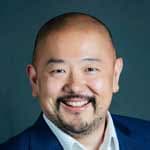
Dr. Jerry Hu, has been lecturing, doing clinical research, and practicing full time dentistry for almost 25 years. He lectures internationally on cosmetic and implant dentistry, as well as his greatest passion, in the field of dental sleep medicine. He has won numerous national awards in cosmetic and full mouth reconstruction dentistry, been published in several peer reviewed world-renowned dentistry journals such as JDSM, JCD, Aegis, Dentistry Today, DSP, and even landed the cover of the excellent Journal of Cosmetic Dentistry (AACD's peer reviewed journal). He also teaches several online webinars, Clinical Pearls forum on social media (FB), teaches for several dental Academies/organizations (ACSDD, ASBA, Roundtable, Neirman's) teaches for Vivos Therapeutics, Sleep Group Solutions, Modern, Global/Microdental USA, and also for Prosomnus Sleep Technologies. He also has developed 5 IP patents in dental sleep medicine and did a startup, O2&U, in Melbourne, Australia. When time permits, Dr Hu loves traveling and spending time with his family exploring the great outdoors in his home state of Alaska.
Dental podcast: Welcome to DentalTalk. I'm Dr. Phil Klein. Today we'll be discussing Airway Focused Dentistry, the impact it has on the overall health of your patients and how it can help achieve better treatment outcomes. Our guest is Dr. Jerry Hu, a full time dentist in Alaska for almost 25 years, a key opinion leader speaker, and clinical researcher. He lectures internationally on cosmetic and implant dentistry and has won numerous national awards in cosmetic and full mouth reconstruction. His work has been published in several peer reviewed world-renowned dental journals and has developed 5 patents in dental sleep medicine.
Transcript
Read Full Transcript
This transcript was automatically generated and may contain errors or inaccuracies. It is provided for reference and accessibility purposes and may not represent the exact words spoken.
You're listening to the Dr. Phil Klein Dental Podcast from Viva Learning.com.
Welcome to the show. I'm Dr. Phil Klein. Today we'll be discussing airway-focused dentistry,
the impact it has on the overall health of your patients, and how it can help achieve better
treatment outcomes. Our guest is Dr. Jerry Hu, a full-time dentist in Alaska for almost 25 years.
He's a key opinion leader, a speaker, clinical researcher. He lectures internationally on cosmetic
and implant dentistry and has won numerous national awards in cosmetic and full mouth
reconstruction. His work has been published in several peer-reviewed, world-renowned dental
journals and has developed five patents in dental sleep medicine. That's impressive. Dr.
Hu, it's a pleasure to have you on my podcast show. Oh, it's a pleasure to be here, Dr. Klein. Thank
you so much for having me. Yeah, we're very happy to have you. So to begin, what is airway-focused
dentistry? Airway-focused dentistry really is the future, but I want to really hone in on why I
believe that that is so, as well as how it's connected to everything we do as a dentist,
whether it's restorative dentistry, implant dentistry, because when we sleep at night,
all the issues from sleep bruxism, sympathetic response, how our airway,
our collapsibility, if you will, of our upper airway. is definitely correlated to the long-term
success and the outcomes of everything we do. So when I lecture, for example,
for ICLI or AAID, I talk about issues where in the past when I did not look into airway,
and I've actually had implants, the fixture part, the titanium part that's inside the bone that's
osteointegrated for over a year and a half to two years, have that actually fracture out with bone.
You know, in implant dentistry, they teach you about occlusion and having the implant only light in
occlusion. However, you can imagine if you're sleeping in a certain position with the pillow a
certain way and you're in REM and your body's trying to fight or flight, it's an over-sympathetic
response and it's trying to get the jaw and the tongue out of the way. Just that example alone,
especially in implant dentistry, is so costly for the patients. You can see... how important airway
is tied to everything that we do. So having an airway-centric practice is when you're looking at
the exam, when you're reviewing the medical health history, you're incorporating everything that
you're doing as well as future risk outcomes all in one. But more importantly too,
you're also looking at the patient holistically, looking at their systemic issues and making their
quality of life better and making your dentistry last longer. Yeah. So airway problems can lead to
dental restorative failures, right? Absolutely. Right. So if you have a case that comes in and that
patient, either you've treated them over the years and you've done a lot of things and the work is
just not holding up or another dentist did it and the patient was unhappy and they went to a
different dentist, would you immediately evaluate their airway condition in that scenario?
Absolutely. Absolutely. um maybe a step back i should kind of talk about an example that i that i
have and i'll answer the question as well when a new patient comes in and may have had either major
full mouth reconstruction or even just a smile makeover without airway centric focus okay so the
backup with with a patient that i i showed this at um aid when i talk about right before the
pandemic the one prior the las vegas meeting that they had And the attendees were kind of blown
away. And this patient, this is before I knew anything about airway, you know, and I was really
into implant dentistry because it was the new latest and greatest. So, you know, several years ago.
And when we had her before photos. you know the mouth was screaming with red flags she had ab
fractions she had fractures she had root tips that were just left over because she would say that
some of her restored teeth literally the clinical crown or whatever tooth structure that was
remaining had fractured off right and so i'm thinking well okay well you need to get those root
tips extracted you need to put an implant in and you know i'm always very conservative because you
know going through credentialing through ICOAID, they really kind of, you know, they force your
brain pretty much to make sure that you do things, you know, kind of like a cookbook method. So I
wasn't skipping steps. I wasn't letting the bone graft material be rushed for healing,
et cetera. And then... know i said okay well i just go ahead and put these implants and i'm going
to make sure the occlusion is right there's just no premature contacts or interferences and things
like that right and again i had no idea because the mouth when you know i look at those photos you
can see just everything's failed she's not having you know her airway addressed and i thought okay
well i put an implant it'll be fine oh my goodness right a year and a half goes by oh my gosh,
a whole implant with half the fixture fractured out. And she brought it one morning and said,
I'm sorry, but I woke up and this has happened, Dr. Who. And I'm thinking, oh my gosh,
the amount of force. But then again, looking back at that with what I know now. i said gosh you
know if i if i would have just looked at her airway address those issues it's looking more at root
cause and looking more see i think that dentistry medicine just kind of really really had uh uh
deviated if you will from that you know most important aspect that if we look at root cause not big
pharma etc etc you know, we're really going to make a difference in what we do as healthcare
professionals. We're going to really stand up to our Hippocratic Oath and really help the patient
the best we can and not give them synthetic drugs, et cetera. When you evaluate a case where you
suspect airway problems, what are you actually looking for in the mouth? I have a list of red flags
that I look at. When I do the exam, I look for malampati, sepsum young.
I look at tongue thrust, macroglossia, all those signs, even ankle glossia, tongue tie.
I look at transverse dimensions. I know Dr. Singh talked about archaeology and looking at primitive
populations and why they don't have airway. Of course, they're not introduced to refined sugar,
etc., etc., but really they're good examples of width that minimally is needed. um you know and i
measure between the cusp of carabelle to the cusp of carabelle of the first max straight molars you
know just look at the overall dimensions and see if they have patent nasal breathing all those
other things right but for me i'm also a believer believer of equipment i have echo vision
pharyngometer rhinometer and so that's to me you know you don't have to have these uh equipment or
all these things that i have But I think it's important that when we look at science that things
are measured. I think measurability is very important because you can repeat measurements. And
having these tools, these equipment really, really helps out. And not only that, patients can have
a report of the results of the pharyngometer when we check their airway collapsibility. I always
use the example right away. I said, you know. Sleep apnea has so many comorbidities and so many
things tied. And I relate to my own family sector. Maybe we'll talk about that a little bit later,
too. But, you know, it's systemically just from your medical history, we can find associations to
airway problems. And when I say this, I kind of use a garden hose example in a fireman's hose.
I said, you know, unfortunately, if we all had a garden hose. where when the water is not flowing
through it, it retains its shape and patency, then we all have a good, you know, airway. However,
if we have a fireman's hose without the water going through it, it collapses. And so a lot of our
upper airway has collapsibility, people with apnea or even upper airway resistance syndrome.
It's very essential for us to realize that and see what we can do, whether it is dental safety.
medicine with customized world science therapy or orthotropics, which I include, of course, the
Bebo's DNA, et cetera, those things like that. That's really where that conversation begins.
But having equipment and having the printout would be as if a patient went to a cardiologist and
did all that workup and had an EKG or, you know, on the treadmill and maybe have a report if they
wanted to, to go back and share with their husband or wife or family or, you know what I'm saying?
So having equipment is very helpful. But if you didn't even have the equipment, just having your
team. on board and having them train and sometimes you may have to you know shut the door and i'll
say quote unquote come to jesus moment in the sense that you know i get a lot of these men that
come in they're you know oil field workers and they're they're just really like well i don't have
any airway issues i'm just here because my wife you know made me come but you know if they have a
sleep test result and they have you know severe apnea and their oxygen desaturates,
you know, you really, really have to tell them, hey, I'm talking about, you know, expanding your
lifespan. I'm talking about your quality of life. Let's say we're talking about a dentist who
doesn't really have a lot of knowledge on airway-focused dentistry. And they want to get started
in this, at least the diagnostic standpoint. So would you suggest that a practice, at least in the
beginning, tries to identify airway problems where they could then refer that patient out possibly
to get treated and then have that patient come back to them to complete their dental work?
What would you say would be the first step? I would say, so thank you for bringing that up because
the American Dental Association does ask all dentists, first of all, to screen everyone. It should
be blanket across screen. And this is the comfort level of each person. I do have actual dentists,
right? But they also, these dentists know they can trust me. If they're going to send a patient
over because they're going to do implant dentistry and they're concerned about the airway, however,
they don't want to do airway, they have absolute 100% certainty that I will only do the airway.
If they have implant, crown, whatever issue, I'm not going to touch that. I'm only going to do
their sleeve. So that's very, very important too that, you know, if you especially have dentists
referring to. But if you're the type of... where you're doing the implant dentistry, for example,
or you're doing a small makeover or full mouth construction, you're like, you know what? I love
what I do. I love cosmetic dentistry, but that's as far as I'm going to go. I'd rather someone else
just take care of the airway that absolutely refer because two things. Number one, it's your actual
longevity, your work. If the patient has airway issues and they're fighting for survival at night,
after night, after night. And that's one thing you have to think about because you're really giving
the patient a more holistic full treatment. But another thing too is when you do that and you
involve yourself, just understanding the systemic issues, the ties. And I can just go on and on and
on. There's literature to support, whether it's Alzheimer's, dementia, to cardiovascular issues, to
even like gout, nucleopeptide turnover, to fibromyalgia, to metabolic syndrome.
I mean, you could just name it. The literature supports that. Yeah, there's no doubt. Sleep,
there's a whole lot of chemical reactions in one's body that occur during our sleep time. Now,
so if a dentist identifies an airway problem and the patient needs a bunch of dental work,
you suggest that they send that patient out to an airway-focused dentistry specialist, if you
would say, if there is one in their area. Now, the treatment for that person's airway problem would
be going on concurrently, right, with some of the restorative work, because isn't this kind of like
a long-term treatment? It's not something you just go to a specialist, they fix it, right? Isn't
this a process of getting the patient to sleep? properly where they don't grind their teeth and do
the damage correct so so it's very very important that the coordination is done so because in
dental sleep medicine i branched out into two main branches one is a static branch and one's a
dynamic branch So especially emergency. So if a heavy BMI,
obese patient walks in my office and there's an urgency and I feel like, oh, my goodness, I'm not
sure if this patient's going to even live another month because there's such severe airway issues.
I definitely lean towards the static and media. And of course, saying that with the notion or the
given that they are already CPAP intolerant, they may be. you know, done a CPAP, they're severe
apneic and whatnot. And you're like their last hope, right? Through dental medicine, because they
don't want surgery, et cetera. Okay. So given those parameters, and a static one would be a
customized oral appliance therapy. Of course, there's so many different companies. Vivos has their
mRNA. Other companies have their customized oral appliance therapy. And that actually today's
technology, and I'm not going to name any companies, but. The customized oral appliance therapy
could be really done to a very precise measurement, right? So that if you needed a crown,
for example, and you already have the scan of the tooth, let's say tooth number 19 fractured after
the oral appliance is already made. Well, I asked my dental lab that makes the crowns to store all
the files so that when I have a crown made, there's really zero adjustability.
They make the crown shape, if you will, out of the data file that they have so that it just fits
and there's no adjustments. Of course, you know, I mean, if the dentists have a good relationship
with both the airway lab as well as some of the, sometimes it's the same lab,
but some, you know, sometimes you send your cases to a, you know, a separate dental medicine,
sleep medicine lab versus your crown lab. uh restore the lab um so so so that's a really good
notion um there's appliances out there that even if you're in invisalign um you know they're they
can work with a static physician now your question actually goes for the dynamic one yeah is is
more complicated but you know this is where um you have to bring priorities uh to a patient I don't
do oval windows. I don't do major bone grafting, right? And I can say, well, because I'm going to
do these oval windows so that we can do it all on four or fix the hybrid denture, but make it
right, right? From the get-go, do the proper steps. I may lose this patient's quote unquote
production for a year, but you bet there's no other way I'm going to do it. I'm not going to go in
there and just like without adequate bone and et cetera, you know, to proceed with the case.
So in this situation where When the patient, you're thinking, well, you know, I can do a smile
makeover now, but the patient wants an orthotopic, something like a DNA appliance,
where myofunctional therapy and a lot of in-between goes about. You know, it really becomes,
again, your Hippocratic oath in your heart. It's really a case-by-case determination.
by the general dentist and and they need to make they need to ascertain how severe the airway
problem is and do we need to um detain doing the restorative work um doing any you know preliminary
surgery for implants and whatever else you're going to do uh on the fixed side or or even just
direct absolutely you have to you have to say okay we need to hold off on this we can or possibly
we can do it in a short time or do it concurrently, but that's on a case-by-case basis. Yeah, if
you have a stubborn patient, though, you may have to say, well, you know, Mr. or Mrs. Jones, how
can you even really enjoy your smile being in a coffin? What if a major stroke happens and you're
paralyzed because you've had, you know, severe night-after-night apneic events and your body,
your cardiovascular system just can't take it? And now when you smile, half your face is paralyzed.
Are you gonna really enjoy your smile? Are you gonna enjoy your Invisalign result? You're going to
enjoy it. Do you know what I'm saying? So those things are really important to have that face-to
-face, one-on-one talk with the patient. And this has been very interesting. You've packed a ton
of information into this podcast, Doctor Who. How can other dentists get started in treating their
patients for airway? What do you recommend? And I know you're affiliated with Vivos. Tell us about
that. How does a dentist get started? Yeah, I think the first thing is realize there are broad,
big academies. um and i want to be truthful every academy of course has some politics and has some
sort of vision right that they go so there's the american academy of dental sleep medicine there is
the american sleep and breathing academy there is the academy of clinical sleep disorders
disciplines those are major broad big companies and they have accreditation they have things you
can go through whether now it's the mastery program or actually credentialing for fellowship or
diplomate status
And ACSDD or ASBA, those are avenues that definitely, I think,
is something to keep the back of the mind. There is also a lot of different, you can call it camps
or schools. You know, you have SPEAR, you have, even COIS has kind of a connection with this,
where you have, of course, the group I'm familiar with, a lot of people are familiar with me with
Sleep Group Solutions, the Pharyngometer EcoVision people, or even certain...
dental appliance companies uh and vivos kind of falls in that too as well but also people is so big
there's you know so many options with that especially pediatric aspect but companies like you know
persomnis or somnomet they all have their own lectures and their their their uh meetings that
people can learn a lot from um so so quite quite a number of different uh schools of philosophy
philosophies and camps but um i think One thing, especially after the pandemic,
you know, you have to be real with your budget. You have to be real with what you can afford. So
just starting out, of course, you know, just check prices and stuff. But no matter what,
though, and I want to say this with truthful sense of urgency and of passion,
okay? There are over 1 billion people in the world who are underdiagnosed and are treated with
airway sleep breathing disorder. So that's number one. Keep that in mind. Number two, even if all
the dentists in America did sleep, there's still not enough to go around to help people.
It is too far. I mean, you talk about pandemic or you talk about epidemic, you can talk about any
of those words. This issue is just too big, okay? And so if you literally want to dive in,
okay, and you do learn the medical billing, learn the aspects,
get your team involved.
I can tell you, I was a very, you know, I still kind of am doing cosmetic and implant issue, but I
was grossing really very, very well. And I looked at some dentists,
especially dentists who are thinking about retirement or getting into the latter years of their
life. You want to say like, holy cow. I mean, they do like four or five times more production and
they have a really cool, some of them even have pulmonologists, ENTs and cardiologists work in a.
dental medical center and the dentist is actually the head person of that yeah and realizing i i
was actually looking for a general dentist today just coincidentally because i have i had a little
fractured composite on on a lower molar and the dentist that was recommended to me when i looked
him up online it was all sleep medicine everything was sleep medicine it was his whole practice
converted to yes sleep medicine and i didn't see anything on restorative so i think i think what in
you know And then I spoke to somebody on a previous podcast who teaches for Vivos Therapeutics.
And I think you teach for Vivos Therapeutics. Sure, yes. And this doctor, Caulfield,
was very interesting. And I think he's 60% sleep medicine now in treating patients in that area.
And the rest of it's restorative and all the other things he does. Yes. And he's moving more
towards sleep medicine. So I think what you're saying is there's... a huge untapped market out
there. The lifestyle is a little atypical. The career is a little atypical for dentistry when I
went to school. You know, I graduated endodontics in 85. So, you know, airway was not even
something that dentists did. And, you know, everything a dentist is typically defined as is a very
technical, hands-driven operator, right? A technical operator in a lot of ways.
So this is almost... whole new field of medicine that's fell in the lap of a lot of dentists and
it's taken off and yes you know based on what you said there's a billion people out there so i want
to comment one more thing about that that's really important i hope that when people listen to this
podcast really understand that um again i'm real let's just face it let's talk about facts so the
ahrq from the government was commissioned to do a huge retrospective study that included many
randomized controls and to look at cpap and all pap therapy through a span of decades okay and
their conclusion okay they actually published this it's very very damning but it's almost like duh
is that cpap lacks effectiveness. It's efficacious, but long-term success and effectiveness is
completely failing. Why? Compliance, right? They even, when you look at Medicare standards of what
CPAP tolerance is or successful, they're judging it by 70%, like four to five days per week and
maybe five hours at most at night. But excuse me, as adults, we know we're supposed to sleep seven
and a half to eight hours per night, seven nights a week. Imagine if I did a root canal or a crown
in this situation, and I asked the patient to say, oh, well, just please only use it or load it for
60%, 70% of the time. The patient will think, are you nuts? Like, excuse me? So,
you know, I love the fact that we dentists are, we hold ourselves to millimeters and microns and
things like that, that we are very, very particular about what we do, which is, you know, a very,
very good A plus for us. I think that is very important. But, you know, you have to, again,
you kind of express too that the medical field is different. However, The medical field is one of
those things that is really, really robbing patients. And again, I sincerely believe that big
pharma has to do a lot to do with it. Medical school training. You know, when I was actually with
Sting's Continuum over at the, where was that?
Shreveport, Louisiana. We had a thing at the medical school there. And the medical staff said,
you know what? Our medical residents and our medical school. at most has two hours of elective
training on sleep. Unless you want to specialize into sleep medicine, that's all you get is
elective. So when I'm sitting there lecturing, you know, for a couple of days thinking, hey,
you dentists, just by being here for two days, you have more training, you have more of everything
than medical doctors, primary care physicians, period. And this kind of goes back, you know, I
don't mean to kind of break out a tangent, but I really want to share my personal. growth in my
personal family history, right? So my father just recently passed away April 19th of this year.
And we just finished his memorial and everything like that. And he ended up with Alzheimer's
dementia, stage seven that overlapped to Parkinson's. He also did, of course, have congestive heart
failure with chain stokes breathing and all the other issues. But all of my life, you know,
you don't know what you don't know. But it's like, you know, he snored, he gasped for air. Not one
primary care physician not one md not one internist not nobody ever asked them hey by the way how
is your Do you have sleep issues? Do you wake up tired? All they do is prescription after
prescription. Well, if you have hypertension, then here you go. They never look at root cause,
right? And for my life, myself, and so I'm not blaming them because they don't know what they don't
know. But, you know, there's a big awareness issue all throughout the world. And I can't underscore
how important it is. And why not dentists lead the charge? You know,
the AHRQ paper really says, hey. you know, long-term effectiveness isn't so good with CPAP.
And this is a review of so many randomized control trials and stuff. So it's like, it's a calling.
So dentists out there, general dentists, this is a calling for us. We can do something about it.
And I'll tell you the, the goosebumps that you feel and the things that you feel from doing this.
Sure. I totally, I love doing cosmetic industry. You change lives, you, you know, but if you either
save a life. extend someone's lifespan or in children you know a pediatric airway you got mom and
dad's crying because their son or daughter is now going through school being thriving productive
and playing sports whereas every day in the past they get labeled adhd or this or hyperactive and
then throw some riddle and speed in there i mean you're making a huge difference as a tooth doctor
as a dentist right And it's priceless. There's absolutely no question what you're saying is true.
The passion that you have for this is obvious. And I've heard this passion in many other dentists
that are beginning. They're new to it. They're five years into it. They're doing it for 10 years.
And they never lose that passion because this is something where the impact is so systemic on
someone's life. It's just so powerful. As I said, you've moved to a different level of being more
of a technical operator in the office. And I'm not trying to in any way mitigate the value of a
highly skilled dentist as far as fixing teeth. I was an endodontist for 13 years and I did molar
root canals almost all day. So very technical. But what you're saying is amazing stuff.
We want to thank Vivos Therapeutics for sponsoring this podcast. And I know they teach.
sleep apnea. They have all sorts of products that go along with it. It's a full multifactorial
approach to handling sleep issues. They lead the way in sleep medicine education and they have the
products that go with it. I've heard great things about it and I thank them for their support. I
know you teach for them as well, right? Yes, I do. Absolutely. I do webinars and other things as
well as live. Yeah, so that is a good place to get started, at least one option.
Sure, absolutely, absolutely. Thank you very much, Dr. Hu. It's been phenomenal. You're very
welcome. Thank you. And again, I take it as a calling, and I'm a talkative person,
so I think there will probably be a future recording. You might have your own podcast program soon,
so that's off to you. All right, we'll talk to you. Thank you very much, and stay well in Alaska.
You take care. Thank you so much.