UCLA School of Dentistry · F.A.C.E. Institute · Esthetic Professionals · Miles To Smiles
Read full bio
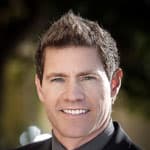
Dr. Todd C. Snyder received his doctorate in dental surgery at the University of California at Los Angeles School of Dentistry. Dr. Snyder has learned from and worked under some of the most sought after leaders in dentistry, refining his skills in comprehensive, extremely high quality aesthetic dentistry and full mouth rehabilitation. Furthermore he has trained at the prestigious F.A.C.E. institute for complex gnathological (functional) and temporomandibular joint disorders (TMD).
Dr. Snyder lectures both nationally and internationally on numerous aspects of dental materials, techniques, and equipment. Dr. Snyder has been on the faculty at U.C.L.A. in the Center for Esthetic Dentistry where he co-developed and co-directed the first and only comprehensive 2-year postgraduate program in aesthetic and contemporary restorative dentistry. He currently is on the faculty at Esthetic Professionals. Additionally, Dr. Snyder is a consultant for numerous dental manufacturing companies and has had the opportunity to research and recommend changes for many of the materials now being used in dentistry. Dr. Snyder has authored numerous articles in dental publications and published a book on contemporary restorative and cosmetic dentistry.
Dr. Snyder also founded and is CEO of Miles To Smiles a non-profit mobile children's charity that helps indigent and underprivileged children.
How do you avoid the costly failures that plague ceramic veneer delivery? What happens when you mix different manufacturers' bonding systems without understanding the chemistry?
Dr. Todd C. Snyder, DDS, brings decades of expertise in comprehensive aesthetic dentistry and full mouth rehabilitation to this essential discussion. A graduate of UCLA School of Dentistry, Dr. Snyder has trained at the prestigious F.A.C.E. institute for complex gnathological and TMD disorders. He co-developed UCLA's first comprehensive 2-year postgraduate program in aesthetic and contemporary restorative dentistry, lectures internationally on dental materials and techniques, and serves as a consultant to numerous dental manufacturing companies. As faculty at Esthetic Professionals and author of publications on contemporary restorative dentistry, Dr. Snyder also founded Miles To Smiles, a non-profit mobile children's charity.
This episode delivers critical protocols for ceramic veneer delivery that can make or break your restorative cases. Dr. Snyder explains why preparation design determines long-term success, how to manage mixed-material cases with both ceramic and zirconia restorations, and why understanding bonding chemistry is non-negotiable for predictable outcomes. The conversation reveals common pitfalls that lead to debonding, sensitivity, and costly remakes.
Episode Highlights:
Ceramic veneers require different treatment protocols than zirconia restorations, with ceramics arriving pre-etched from the lab and requiring silane application, while zirconia needs specialized cleansers and primers. Mixing manufacturers' bonding systems with dual-cure cements can cause chemistry incompatibilities and bonding failures.
Staying within enamel during preparation provides the most durable long-term bond, as MMP activity in dentin can break down the resin hybrid zone within 6 to 12 months. Extensive tooth reduction increases risks of sensitivity and debonding over time.
Pre-silanation of ceramic veneers protects the material during try-in, and contaminated surfaces can be cleaned with steam or alcohol-acetone-water baths without requiring re-silanation. An unfilled resin surfactant improves adaptation and reduces bubbles during cementation.
Full curing ceramic veneers to completion prevents margin defects and blood contamination that can occur with tack curing techniques. While excess cement removal requires careful use of fluted carbide burs and interproximal saws, this approach eliminates the risk of creating gaps or bleeding that leads to brown staining.
Material selection should consider case complexity and laboratory capabilities, with lithium disilicate offering easier color matching for technicians while high-strength zirconia may require more tooth reduction for adequate thickness in posterior applications.
Perfect for: General dentists performing aesthetic restorations, prosthodontists managing complex cases, and dental teams seeking to improve ceramic veneer protocols and reduce remake rates.
Master these delivery techniques to eliminate the common failures that plague ceramic veneer cases.
Transcript
Read Full Transcript
This transcript was automatically generated and may contain errors or inaccuracies. It is provided for reference and accessibility purposes and may not represent the exact words spoken.
You're listening to the Phil Klein Dental Podcast.
Many of us rely on ceramic materials to do our indirect restorations. And with today's choices,
we need to be aware of how we handle these materials before we cement them in. We also need to
understand the differences between ceramic and zirconia and how to prepare the material itself
prior to placing it over the tooth. To tell us all about it and share some invaluable clinical tips
is our guest, Dr. Todd Snyder. Dr. Snyder is a popular speaker on VivaLearning.com,
a cosmetic dentist, international author, lecturer, and consultant to dental companies. He hosts a
weekly podcast, Delusional, Winning the Weekly War of Dentistry. You can reach Dr.
Snyder at legion.dentist. Dr. Snyder, it's a pleasure to have you back on the show. Thanks.
Always great being here. So typically when we talk about veneers, we're thinking of ceramic, but
there are other options. Before we get into the details of ceramic veneers, talk to us about the
other options that are out there, including additive techniques by using composite resin directly
on top of the tooth. There's zirconia, which we've talked about in other podcasts and so forth. You
know, I think it's great to have numerous different modalities of care for your patient based on
what they need. And I think each person should have a good understanding of these different steps,
whether it be direct resin veneers or being different types of ceramic veneers or even modern
zirconia can make phenomenal veneers. I think that getting training and knowledge in all of these
that you can become very versed at them and can offer them to your patients becomes beneficial. At
the same time, it seems like we're having a full circle resurgence of direct resin veneers.
As amazing as resins are nowadays with translucency and colors and whatnot, strength,
polishability, we still know that resins have some color shift over time.
What I see is, okay, we're using resin to be conservative. It's like, well, if you can add that
much resin onto a tooth that's, you know, half a millimeter, millimeter thick, then you can do a no
prep veneer unless you can't wrap it around a corner. So in that sense, I see that a no prep,
whether it be resin, ceramic or zirconia, I think are all coming into their own right now,
which is great to see being conservative. So getting back to the subject of this podcast, which is
the delivery of ceramic veneers. What are some of the pitfalls or what are some of the dangers that
dentists run into when placing a ceramic veneer that would cause a failure?
I think there's a few things. I think it starts with preparation design. You know, if you're
someone who does extensive reduction to tooth structure and you're in the dentin, you have a lot
more risk of sensitivity and debonding over time. We know that MMP activity happening inside the
tooth will break down the resin hybrid zone in as little as 6 to 12 months. And so I think doing
extensive tooth reduction creates more problems in the long run for something debonding and coming
off, but also having less tooth structure, as you mentioned earlier, being minimally invasive,
having less tooth structure for the next best thing 10 years down the road. So we know that the
most durable, long-lasting bond is to enamel. So hence, minimally invasive staying on the enamel
becomes what I would see the better technique for longevity. But it's more challenging to take just
a small amount away and make it still look amazing. Because if you don't have a skilled technician
that can fabricate something that's very thin, well, then you end up with something that may look a
little bulbous or peculiar compared to the natural emergence profile and shape of the tooth
structure. Do you typically utilize whitening techniques in order to allow for possibly a thinner
veneer, which obviously goes along with more minimally invasive dentistry? You know, every case is
different. We always talk about where we're ending. So we start with the end in mind, like what
color are we going for? And then based on the color we're trying to achieve, is that even something
we can have in life? Or is that something unrealistic that we have to create through the gift of
ceramics? And so in that sense, you go, okay, well, If we're only doing a certain number of teeth,
then we definitely need to whiten the teeth around it so that it doesn't have a very peculiar
change in color from the ceramic to the natural tooth. Or in the case of some of them where we
would call them like ice chips, where they're literally just paper thin, milky translucent, that
when you lay it on the tooth, that underlying tooth color comes right through it. In those cases,
you definitely want to whiten. So it kind of depends on how much you're covering with the ceramics.
how translucent the material is and what the final shade determination is. So a lot of
communication before you get started with a case. So there are certainly instances where dentists
are using both ceramic and zirconia, depending on the clinical application. We're talking about the
same patient and even delivering it at the same time. So they're putting in zirconia and ceramic at
the same time. So it's really important, I think, to have really good protocol, good systems in
place so that when you're dealing with a ceramic veneer, you treat it completely differently than
you do the zirconia veneer or zirconia crown. So talk to us about managing both those materials and
the techniques and how important that is. And of course, if you don't follow the protocol carefully
and have your staff up to speed, you can run into some real problems. So the first thing I would
consider is that with your ceramic, whether it be, you know, like a lithium disilicate, like an
Emacs. or you know feldspathic you're doing traditional ceramics at that point so restoration comes
from the lab already etched so you've got to use some type of silane and then you're typically
going to use you know your favorite bonding agent and your light curable resin and so with your
bonding agent and your light curable resin you can mix and match companies so whether you want to
use visco and Kerr or 3M and GC, you can mix and match when it becomes a light curable based
product typically. Now, where you're going to run into problems, if you're going to put a zirconia
restoration at the same time, the zirconia needs a totally different primer and cleansing aspect,
which we talked about in a prior podcast episode. And so to put some type of zirconia cleanser and
zirconia primer on the zirconia material is totally different than your ceramic. But then you go,
okay, well, if I've conditioned them differently because they're uniquely different, And I have
different products for that purpose. The next thing becomes, okay, adhesion. Is adhesion using just
a resin cement? Is any resin cement the same? It's like, no, here's what you got to think twice and
be careful. When I said you could put something in with light cure resins, you could mix and match.
The problem becomes with zirconia. If you're going to go to a dual cure based resin looting system,
you're going to have to be very careful with the chemistry. You typically. Don't want to mix one
manufacturer, let's say bonding agent with a different manufacturer's looting cement because the
chemistries oftentimes will not work properly simply because of the acidity and or chemistry
differences in the product. So that's where me personally to make life easy because I've got a case
like that right now. It's a big zirconia bridge in the front with a bunch of Emax next to it in the
back. And so to keep life simple, I use my Bisco All Bond Universal. which allows me to use it for
both direct and indirect restorations. It allows me to use it for a total etch, a self etch or a
selective etch. It allows me to use it for both a light curable resin from an indirect ceramics.
It allows me to use that same exact bottle with no additional bottles or extra additives necessary
for my dual cure resin system. So for like zirconia, the only thing I'm going to change is I'm
going to use a dual barrel resin cement from Bisco. that matches my chemistry with my all bond
universal. And then I might use my choice to light curable resin for my veneers,
inlays and unlays. So I pretty much have the same system across everything other than I'm grabbing
a dual barrel resin that has both light cure and self cure capabilities for the zirconia and a
light cure product for my ceramics. Now you can't do that necessarily with most manufacturers.
products. I will tell you, if you're using the Albon Universal from VSCO, that is one product
they've tried with different dual-cure resins from different manufacturers. And you can, for their
chemistry, use it with other companies' dual-cure resins. But that is not the norm. That is one of
the only cases you can do it. So hence I mentioned. stay within one manufacturer's chemistry when
it comes to dual cure products. That wasn't particularly easy to articulate, but I think you did a
pretty good job. I did notice that you mentioned that you used zirconia anteriorly and towards the
back you used Emacs. I assume that's for an anterior bridge? Anterior six unit zirconia bridge.
And then I've got posterior veneers and veneer onlays that I didn't need the same strength because
I have plenty of tooth structure there. I'm adhering the existing ceramic to the tooth. So in that
case, why not just use zirconia for everything and simplify it to one material and then one
delivery cementation technique? You totally could. Yeah, I would just say Emacs is easier to handle
for the lab technician to get the colors right because the zirconia bridge is so big and they're
going to be layering on it to make a thin piece of zirconia in the back. Just a little more
challenging since you're typically machining it. Not that you can't layer at the back too, but you
might have to take more two structure away to make it possible. And so in having a conversation
before we start a lab case, I asked them, you know, what are we thinking here as far as materials?
What can we get away with? What is the easiest for you in the lab when I finally get it there? And
so it was like, yeah, we can do Emax in the back, keep it simple. And we'll do a nice strong
zirconia with a, you know, very translucent, newer system that matches the Emax very nicely.
So when you have a case where you're delivering two different materials, in the case you just
described, I assume your staff is well-trained and they're on top of things because obviously you
don't want to make a mistake there. I would say almost a nice cheat sheet that's laminated that's
sitting to the side where they know which materials to have out and ready for the delivery process.
But also as we're going through delivery, they know on the checklist what's next is a nice thing to
have chair site. So if you would, Dr. Snyder, review the steps that you employ when delivering a
ceramic veneer in your practice. So when I go to try in the ceramic veneer,
I've already cleaned the tooth and my veneer has already been pre-silinated. And so when I'm going
into the mouth, that veneer having been pre-silinated helps protect it. And the silane chemistry
has already adhered to that veneer. So that's when I take it out of the mouth after try in,
it's contaminated, but it's easier for me to use a steam cleaner to clean the entire inside area
that had been contaminated. You could also use an alcohol acetone water bath. I just like a steam
cleaner personally. And then after that's been done, some people would say, well, do you have to go
back and silenate it again? You don't have to. If you want to, you can. From there,
I'm using a unfilled resin that I utilize as kind of a surfactant,
you could say, a very thin layer of unfilled resin. The one that I use comes from Bisco and their
Choice 2 system. And what it's basically doing is allowing the resin looting agent to lay down
easily and adapt well to the ceramic veneer. And so as I'm using my Choice II resin looting cement,
it slides more easily, it adapts better, so I'm having less bubbles, less problems potentially if
not getting good adaptation. Now, once that resin looting cement is inside the veneer, I push it
down in the tooth, I get all the excess coming off. It's at that point I either have a decision to
tack cure it or to cure it to completion. Me personally, I'll wipe off,
let's say 40%, 50% of the gross excess and I will cure it to completion. I'm not someone who tack
cures and tries to wipe everything up because oftentimes you may wipe something out of a margin and
create a defect or potentially cause bleeding and now you can't get the veneer off. So me
personally, I cure it all at one sitting. What do you see as one of the major pitfalls that
dentists face when dealing with ceramic veneers and ceramic restorations? Well,
I'd say one of the things I find is that trying to work quickly or trying to make things easier
oftentimes creates more problems. And so where I mentioned just a moment ago, if you try to tack
cure something, it's not that it can't work. But again, you've got a thick resin looting material
there that if you're wiping off all the gross excess, you're not going to see some tiny micron gap
that just opened up until later when the patient comes back on recall and they have a brown line or
something leaking. Pretty hard to fix that at that point. Now it's a redo.
For the same token, if you try to clean everything off and you're flossing the contacts, and in
flossing the contacts to make it easy, you hit the papilla and it starts to bleed. Now that blood
goes underneath where you've already tack cured it, and that blood is going to become a brown
stain, a mark under that veneer in the coming weeks as it oxidizes. And so you go,
wow, trying to clean everything up to make life easy actually potentially could create a lot of
problems going forward, as opposed to saying, well, if I... everything and potentially curing teeth
together. And I got a bunch of excess on my margins. At least I know everything was sealed up. And
when I'm cutting off the excess, I know there's nothing that has come out of my margins. And you
go, wow, that's a lot of time and effort. What a difficult process. And I said, yeah, it is. But
it's far better than having to redo a case for free months or a year down the road. So that's my
philosophy on it. So doing a full cure outright sometimes will cause some cement to harden in
approximately. What do you do to clear that? Yeah, well, I do minimal prep. So a lot of times I
haven't broken the contact. So I'll literally get enamel to enamel adhesion as well as enamel to
ceramic. And so going in there, I might use where I have access a 12 or 30 fluted carbide burr.
And then to break that final little part, if you think of like Brassler or Axis or Ultradent,
they'll have these little interproximal saws that you can go through carefully. you know,
strip away resin, resin being softer than tooth or ceramic, the resin strips away. So it's very
easy, but it is, you know, it takes a little pressure and time to get through them, but it's
doable. Thank you, Dr. Snyder, for sharing with us that invaluable clinical tip.
And thank you for the nice discussion today. We really enjoyed your input and we look forward to
seeing you on future podcasts and webinars. Thank you so much. Thanks, Bill. If you're enjoying
this podcast, please leave a review or follow us on your favorite podcast platform. It's a great
way to support our program and spread the word to others. Thanks so much for listening. See you in
the next episode.