Aesthetic & Implant Dentist · Private Practice Owner
University of Alabama Birmingham · American Academy of Cosmetic Dentistry · American Society for Dental Aesthetics · International Congress of Oral Implantologists · American Academy of Facial Esthetics
Read full bio
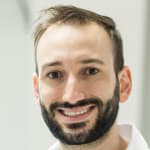
Dr. Luis Abrahante graduated from the University of Alabama and currently resides in Birmingham. He owns and operates a full-service dental practice in Mountain Brook, focusing on aesthetic and implant dentistry. Dr. Abrahante is passionate about his field and has continually advanced his career by accumulating numerous continuing education hours and actively participating in various dental organizations. He is a member of the American Dental Association (ADA), the American Academy of Facial Esthetics (AAFE), and the American Academy of Cosmetic Dentistry (AACD). Due to his significant contributions to the field, Dr. Abrahante was awarded membership by the International Congress of Oral Implantologists (ICOI). His dedication to dental excellence is further highlighted by prestigious awards such as the American Academy of Orofacial Pain Outstanding Award and the Academy of Operative Dentistry Award. Beyond his clinical practice, Dr. Abrahante contributes to the dental community as a lecturer, author of publications in national journals, and as a product evaluator for Catapult. He is one of only three members of the American Society for Dental Aesthetics in Alabama, emphasizing his commitment to high standards in dental aesthetics.
How does a young dentist who came to America at 18 without speaking English transform a struggling insurance-dependent practice into a thriving fee-for-service aesthetic dentistry destination in just one year?
Meet Dr. Luis Abrahante, a 2022 University of Alabama Birmingham graduate who has accomplished what many consider impossible in today's dental landscape. At just 31 years old, Dr. Abrahante has paid off his dental school loans, purchased his own practice in Mountain Brook, Alabama, dropped all five insurance plans, and built a fully digital aesthetic practice specializing in anterior implant aesthetics and complex restorative cases. He holds membership in prestigious organizations including the American Academy of Cosmetic Dentistry, International Congress of Oral Implantologists, and is one of only three Alabama members of the American Society for Dental Aesthetics. His rapid success has led to published articles, national lectures, and recognition as a rising leader in aesthetic dentistry.
This conversation reveals the strategic decisions and mentorship relationships that enabled Dr. Abrahante's remarkable transformation from new graduate to established aesthetic practitioner. He discusses the critical role of his mentor Dr. Thomas Dudney in shaping his clinical approach and business philosophy, the challenges of transitioning from insurance-dependent to fee-for-service care, and his investment in cutting-edge digital technology including intraoral scanners, 3D printers, and milling equipment. The discussion explores his clinical protocols for anterior implant aesthetics, material selection strategies, and the business management challenges of rapid practice growth.
Episode Highlights:
Tissue management emerges as the most critical factor in anterior implant aesthetics, with proper extraction technique and temporary restoration design being more important than implant placement itself. Strategic handling of papilla and prevention of tissue collapse determines long-term aesthetic success and prevents black triangle formation.
Transitioning from insurance-dependent to fee-for-service practice requires strategic patient education and case presentation techniques. Showing patients actual laboratory costs versus insurance reimbursement rates, combined with documented case portfolios, helps patients understand value proposition and accept treatment recommendations.
Digital workflow integration demands significant capital investment but enables complete control over aesthetic outcomes. In-house capabilities including surgical guide design, 3D printing for models and night guards, and chairside milling for posterior restorations reduce turnaround times and improve patient experience.
Cement selection varies by restoration type and location, with low film thickness and color stability being paramount for anterior aesthetics. Light-cured resin cements work well for veneers while radiopaque, fluoride-releasing cements are preferred for implant-supported crowns in anterior regions.
Staying within one manufacturer's material system across adhesives, cements, and composites simplifies inventory management, ensures material compatibility, and streamlines troubleshooting when complications arise. Universal adhesives with sub-10 micron film thickness accommodate both total-etch and selective-etch techniques.
Perfect for: Young dentists seeking practice ownership guidance, established practitioners considering fee-for-service transitions, aesthetic dentistry specialists, and anyone interested in digital workflow implementation and anterior implant protocols.
Discover how mentorship, strategic decision-making, and unwavering commitment to excellence can accelerate your path to practice success and clinical mastery.
Transcript
Read Full Transcript
This transcript was automatically generated and may contain errors or inaccuracies. It is provided for reference and accessibility purposes and may not represent the exact words spoken.
I purchased a practice about a year ago where it had five, six insurances, and I was able to drop out of those insurances. And now we are fully fee-for-service practice and doing a lot of aesthetic works. And it's just, I think, mentoring, having somebody who mentors you at the beginning of your career is one of the biggest things that helped me. Welcome to the Phil Klein Dental Podcast. On today's episode, we're talking with an inspiring young dentist whose story is nothing short of amazing. Meet Dr. Luis Abrahante.
He came to the U.S. from Cuba at just 18 years old, not knowing a word of English. Fast forward to age 31, and he's already paid off his dental school loans, bought his own practice, and turned it into a fully digital high-end aesthetic dentistry hub. In just one year, Dr. Abrahante has equipped his office with cutting-edge scanners, printers, and milling machines, giving him total control over the beautiful aesthetic results he's known for. And here's the kicker.
He's also dropped all five insurance plans that came with the practice and gone completely fee-for-service. We'll dig into how mentorship helped shape his career, the key decisions that fueled his success, and the go-to materials and adhesive systems he relies on every day.
Dr. Abrante practices in Mountain Brook, Alabama, a 2022 UAB graduate. He's already published and lectured on topics like anterior implant aesthetics and material selection. He's one of only three Alabama members of the American Society for Dental Aesthetics, and he's quickly earning statewide recognition for his artistry in aesthetic dentistry. He's becoming a regular contributor to VivaLearning.com. In fact, check out his webinar that he gave in March.
18th, 2025, it's titled Managing Anterior Implant Aesthetics, Technique for Immediate Placement. So I hope by the end of this interview, you agree with me that this episode is all about courage, vision, and the power of mentorship in building the next generation of dental leaders.
Before we bring in our guest, I do want to say that if you're enjoying these episodes and want to support the show, please follow us on Apple Podcasts or Spotify. You'll be the first to know about our new releases and our entire production team will really appreciate it. Dr. Abrahante, it's great to have you on the show. Hey, pleasure to be here. This is really an inspiring story. You've only been out of dental school for about three years at this point, yet you've already built a fee-for-service practice. You have a practice that's fully digital.
And you've developed a solid reputation for aesthetic dentistry. So you're building your patients of record quite quickly. And they're learning about you. And they're happy to say yes to your treatment plans. But you've just been out of school three years. So tell us how you did this so fast.
Yes, Phil, that's actually, I've been blessed. It's been a very nice path for me. And one of the things that I did, and it kind of happened, I wasn't planning it that way. I think it just happened to be that way. I was very lucky and blessed to have a great mentor. As soon as I got out of school, three months after, I found a...
a job with Dr. Thomas Dudney. He's a well-renowned dentist. He does a lot of aesthetic work and a lot of...
full mouth reconstructions. And I happened to be with him and we got together and worked with him for about two years until he helped me out in this journey. And I was able to find my own practice. And now I purchased a practice about a year ago where it had five, six insurances and I was able to drop out of those insurances. And now we're fully fee-for-service practice and doing a lot of aesthetic works. And it's just, I think, mentoring, having somebody.
who mentors you at the beginning of your career is one of the biggest things that helped me. Yeah, and I've heard that before. I think that's 100% true. I recently just did a podcast episode with a doctor who works out of New York City, Manhattan, and he has his own lab in his office. And his mentor told him right out of dental school, if you're going to work in Manhattan, New York City, get your own laboratory, get a top-notch lab person, and you'll be off to the races doing the kind of aesthetic work you want to do.
And he's never looked back. He's always had a lab. And he's also always been fee-for-service, never accepted insurance. My question to you is, as a young dentist who just bought a practice, how did you rid yourself of the encumbrances of third-party payments as dental insurance that quickly? We all know that part and parcel of a new practice is lots of bills to pay. And those patients with insurance would help pay those bills. Well, it was definitely hard for me.
And a lot of it, especially I am in Alabama. Unfortunately, it's not like, for example, like Beverly Hills or New York, some place where you can probably people are more kind of step to aesthetic work easier, I guess, for lack of a better word. And the type of dentistry that I do, which is mainly aesthetic and veneers, implants, it's kind of hard. It was definitely hard. So the minute that I drop out of those insurance, I did have a dip.
and in production and a dip in, for sure, in patient inflow to the practice. But I just stuck to my guns and I said, well, this is the way we're going to do it. We're going to do good dentistry. If I want to pay for my lab technician here, the price it costs me to do this particular restoration is pretty much what the insurance is going to reimburse me. And I think that was when I started saying that, I think a lot of patients understood where I was coming from.
actually show sometimes the prices that I was paying for some of the lab bills. And I said, here, this is what the insurance pays. This is how much I have to pay the lab technician. Do you want this restoration that is going to cost me this much and accept your insurance?
Or would you rather have this or the restoration done by this particular person that is going to be a lot superior? And I can guarantee it's going to be a lot more aesthetic. And because I had a little bit of a record and I had some cases that I was documenting in those two years that I worked with Dutney, it was...
Very easy for me to show these cases is, hey, this is what I have done so far. And I had maybe a narrative, maybe 20, 25 cases of veneers and my little books and say, hey, take a look at this. This is what I have done so far. This is what you want to do. So you were getting high case acceptance based on your approach, which makes a lot of sense. You were giving them options and say, we can go the cheap way or go the expensive, more expensive way. But this is, we're talking about your oral health. We're talking about longevity of these restorations.
aesthetic strength and everything else and uh for the most part the patients that said yes are the patients you were looking to keep the patients that said no may not be a right fit for those patients in your practice now did they look at you as like a young guy like uh oh definitely i still get that all the time so how do you handle that it i still it's still hard to handle i think a lot
I'm still building the practice. The practice is not, I got it out of two days a week. We're now at a four days a week practice, and we're thriving. We've done a couple of Saturdays. That is definitely a challenge that I'm still trying to overcome. But the war is getting around. The war is getting around, and I think patients are seeing the work, and it's just something that I think time is going to tell. Yeah, so word of mouth is so important.
You're fully digital. Did you buy the practice with all the digital gadgets in there and you had digital workflows set up when you bought it or you had to buy this after you purchased the practice? I had to buy it right after I purchased the practice. Where'd you get all this money from? A debt? A debt. Yeah, I had to, definitely. All right, so you borrowed the money, right? I borrowed the money, yes. Right, but what about dental school loans? You have that too.
Well, I'd worked for almost seven days a week, first two years, and I paid all my loans before I bought the practice. All right. So you were debt-free on dental school before you purchased the practice. That's what I did. Wow. So you are a very motivated type A kind of guy, I guess. You don't mess around. You're not waiting for it. I mean, it's an amazing story that you're only... How old are you? I'm 31. Just turned 21. 31 about a week ago. 31. Okay. Happy birthday. Thank you. So 31 years old, you're doing advanced...
aesthetic cases with implants. Anterior implant aesthetics is really you're focusing on too. And I guess you have enough people in your area in Alabama that are willing to say yes to high-end aesthetic dentistry, which includes implants, and are willing to pay for it.
out of their pocket. That is correct. And a lot has, I get a lot of referrals from colleagues, I guess, and friends of mine that are, at least I can think of a three or four people, dentists that refer me cases that they've seen the articles that I have published and they've been to a couple of my lectures and they, when they get an anterior case and...
And I'm very blessed that I have gotten referred from other dentists at a very young age here. Yeah, for sure. Now, how did you gravitate towards dentistry? Do you have a dentist in your family? I do not have a dentist. I'm actually from Cuba. I came here when I was 18 years old. You may feel the accent right there. Did you speak English when you got here at 18? I did not. So you learned English.
in the last uh what are we talking about 13 years you've been here i've been here 2012 13 years yeah so 13 years you learned english got into dental school excelled i guess you did pretty well in dental school i assume for you to be that aggressive with buying a practice turning it into a digital practice how did you learn all about the digital stuff that you need did you get that from dental school or your mentor well both kind of both uh i went to uab
University of Alabama, Birmingham. And I had great mentors there as well. And I felt very, very good right after I graduated. But the biggest, biggest thing was when I started working with Thomas Duttony because he is the one that definitely influenced me the most.
and buying all this new equipment and getting... What did he tell you as a young dentist that got you to do all this? Did he say that any limitations are basically self-imposed and you shouldn't be holding yourself back from doing anything you want to do? Was it kind of a motivational mentorship? Was it spiritual? Was it clinical? Or all of the above?
I think it's all of the above. And he happens to also be a speaker. He takes several dental institutions and meetings worldwide, actually. Yeah, he's well known. I know Dr. Tully's name. Yeah, I don't think I've interviewed him on this podcast, but he's done some webinars for Viva Learning, I'm pretty sure. Yes, he has. Yes, he has.
Pretty much because I think the teaching component definitely helped there because he was always very willing to teach me and introduce me to stuff. And when I was ready to buy my practice, he guided me all throughout the process and said, okay, let's do this. Let's not do that. And let's just find this particular area of town that I know for sure is going to be a lot better for you. Because I'm in an area of town that is also...
It's a lot easier to accept treatment than other areas. There's no question the mentor part of it, the component for a young dentist to get started is so critical. I couldn't have done it so fast without him. So you're big into anterior aesthetics and you do some anterior implant aesthetics. What do you consider the most critical factors in treatment planning and execution for anterior implant aesthetics?
Well, one of the most critical factors for anterior implant aesthetics is the way you handle the tissue. Tissue management is the key of how you handle these cases, especially if you're trying to do immediate implants, the way you extract the tooth, treatment planning, the way you approach that extraction, how you take that tooth out, how you handle the implant placement, all of that. I think the preparation is more important than the actual.
putting the implant and putting the implant is if you know where to put the implant in the bone is fine the key is how do you handle that tissue and then how do you handle that temporary that forms the tissue and you don't collapse the papilla after and then you and you don't end up with what we call black triangles in the in the area so planning and tissue management is definitely the most important factor and handling those cases for sure yeah now veneers you're doing um
indirect veneers right uh i do and you send this out to a lab you use you use a digital scanner and do they do a digital wax up or you do anything in-house yourself or you leave it to the lab i do have a milling house for cat cam restorations and i do a little bit of those especially in the posterior
Anytime that I do anything aesthetic, I definitely have to have a ceramist working those for me. They have a lot more power to shade match and all that. But I do a lot of veneers and direct restoration. What are you actually milling chairside? What kind of restoration? Chairside, inlays and unlays, and then crowns.
Okay. Are you doing some composite blocks where you don't have to center? You could just mill it in seven to 10 minutes and polish it up and put it in? I do. I haven't bought the Midas printer yet. I know it's very popular nowadays. I'm still researching and learning a little bit more about that one. But I do have some composite blocks as well. Yeah. Oh, so you don't have a 3D printer yet? I don't have a Midas 3D printer. Oh, you don't have a Midas. The Midas milling for the crowns, the one that makes crowns and all that. I have a 3D printer.
Okay. And what are you doing with 3D printing? Are you doing night guards? You're doing models? Night guards, models. Yes. And surgical guides. I do surgical guides. I design my own surgical guides and I print them and myself. I like doing my own surgical guides. And how did you decide on which digital equipment to buy? A lot of it was I inherited it from Dr. Dudney. And part of it was just doing my own research and talking to dental reps and seeing and reading and pod med and seeing.
research and say, I also, I'm good friends with Nate Lawson at UAB. Oh yeah, he's a brilliant guy. Yeah, brilliant guy. Yeah, he was actually one of my instructors as well. So every time I had a question, I was just emailing him and texting him, hey, what do you think about this particular equipment? Is it worth buying or not? And he would just guide me. Yeah, he's in touch with a lot of the manufacturers, but he's also an expert on materials. He'll tell you all about zirconia and lithium disilicate and all this stuff. So restorative success.
often comes down to the cementation phase we all know that right so what are some of the key properties you look for in a cement let's talk about veneers for instance uh right we'll start with that and then we'll talk about ceramic onlays and crowns what are you looking for in a cement uh we're looking for it depends for example if we're talking about veneers we're looking for a like your cement
We're looking for a cement that has a low film thickness and cement that is easy to clean and it's stable over time. Like if you do a cement that is going to change over time, that probably is not a good restoration to have in the mouth, especially in veneers because veneers show pretty much everything. So when you say change, change in color. Change in color, yes. Change in color over time.
Really good cements out there. Pretty much every company manufacturer have a good cement in their portfolio. What do you particularly prefer and why? I really like Choice 2 from Bisco. So far, it's the cement that I've been using for the past three years.
And I have no complaints. I have three shades. Let's say if you try in the veneer, you don't like it, you can darken it or line the veneer up and change the color in case you don't like the first drying of the veneer. It's very easy to clean. Choice 2 is one of the, I think one of the best that I have tried so far. Tag here, that's the man, and it peels up really, really nicely in the gel states. And it's very stable. I've seen, and I haven't been long enough to see.
probably failures i haven't been long enough practicing but i have seen some thomas dudney veneers that have been in the mouth for 30 years some of these veneers are actually older than i am and they're still holding strong yeah they're still holding strong they're
They're doing just fine. And that's what he uses. And that's what I like using as well. And that's for veneers. And how about crowns and onlays? For crowns, I change a little bit. I try to look for cement that has more, depending on what type of crown I'm using. Let's say if I'm using a zirconia crown, I like you doing more like a cement that contains NDP that has some sort of calcium and fluoride releasing properties. And it's got easy.
Easy to clean, especially when I'm doing implants in the interior region and I am not doing a screw retained implant. I'm looking for a cement that you take an x-ray, you can see it on the x-ray with some sort of radio opacity capabilities. I really like TerraSim. There are a lot of other cements you can use out there. Pretty much every company has some sort of cement.
with these properties. But the one that I use because I like and I've been using it for three years and it works really great in my hands is TerraSim from Bisco as well. And the cement is great. The cement, I think if you use it one time, you probably will fall in love with it. Yeah, and I talked to you offline and you're a real advocate of the Bisco product line. And I guess, you know, every dentist has their favorites.
Right. I don't know whether you use this in dental school or whether your mentor recommended it or you just another dentist used it and you got to use it or however you find out about these cements or materials and see what works best in your hands. But there certainly is a lot of documentation and evidence on the material that Bisco makes. There's no question about that. So I've talked to a lot of dentists about the materials they use in their practice. And in large part, many of the dentists feel more confident sticking.
within one manufacturer across adhesion, cementation, and restorative composite. And the reason for that, mostly what I hear, is the confidence in the company and also the compatibility of the materials. If there's a problem with any of the steps, if the materials come from one manufacturer, the troubleshooting process is easier.
especially if there's a customer service person available to talk you through it. Are you doing that as well, staying within the realm of one manufacturer with your materials when it comes to adhesion, cement, and so forth?
There are so many options nowadays that probably every dental rep that brings you an adhesive, you probably will like it because there's a lot of research. There's a lot of technology nowadays that pretty much all companies have really good adhesives. And I do keep it in the same realm of the same company that I use. It's just because...
I have a great connection with this company and I like what they do. They have great research. I've been to their facilities and I've been to their research department. I actually went there to test them myself. I went there, I have videos there of myself testing the products and see what they do. And I was able to do some research with them as well. And I look for an adhesive that has very low film thickness, which is...
Everyone's talking about that today. But think about the one that I use, which is Auburn Universal. It has less than 10 microns.
Even if you get it wrong, there's no way that 10 microns is going to make your restoration not seat. Even if you screw it up completely, you're still going to be able to seat that restoration. And it's compatible with any systems because if I use an onlay, I may not be doing total edge. I may be doing selective edge. But if I do a veneer...
which is all in enamel, I'm going to do a total edge technique, right? So I cannot be having like three or four systems in-house. And I'm a very hyperactive person. I cannot have two bottle systems. So I had to have something that is kept in one bottle, but at the same time does not compromise the outcome of the restorations. And I've been using Auburn Universal for three years now. I've seen some of Thomas Dudney's veneers that use this.
particular bonding agent for over 5, 10, 15 years, and they're still holding strong. And I really like it. As a 31-year-old dentist who's only been out for three years, when you see Dr. Dudney's cases that have lasted 30 years and it's good enough for him, you say, okay, let me try this stuff. It's good enough for Dr. Dudney. I'll try it. So is that how you got brought into the Bisco world as far as evaluating some of their products?
actually going down to their R&D facility and seeing what they're doing there? Yes, that's definitely correct. He's actually the one that introduced me to all the basic products. And when I started working with him, he said, you're free to use anything. I just would like for you to try these products. And man, I fell in love with it. I was used to a different adhesive prior to using All-Bone Universal. And it's incredible because when I started using All-Bone Universal, you can...
See it when you're drying the adhesive, you can see how fast it dries and how good it is when you're handling it. It's pretty good. I like it a lot. We'll do a podcast 10 years from now, Dr. Abrahante, and we'll talk about your success with all this stuff. Because as you said, you have no failures because you've all been practicing for three years. That is right.
You know, you're an extremely successful young dentist. I mean, there's no question about it. Very, very impressive. It looks like you have an incredible passion for dentistry. So when you have some free time and you're just thinking about things, how do you see yourself in five years? How do you see your practice and the kind of cases you're doing? Yeah, the main goals that I have in five years, other than having more time for family, for sure.
definitely doing more of these cases and maybe starting to lecture a little bit more. So starting to teach other people what went right for me, what didn't go so well, the things that I've...
Being able to do, and I've done a little bit of that already. Last year I did two webinars and I was able to kind of like, it feels good when you're able to say, hey, you know, this is what worked for me. Don't do this other stuff and don't do this. And that probably will be the goal in five years from now, being able to teach other dentists. Balance your career with a little teaching and education, which I think is a great service of the profession.
I do want to ask you, so you're very clinically advanced. What about the business management part of your practice? You know, there's a lot of things you have to worry about. I don't know what kind of staff you have, but you have HR, you have regulatory with OSHA, infection control, inventory, expenses, and all this other stuff. So how do you manage the day-to-day operations of a practice and also the business end of the practice? Is all of this kind of overwhelming at times and stressful for you?
It's still stressful, I'll be honest with you, especially because I have a 16-month-old, and trying to balance the business with family, it's definitely challenging, and it gets to me every single day. But I enjoy it, and my office is getting a little bit bigger. Now I have two hygienists.
One full-time assistant, one part-time assistant. And I have one office manager slash treatment plan coordinator. And it's...
It's gotten bigger. It's gotten bigger by two employees since I bought the office. Does it keep you up at night thinking you have to make payroll every two weeks? It does keep me up at night still. I still think about that. But it's getting better. It's getting better. The first few months were the worst when I dropped the insurances and I said, oh, my God, what am I going to say? Am I crazy? What's happening here? Did I do the right decision? Did I not? But you know what? It just went.
It went fine. And I think it helped a lot that I didn't have any depth at the time. Yeah, without a doubt. You know, I'm not practicing right now. And as I mentioned to you, I was an endodontist in Philadelphia for about 15 years before I got into Viva Learning, which I started in 1999. But I will tell you the decision you made.
to remove yourself, extricate yourself from the control of insurance companies about their pricing and their compensation was the best thing I think that you could possibly do at your age. If you can get by that and deal with that, then everything going forward, you're growing your practice with the kind of patients you want to treat and they have to respect your practice and respect your services to the point where they have to pay for them. Otherwise they...
It's not a right fit, like I mentioned. And it'll allow you to do the dentistry you want to do. And I think it's going to be, it has to be financially feasible. It has to work because it's a business, but you also love the dentistry itself. So by combining those two, the only way for that to work together is to rid yourself of the insurance company. And that's what you did. So whatever advice that you got from Dr. Dudley, that was good advice. Absolutely great advice. Definitely. And I'm blessed. I'm grateful. And I'm very happy how things are going now.
In wrapping up this podcast, and I think we covered it very well, and I appreciate you, you're at a dental meeting right now, are you not? I am. I am at the American Society for Dental Aesthetics, and I became a member last year, and I pretty much participate every year now. I've been coming here for the past three years. And you learn a lot from your colleagues. Is that something that you value and recommend to others? Oh, definitely. This is a great meeting to be in.
It's very good, and there's a lot of people you learn from here that you get good information from. Are they mostly dentists your age? No. Actually, yes and no. There's half and half. There's a lot of dentists. There's actually not a lot in between. It's mainly older dentists and a lot of young dentists. We had 26 new members this year, so it's a pretty good meeting, actually.
And again, the group that Dr. Abrahante is talking about is the American Society for Dental Aesthetics. So check that out. Dr. Abrahante, it's been a great discussion. You're certainly an inspiring young man. And I think dentists that are your age that are looking to accomplish similar things will be inspired by this conversation. And I'm sure there's great things yet to come from you. And we look forward to keeping in touch with you to follow up on your career. Thank you very much for joining us.
Hey, thank you, Phil, for having me. And I look forward to that podcast in 10 years from now. Yes, absolutely. Absolutely. Thank you very much. Take care. All right. All right. Take care.
Clinical Keywords
Dr. Luis Abrahanteanterior implant aestheticsfee-for-service practicedigital dentistryaesthetic dentistryveneerstissue managementChoice 2 cementAll-Bond UniversalTerraSimBiscointraoral scanners3D printingsurgical guideszirconia crownslithium disilicateanterior aestheticsimmediate implant placementpapilla preservationblack trianglesceramic onlaysuniversal adhesivesDr. Phil Kleindental podcastdental educationpractice ownershipAmerican Society for Dental AestheticsDr. Thomas DudneyUAB dentistryMountain Brook Alabamainsurance transitiondigital workflowsCAD CAMmilling machines