PPAD Practical Periodontics and Aesthetic Dentistry Editorial Board · Spectrum Magazine Editorial Board · The Journal of The Academy of Cosmetic Dentistry
Read full bio
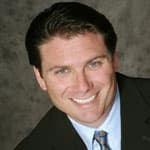
Dr. Ritter has published many articles on adhesive and cosmetic dentistry in several publications, including PPAD, Signature, Spectrum, Dentistry Today, DPR, Contemporary Esthetics, and is on the editorial board of PPAD Practical Periodontics and Aesthetic Dentistry, and Spectrum Magazine and The Journal of The Academy of Cosmetic Dentistry. In addition, Dr. Ritter is an Editorial Board member of REALITY, a publication to keep dentists up-to-date with advances in the products, techniques and research of esthetic dentistry. He is also a product consultant to numerous dental manufacturers. He has lectured nationally as well as internationally on cosmetic dentistry, new materials, joint based dentistry and the steps necessary to transform a practice into an esthetic based practice.
Are you running your practice, or is your practice running you? The difference between these two scenarios often determines the gap between career burnout and lasting professional satisfaction in dentistry.
Dr. Rob Ritter brings over 30 years of experience as a cosmetic dentist and practice owner who has built a reputation for excellence through intentional leadership and unwavering vision. He is a published author in multiple dental journals including PPAD, Signature, Spectrum, Dentistry Today, and Contemporary Esthetics, serves on editorial boards for PPAD Practical Periodontics and Aesthetic Dentistry and Spectrum Magazine, and works as a product consultant to numerous dental manufacturers. His national and international lectures focus on cosmetic dentistry, new materials, and practice transformation strategies.
This episode explores the fundamental principles of achieving career satisfaction in dentistry through maintaining control, defining your practice vision, and surrounding yourself with the right mentors and colleagues. Dr. Ritter shares how he transformed a traditional practice into a cosmetic-focused destination despite initial resistance from local colleagues, demonstrating that success comes from staying true to your professional vision regardless of external opinions.
Episode Highlights:
Practice ownership requires a clear decision about who controls the direction of care - the dentist, team members, or patients. When patients or inadequately supervised team members drive practice decisions, stress and dissatisfaction inevitably follow, making it essential for doctors to establish and maintain leadership authority from day one.
Financial literacy forms the foundation of practice success, with monthly profit and loss analysis being critical for sustainable growth. Many dentists lack basic business knowledge like understanding appropriate lab cost percentages (10-12% for general practices, higher for cosmetic-focused practices) and fail to work with dental-specific accountants who understand industry benchmarks.
Continuing education should extend far beyond clinical techniques to include business management, patient communication, team leadership, and practice marketing. The most successful practitioners invest heavily in learning how to run the business aspects of dentistry, not just the technical procedures.
Career satisfaction develops when dentists reach unconscious competence in their chosen specialty area, which requires years of focused practice, continuous learning, and collaboration with like-minded colleagues who share similar practice visions. This competence comes from deliberate skill development rather than simply treating more patients.
Professional mentorship and networking outside your local market provides invaluable guidance without competitive conflicts. Building relationships with successful dentists in other geographic areas allows for open information sharing, collaborative problem-solving, and career guidance that local colleagues may be reluctant to provide.
Perfect for: Practice owners and associates looking to gain control of their careers, dental entrepreneurs planning practice transitions, and any dentist struggling with work-life balance or professional direction.
Discover how to build the practice of your dreams while maintaining the leadership control necessary for long-term career satisfaction.
Transcript
Read Full Transcript
This transcript was automatically generated and may contain errors or inaccuracies. It is provided for reference and accessibility purposes and may not represent the exact words spoken.
I cannot emphasize enough. Do not let anybody talk you out of your dream, whatever dream that is for your practice or your career. If you decide that you don't like what you're doing and you want to change, that's up to you. Be around people who are going to be positive, uplifting, offer you mentorship, offer you positive confirmation. Do not listen to anybody in our profession that tells you you can't do that. You shouldn't do that. I wouldn't do that. It's not about them.
It's about you. If I listen to every person who told me I shouldn't, I couldn't, I wouldn't, I wouldn't be here with you right now. Do not listen to those people. Get rid of them. Welcome to Austin, Texas, and welcome to the Phil Klein Dental Podcast.
We all know that dentistry can be incredibly rewarding, but it also can be stressful and overwhelming. The clinical demands, business pressures, and daily responsibilities can take a serious toll if you're not intentional about how you run your practice. That's why maintaining control is essential to achieving career satisfaction. And it starts with having a clear vision of the kind of dentist you want to be and the type of practice you want to build. It also means connecting with a trusted mentor and staying open to new ideas that align with your philosophy of care.
And equally important is having a solid understanding of the business side of dentistry. As practice leaders, it's incumbent upon us to make sound financial decisions that support our long-term goals and ensure the sustainability of our careers. So today we'll hear from Dr. Rob Ritter. He's a general dentist with over 30 years of experience specializing in cosmetic dentistry. He'll share with us why it's essential to define the level of care you want to provide.
Surround yourself with like-minded colleagues and create a practice that reflects your values, not just as a clinician, but as a leader. And if you do this, you will have control over your practice and be rewarded with career satisfaction. Before we bring in our guest, I do want to say that if you're enjoying these episodes and want to support the show, please follow us on Apple Podcasts or Spotify. You'll be the first to know about our new releases and our entire production team will really appreciate it. Dr. Ritter, welcome to the show.
Great to be with you, Phil. So we've heard so many times, Dr. Ritter, dentistry has the highest suicide rate. Dentistry causes people to lose their minds and their marriages. I mean, I can't tell you how many times. I'm an endodontist. I practiced 15 years in Philly. I can't tell you how many times I heard.
wow, what'd you go into dentistry for? Doesn't it have like the highest suicide rate? I mean, I'm sure you've heard that many times and it could still be true. I stopped listening to it. I became numb to it. I didn't pay attention. But there's a point to be made that dentistry is an extremely difficult profession. It requires physical efforts and it takes a toll on your body. It certainly involves so many different aspects of any other business, which means managing other people, inventory.
bureaucracy, meaning, you know, OSHA, HIPAA. It's almost amazing how much a dentist has on his or her plate. This particular episode, we're going to talk about career satisfaction. So with that morbid intro, tell us how we can achieve unmitigated career satisfaction in dentistry. First of all, thanks for having me on to talk about this as well. This is something I speak about in my lectures and in my course that I give. And, you know, when I look back on dentistry, I've been doing it 31 years.
It's everything that you said, plus, plus, plus. I have a friend of mine who talks about the emotional toll that dentistry takes on us. His name is Kyle Stanley. He teaches a course for people who have a lot of issues in dentistry, and they don't really tell you these things before you go into dental school or even in dental school, because you know, if we bring it back to the beginning, they're so busy to get you to get up to just being competent, you know, basic levels of understanding. And what is the,
What's the term that we use for legal ease in the state? Clinically acceptable, right? Okay. That's what dental schools focus on. They don't have time to go over things like how to run a business, how to manage staff, accounts, receivable, you know, the business of dentistry, let alone the emotional toll that it can have on people. How many times have we seen over the last, gosh, it seems like five years since COVID, but it's been going on for a long time, dentists with alcoholism?
drug issues, murders, suicides, just it's astronomical. I don't know if we're still number one, Phil. I think number one actually is firefighters now, which makes a lot of sense because they see a lot of things that you would never want to see, right? First responders. Interesting enough that I have a lot of firefighters in my practice and they have the funniest stories and the saddest stories at the same time. But we're up there. We're at least in the top three or top four.
And I think that's really sad for all the reasons that you say. First of all, you go through college for four years. You work your ass off to get into debt, to get into dental school, to come out of school now with hundreds of thousands of dollars worth of debt, to go either work in a private practice, which takes time, or to jump into a DSO to make some money to start paying your bills. And you're running around trying to learn and incorporate at the same time you're dealing with the humans on the other end of your instruments, right?
And a lot of people, for us, we love dentistry. As dentists, it's hard for us to understand, quite honestly, the other side of it. We love the intricacies of it, the minutia of it. We love the technology. We love the shared learning. We love the ability to run your own practice and make your own way in life. But man, does it take a toll on people. And it really comes down to, my thing has always been, who is running the practice? Are you running the practice?
Are your team members, I notice I don't call them staff, they're team members and they're kind of, they're a family. Or are your patients running the practice? So if your patients are running a practice, you've got a big problem. If your team is running the practice without guidance, without vision, without supervision, without clear train of thought, you're going to have a problem.
Before we get back to our guest, I'd like to give a huge shout-out to our sponsor, VOCO, the Prevention Pros Dentist Trust, for products that truly make a difference, like Pro Fluorid Varnish. This isn't your typical thick, sticky varnish. It's thin, transparent, tastes great, it has seven flavors, and delivers the ADA-recommended 5% sodium fluoride for a strong burst of protection.
VOCO's unique procolophony formulation helps the fluoride stay in the teeth longer for extended uptake. And that's exactly what you want. And then there's Admirer Protect, VOCO's light-cured nanofill desensitizer that keeps patients' sensitivity free for up to two years. It's a great practice builder. And yes, CDT Code 9911 makes billing simple. If prevention matters in your practice, join the thousands of dental offices that depend on VOCO.
visit foco.dental. I made it a point years ago that I was going to run my practice. Did I lose team members over that? I sure did, happily. Did I lose patients over that? Yes, I did, happily, because they didn't share the same vision of where I wanted the practice to be, known for, to provide services for the patients at the highest level, and that's okay. I always said, I'm not the dentist for everybody in my town, and that makes some dentists very uncomfortable, Phil. When you lose control,
Or if you do not have control of your life or your profession, you're going to have a very stressful environment. I mean, that's how it works. And you covered all that. You said when you started your practice, you made it a point, a priority for you to be in control. It was your decision and you were okay with whatever the results were because you were the one in control. You're correct, Bill, because I think of it this way. Do you think...
spent eight plus years of my life and hundreds of thousands of dollars going into debt between college, dental school, buying a practice to let somebody who's 24 years old with a high school education determine my path in my profession. That is not my goal. Was that my goal when I went to dental school? You think that was my end point that that's where I wanted to be? That's what I was going to allow to happen in my life? Absolutely not. So is that the most critical thing you think?
A dentist has to keep in mind when they're running their practices that they not only have to make the effort to be in control, but they have to make sure everybody else knows they're the ones in control. Oh, 100%. Look, it's always false. It's always my fault. That's the way I look at it. It's always my fault. Because if something is not going well in the practice, it's because I didn't manage it well. I didn't manage the team member who didn't manage it well. That's what it comes down to. I can't blame anybody other than myself. You have to always think, look, you're the leader.
And they look to you for guidance. What happens when you don't have structure or order in life? It's chaos. I don't like chaos. I don't want chaos. I don't like mess. I want order. I want people to be succinct. Now, I want them to be firm, but I want them to be friendly. It is our way. And our way has been proven to be better than everybody else in our town. And I don't really care, Phil, how anybody else does it.
other than my practice and a 10-mile radius of where I live in my practice. I want to be the best. I want to be the best practice, deliver the best goods and services, and be the place where people say, oh, you know Ritter and Ramsey? Oh, yeah, you go there? Oh, yeah. Oh, I've heard so many great things about it. That's our word of mouth for 24-plus years. And it's better than everybody else in town. Right. Now, if a dentist is not a leader, just genetically not a leader, and they want to delegate this to an office manager and all of this...
comes from the office manager. And obviously the dentist and the office manager are going to talk and set up a culture, but the dentist wants to be popular. The dentist wants to be liked by the staff and everybody else doesn't want to be too strong as far as what he or she wants. So the dentist practice owner delegates this to the office manager and it's all coming from him or her. What's your feeling on that? I have no problem with that as long as that person
you've clearly communicated to at least that office manager of what you want the outcome, the goal to be, how you want it to get there, and when there's an issue, they need to come to you. I don't want my office manager to go to my team members to figure it out unless it's something that we talked about first. Now, I've given them autonomy to fix the little things. The example would be, when you check into the Ritz-Carlton, did you know the people there are given something like $500 per person?
person if something's not right they're given the ability to make a decision on the fly to fix the problem to make it easy solvable to make the experience great now if it's a big issue if somebody is not happy about you know the overall cost of a procedure then they can come to us for that but the little things that i do not want to skunk up the works on a daily basis i want my team to handle that now
They are meticulously trained because you have to inform before you perform and you have to train and not complain. Let's go to the other example, Phil. Chick-fil-A. Is there any fast food establishment that has a better training program or is friendlier?
staff team members than Chick-fil-A? And the answer is no. And what's the reason? They have an intense training program for it somewhere between two and four weeks before they put the young kid, because they hire people that are, you know, 15 to 20 years old on the floor. Why is that? Because they are a direct representative of the overall brand. They will not put somebody fresh on the floor. Now you go to other places, people don't know what they're doing. They turn around, how do you plug this in? I don't know. They weren't trained.
And what's the experience for you? It's awful. So for us, we're going to train before anything else and not complain. That all comes back to the dentist. I have no problem if you don't want to be the dominant, dominant figure, but you have to clearly lay out your vision for the practice. Otherwise, nobody else knows what it's going to be. And I know that there are introverts in dentistry. There's no problem with that. There are courses that teach you
how to gain all this information, package it together, relay the information to your team and your office manager so that you don't have to be the so-called heavy. And that's fine. Now, obviously with me and my business partner, we have no problem doing that. We have no problem because we have a very clear vision and we know where we want to go and where we're coming from and where we want to be.
If you don't have that ability, there are places that you can learn. And listen, the other thing would be get a mentor, get a mentor. Phil, I wouldn't be here with you today if I didn't have some early mentors in my career. Tiger Woods had a mentor. Rory's got a mentor. If you're a golfer, you know, the tennis players, they all have teams now. You think they just go out and play tennis and all of a sudden they're playing on the finals for Wimbledon? No, everybody has help along the way. You have to be able to drop your ego.
and say, I need help to get there. I don't know everything. Phil, I know a little bit. I know a little bit. If it's something I don't know, I'll go ask the question. I have no problem with that. And I'm not always right. And I don't know everything. That's just impossible. I'd like to get on Jeopardy. I think I do pretty good on Jeopardy, but I still don't know enough to get on Jeopardy. Let me ask you this. So what do you think a dentist who is looking to start their own practice should do in the early parts of their career to avoid?
burnout and to avoid that frustration that leads to unhappiness and career dissatisfaction. What are some of the things they could do to circumvent that before they actually happened? Great question. First of all, I got to tell you that today's generation, you can't learn everything on Instagram. You can't. And you take a look at the picture of the beautiful cosmetic case somebody put up. That's the bed. They took the picture that day it went in and they better take it.
Because that's the best day that porcelain is going to look. Right? It's never going to look as good as that first day it goes in. Film me the picture 10 years later, actually. And you notice most people don't post pictures from 10 years because they don't make it to 10 years. So, Mike, let's go back to the beginning. Education. Continuing education. I think you should spend as much money as you possibly can on continuing education.
not just on the technicalities of doing seven layers of composite. I'm talking about understanding how to run a business, understanding accounting, how to run a monthly P&L. Years ago, Phil, when I was lecturing 25, 27 years ago, I'd go to a room of 50 people and say, how many people run a monthly P&L? And out of 50 hands, five would go up. They didn't know what a P&L was, yeah. They didn't know what a P&L was. Most of them rely on their...
accountants to do this and that's not a bad thing to do but you need to have an accountant that can sit down with you and keep you on track and say hey we've been looking at your P&L and this this office you're spending too much you're not the revenue is not appropriate to the amount of money you're spending on whatever I mean that's the kind of thing that has to be discussed right
Yes. And actually, the accountant has to understand dentistry, right? Because otherwise, they don't understand the breakdown of facility costs, team members, what the salaries are, insurances, supplies, you know, they have no idea. They just look at and say, well, your profit this month is 10%. But your numbers, your lab costs can be 20% when it should be down at well, for restorative practices, she should be somewhere between 10 and 12. They don't have that knowledge. Yeah, they don't have enough.
they don't have that knowledge there are some there are some accountants that do specialize in correct there are some accounts that work with dentists that understand that number but even them you have to be very careful with phil early in my career because i was a restorative only practice and my laboratory number was higher than the average general practice and they couldn't get their head around it because they were basing it on you know the other 50 general practices where they were taking teeth out and using
you know, they were doing partials and I was doing nothing but small designs and porcelain restorations. They're like, well, your lab cost is double. I said, that's because I'm not doing these procedures that have no lab costs involved with them. So you have to be very careful when it comes to those sorts of things. We'll be right back to our guests. But first, a big shout out to GC America.
A leader in dental materials, GC is all about minimally invasive dentistry, preserving natural tooth structure and helping to keep it healthy long after the restoration is placed. That's where glass onomer technology shines, and GC's new glass hybrid, Equia Forte HT, fits right in. It chemically fuses with the tooth for strong, long-lasting, aesthetic results. It's fast, packable, moisture-tolerant, and requires no bonding or conditioning. Plus, it delivers continuous fluoride protection.
We talked about the business aspect of understanding the P&L. That's a downfall. If you don't have a grasp...
of your P&L and understand the accounting part of your business. There's no way you could run the business properly because you don't know whether you're in a position to make investments in equipment and hire more people and expand. And you're doing it blindly. There's no reason for you to be doing something if you can't afford it. In addition to that, what are some of the other things dentists should be very careful of before getting too deep into a practice?
Most importantly, you've got to figure out what do you want to do in dentistry? What's the overarching reason you're there? What do you want to accomplish? What kind of dentist do you want to be? What kind of services do you want to provide? I know exactly what I want to do. Now, when I came to my town, let me tell you, was I met with resistance. Holy cow. Because I know the type of practice I wanted to have was going to be very different than a traditional dentist that were at least...
10 to 20 years older than me. And man, I got shunned. I got shunned because of the type of practice I wanted. And you know what, though? I didn't care. I just put my head down and said, I'm going to do what I want to do. Now, I caught a lot of arrows in my back. When you stand out front, you catch arrows in the back. How much dentistry did you do before you opened up your own practice? Working for someone else? They didn't have DSOs when you started. No, they didn't. Right. What did you do?
Yeah. So I worked at other practices for like a year and a half. And it just so happens that when I came out of dental school, I was working for a dentist. Oh, probably about now, I would say 40 minutes south of where I live and practice. And this dentist was really out in front with doing better. I call it better dentistry. This dentist was not doing, you know, partials. They were doing restorative dentistry. And I really, for me, I saw a completely different world. And I said, oh, that's the kind of dentist I want to be.
This dentist pointed me in the direction of taking the right CE. All of a sudden, after taking three to four to five different CE courses, I'm like, whoa, I didn't even know this was available. I said, this is what I want to do. So you found a mentor. You found a mentor. Back to having a mentor. The mentor that you found was the dentist that you purchased the practice from. No, no, that wasn't. No, that was the guy you worked for.
That was a person, a dentist I worked for. And then I heard that there was a dentist now where I practiced that was looking to sell and retire at a very early age. So I went into this practice and was the associate for a year and then decided to buy them out. And then from that point, I started to put my stamp on the practice and started to transform it into the practice it was today. It was not easy. It came with some heartache. It had some grief. It had some ups and downs along the way. And while some patients left,
Others that wanted that dentistry found me. I put my head down, put the blinders on, blocked out the other local dentists who were not saying very nice things about me and just decided I'm going to go for it. I'm going to turn this practice into the practice that we want. One more thing, found my partner that had the same shared vision as me and transformed the practice 24 years ago into what it is right now.
the key thing here is, is that you have to define what kind of practice you want to build. And, and when you give us an example of different kinds of practices and why did the existing dentist in your neighborhood shun your practice? Well, first of all,
Because I was doing procedures that they either were not doing or able to provide. They didn't take the CE to get them there. They didn't know how to talk to the patient about it. They weren't incorporating the technology quickly enough. This was before the days of the internet really taking off. I was one of the first people to have an internet site. You know, all those sorts of things that I got bashed for. But it didn't matter. At the long run, it didn't really matter. I had to fight along the way to establish myself.
And of course, they would say, well, now, you know, some of the people would say, well, you see how good you came out of it. I don't like that either. That's a cop out. You made things difficult for me. I'll never forget it. There's a whole nother story. So you differentiated your practice as a cosmetic focus practice, right? Correct. That's exactly what I did. Okay. So you were one of the earlier dentists that, or one of the few dentists that did that early on. Today, you know, you can go to a lot of neighborhoods and you see cosmetic dentistry all over the place.
You did that before, way before your time. It was something generally accepted to do. And back then, 20, 24, between 20 and 25 years ago, Phil, I was doing what I call smile design every week. I was doing a veneer case or a smile design. I was prepping a case in the morning and the afternoon, inserting it one a week, which was very high for back then. Very high. And of course, you know, professional envy comes into this and all the other things that go with it. I didn't care. I just kept doing it.
So we talked about a lot of important things so far, maintaining control of the practice, differentiating your practice, and knowing what services you want to offer and what kind of dentist you want to be, making sure you have a good understanding of the business end of dentistry, whether it's understanding a P&L and understanding your finances. What other things should a dentist keep top of mind in order to excel in dentistry and at the same time enjoy career satisfaction?
Well, I think also, you know, the traditional model of going to meetings is coming to an end, or at least it's shrinking, Phil. The issue, I think, though, what we're missing out on, it's not just when you don't go to those meetings, it's not just that you're not learning inside the four walls. It's the learning and the sharing that happens outside of those walls. The connectability, the networking, it's going out for some food or a drink and sitting down with somebody that might be.
You know, doing things that you want to do in another part of could be 10 miles away. It has no effect on your practice. They're willing to help you can ask questions because it's very difficult to get information from people who are not really there to help you. I mean, it's a very difficult thing and we can feel isolated and alone in our practices. And we go back to the beginning of the conversation about career satisfaction. Career satisfaction happens, Phil, when you're unconsciously competent in what you're doing.
Now, where does that come from? That comes from years of doing it, of doing it really well, of adding to your armamentarium, about hanging around like-minded dentists who share the same vision, of which most of the times it's not your local dentist. My friends, Phil, mainly are not local. They're dentists nationally who have these types of practices that we all share information, and they're doing really well in other areas across the country.
because they have the same as your vision. Every practice is going to be different. And that's okay, too. I just, my concern was never what anybody else.
was doing. I was going to ask you about local dental society meetings, but then... We don't have one. Well, you don't in Florida? Not in our area. But you do make a good point, Dr. Ritter, that the benefit of working or collaborating with dentists that are out of your area, there's no competitive component in this discussion, in this friendship or this...
colleague relationship that you have when you're working with people outside of your area. But study clubs are usually local dentists. Is that not something you think would be beneficial to a new dentist that's starting their own practice? Joining a study club actually is a great thing when it comes to especially technical or skill knowledge, because
With study clubs, you know, what they do is they bring in, let's say, a national speaker and you don't have to spend the money and take the time out from your practice to go. So as starting out, being part of study clubs is great. And what happens from that is not only do you can you share some information amongst your local colleagues and hopefully everybody grows together at the same rate, which would be great. Some of them bail out along the way. Maybe others move into the area and we're like minded. That's great.
You also get to see different types of dentistry. And maybe you say, you know what? That one dentist that came three months ago, I like what they do. I'm going to reach out to them. I've had a lot of dentists reach out to me through the years, a lot. And I'm always willing to help anybody if they just ask the simple questions. Just what do you need? What do you need? I mean, it's that simple. And now, you know, teaching my own courses, that's why they come because they want to learn. The people that come.
They want to learn. And I want to be around people who want to learn. And I want to be around people who are thinkers. Where are your courses offered? In Florida? Yeah, in Florida, in Jupiter, Florida. We have a course called The Protocol. We've been doing it five years. It's small group learning. There's nothing better than small group learning. How many dentists? We have 15. And what does that look like, that classroom or study environment? Are you treating a patient? Or what are you doing in that environment?
No, we're not doing live patient. It's a two-day course in our office. We have a facility that lends itself towards that. And for two days, we go over everything, Phil, from patient attraction, how to attract the right patients, marketing, what I call integrity marketing. We talk about patient communication. My business partner talks about body language and understanding human emotion, what people connect with. We talk about technologies. We talk about how to properly
bring a patient into the practice, how to present treatment and do, we actually break out into sessions where we do chair side digital consults and the words that we use and the technologies that we use to get people to buy in, to move forward with doing not one tooth, but arches of dentistry, either doing an arch of dentistry or full mouth reconstruction, whether it be tooth born or with implants.
We talk about the different types of materials that are available. We talk about the different technologies that are available. And most importantly, we have our team members there. We have four team members so that during the breakout sessions, you can talk to them. And then we share everything with you, all of our paperwork. We give it to you. You leave with the manual. You leave with $1,600 worth of the products that we talk about that we use on Monday through Thursday. You go back to your practice and use the same materials.
We feed you. I treat you the way that I want to be treated when I go somewhere for seeing. Yeah, it sounds like an amazing experience. It's a great experience. Yeah, and anybody could find information on this just by Googling Dr. Rob Ritter. Would that show up? Yeah, you could do that. Just go to theprotocollive.com. That's our website. Protocollive.com. I'll put that in the show notes. Yeah, put the link in there, and we're available to answer questions about it.
The reviews are great if you go to Course Karma. There's a tremendous amount of reviews on our courses. The reviews speak for itself. I'm not doing it for me, Phil. I just want people to know. I'm not doing this for me. I already have the practice. I know what I'm doing already. I'm trying to help the people who want to become great, who want to have the type of practice of their dreams, and they don't know how to get there. They might have taken disparate courses along the way.
This course is not a replacement for going to, let's say, a Panky Dawson Spear Coist. But what those other places don't do for you is wrap it all up to go back to your practice and implement it. And nobody can do it the way we do it in our practice. And so we're there to help you every step of the way. Dentists that are coming out of dental school are so unprepared for running a business and getting out on their own. There's just a lot of debt that they're...
encumbered with. They're coming out with a digital world where you need to start to really think about the kind of equipment that you're buying. It's overwhelming.
It's an overwhelming responsibility to, yeah. So it's a lot to bite off. It's a good idea to make your mistakes working for someone else. If you want to work on a DSL or being associated in another practice, you need to, what do you think? Five years minimum as a GP before taking the dive? Or is there, you don't really have, it depends on the individual. I think it depends on the individual. I really do. I think some people learn, you know.
It takes them longer to assimilate the information or to grab it and kind of mold their vision. I've spoken to a lot of people who they know what they want to do. They know how to get there. I spoke at a conference last year called The Making Of. And it's all for young dentists who are working in different places who are starting to get the processes together to build out their own practices, which was really very fulfilling for me. I kind of want to say one more thing, Phil. It's really sure. I cannot emphasize enough.
Do not let anybody talk you out of your dream, whatever dream that is for your practice or your career. If you decide that you don't like what you're doing and you want to change, that's up to you. Do not listen to anybody in our profession that tells you you can't do that. You shouldn't do that. I wouldn't do that. It's not about them. It's about you. If I listen to every person who told me I shouldn't, I couldn't, I wouldn't, I wouldn't be here with you right now.
Do not listen to those people. Get rid of them. Be around people who are going to be positive, uplifting, offer you mentorship, offer you positive confirmation. Now, at the same time, you can't be, you know, so hunky dory that you don't think that there is going to be, you know, on the superhighway to life, you're going to have some speed bumps. I understand that.
I'm just saying if you want something, you got to go make it happen on your own because nobody is going to help you unless you ask. And sometimes people are trying to stop you from your ultimate goal of happiness. Do not let them do that. This can be done. It's not going to be easy, but anything worthwhile is not given to you. It's earned. There are two words, Phil, that we don't use in my house or my child. It's deserve and fair because life is not fair. And if it was all based on what we deserve, I'd be living.
Like Jeff Bezos. It doesn't work like that. You have to earn it. You have to earn it. And you can't earn it. Just be around people who are going to help you get there. Don't give up on your dream. Well said. Very well said. Thank you, Dr. Ritter. We really enjoyed this discussion and hope to have you on a new program shortly. Thank you so much. Thank you.
Clinical Keywords
Dr. Rob Rittercosmetic dentistrypractice managementcareer satisfactiondental leadershipprofit and loss analysiscontinuing educationdental mentorshipsmile designveneer casespractice transformationpatient communicationteam managementdental businessunconscious competencepractice controlThe Protocol coursedental networkingprofessional developmentdental entrepreneurshipDr. Phil Kleindental podcastdental education