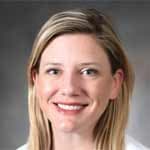
Dr. Ashley Clark is an Associate Professor and Division Chief of Oral Pathology at the University of Kentucky College of Dentistry. She earned a DDS from Indiana University and a certificate in Oral and Maxillofacial Pathology from The University of Florida. Dr. Clark has previously worked at West Virginia University (WVU) and University of Texas at Houston School of Dentistry (UTSD). At WVU, she was the oral pathology laboratory director and was nominated for the Early Career Innovator Award. At UTSD, she earned the John H. Freeman Award for Faculty Teaching and the Dean's Excellence Award in the Scholarship of Teaching; she also earned a Fellowship in Health Education during her time at UTSD. Dr. Clark has published over 40 papers and abstracts, authored the oral pathology sections of both Dental Decks and Dental Hygiene Decks (2014 editions), and is on the Professional Board for Digital Dental Notes. She is a Fellow in the American College of Dentists, serves on the Commission on Dental Accreditation review board for oral and maxillofacial pathology programs, and is on the Advisory Board for Oral Cancer Cause. Her biopsy service offers free biopsy kits; please contact opath@lsv.uky.edu or call 859-323-6333.
Dental podcast: Welcome to DentalTalk. I'm Dr. Phil Klein. Identifying potentially malignant lesions before transformation into squamous cell carcinoma should be the goal of all oral health care professionals. Today we'll be discussing various lesions in the mouth that could be potentially malignant and also learn about some updates on oral cancer. Our guest is Dr. Ashley Clark, an Associate Professor and Division Chief of Oral Pathology at the University of Kentucky College of Dentistry. She has published over 40 papers and abstracts, authored the oral pathology section of both Dental Decks, and is on the professional board for Digital Dental Notes and Oral Cancer Cause. Her biopsy service offers free biopsy kits to dentists across the country; so if you are interested please contact Dr. Clark at Ashley.Clark.DDS@uky.edu.
Transcript
Read Full Transcript
This transcript was automatically generated and may contain errors or inaccuracies. It is provided for reference and accessibility purposes and may not represent the exact words spoken.
You're listening to The Dr. Phil Klein Dental Podcast from Viva Learning.com.
Welcome to the show. I'm Dr. Phil Klein. Identifying potentially malignant lesions before
transformation into squamous cell carcinoma should be the goal of all oral healthcare
professionals. Today, we'll be discussing various lesions in the mouth that could potentially
become malignant and also learn about some updates on oral cancer. Our guest is Dr. Ashley Clark,
an associate professor and division chief of oral pathology at the University of Kentucky College
of Dentistry. She has published over 40 papers and abstracts, authored the oral pathology section
of Dental Dex, and is on the professional board for digital dental notes and oral cancer cause.
Her biopsy service offers free biopsy kits to dentists across the country. So if you're interested
in learning more about that, you can contact Dr. Clark at ashley.clark. ashley.dds at uky.edu.
Ashley is spelled A-S-H-L-E-Y. Clark is C-L-A-R-K. So that's ashley.clark.dds at uky
.edu. That's a great service, Dr. Clark, and welcome to DownTalk. Thank you. Thanks for having me,
Dr. Klein. I'm excited to be here. Yeah, so that's amazing. So nobody offers free anything these
days that are worth something, but you offer free biopsy kits across the country. I think a lot of
oral pathology labs, at least the few that I know, a lot of us do offer free biopsy kits.
So our kit includes the formalin, any paperwork, and the shipping.
So we pay for shipping both ways, two-day shipping. Let's begin with a simple question. What
should the oral healthcare provider know about potentially malignant diseases? So what the oral
healthcare provider should know is that... they can present in a variety of ways i like to focus on
leukoplakia because about 85 percent of oral dysplasia presents as leukoplakia or i guess i should
say a potentially malignant disorders present as leukoplakia and occasionally i see that clinicians
will see leukoplakia and it doesn't look so bad you know it's thin and it's well demarcated maybe
it's not in a high risk area it's on the gingiva So they watch it. And what I would like to get
dentists in the rhythm of doing is biopsying it at that stage so we can diagnose it.
Just make sure it's not dysplastic. Make sure it truly is just hyperkeratosis. We've done other
podcasts on this. And I've asked other key opinion leaders and speakers about what a general
dentist feels comfortable with. Do they feel comfortable doing that? And do they feel like if they
do a biopsy and they don't do a good job and they send it out and it comes back negative and then
patient, God forbid, does move to the next stage of malignancy that they're responsible? What's
your feeling on that? So I think you're correct in that most general dentists don't feel
comfortable doing scalpel biopsies. I have quite a few general dentists in our practice that will
do laser biopsies on benign mesenchymal tumors such as fibromas.
And the tissue does get burnt, but when it's a fibroma, that doesn't matter. With areas of
leukoplakia, we don't want to use a laser. So we do get fewer biopsies from general dentists.
But I will say... If I can do it, I would almost guarantee that any person doing general dentistry
can do a biopsy. It's just a matter of getting the right tools and the comfort level of doing it.
In my hands, I actually do punch biopsies myself. I actually don't do the scalpel biopsies.
They're really a lot easier for me to make sure I'm getting into the connective tissue,
especially on attached gingiva, because if it starts bleeding, then I know I've got the tissue I
need. And also as far as when I'm preparing the specimens to look at them under the microscope,
the punch biopsies tend to lay flat so I can get a nice clean cut and there's no problem with
tangential sectioning. So I actually prefer punch biopsies to scalpel biopsies. So what would you
suggest to a GP who doesn't do biopsies at all, or maybe did a few of them in the past?
What's the best way to get a good handle on doing a biopsy and then feeling comfortable, for
instance, getting your kit and and doing the biopsy and sending it back so i think i was in a in a
lucky situation i did no biopsies in dental school either but when i went to university of texas i
started doing biopsies on my own patients now it was easier for me because i was in a dental school
and if i you know got caught where i couldn't stop bleeding or something i had an oral surgeon down
the hallway so i think if i were in general dentistry i would speak to the oral surgeon to whom i
normally refer those biopsies and ask if i can just come shadow for a day do it if they have a
biopsy scheduled i find that most oral surgeons are really helpful when it comes to that a
continuing education course would be You know, maybe helpful if you could find one in your area,
but I really think getting that mentoring from a local oral surgeon would be what I would do if I
was a general dentist wanting to learn how to perform my own biopsies. Now, I don't do anything
crazy. I don't do soft palate biopsies because of the bleeding risk. I don't do floor of mouth
biopsies just because of all the anatomy there, but I feel really comfortable doing buccal mucosa,
tongue. labial mucosa, and gingival biopsies. Where you feel comfortable working is areas where you
don't anticipate a lot of bleeding, which is a big, you know, not a big risk, but it is something
to certainly consider when you're doing a biopsy. So as oral healthcare providers,
what should we be aware of when it comes to managing areas of leukoplakia, which you mentioned is
something that you want to spend particular attention to in this podcast? Yeah. So great question
um what i would encourage dentists to do and what the literature says is best practices is if
someone has an area of leukoplakia every single area of leukoplakia should be biopsied to establish
a diagnosis because we can't tell by looking at it what the diagnosis is it could be totally benign
hyperkeratosis But it might be an HPV-driven squamous cell carcinoma or intraepithelial neoplasia.
We don't know. So number one would be to get your diagnosis. But the literature says long-term
follow-up for 20 years. And the literature says to take every six months.
So I would recommend every six months for 20 years when they come in for their hygiene checks to
take a picture. I know sometimes it's hard to get all the equipment out and do stuff like that. But
I think that's probably the best way to manage these areas of leukoplakia. Another thing is if you
are doing your own biopsy, you do need to know how to manage what comes back as the diagnosis.
So hyperkeratosis, we can just watch that. And if it changes in any way in the future,
then we re-biopsy because even hyperkeratosis needs to be followed. If it's mild dysplasia or
worse, I recommend to get rid of that tissue. And I don't do that myself. I send that to a surgeon.
So you have to be prepared. If you do the biopsy, it comes back as moderate dysplasia that you know
then that all that tissue needs to come out. The technique in which they do the biopsy, do they
have to get the perimeter of the lesion all around and also get healthy tissue in that biopsy?
For the initial biopsy, we recommend doing an incisional biopsy, meaning just taking a tiny piece
of the tissue. And when I do... incisional biopsies on leukoplakia i don't get the border or
periphery with normal tissue i actually go to where the worst looking area is and depending on the
lesion that can mean different things it's usually the area that's most red Now,
ulcers are a little bit different. If the leukoplakia is ulcerated, then you do want to get a rim
of normal tissue on that initial biopsy. But if there's no ulceration and it's just a white or red
lesion, you don't need normal. Just get the worst looking part. And then for the excision, I do
recommend that a surgeon does that, someone who's used to doing those things, because what the
surgeon will typically do is he or she will take a rim all the way around of normal, tag one side,
and then I'll look it up in the microscope to make sure they got it all. And those patients still
need follow-up after that tissue is gone because while surgical excision of potentially malignant
disorders decreases risk for malignant transformation, it does not eliminate the risk because so
many of them come back. So you still have to follow-up. So on the follow-up, do you recommend
doing intraoral imaging using the intraoral cameras and taking the photo,
putting it into the digital chart so they have a record of what it looks like and then even
measuring it? always so i always take pictures at my re-evaluations every six months they get a
but i get you know a big fancy extra oral camera out if you've got a wand that'll work in a pinch
they don't usually get all of the anatomy surrounding it so it can be a little bit harder to tell
if it's growing or changing honestly if you have a smartphone you can turn the flash on your
smartphone on and the overhead light off You can snap a picture with your smartphone.
Just make sure that you get it out of your phone and put it in the chart and make sure it's HIPAA
compliant and all that. But those do take pretty nice pictures. And how often do you do that when
you're talking about 20 years? That's a long time. It's a long time. I mean, that's a long time.
Yeah. So you're going to be doing that twice a year on the patient? Twice a year. So ideally,
whenever they're coming in for their hygiene checks. If it's true leukoplakia, so when I say true
leukoplakia, I don't mean frictional keratosis. If they're biting on the area and some sort of
trauma is causing the hyperkeratosis, that doesn't need to be followed. But if it's a lateral
tongue, white lesion with sharply demarcated borders, and we don't know why it's there, and it's
just hyperkeratosis, that one does need to be followed, even though there's no dysplasia in it
because it's still considered a potentially malignant disorder. Okay. And are you focusing on
leukoplakia in this podcast because of its prevalence? Yes. Okay. Tell us about that.
What is the prevalence? So probably about one in 200 people will have it.
The most common age group is men over the age of 40. And the prevalence increases with age to the
point where about 10% of men ages 70 or older will have leukoplakia.
Wow. So it's also the most common way in which oral potentially malignant diseases present.
So my sort of career goals and aspirations are to get these cancers before they start.
And the oral cavity cancers, with the exception of HPV driven cancers, they tell you before they
turn to cancer. So they present with a white lesion. gradually gets thicker and then turns red and
then it's cancer. So if we can catch it in those early stages and cut it out, we can decrease that
risk of the patient getting cancer. Would you do really well in pathology in dental school? And
that's what drove you into your interest into, I mean, that's amazing. You're division chief of
oral pathology at University of Kentucky School of Dentistry. That's pretty impressive. Is that
something that came from pathology in dental school?
um thank god for pathology for me because uh my classmates will tell you i was not the greatest
with my hand skills and i looked around after my first year and i thought oh no i'm gonna have to
go to med school and so my uh second year rolls around and we're in pathology and i was like You
know, sort of like the light, the room opened and the light shone down. And I marched up to the
professor. His name was Nadim Islam. And I said, I want to do what you do.
And he said, come to me after you've done a year of clinics. You know, you're in the worst part of
dental school right now is studying and labs and you're. you know, stressed all the time. So the
very last day of third year, I knocked on his door and I said, I want to do what you do. And he's
been, he helped me apply for residency. And I actually went, did residency right out of dental
school, which is a little unusual. So most people go practice or,
you know, do a GPR or something. So yeah, I've known since the day I took the class that this,
this is what I want to do. I love it. And thank goodness. That's great. No, you seem so passionate
about it. And just imagine how many lives will be saved if they go along with the regimen of doing
biopsies more often when they see leukoplakia. Give us some updates on oral cancer. Where are we
now? So the oral cancer rates have steadily declined with a decline in smoking.
So as fewer people smoke, fewer people get oral cancer. The exception is HPV-driven cancer.
So while we are seeing a sort of a decline in cancer, tobacco-driven cancer,
alcohol-driven cancer in the oral cavity proper, we are seeing an explosion of HPV-driven cancer
in the back parts of the throat, in the oral pharynx, tonsils, etc. So there will be more men that
get HPV-driven oral pharyngeal cancer. This year, then women will get HPV driven cervical cancer.
So that's how prevalent it's become. The most common age group is white men ages 40 to 59.
So it's affecting younger people and it develops independently of tobacco and alcohol.
So you may have never smoked or you don't drink. But if you have any sort of high risk HPV that
sticks around and turns into cancer. That can cause a throat cancer. And how is that discernible by
general exam by a dentist? That's the scary part is it's really not. So these primary tumors are so
small that you often can't see them. And they're so far in the back of the throat that you can't
see them. You know, sometimes scanning won't even pick them up because they're so small.
But what we can do is make sure we do extra oral tactile examinations.
We feel the lymph nodes. because 80% of these cancers are caught after they've metastasized to the
cervical lymph nodes. So we can make sure we check those cervical lymph nodes. The good news with
these cancers is they're a lot more curable than the HPV negative cancers.
So they have about an 80% five-year survival rate, even though they're caught after they've
metastasized. And also, as you get older, we rely less on our lymphatics and more in our blood to
remove foreign bodies.
carcinogens, which is bad because that obviously drives metastasis to a greater level than if it
stayed in your lymphatics. What are some of the ways in which we can prevent oral cancer as
dentists, as dental professionals? So what I would recommend is every patient,
every time. So that's my mantra, every patient, every time. one minute or less to do a cancer
screening, you just look. So you take the overhead light and you look everywhere. I use the same
pattern. You make sure you check the cervical lymph nodes and just document that.
So I know a lot of people also like to use oral diagnostic aids. So one such example,
let's say, would be the Gawkels that have just, it's a new product on the market. So what you do is
you put these on, you use a curing light and After you've looked, after you've screened with just
the light, then you can use this diagnostic aid to look again. to make sure you didn't miss
anything. And a lot of people use those diagnostic aids in that way. And I think that's fine.
And the science behind that device goggles, is that auto fluorescence? It's a fluorescent device.
So anything that is abnormal or dysplastic should lose fluorescence or appear black.
Now you have to sort of be aware of what you're doing when you're using these things, because
anything with inflammation can lose fluorescence. But when you're looking at dysplasias,
these have an incredibly high sensitivity rate, over 90%. This fluorescence technology has an over
90% sensitivity rate at catching these dysplasias and oral cancers.
So I recommend looking with your eyes first. And then if you want to check to make sure you didn't
miss anything, that's a great way. Plus, that means you're looking twice. Right. No, that's a good
point. Yeah, I know gackles. I've done some reading about gackles. And what I thought was
interesting about it is that... any curing light in the office works with it so you don't need a
whole apparatus it has a very small footprint you can move it from operatory to operatory and then
you're just putting it on and look as you said it's a second attempt to find something that's not
normal and it gives you that extra screening capability by showing up a little bit darker but you
know it's not 100 none of these are 100 like you said inflammatory tissue will give you a false
positive their specificity rating is around 70 and this is not just goggles this is any any
autofluorescent device so you have to be careful you can't which is why i said look first then
screen um so i wouldn't use it as okay i see this leukoplakia on the gingiva and because you got to
biopsy it. You don't have any decision to make. Leukoplakia equals biopsy. So when these tools
originally came out, they were meant to assist you in, should I biopsy this or not? And I don't
recommend using them in that way. If you're going to use them, I would use them as a screening
device, which is how I think most people use these devices anyway. Right. So tell us about the kit
that you offer. What's in the biopsy kit? and how does it work so we have a history sheet that we
put in the kit we have a bottle of formalin we have all the information you could possibly need we
work with a variety of insurances to keep the cost low to your patient because you don't want a
patient calling you afterwards saying what's this bill for so we work with a variety of medical
insurances so you want to make sure you send the medical information And then again, we do free two
-day shipping. So our turnover is about 24 hours. So the cases that we received in the mail
yesterday, the reports are out today. Not all of them,
but for almost all the cases. I've got a metastatic lesion that I'm trying to suss out with
immunohistochemistry. And that one takes a couple of days. But most of them are done in 24 hours
because we don't want to keep patients waiting. The doctor can get more information about this. by
emailing you directly or is there a website they can go to? So you can email me directly would be
the easiest way because I can set you up with our administrative assistant, Sarah. She's fantastic
and she knows all the answers to the questions that I don't even know. So that's probably the best
way to do it. Or you can look us up on the internet. We have a pretty good web presence.
on how you can sign up to be a contributor on the internet if you want to. And I work at University
of Kentucky. That's pretty much all you have to look up. You're fully equipped to really provide a
very thorough diagnosis as far as those specimens that are coming in the door. So that's, again,
feel free to email Ashley Clark or the dentist who we're talking to here. Her email is Ashley,
A-S-H-L-E-Y dot Clark, C-L-A-R-K dot D-D-S at U-K-Y.
So if they email you, they can get a kit, and then they just need the confidence that they're
identifying leukoplakia, right? Because they have to know what that looks like. Once that's
identified, that's a biopsy situation, right? They have to biopsy that or refer it out.
Yeah, exactly. So for me, leukoplakia is not a diagnosis, so I want to get it diagnosed. So that's
why we must biopsy it because we actually don't know the diagnosis until we do or refer to a
periodontist or surgeon who does biopsies. But by the way, you can email me pictures if you want
to. I'm happy to do curbside consults if anybody, you know, hey, I've got this.
I don't know if it's worth biopsying. I'm happy to field those questions as well. Oh,
that's amazing. Yeah. This is like old time medicine where the doctor comes to your house with his
little black bag and takes your temperature and you're living the life over there in Kentucky.
I'm happy to do it. Yeah. No, that's great. This has been very helpful. Is there anything else that
you want to share with us? So I would say the thing that I'm on to right now that I try to hammer
is gingival carcinomas are really tricky. They often masquerade as other things like infection or
periodontal disease. So I would suggest that anything that's not behaving the way it should with
appropriate therapy, let's get a biopsy of it and make sure it's not carcinoma.
Let's make sure it's not some sort of weird infection. So those gingival carcinomas are really,
really tricky. And they tend to occur in women who don't smoke. They're not HPV driven.
So just have a high degree of suspicion if you have a funny looking lesion on the gingiva that's
not responding to appropriate therapy. Thank you, Dr. Clark, for your time today. And before we
conclude this podcast. I would like to thank our sponsor, Perel Pharma. Check out their product
called Gockels. That's G-O-C-C-L-E-S. It's essentially a pair of glasses that when used with
any curing light helps you see abnormal tissue in the mouth. And as Dr. Clark mentioned,
it's an excellent adjunct to your oral cancer exam. Thanks again, Dr. Clark, for your great insight
on oral cancer. We learned a lot and we look forward to having you back again soon. Thanks for
having me.