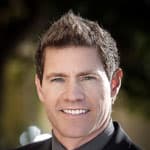
Dr. Todd C. Snyder received his doctorate in dental surgery at the University of California at Los Angeles School of Dentistry. Dr. Snyder has learned from and worked under some of the most sought after leaders in dentistry, refining his skills in comprehensive, extremely high quality aesthetic dentistry and full mouth rehabilitation. Furthermore he has trained at the prestigious F.A.C.E. institute for complex gnathological (functional) and temporomandibular joint disorders (TMD).
Dr. Snyder lectures both nationally and internationally on numerous aspects of dental materials, techniques, and equipment. Dr. Snyder has been on the faculty at U.C.L.A. in the Center for Esthetic Dentistry where he co-developed and co-directed the first and only comprehensive 2-year postgraduate program in aesthetic and contemporary restorative dentistry. He currently is on the faculty at Esthetic Professionals. Additionally, Dr. Snyder is a consultant for numerous dental manufacturing companies and has had the opportunity to research and recommend changes for many of the materials now being used in dentistry. Dr. Snyder has authored numerous articles in dental publications and published a book on contemporary restorative and cosmetic dentistry.
Dr. Snyder also founded and is CEO of Miles To Smiles a non-profit mobile children's charity that helps indigent and underprivileged children.
Dental podcast: Welcome to DentalTalk. I'm Dr. Phil Klein. Today we'll be discussing how business systems in the dental practice can help us drive success and free us from the constraints of dental insurance. Our guest is Dr. Todd Snyder, a popular speaker on Viva Learning.com, a cosmetic dentist, author, international lecturer, researcher and instructor at various teaching facilities. Dr. Snyder is a consultant for numerous dental manufacturing companies and has had the opportunity to research and recommend changes for many of the materials now being used in dentistry. You can reach Dr. Snyder at: www.legion.dentist.
Transcript
Read Full Transcript
This transcript was automatically generated and may contain errors or inaccuracies. It is provided for reference and accessibility purposes and may not represent the exact words spoken.
Welcome to The Dr. Phil Klein Dental Podcast. I'm Dr. Phil Klein. Today we'll be discussing how business systems in the dental practice can help us drive success and free us from the constraints of dental insurance. Our guest is Dr. Todd Snyder, a popular speaker on VivaLearning.com, a cosmetic dentist,
author, international lecturer, researcher, and instructor at various teaching facilities.
Dr. Snyder is a consultant for numerous dental manufacturing companies and has had the opportunity
to research and recommend changes for many of the materials now being used in dentistry. You can
reach Dr. Snyder at www.legion.dentist. Before we get started,
I'd like to thank our sponsor, Saikan. a world-renowned company that provides a complete range of
infection control solutions for dental practices. So if you're looking for equipment or products in
the area of infection control, look no further than Sycan, known as the maker of the Statum
cassette autoclave, the fastest cassette autoclave out there for sure. Sycan offers cutting-edge
solutions for efficiently washing, disinfecting, and sterilizing dental instruments.
A really phenomenal company. Great products. You'll see it at the dental shows or showrooms and so
forth. Super cutting-edge stuff. They make any SteriCenter stand out. So we thank SICAN for their
support for this podcast series with Dr. Snyder. So let's begin, Dr.
Snyder, with a simple question. What is a business system in the world of a dentist? You know,
I define systems when I'm talking to my colleagues as... things we put in place that we have to
manage or oversee to make the business work. So in other words, your systems are your advertising
systems, your employees, how they work. That's a system, how they manage everything.
You have your communication with patients, both you and your employees. That's a system. You have
the way that you collect money or bill an insurance company. That's another system. And so you have
these different business systems that I find that a lot of times dentists don't spend enough time
on. They spend more time quite regularly on learning another procedure or buying another piece of
dental technology. It's typically on, let me learn how to deliver more of a product or a different
product or a better product or more options throughout the office. And yet what we find oftentimes
is that's not really changing the bottom line and making someone more successful. If anything, it's
detracting from being more successful, I would say quite often, because you're trying to do too
many things instead of just a couple things really well. That's part of the reason we have
specialists. We send out to the specialists so they can do the best job possible for certain
procedures. But I know nowadays, the insurance companies, reimbursements being what they are, a lot
of times dentists want to try and keep things in-house to be more profitable. So to be more
profitable, I think you could be profitable and yet do less. if you have better systems aligned for
everyone in the practice. So assuming everything's going fairly well for a practice, is it
important for a doctor to regularly look introspectively at their internal systems to figure out,
are they humming along? Do they need to tune up? Or do we need to revise things?
Or is that something you do just when you're realizing that you're running into some problems with
your practice and things aren't going as well? So usually at some point we get comfortable in our
life. Okay. We're not pushing as hard. We're not falling down and having to step back up again. We
don't want to fail. And so to change a lot of systems and things in the office oftentimes is
challenging for many of us in life. And so I would say, okay, first thing is recognize what you're
making currently. And if you're comfortable with that, then that's fine. You know, you can live in
that world. Me personally, I'm always trying to push for more. I want to do a 10, 20%, you know,
increase in my production every year, which is a huge, you know, like. hurdle to try and get over
but if you don't put lofty goals in front of yourself you can't achieve them so if you're staying
kind of consistent and just comfortable while the world potentially with inflation and everything
else increasing if you're just staying comfortable you're not really growing and so if you're not
growing you're potentially going backwards and if you're not looking at the numbers closely you may
not realize you're going backwards and so i would say number one thing to look at is okay what is
my production by procedure, procedure types. And how is my income changing over the years?
They showed a 20 year retrospective and research that Dennis incomes remained flat.
And I was like, wow, over 20 years, if your income was flat, what does that say about you?
You went backwards over 20 years. That's not good. But if you're not evaluating these things on a
regular basis, you wouldn't know. So I would say you need to be evaluating this monthly, quarterly,
you know, as well as every year. Not to say New Year's goals, but looking at the big picture of
what am I going to change this year that's significant that I can then benchmark where I want to be
in 12 months and how am I going to achieve that every quarter and every month coming backwards and
getting the team involved by building systems. They understand what the goal is and how we're
getting there and all the steps that are necessary to get to that achievement. And when you do this
and you can put analytics to it and track tracking employees and accountability. You instantly
start to see where people are not pulling their weight or where people are pulling their weight and
how you can find advantages to get forward faster or where you're missing things and actually going
slower. Lots of business that we don't talk about in dentistry. Yeah, that makes total sense. Now,
when you're reviewing internally your own system, it's kind of like a writer reviewing their own
book or article. It's nice to have an editor. Do you recommend bringing a third party in to take a
look at this objectively?
That's a yes and no answer. It depends on who it is and what their belief and philosophies are.
Because I think like certain analysts have a different perspective than I do. And so I would say,
well, if you're bringing in typical analysts, you might not be getting what I would tell you to be
doing. So it's a hard question to answer for me because I'm always pushing for really big goals
that most people are going to say like, oh my gosh, how will you ever do that? That's not possible.
And what happens is you play at a different level. You rise to the occasion. If you're truly
committed to wanting whatever it is, that's that big goal. And so I try to challenge myself
quarterly. What's the next big thing I'm going to try and pull off in 90 days? Now, how am I going
to backtrack that over 90 days to figure out what do I have to do every day like a domino effect to
get to that place in 90 days? Most people don't want to push themselves out of their comfort zone.
But what's amazing is you can do it and your brain literally expands that what used to seem as,
oh, my gosh, no way. Now it's like, oh, that's no problem. I already did something hard like that
before. I can do that and way more. So that's the kind of mindset I want to create. Yeah. When you
do your training programs on legion.dentist, you have these personal interactions with the
dentists, right? Virtually. Do they talk about their business systems with you and then you help
them decide whether or not they need a tune up or a complete overhaul or how does that work?
So we dive in deep to everybody that comes in. And it's however much one is willing to share and be
honest or truthful about, because let's face it, we can all lie about numbers and everything. We
can say everything's great in our world. We can say it's social media. Everything's perfect. Or we
can be honest and say, you know what? I hate this one thing in my life. I want it gone. I'm unhappy
with this employee. They've been there for 12 months and they're pissing me off. You know, whatever
it is, if you share that, that becomes gold because every problem is a gift. If you see the problem
and you recognize that you get help, that becomes an opportunity to change and make things better.
But if you don't recognize it or don't talk about it, don't share it, we can't help anyone change.
And so, yeah, everyone has a different path. Everyone has different problems. And so we address
each one of them. But I never tell anyone you have to do this. It's really a bunch of questions
that create their own answers and opportunities. Yeah. So it's a little bit more complex.
than just saying, okay, I want to raise my revenue by 10% every year. Let's just raise our fees
10%. It's a little bit more complex than that, obviously. Yeah, because you could just raise fees.
But if you didn't talk to the employees about how they're going to talk to the patients about why
the raise is there and what the overhead is and all the other things, then it's not going to work
as well. So again, you can say, yeah, let's do 10%. But now let's figure out every possible problem
or hurdle that's going to arise. And let's figure out the answer now before it happens. So when it
does, everyone's been trained to answer that question. the right way so you can be successful
versus just saying let's do 10 and see what happens and then you fail and you go oh it didn't work
well it didn't work because you didn't have a good plan you didn't have a proper goal with a plan
backwards to reverse engineer the win right it's that simple now in your practice though based on
me knowing you as a friend and so forth i don't think your patients really look at the price when
we're talking about fees i think they want to go to dr snyder And they want the services. They're
very happy with the practice. I'm sure there's some unhappy patients. There's always some. But
generally speaking, most of them are happy. You know, when they check out to pay the fee or where
they pay it before the service, however you do it, I'm not sure they're scrutinizing the price. Am
I wrong? No, you're correct. What's interesting is if you create the benefit and the patient has
the emotional desire, they want whatever it is. And half the time, more than half the time, they
never even ask what the price is. Right. And then obviously you have to provide a good service,
good value that they recognize after the fact, not that their question like, wait, I got this bill,
but it wasn't that good of an experience in the procedure. Final product wasn't that great. You
have to obviously deliver. But it's amazing how often if you're acting differently and talking
differently, how a patient will move forward. And here's an example. I was treatment planning
someone a couple of months back, had a new dental assistant and she was watching me talk to this
patient. all the different aspects that we train on inside of Legion. I won't go into all of it,
but basically was having a long communication with this patient. And I kept telling her, you know,
certain numbers as I was going along. And one of them was 50,000. By the time I got done with this
cosmetic consult, she was already, you know, in the mindset of saying, oh, I'm probably going to be
spending 40, $50,000. And so when I turned her at the end and said, yeah, so, you know, the whole
treatment is $50,000. And my employees look at me like, oh, and there's no way he's charging 50
for that. I wasn't charging 50. but I had led the patient up to that saying I was charging them 50.
And then I leaned over and said, no, it's only 18,000. She's like, oh my God, I'm in, this is
easy. How many people are gonna say 18,000 is easy, right? So it was all in the psychology and the
emotional buildup that she had that it became easy for her. And so again, based on how you talk to
someone determines the benefits and outcomes you will receive. Same with your employees talking to
them. so if the first thing you do is go up to every patient say well your insurance is only going
to cover this you just put a bunch of limitations in their mind and now they're going to start
picking your treatment plan apart like a menu at dinner deciding what they want and what they don't
want you created your own problem by the way you talk to them that's all part of case presentation
and case acceptance i was wondering if a business system in itself can help a dentist free
themselves from the constraints of insurance companies is that possible oh definitely We see it
time and time again inside of Legion, and there's plenty of dentists outside that have done it as
well that have said, okay, I've done insurance long enough. I'm frustrated with them reducing my
fees every year. I've got to put food on the table and pay bills, so I'm going to have to go out of
network. And so what happened was the fire underneath that dentist was burning so badly they had to
finally jump versus most dentists just sit there and burn and go, okay, well, I'll deal with it.
And so it's really once you're frustrated and committed getting out, that's when you go, oh. Why
didn't I do this a long time ago? Because you weren't, you know, like wanting to remove the comfort
and jump into fear of the unknown. And as soon as you learn that, it's like, wow, I wish I would
have met Snyder many years ago, or I wish I would have done this many years ago. I could have been
so much further forward in life and making more money and living more and having more freedom and
time to do what I like to do in this world. What about those dentists who are in an area where
they're maybe a little newer to the community? They're practicing amongst other well-known
dentists that are established, that have the lion's share of patients that have no economic
constraints. And most of these kinds of patients are going to those practices. They're well-known,
they're established, they have good reputations. Dentists in those circumstances feel maybe they
have to be on these plans in order to survive, at least for the short term, until they can get
critical mass to keep their lights on and run their practice. Well, I think we always create,
again, excuses and fears and limitations and stories as to why we can't do well. And so we say,
oh, well, there's other people in the city. There's too many people here already. There's too many
big names already here. There is no reason why you can't create a big name for yourself and create
a world that people want to come into your world and give you money for your services. It's all in
your marketing and how you perform. And so the sooner that someone recognizes that their
limitations is their own mind, all of us, Once you overcome these,
you know, these limitations of our mind, then it's amazing how literally just one little step
forward, you know, into an uncomfortable situation and you see a result and then you go,
okay, building on that, I got a little win. Let me do another step. And you go, wow, I got another
win. And now your mindset is no longer this scarcity, you know, fear mode. You're now looking at
like, oh, abundance. and growth and possibilities and so you're now have a different mindset
different psychology of wow i can do this and building on that momentum it's amazing how you can
keep going forward and no longer be limiting yourself to wrap up this podcast dr snyder what is
your biggest tip to dentists and their staff to become more successful whether or not they are
contracted with insurance companies or not i think the number one thing for any business is the
ability to communicate because let's face it The biggest problems we have in life occur from a lack
of communication, whether it's an argument with some other person, whether it's a disagreement over
a bill or a procedure. It's because there wasn't enough communication that somehow someone
misconstrued something. And so in our lives, we try to move so quickly nowadays that we lack the
amount of communication. And so people have to assume things. And that's where I feel like if you
spend just a little more time on everything, you'd be amazed at the benefits and lack of problems
that arise. because of having a better ability to communicate, but also communicate in a way that's
effective to get people to come up with the conclusion that you want them to have by basically
framing them as you're giving the communication. So they end up at exactly the place you want at
the time that you want. That is a critical key in communication that most people don't understand
or don't have the ability to utilize. Yeah, and that obviously does not only apply to dentistry.
every business vertical that ever existed what you just said that is so critical and communicating
with your customer and getting them to agree on something and getting them to be in a place where
you want them to be so you can operate successfully is is the goal of just about every business
that exists and that's through product branding and marketing and every other form of communication
including speaking to the patient like you explained here Great stuff again, Dr. Snyder. You never
fail to amaze me with the things that you come up with. I guess you've been doing this a while and
you've thought about it. It's not like you are new at the game. So those of you who are interested
in Dr. Snyder's new podcast program, it's called Delusional. You can listen to it on all the major
podcast platforms. And then, of course, he has an incredible training program where it's
personalized. And that's at legion.dentist. And in closing, I'd like to thank our sponsor,
Psycan, a world leader in infection control products and equipment. Thanks again, Dr.
Snyder. I'm looking forward to you doing more stuff with us in the coming year. Thank you, Phil. I look
forward to it as well.
to The Dr. Phil Klein Dental Podcast at Viva Learning. I'm Dr. Phil Klein. Today we'll be discussing how business systems in the dental
practice can help us drive success and free us from the constraints of dental insurance.
Our guest is Dr. Todd Snyder, a popular speaker on VivaLearning.com, a cosmetic dentist,
author, international lecturer, researcher, and instructor at various teaching facilities.
Dr. Snyder is a consultant for numerous dental manufacturing companies and has had the opportunity
to research and recommend changes for many of the materials now being used in dentistry. You can
reach Dr. Snyder at www.legion.dentist. Before we get started,
I'd like to thank our sponsor, Saikan. a world-renowned company that provides a complete range of
infection control solutions for dental practices. So if you're looking for equipment or products in
the area of infection control, look no further than Sycan, known as the maker of the Statum
cassette autoclave, the fastest cassette autoclave out there for sure. Sycan offers cutting-edge
solutions for efficiently washing, disinfecting, and sterilizing dental instruments.
A really phenomenal company. Great products. You'll see it at the dental shows or showrooms and so
forth. Super cutting-edge stuff. They make any SteriCenter stand out. So we thank SICAN for their
support for this podcast series with Dr. Snyder. So let's begin, Dr.
Snyder, with a simple question. What is a business system in the world of a dentist? You know,
I define systems when I'm talking to my colleagues as... things we put in place that we have to
manage or oversee to make the business work. So in other words, your systems are your advertising
systems, your employees, how they work. That's a system, how they manage everything.
You have your communication with patients, both you and your employees. That's a system. You have
the way that you collect money or bill an insurance company. That's another system. And so you have
these different business systems that I find that a lot of times dentists don't spend enough time
on. They spend more time quite regularly on learning another procedure or buying another piece of
dental technology. It's typically on, let me learn how to deliver more of a product or a different
product or a better product or more options throughout the office. And yet what we find oftentimes
is that's not really changing the bottom line and making someone more successful. If anything, it's
detracting from being more successful, I would say quite often, because you're trying to do too
many things instead of just a couple things really well. That's part of the reason we have
specialists. We send out to the specialists so they can do the best job possible for certain
procedures. But I know nowadays, the insurance companies, reimbursements being what they are, a lot
of times dentists want to try and keep things in-house to be more profitable. So to be more
profitable, I think you could be profitable and yet do less. if you have better systems aligned for
everyone in the practice. So assuming everything's going fairly well for a practice, is it
important for a doctor to regularly look introspectively at their internal systems to figure out,
are they humming along? Do they need to tune up? Or do we need to revise things?
Or is that something you do just when you're realizing that you're running into some problems with
your practice and things aren't going as well? So usually at some point we get comfortable in our
life. Okay. We're not pushing as hard. We're not falling down and having to step back up again. We
don't want to fail. And so to change a lot of systems and things in the office oftentimes is
challenging for many of us in life. And so I would say, okay, first thing is recognize what you're
making currently. And if you're comfortable with that, then that's fine. You know, you can live in
that world. Me personally, I'm always trying to push for more. I want to do a 10, 20%, you know,
increase in my production every year, which is a huge, you know, like. hurdle to try and get over
but if you don't put lofty goals in front of yourself you can't achieve them so if you're staying
kind of consistent and just comfortable while the world potentially with inflation and everything
else increasing if you're just staying comfortable you're not really growing and so if you're not
growing you're potentially going backwards and if you're not looking at the numbers closely you may
not realize you're going backwards and so i would say number one thing to look at is okay what is
my production by procedure, procedure types. And how is my income changing over the years?
They showed a 20 year retrospective and research that Dennis incomes remained flat.
And I was like, wow, over 20 years, if your income was flat, what does that say about you?
You went backwards over 20 years. That's not good. But if you're not evaluating these things on a
regular basis, you wouldn't know. So I would say you need to be evaluating this monthly, quarterly,
you know, as well as every year. Not to say New Year's goals, but looking at the big picture of
what am I going to change this year that's significant that I can then benchmark where I want to be
in 12 months and how am I going to achieve that every quarter and every month coming backwards and
getting the team involved by building systems. They understand what the goal is and how we're
getting there and all the steps that are necessary to get to that achievement. And when you do this
and you can put analytics to it and track tracking employees and accountability. You instantly
start to see where people are not pulling their weight or where people are pulling their weight and
how you can find advantages to get forward faster or where you're missing things and actually going
slower. Lots of business that we don't talk about in dentistry. Yeah, that makes total sense. Now,
when you're reviewing internally your own system, it's kind of like a writer reviewing their own
book or article. It's nice to have an editor. Do you recommend bringing a third party in to take a
look at this objectively?
That's a yes and no answer. It depends on who it is and what their belief and philosophies are.
Because I think like certain analysts have a different perspective than I do. And so I would say,
well, if you're bringing in typical analysts, you might not be getting what I would tell you to be
doing. So it's a hard question to answer for me because I'm always pushing for really big goals
that most people are going to say like, oh my gosh, how will you ever do that? That's not possible.
And what happens is you play at a different level. You rise to the occasion. If you're truly
committed to wanting whatever it is, that's that big goal. And so I try to challenge myself
quarterly. What's the next big thing I'm going to try and pull off in 90 days? Now, how am I going
to backtrack that over 90 days to figure out what do I have to do every day like a domino effect to
get to that place in 90 days? Most people don't want to push themselves out of their comfort zone.
But what's amazing is you can do it and your brain literally expands that what used to seem as,
oh, my gosh, no way. Now it's like, oh, that's no problem. I already did something hard like that
before. I can do that and way more. So that's the kind of mindset I want to create. Yeah. When you
do your training programs on legion.dentist, you have these personal interactions with the
dentists, right? Virtually. Do they talk about their business systems with you and then you help
them decide whether or not they need a tune up or a complete overhaul or how does that work?
So we dive in deep to everybody that comes in. And it's however much one is willing to share and be
honest or truthful about, because let's face it, we can all lie about numbers and everything. We
can say everything's great in our world. We can say it's social media. Everything's perfect. Or we
can be honest and say, you know what? I hate this one thing in my life. I want it gone. I'm unhappy
with this employee. They've been there for 12 months and they're pissing me off. You know, whatever
it is, if you share that, that becomes gold because every problem is a gift. If you see the problem
and you recognize that you get help, that becomes an opportunity to change and make things better.
But if you don't recognize it or don't talk about it, don't share it, we can't help anyone change.
And so, yeah, everyone has a different path. Everyone has different problems. And so we address
each one of them. But I never tell anyone you have to do this. It's really a bunch of questions
that create their own answers and opportunities. Yeah. So it's a little bit more complex.
than just saying, okay, I want to raise my revenue by 10% every year. Let's just raise our fees
10%. It's a little bit more complex than that, obviously. Yeah, because you could just raise fees.
But if you didn't talk to the employees about how they're going to talk to the patients about why
the raise is there and what the overhead is and all the other things, then it's not going to work
as well. So again, you can say, yeah, let's do 10%. But now let's figure out every possible problem
or hurdle that's going to arise. And let's figure out the answer now before it happens. So when it
does, everyone's been trained to answer that question. the right way so you can be successful
versus just saying let's do 10 and see what happens and then you fail and you go oh it didn't work
well it didn't work because you didn't have a good plan you didn't have a proper goal with a plan
backwards to reverse engineer the win right it's that simple now in your practice though based on
me knowing you as a friend and so forth i don't think your patients really look at the price when
we're talking about fees i think they want to go to dr snyder And they want the services. They're
very happy with the practice. I'm sure there's some unhappy patients. There's always some. But
generally speaking, most of them are happy. You know, when they check out to pay the fee or where
they pay it before the service, however you do it, I'm not sure they're scrutinizing the price. Am
I wrong? No, you're correct. What's interesting is if you create the benefit and the patient has
the emotional desire, they want whatever it is. And half the time, more than half the time, they
never even ask what the price is. Right. And then obviously you have to provide a good service,
good value that they recognize after the fact, not that their question like, wait, I got this bill,
but it wasn't that good of an experience in the procedure. Final product wasn't that great. You
have to obviously deliver. But it's amazing how often if you're acting differently and talking
differently, how a patient will move forward. And here's an example. I was treatment planning
someone a couple of months back, had a new dental assistant and she was watching me talk to this
patient. all the different aspects that we train on inside of Legion. I won't go into all of it,
but basically was having a long communication with this patient. And I kept telling her, you know,
certain numbers as I was going along. And one of them was 50,000. By the time I got done with this
cosmetic consult, she was already, you know, in the mindset of saying, oh, I'm probably going to be
spending 40, $50,000. And so when I turned her at the end and said, yeah, so, you know, the whole
treatment is $50,000. And my employees look at me like, oh, and there's no way he's charging 50
for that. I wasn't charging 50. but I had led the patient up to that saying I was charging them 50.
And then I leaned over and said, no, it's only 18,000. She's like, oh my God, I'm in, this is
easy. How many people are gonna say 18,000 is easy, right? So it was all in the psychology and the
emotional buildup that she had that it became easy for her. And so again, based on how you talk to
someone determines the benefits and outcomes you will receive. Same with your employees talking to
them. so if the first thing you do is go up to every patient say well your insurance is only going
to cover this you just put a bunch of limitations in their mind and now they're going to start
picking your treatment plan apart like a menu at dinner deciding what they want and what they don't
want you created your own problem by the way you talk to them that's all part of case presentation
and case acceptance i was wondering if a business system in itself can help a dentist free
themselves from the constraints of insurance companies is that possible oh definitely We see it
time and time again inside of Legion, and there's plenty of dentists outside that have done it as
well that have said, okay, I've done insurance long enough. I'm frustrated with them reducing my
fees every year. I've got to put food on the table and pay bills, so I'm going to have to go out of
network. And so what happened was the fire underneath that dentist was burning so badly they had to
finally jump versus most dentists just sit there and burn and go, okay, well, I'll deal with it.
And so it's really once you're frustrated and committed getting out, that's when you go, oh. Why
didn't I do this a long time ago? Because you weren't, you know, like wanting to remove the comfort
and jump into fear of the unknown. And as soon as you learn that, it's like, wow, I wish I would
have met Snyder many years ago, or I wish I would have done this many years ago. I could have been
so much further forward in life and making more money and living more and having more freedom and
time to do what I like to do in this world. What about those dentists who are in an area where
they're maybe a little newer to the community? They're practicing amongst other well-known
dentists that are established, that have the lion's share of patients that have no economic
constraints. And most of these kinds of patients are going to those practices. They're well-known,
they're established, they have good reputations. Dentists in those circumstances feel maybe they
have to be on these plans in order to survive, at least for the short term, until they can get
critical mass to keep their lights on and run their practice. Well, I think we always create,
again, excuses and fears and limitations and stories as to why we can't do well. And so we say,
oh, well, there's other people in the city. There's too many people here already. There's too many
big names already here. There is no reason why you can't create a big name for yourself and create
a world that people want to come into your world and give you money for your services. It's all in
your marketing and how you perform. And so the sooner that someone recognizes that their
limitations is their own mind, all of us, Once you overcome these,
you know, these limitations of our mind, then it's amazing how literally just one little step
forward, you know, into an uncomfortable situation and you see a result and then you go,
okay, building on that, I got a little win. Let me do another step. And you go, wow, I got another
win. And now your mindset is no longer this scarcity, you know, fear mode. You're now looking at
like, oh, abundance. and growth and possibilities and so you're now have a different mindset
different psychology of wow i can do this and building on that momentum it's amazing how you can
keep going forward and no longer be limiting yourself to wrap up this podcast dr snyder what is
your biggest tip to dentists and their staff to become more successful whether or not they are
contracted with insurance companies or not i think the number one thing for any business is the
ability to communicate because let's face it The biggest problems we have in life occur from a lack
of communication, whether it's an argument with some other person, whether it's a disagreement over
a bill or a procedure. It's because there wasn't enough communication that somehow someone
misconstrued something. And so in our lives, we try to move so quickly nowadays that we lack the
amount of communication. And so people have to assume things. And that's where I feel like if you
spend just a little more time on everything, you'd be amazed at the benefits and lack of problems
that arise. because of having a better ability to communicate, but also communicate in a way that's
effective to get people to come up with the conclusion that you want them to have by basically
framing them as you're giving the communication. So they end up at exactly the place you want at
the time that you want. That is a critical key in communication that most people don't understand
or don't have the ability to utilize. Yeah, and that obviously does not only apply to dentistry.
every business vertical that ever existed what you just said that is so critical and communicating
with your customer and getting them to agree on something and getting them to be in a place where
you want them to be so you can operate successfully is is the goal of just about every business
that exists and that's through product branding and marketing and every other form of communication
including speaking to the patient like you explained here Great stuff again, Dr. Snyder. You never
fail to amaze me with the things that you come up with. I guess you've been doing this a while and
you've thought about it. It's not like you are new at the game. So those of you who are interested
in Dr. Snyder's new podcast program, it's called Delusional. You can listen to it on all the major
podcast platforms. And then, of course, he has an incredible training program where it's
personalized. And that's at legion.dentist. And in closing, I'd like to thank our sponsor,
Psycan, a world leader in infection control products and equipment. Thanks again, Dr.
Snyder. I'm looking forward to you doing more stuff with us in the coming year. Thank you, Phil. I look
forward to it as well.