Board-Certified Prosthodontist · New York University College of Dentistry
New York University College of Dentistry · American College of Prosthodontists · American College of Dentists · Greater New York Academy of Dentistry · Northeastern Gnathological Society · New York Academy of Dentistry · Greater New York Academy of Prosthodontics
Read full bio
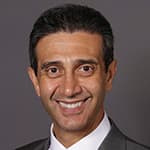
Dr. Graziano D. Giglio is a board-certified prosthodontist focusing on aesthetics and implant dentistry. He received his D.D.S. and postgraduate training in prosthodontics from New York University College of Dentistry.
He is a Fellow of the American College of Prosthodontists, the American College of Dentists, the Greater New York Academy of Dentistry, the Northeastern Gnathological Society, and the New York Academy of Dentistry. Dr. Giglio serves on several boards and committees of many dental groups, including a term as President of the
Greater New York Academy of Prosthodontics in 2013.
Dr. Giglio keeps current with the very latest in research and technology through his faculty position at New York University College of Dentistry where he is an Adjunct Clinical Associate Professor. He has found numerous opportunities to share his experience with the dental community as he publishes and lectures frequently on dental
implants, aesthetics, and digital technology. As a result, he has received multiple awards in dentistry throughout his career, including the Prosthodontist Private Practice Award from the American College of Prosthodontists in 2013. He shares an interdisciplinary practice in New York City with his wife, Dr. Ana Giglio, a periodontist.
How do successful fee-for-service practices thrive without insurance participation while building genuine patient relationships and maintaining profitability?
Dr. Graziano D. Giglio brings over 30 years of prosthodontic expertise to this comprehensive discussion on practice optimization. A board-certified prosthodontist and Fellow of the American College of Prosthodontists, American College of Dentists, Greater New York Academy of Dentistry, Northeastern Gnathological Society, and New York Academy of Dentistry, Dr. Giglio earned his D.D.S. and postgraduate training in prosthodontics from New York University College of Dentistry. He serves as Adjunct Clinical Associate Professor at NYU College of Dentistry and received the Prosthodontist Private Practice Award from the American College of Prosthodontists in 2013. He operates an interdisciplinary practice in New York City with his wife, Dr. Ana Giglio, a periodontist.
This episode breaks down Dr. Giglio's proven ACDC framework: Attract, Convert, Deliver, and Collect. The conversation explores how high-end practices can differentiate themselves in competitive markets, build systems that serve demanding clientele, and maintain profitability while delivering exceptional patient experiences. Dr. Giglio shares specific strategies for managing time-sensitive business professionals, converting consultations into committed patients, and implementing collection systems that support both practice sustainability and patient relationships.
Episode Highlights:
Time-sensitive patient management involves parallel processing with multiple assistants, allowing procedures like provisional fabrication and cord placement to occur simultaneously while maintaining continuous patient engagement. Business professionals are seated immediately upon arrival and checkout occurs chairside to eliminate waiting room delays.
Effective case acceptance requires comprehensive before-and-after documentation organized by procedure type in accessible digital files. Patients convert when shown specific examples of similar cases rather than generic internet images, with presentation occurring through staff-operated systems during consultation visits.
Pre-treatment financial commitments significantly reduce appointment cancellations and improve practice flow. New patients provide one-third down payment for major procedures, with full payment required before laboratory work begins, creating accountability while ensuring treatment completion.
Fee-for-service practices differentiate through user-friendly websites, immediate phone response by trained customer service staff, and comprehensive patient amenities including food service, internal restrooms, and home-like décor that contrasts with clinical sterility.
Collection systems succeed when integrated into practice culture from initial consultation through treatment completion. Staff understanding of practice financial needs translates to patient education about payment expectations, with established patients receiving more flexible arrangements than newcomers.
Perfect for: General dentists transitioning to fee-for-service models, prosthodontists and cosmetic dentists seeking to optimize patient experience, and practice owners looking to implement systematic approaches to practice growth and profitability.
Discover how systematic patient management and clear financial frameworks can transform your practice into a thriving, patient-centered operation.
Transcript
Read Full Transcript
This transcript was automatically generated and may contain errors or inaccuracies. It is provided for reference and accessibility purposes and may not represent the exact words spoken.
We can show them before and after. Here's someone who's missing the same tooth or had very dark
teeth. Bleaching, incisal veneers, we can make veneers on little incisal edges. Class 5 veneers,
all these procedures are documented and you show them. That makes them convert automatically and
they say, now this person can deliver and they will believe you, they'll trust you. Welcome to
Austin, Texas for the Phil Klein Dental Podcast. On today's episode, we're sitting down with Dr.
Graziano Giglio, a New York City prosthodontist with more than 30 years of clinical experience and
one of roughly 250 prosthodontists practicing in the New York metropolitan area. We'll be talking
about the four core pillars every successful dental practice needs to get right, attract,
convert, deliver, and collect. Dr. Giglio shares how he attracts the right patients without relying
on insurance, how he turns new inquiries into loyal relationships, how he delivers an exceptional
experience that keeps his patients coming back, and how he collects in a way that supports a
trusting doctor-patient relationship along with a thriving and profitable practice. So whether
you're getting started or looking to refine an already strong practice, This conversation will give
you practical, real-world guidance on building a more intentional, sustainable, and truly patient
-centered practice. Before we bring in our guest, I do want to say that if you're enjoying these
episodes and want to support the show, please follow us on Apple Podcasts or Spotify. You'll be the
first to know about our new releases, and our entire production team will really appreciate it.
Dr. Giglio, it's a pleasure to have you on the show. Pleasure to be here. When it comes to
attracting new patients, especially in a practice that doesn't participate with dental insurance
like yours, what strategies have you found most effective for drawing in the right kind of patients
for the practice? In your case, for example, patients who value and can afford the kind of services
you offer. So the dentist has to decide on what type of patients they want to attract.
And you have to figure out which ones you get along with, the most desirable patients for you.
I happen to do very well with business people. And then you start cloning them.
So the way you attract them is you make them very comfortable. I know that business people are on
time. They have someone else making their appointments for them. They want that eight o'clock
appointment. They want to be seen. um at a certain time in the day mostly in the morning right so i
tracked those patients my morning is mostly the business people in the afternoon and it's the
housewife the students and so on and so forth so i know the types of patients that i want so i
tried to target high value targets are important and so the business people some of the families
right the people who are younger and are trying to make it in new york city So they're looking for
aesthetics. Now, the business people are very meticulous about their time. They're probably looking
at their watch. The whole time. Right. The whole time. Right. So you have to build that customer
experience, that patient experience around their attentiveness to every minute of the day because
they've got big deals to do and so forth. So how do you manage that to make sure that they
understand that you're very aware and compassionate to their expectations regarding?
getting out of the office as soon as possible okay so so since they're time sensitive what you do
is instead of having them sit in the waiting room like most people ceos of companies don't want to
wait in waiting rooms so when a ceo comes in a business person comes in real estate person they
they value their time so we put them right in the chair have a room ready for them then here's the
other thing someone greets them brings them in and you have two assistants you have a main
assistant and then a floater in the room and then we also have a floater right outside the room so
say you need something that's not in that room the floater gets it something that is in the room
the second assistant gets it but there's always someone there with the patient we never leave them
alone so there's work being done the whole time and we also work in parallel so for example as i'm
finishing to prep the tooth i know that i'm at the end i'm putting just the rounding off some
corners the second assistant knows to mix the acrylic for the provisional So there's parallel
procedures going on at once. So while I am relining the provisional,
I'll go and see another patient and the patient is allowed to look at their phone during that time
because they're just sitting there biting down. So the other thing we do is while the provisional
is being trimmed, right? And it goes to the lab, I'm putting in cord. I'm just talking from a
restorative standpoint, how you can have two procedures going on at the same time. So while the lab
tech is trimming the temp or an assistant's trimming the temp, I'm putting in the cord. While
they're scanning, I'm leaving the room to go see a hygiene appointment. So you want to have two
things going on at once, but not interfering with one another. So after I put the cord in,
the assistant takes over and they scan the patient. So I am making exits three times in an
appointment, but something else is going on. They're not just sitting around waiting. They feel
that if they're waiting around or if they're looking at their phone, they're wasting time in your
office. Right. Now, let me ask you this. You do chairside milling. Do you think that that's a big
part of attracting those business kind of people because they get it same day, but they still have
to wait hours? The waiting time, it kills them. No, they don't want to do that. So the whole thing
that sold chairside milling, the marketing behind chairside milling was that it was one day
delivery, same day delivery. But that doesn't really make sense with businessmen.
They're not going to sit there and wait three hours for something. Absolutely not. So how do you
handle that? You make a good provisional and you send them off. The only thing that chairside
milling works for is the patient from out of town, not for the patient that is there and is busy.
So the other thing is, here's another trick or another pearl. While they're waiting and then biting
down on something, Right. For the provisionals being cemented on and they have to wait for two
minutes. We make their appointments in the room. That's another little pearl. So when they leave
and they don't they don't check out at the front desk. So they don't have to wait. They don't have
to wait behind another patient who's waiting to see your front desk. When they walk out of the
operatory, they're gone. So so in and out for them is very quick. They just leave. Right. And they
don't feel like they've really waited at all because they're not they're not in the waiting room
and they're not. outside at the front desk when they're checking out. That makes a lot of sense.
Let me ask you this. How can a fee-for-service practice like yours stand out? You covered this a
little bit, but how can you make your office stand out and build trust before a patient even walks
through the door? So we're not even talking about the patient that was escorted directly to the
operatory like you said. They haven't even got there yet. How do you make your office stand out in
that situation? They haven't even visited your office. And by the way, you're competing with
offices that advertise heavily around insurance networks. They promote special discounts on
services. So you have to deal with that kind of competition and you don't offer that. So user
-friendly website provide an awful lot of information, but it has to be clean and user-friendly.
I get on some websites and it's so difficult to navigate. You want to make it easy for the patient.
They want to know about toothbrushing. or why you should use certain products or whatever it should
be just a click a link so make it clean make it user friendly make it educational so if the patient
wants to make an appointment make it easy for them that interaction who answers the phone is key
you want someone with customer service experience answering that phone like what about off hours
off hours answering the phone do you use ai for that no we introduced it to the staff and we there
are some great ai portals that you can use they charge you per minute they're available our staff
says that they don't want that because our type of patients do not want to talk to a machine and i
i can tell you that i've even tested some of these out and they're excellent i did one with these
ai um vacation
making appointments for vacations, for example, arrangements for vacations. I said I wanted to go
to New York City. I was coming in from Denver, and I wanted to go see a show, and it made it
perfectly for me. They all made all the arrangements, and I said, why can't we do that? I showed
the front desk, and they said, no, not our patients. We'd rather get on the phone with them. Now,
you mentioned off hours, so if they need to speak to us, They could either leave a message or they
can contact the doctors directly. And we have a service. Oh, so they do speak to a person.
They can just click, you know, one and then it goes right to the emergency service and the
emergency service will contact us. Most of our patients, however, have our cell numbers, the doctor
cell numbers. We have 4,000 patients. Every one of them has our cell number if they need to. Yeah.
So as far as offices that advertise heavily around. being participants in insurance networks.
And they, like I mentioned, promote special discounts on services. You don't care about that. That
doesn't affect the way you attract patients, right? No, we attract patients by word of mouth and by
referrals from other dentists or physicians. And then we get some from the outside world,
from the internet. It's rare. Maybe we get two, three patients. a year from social media and some
internet-related pathways. And we have those patients pay for the consult up front because we want
them to show up. Right. So the patients that you want to attract obviously reflects the kind of
services that you want to offer. And promoting special discounts and having those patients come to
your office, they don't often align with what you want to provide them, right? Because you're doing
very sophisticated, high-end aesthetic dentistry and that's just a fact that's what you do that's
your job right and if they can't see that value and afford it then you don't you you don't want to
attract those patients because it doesn't go anywhere it's not good for the patient and it's not
good for the practice we want to demonstrate value so they say well i can get it done down the
block for less money that's fine you have to be able to say no to a patient that i am this is what
i charge this is what i'm going to deliver on because delivering is very important and then be able
to follow through on that. So if the patient says, I can get it done for less money,
then fine. Whenever a patient has challenged me with that, I've often said, that's okay.
And they actually accept treatment. And if they don't think it's okay, then it's better for the
practice and for them to find someone else. Yeah. So let's talk about Convert. Once a potential
patient contacts your office, they haven't seen it yet. What's the most important part of the
process that determines whether they actually schedule an appointment with you? It is the way that
they perceive your office through the front desk person answering the call.
They have to be inviting, engaging, care about the patient, show compassion,
and then they have to be customer-oriented. in terms of being able to convert that patient to make
an appointment. And you do a lot of training on this with those people. Absolutely. So are there
questions that they ask specifically? Like if a patient calls up and there's a simulated
conversation that you can do in training, then you would recommend to them, that's the time to ask
this question. Like, Mrs. Smith, are you in any pain? Is there anything we need to see right away?
I mean, are these the kind of things that you handle in your training? So the training involves
assessing the patient's needs. to see if it's an emergency they need to come in today is it one of
our teeth is it something that we did now if it's a new patient that's a whole different story so
is it something are you in pain is it which part of the mouth is the second do you want to be seen
today right these are questions that they need to ask do you have a radiograph do you have a
picture These are things that we try to get as much information so then when they relay it to the
doctor, it's easier to assess whether this patient needs to come in today or not. Do you ask them
if they are currently being seen by another dentist? Yes. You ask them,
you know, do you have a dentist? Because we may have to get their records or their radiographs.
So sometimes they say, I don't want my other dentist knowing that I'm coming to you because then we
have to sign releases and all that. But the easier it is for them to make an appointment,
the more accepting they are because they may not want anyone to know. So even if they have a spouse
or a family member, they may not want that other person to know that they've made an appointment
because it may be something aesthetic or something that they're embarrassed about. So
confidentiality is important as well. They have to trust the person at the front desk.
We'll be getting right back to our guest in a second. But first. Now, do you have your staff ask
them, number one, how did you hear about us? And number two, about the insurance. Like when I moved
to Austin, Texas, and I was looking for some dentists out here, it was amazing how quickly the
staff member said, do you have dental insurance? What kind of insurance? It was like the second
question. So how do you handle that part of it? It's towards the end of the conversation is,
we just like to fill you in on how we operate. We need you to fill out the medical history online.
If you can't fill out the medical history, we will help you when you come here on an iPad,
come 15 minutes early. And we want to let you know that we do not accept insurances,
but we will help you gather all the information and we will even submit it for you,
but we will not accept. And payment is expected at the time of service. So those three things,
the medical history, that we don't accept insurances, but we want to reassure you that we'll do
everything in our power to make it easy for you to submit, or we will submit it for you.
We'll be right back with our guest, but first, I want to tell you about VOCO's newest composite,
Grandioso for You. Top clinicians are calling it the most tooth-like universal composite ever
made. Unlike traditional composites that force you to choose between either an anterior aesthetic
composite, a stronger layering posterior composite, or a fast but aesthetic compromising bulk fill,
Grandioso 4U does it all, simplifying your workflow while delivering superior results in a single
material. It cures 4mm in just 10 seconds, looks stunning with 5 cluster shades covering all 16
Vita shades, and handles like a dream with 50% less resin. It's a 91% filled nano-hybrid,
giving you tooth-like strength, ultra-low shrinkage, exceptional wear resistance, and an amalgam
-like high radiopacity. So as they say, seeing is believing. So grab your free sample of Grandioso
for you today at voco.dental. And then once the patient comes in,
how can the entire team, not just the dentist, from the front desk to the clinical staff, the
entire team, How can they work together to improve case acceptance and turn those consultations,
those first visits, into committed patients? Okay. So first is they need to make eye contact with
the patient. So when the patient comes up to the front desk, someone has to make contact with that
patient directly. Like, good morning, Mrs. Jones. Make eye contact and say,
take a seat. We'll be right with you. We will let the doctor know that you're here. Then the person
who receives them to bring them into the treatment room has to be engaging as well and make them
feel comfortable. Would you like something to drink? Some water? Do you have to take any pills? You
know, whatever. Just make them comfortable. Would you like to use the restroom prior to being
seated? You don't know how many patients walk in, and the first thing they do is say, can I get the
keys to the restroom? So if they're internal, if they're in the treatment area,
the clinic area, they go to the inside bathrooms. If they're in the waiting room, they go to the
outside bathrooms. We have to account for that because... Most of these patients come in after
being on a commute to get to the office. They have to go to the restroom. Maybe they're tired and
they need a protein shake or something. We actually have food in the office for patients.
Really? Yeah, we have food in the office. We have a refrigerator right here in the conference room.
We provide them with all sorts of snacks, food, and whatever. And how often do patients take you up
on that? Because they know they're going to be opening their mouth and they're going to need to
brush their teeth. Right, they'll brush your teeth. But if a person's getting surgery, we usually
want them, because we give them non-steroidal anti-inflammatory drugs before, we want them to
have something in their stomach. So we give them a yogurt, a protein shake, something. Some
muffins, something in here. We do provide food for them before treatment if they need to take their
medication. And where do they brush their teeth when they finish? They brush their teeth right in
the room or in the bathroom. We give them a toothbrush and they can brush it. Or they can do it in
the operatory as well. They can do it in the room or in the bathroom. We have internal bathrooms
and not external bathrooms. So the key thing is on that conversion is that first interaction that
you're having with the patient. You have to build trust, but you also have to make them feel.
welcome, that you care about everything, every detail about what they need when they get to the
office. It's something that becomes exceptional compared to what they're used to. So if they've
been to other dentists in the past and they have never seen anything like this before, that's what
you want to exude from your staff to the patient so that they feel special. Right.
And most dental offices look very sterile. They don't have to look sterile. They have to look
clean, but it has to be more... of an inviting environment such as a home you do not want it to
make it look like they're going to get surgery stainless steel over the place and instruments all
over the place you want to hide the instruments behind the patient what's your decor in your
practice to make them feel like it's home it is just like their home like their living room it's
the waiting room is very homey it's it's it's a serene environment quiet soft colors nothing bold
The light is a little dim, not this stark, you know, clean environment to the point where it looks
sterile like an operating room. So we're redoing our office right now. So everyone comments on how
they want to make sure that it still looks like a home instead of a dental office. But you still
have to make sure that the patient feels like everything is aseptic. Aseptic.
But it can look aseptic. But you don't decorate the operatory that way. It's the entryway and the
way... The entry, the hallways have to look. The reception area. The sterilization area, the
patients walk by it all the time. It's got to be a clean environment. Yeah, and that's good for
them to see that, actually. We want them to see that. We have a little window that they could look
in and see our lab as well. Yeah, patients are so aware of that, especially since COVID.
So we talked about... attract. You want to attract the patients that you want to treat and that
align with the philosophy of the office and so forth. Converting, of course, without converting,
what good is attracting the patient? We've talked a little bit about that. Let's talk about
deliver. What does it really mean to, quote unquote, deliver an exceptional patient experience
beyond just providing the quality dentistry that we assume all of us are trying to do? So our goal
is to deliver on aesthetics. and function that's all we take care of dentists we're trying to get
people to function get them out of pain or if they want something aesthetic those are the only two
reasons why they would come to me they're not coming to me because i'm a nice guy they're coming to
us because we can deliver on those two things so i find a lot of people a lot of dentists a lot of
my mentees have excellent personalities better personalities than i have but the key is whether
they can deliver or not Their success will depend on whether they can deliver on what they promise.
What they promise the patient, if you show them in a computer what they're going to look like and
you don't deliver on that photograph, then they will not trust you. Get them out of pain and
function and or aesthetics. You have to be able to deliver on those two items.
Let's talk about the aesthetic zone, the social six, and they want to do veneers.
They have gone through, let's say, Invisalign, their teeth are aligned, and they're ready to make
them look even better. How do you get their case acceptance up? How do you get their approval to be
really high when it comes to spending that kind of money? What do you show them, and how do you
communicate with them so that they have that perceived value of what you're offering? Okay, so the
most important thing is patients want to be heard. So you have to ask questions,
open-ended questions. Do you like your smile? No. What don't you like about your smile?
It's the same thing when I give lectures. I always ask the audience some questions. You have to
make them feel part of the process because if they are not heard, they will not accept your
treatment or recommendations. So they want to be heard. Patients want to explain what they don't
like and then what the dentist has to address their chief complaint. So if they have a long tooth
or a short tooth or a dark tooth or something that they don't like, they have a gummy smile. Lady
came in with a gummy smile. I don't like my gummy smile. Okay, this is what we can do for you.
Now, you have to be able to show them examples of what you can deliver on.
So, oh, I have a patient named Jan. She had the same problem that you do.
Let me show you in my computer or turn around and let the assistant show you what you're going to
have done, what the treatment is, and what the outcome is. You have to be able to show them an
outcome. And what do you use? What tools do you use for that? We'll be getting right back to our
guest in a second. But first, we have all of our patients. We have pictures on every single
patient. Now we pick certain cases that I use for lecturing. And we put them in a file on the
desktop, in the computer, in the room, on the server. So any assistant hygienist can access those
files. We show them partial veneers, inlays and onlays, missing lateral,
implant and central. We have a portal for each one of those or a little file.
And we show them, we do it on Canva. It's just a design software that we can show them before and
after. and say, this is what we can accomplish. Here's someone who's missing the same tooth or had
very dark teeth, bleaching, incisal veneers. We can make veneers on little incisal edges.
Class five veneers. All these procedures are documented and you show them. That makes them convert
automatically. And they say, now this person can deliver and they will believe you. They'll trust
you. Before we jump back to our guest, I want to take a moment to thank our sponsor, EMS, the
company behind guided biofilm therapy, or GBT. If you haven't heard of it,
GBT was developed with... universities and clinicians, and it's quickly becoming the gold standard
for managing biofilm. What makes it so effective is the minimally invasive, evidence-based
approach. With airflow, perioflow, and piezon technologies, GBT gently removes biofilm,
stains, and calculus with impressive precision. Patients really notice the comfort and speed,
and hygienists love how efficient the workflow becomes. No surprise that thousands of practices
worldwide are already seeing great results. And EMS makes it easy to bring GBT into your practice
with clinical guidance, marketing support, and a clear plan for implementation. So check out the
GBT-ready practice setup at gbt-shop.us. Now,
what about the dentist that doesn't have the library of cases that you have because you've been
practicing for 30 years and they come in and they're practicing two years and they've never done a
case specific to this one patient who's sitting in the chair hypothetically and you don't have a
before and after. You need to accumulate. What I did when I first started out is I borrowed some of
the photographs from some of my mentors. Other people, when I saw, I went to a lecture and I...
there was someone there who gave a very good lecture on single tooth implant, centrals.
Say, can I borrow this and can I use it for my lectures? And I gave that person credit.
Now, it's a little difficult doing that when you're two years out and you haven't done a single
central. It's hard to deliver and the patient may sense it. So even if you do show them a picture
from the internet, because I can pick up pictures from the internet very quickly. I know when even
someone lecturing shows a picture from the internet, I can tell. It's usually grainy.
They did a screenshot. I can usually tell. And then it's not in the same style as their pictures.
I can pick it up in a heartbeat. Right, but most of these speakers are not claiming it's their
work. They're just giving an example, I guess, for teaching purposes. Right. For teaching prep, but
not clinical exams. And here's what a lot of people do sometimes. And I can pick this up right
away. They only showed a smile shot. They don't show the retracted view. So I know right away that
they're hiding something. Yeah, that's interesting. That's very interesting. So basically,
deliver means, you know, the real thing. So all the attract,
all the convert, that's all great. Now we got to come up with the great tasting pizza, right?
Because people are actually sitting in the restaurant tasting it and you brought them in there and
they'll never go back if that pizza ain't good. I mean, that's... Right. Absolutely. Yeah. So you
got to deliver on the real thing, on the real promise. And obviously, you know, you have the skill
set to do that and hopefully our listeners do as well. But you got to get them in the chair and you
got to get them to say yes before you can deliver. Now, when you do that, you still have to collect
the money, right? Oh, yes. So the part that everybody fails to understand,
fails to understand is that if you deliver 99.9% of them will want to pay because they're happy
with the service. If you go to like a pizza place and you like the pizza, you're going to pay for
it, right? You know, because you've experienced it before. And you also want, you got to pay for it
because you want to come back and you want to come back. So here's the thing. You can sell
something to someone once. the thing about collection is getting patients into certain habits we
have them pay for a crown the day of the impression visit or the scan visit if they pay for it
they're never going to cancel on you they're going to come back for it no canceled appointments and
they're going to be happy with it Because they've already paid for it. They just want you to
deliver on the other end. So you already collected, but now you have to deliver. It's almost like
backwards. They're going to pay for it. They're willing to give you the money. You're going to
collect. But now, when you deliver that crown, it's got to be acceptable. Right. Now, it's similar
to the Invisalign model or clear aligner model. The dentists that I talk to that do Invisalign and
those kind of treatments, they're fully paid three quarters way through the treatment. Does that
sound right to you? Yes. So that's fine with orthodontics. But for us,
we tend to get paid at the time that the lab work is ordered.
So now what it does is it cuts down on patient cancellations. This is what our front desk tells us.
So give us an example. Let's say I want to get the social six veneers and I'm sitting in your
office and I'm ready to go. What's the payment plan for me?
If there's a major wax up to do and preparation, lab work,
we will have them put down a retainer. Say you're going to pay a third. So a third, the first visit
that I schedule that procedure. If it's a new patient, new patient, they put down a third.
Now, it's a retainer fee. It's just like a lawyer or anyone else. You're doing business with me. I
have to do a wax up. I have to get my plan ready. So they put down a third.
Then when they come in for the impression and provisionals, they may put another third. And then
you could that's that's if you don't know the patient. Basically, once they make a financial
commitment, they're not going to cancel on that appointment. Here's what happens. Say you do the
wax up and you get everything ready and then they make an appointment. They cancel that two hour
appointment that you have. What we find is by having them make a commitment, that retainer fee,
that that third down, for example, surgery, implant surgery. When we get a new patient, they need
to put down a third or half prior to getting an appointment.
You know, they want to make an appointment. They have to put down a third for that surgical visit.
Why? Because we're setting up an operating room and there's disposables. There's things that we
open up, the implant kit. We're ordering the implants. We may not have those implants in stock. We
have to order two of them. So there's a fee involved. And then the likelihood of them canceling is
very slim. Now, if they cancel, what do you do then as far as the fee? I mean, it still costs you
quite a lot of money to tie up that kind of time and get that setup going. So how do you handle
that? We usually let them do it once if it's a good excuse. For example, they got sick.
They sound horrible on the phone. That's okay. We're understanding to that. We usually get those
cancellations last minute or the day before. And so we still retain the fee. We'll give them
another opportunity. What about a second time? The second time then we say, well, we will have to
charge you for that visit because we had to set up the room. We were waiting for you. We killed two
hours to do two implants. But that doesn't happen. That's very rare. Rare, rare. But there was a
patient who came in yesterday and paid for two cancellation visits, $2.50 each, for two hygiene
appointments because she is a chronic counselor. And so she was happy paying the $500.
A chronic counselor. She paid it about right, didn't care. Yeah. Those are the kind of patients you
love, the chronic cancelers. You love them. So some patients say, I know I had a two-hour
appointment, and I canceled last minute on you. Please charge me. I once charged a high-profile
person $2,700 for a visit. They had a quadrant scheduled with me, and it was a two-hour visit,
so I charged them a quarter of the visit. For canceling because he had an obligation,
an attorney who gets paid at $2,000 an hour. I charged him $2,700 cancellation fee.
And he paid it. He was glad to pay it. Yeah. You wish your whole practice was just built on that,
huh? Right, right. Not everybody does that. You wouldn't have to work. You just take the
cancellation fees. Okay, so I'm getting the six veneers or eight veneers. When do I need to pay in
full? On delivery after you put them in at that last visit or before that last visit? Before the
last visit. What do you say to the paper? You don't deal with the paper. Your staff does. You have
a special staff member that handles? Is that your office manager? We have the office manager who's
been with us 30 years. When she comes in to see me, and I'm looking to get those eight veneers,
does she come in with a piece of paper that has a schedule of payments and say, today you're going
to make a third payment, and then these are the other dates, or does she give me an option of how I
want to pay it? Do I want to pay the whole thing up front? Do I want to pay half? Or do you bill
monthly? Do you have a monthly plan? We do, and then they sign something. They sign a monthly plan.
We have people on credit card, automatic payment. Every month they're paying $800, $1,000 for that
treatment. And you have the permission to take it off their credit card? Yes. They sign something,
a legal doctor. So you do give the patient an option to do different things? Yes. You don't have a
set plan? It depends. We're different with the patients that we currently have in the practice as
opposed to a newcomer. Newcomer gets, it's more strict. Right. But you set up rules with the front
desk people. So what do you say to a dentist who says it's awkward to do prepayments on this stuff?
I want to build my practice. I live in a community, a rural community. We see each other at the
diner. This is a small community. It's not Manhattan. And I don't want to feel like I'm the first
thing I'm looking for. before I do any treatment is money. And I feel that it's a very awkward
conversation, and I don't feel that's the way to build a genuine relationship with the patient,
trust, credibility, and so forth. I'd rather do some work and have them owe me money and then hope
to get collection. What's your answer to that? It's getting people into habits and talking about it
up front. That's the key. The key is getting them to talk about it and establishing guidelines up
front. And let's not treat one patient one way and another patient. Let's just have the guidelines
set up from the beginning. So we have a treatment coordinator, a treatment manager here. She sets
that all up before it even gets to the office manager. The treatment coordinator, what she does is
comes into the room and I leave and says, we are doing eight veneers on you.
This is the cost. We expect payment. If it's a new patient, a third of it down.
And then the remainder has to be paid when we send it to the lab, right?
So that's paid at the visit when it's scanned or impressioned. And then that means that the
patient's not going to cancel the insertion visit. Now, you have the luxury, and you've earned this
with a very busy, growing practice. You're building out your practice. You'll have 13 operatories,
20 staff members, and three dentists total. So you have a huge operation over there. Many dentists
don't have that. So they don't even have someone that can actually talk to the patient separate
from them. Right. Regarding payment. So for them, they have to make that conversation with the
patient. But they should learn how to do that, right? I mean, that's something. They have to. They
have to. Yeah. Because. Go ahead. Tell us why. No, the staff is only an extension of me.
So I don't have a problem talking to them about finances. Most of the time,
I never have to go there. I had a patient who's been with us for a long time getting cleanings
here. She broke a tooth. I said, Mrs. Jones, it's going to cost you X amount of dollars for the
core buildup. I can't use this crown. You fractured the tooth inside. It's a core buildup with pins
and then a crown. She was like, oh my goodness, it's so much money. She never got any work done
other than cleanings. But I had to establish that. up front because patients don't like going to
the front desk and getting a $4,000 or $5,000 bill that you did all this work on. So it's setting
up ground rules and being consistent with everyone the same way. And the staff will pick up on that
as well. Because if you're wishy-washy, then they will pick up and they become wishy-washy too.
So they see that I'm very definitive, consistent with everyone. Mrs. Jones. I know you've been a
patient here a long time. We never did a crown on you. We would like to tell you before we start
treatment what it's going to cost. And so once you establish that, the patient agrees.
It's basically informed consent up front. The same thing happens before the laminates.
You tell them this is how much it's going to be, the X amount of dollars for the retainer or up
front when we send it to the lab to do a wax up or whatever it may be. then when you come in,
we expect the second or third payment, whatever it may be, you know, again, and then we do not send
anything to the lab unless it's paid for. Now, say you have a patient who's been with us 30 years,
and they say, can I pay you over a five-month period? Yes. Put half up front,
and then the other half, let's do it $1,000 a month. For the next five months,
sign this form that says that we'll take it out of your... credit card every month.
And then we send them a receipt. We mail them a receipt. Right. So the bottom line is it depends on
the patient, but also it has to be firm in the practice.
The training that goes on in that practice needs to make it clear to everybody that works there
that minimally we have to have some money up front and we could work out the rest of it based on
the patient. To do work and then just bill like the old days. I mean, that's the way it was in the
old days. You can't do that anymore. No, you can't because your overhead is too high. The landlord
wants to get paid. You have expenses with the supplies. You have to pay your employees.
So the conversation is to have with the staff or the team. I make them part of the game here.
Say to them, you want me to have enough money to pay you. At the end of the week.
Would you like to get paid? Yes. So if I don't collect or we don't collect from the patient,
I can't pay you. So they take some ownership because if they're not collecting at the front,
then they can't get paid and then I'm going to be stressed and that stress is going to translate to
them. So that's what I always say is how you treat your employees is how your employees will treat
the patients. So they say the same thing because they're taking ownership of that collection.
If we don't get paid today, then Dr. Giglio is going to have trouble paying us. So that's how it
translates to them. Right. And they're all on the same page with the methodology that you use as
far as options. What's due today and what you have due later.
And here's how we could work this out with you. But most of the patients that you have. None of
this is an issue because you work in a high-end aesthetic practice in New York City. But there's a
lot of dentists out there that a lot of their patients are blue-collar and they're doing the best
they can. But they still have to get paid. As much as they want to help that patient, they have to
get paid. Because in the long run, it's a business. We're providing excellent services and we're
helping the patient. But it is still a business and there's bills to be paid. I think you covered
it pretty well. We covered the whole, you call it ACDC. Is that basic? Yeah.
Attract, convert, deliver, and collect. And there's lots of leadership books on this, right?
Yes. That you've read. And many of the lecturers that talk about this are kind of sermonizing from
the same book or books, set of books. Yes. Yeah. Everybody wants to get paid for the services they
provide. And it's not just in dentistry. It's in medicine. And it's any service, any professional
service. You go to the supermarket. They're not going to give you that milk,
that carton of milk, without paying for it. So why should we be any different? Yeah, and that's
exactly what's happening in dentistry today. So I really appreciate your input, Dr. Giglio. Thank
you so much. We'll be having you on the show. future. Good luck with your expansion on your
practice. Dr. Giglio is expanding to 13 operatories, currently has seven, and he's going to do a
program with us in the future about how to lay out an office, how to design an office with growth
in mind, which is going to be very exciting. Have a great day, Dr. Giglio. Thank you very much.
It's been a pleasure, Phil.
Clinical Keywords
Dr. Graziano Giglioprosthodonticsaesthetic dentistryimplant dentistrypractice managementfee-for-service dentistryveneerscrown procedurespatient experiencecase acceptancedental practice systemsACDC frameworkparallel processingprovisional restorationsdigital impressionschairside millingpatient conversioncollection systemsdental photographybefore and after documentationDr. Phil Kleindental podcastdental educationNew York University College of DentistryAmerican College of Prosthodontists