General Dentist & Orofacial Myofunctional Therapist · Revive Orofacial Therapy and Wellness Center
UC San Francisco School of Dentistry · UNC Chapel Hill · International Association of Oral Myologists
Read full bio
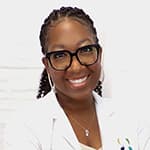
Dr. Jacqueline Patterson is a General Dentist and Orofacial Myofunctional Therapist and has been practicing for over fifteen years. Dr. Patterson believes that by educating her patients and providing the proper therapy and techniques, she can non-invasively improve their conditions - from general restorative treatment to Airway-Centered Disorder therapies. Dr. Patterson received her training as an Orofacial Myofunctional Therapist from the International Association of Oral Myologists, and prior to that, earned her Doctor of Dental Surgery from UC, San Francisco and undergraduate degree in Dental Hygiene from UNC, Chapel Hill.
Are you addressing the root cause of your patients' dental problems, or just treating the symptoms? Many common dental issues like bruxism, scalloped tongues, and repeated crown failures may actually be signs of underlying sleep-disordered breathing.
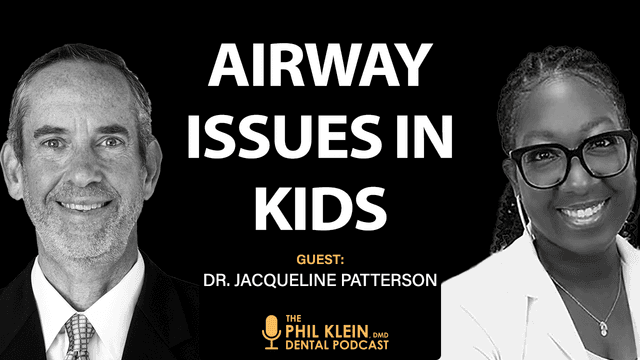
Dr. Jacqueline Patterson brings over 15 years of experience as a general dentist and certified orofacial myofunctional therapist. She received her Doctor of Dental Surgery from UC San Francisco, her undergraduate degree in Dental Hygiene from UNC Chapel Hill, and completed specialized training as an Orofacial Myofunctional Therapist through the International Association of Oral Myologists. Dr. Patterson has developed expertise in airway-centered disorder therapies and non-invasive treatment approaches that address the underlying causes of dental and systemic health problems.
This episode explores how sleep-disordered breathing connects to common dental findings and reveals a comprehensive approach to patient care that goes beyond traditional restorative treatment. Dr. Patterson shares her journey from general dentistry to airway-focused practice, demonstrating how specialized training can transform both patient outcomes and practice fulfillment. The discussion covers practical assessment techniques, treatment protocols, and the importance of medical-dental collaboration in managing sleep-related disorders.
Episode Highlights:
Visual assessment techniques for identifying sleep-disordered breathing include recognizing mouth breathing posture, narrow arches with crowding, scalloped tongue edges indicating clenching patterns, and venous pooling under the eyes. These clinical signs often correlate with poor sleep quality and can be identified during routine dental examinations.
Adult palatal expansion using clear aligner therapy focuses on expansive rather than retractive orthodontics, avoiding unnecessary extractions and minimizing interproximal reduction. This approach aims to increase airway space while addressing crowding and aesthetic concerns simultaneously.
Sleep screening protocols using digital assessment tools can identify at-risk patients across all age groups, from low-risk to severe-risk categories. Follow-up protocols include medical history review and coordination with sleep physicians for definitive diagnosis and treatment planning.
Myofunctional therapy certification through organizations like the International Association of Oral Myologists provides training in head and neck anatomy, muscle retraining exercises, and habit modification techniques. This therapy complements appliance treatment and surgical interventions for comprehensive airway management.
Medical-dental collaboration requires structured referral relationships with sleep physicians, primary care providers, and ENT specialists to ensure proper diagnosis and insurance coverage. Educational outreach through lunch-and-learns and community presentations helps establish these partnerships and improve patient access to care.
Perfect for: General dentists interested in sleep medicine, dental hygienists seeking expanded scope opportunities, and practitioners looking to develop airway-focused treatment protocols that address root causes rather than just symptoms.
Discover how recognizing airway health issues can transform your approach to restorative dentistry and improve patient outcomes dramatically.
Transcript
Read Full Transcript
This transcript was automatically generated and may contain errors or inaccuracies. It is provided for reference and accessibility purposes and may not represent the exact words spoken.
So I will come more from like, you know, you have a narrow arch, you have crowding, you have a lot
of incisal where, you know, I come from that aspect where they feel like, oh yeah, you're right.
And we scan every patient. And so they see the scan and I say, well, I can fix all this,
but this might not be the end if we don't kind of go to the root source of this.
Welcome to the Phil Klein Dental Podcast. I think we all know that when we graduate dental school,
we certainly are not prepared to do everything out there in the dental profession. That's why we
need to take continuing education courses to learn more, expand our horizons. Our guest today,
Dr. Jacqueline Patterson, is a prime example of this. By pursuing specialized training in treating
sleep disorders, Dr. Patterson has carved out a unique niche in her practice. Not only does she
receive referrals from other general dentists, but she's also become a go-to resource for
healthcare providers in the medical community that are dealing with patients with sleep disorders.
We're excited to have Dr. Patterson on the show to share her journey, a journey that shows how
following your passion through continued learning can lead to a fulfilling and dynamic dental
career. Dr. Patterson is a general dentist, an oral facial myofunctional therapist, and has been
practicing for over 15 years. She believes that by educating her patients and providing the proper
therapy and techniques, she can non-invasively improve their conditions. from general restorative
treatment to airway-centered disorder therapies. We'll be getting to our guest in a second,
but first, as a dental healthcare professional, you might already know that 3M Healthcare is now
Solventum, and one of its next-generation products is 3M ClinPro Clear Fluoride Treatment,
available in a new rosin-free water-based formula, with soluble fluoride ions immediately
available to deposit on the tooth. ClinPro Clear Fluoride treatment needs only 15 minutes of
contact time. Plus, with less waiting time to eat or drink after application, it's even easier for
your patients to say yes. Its uniquely designed LPOP delivery system ensures a smooth and
professional application process. In clinical studies, hygienists found it fast and easy to apply.
And patients rated their experience an impressive 98 out of 100. So if you're looking for effective
fluoride uptake in a rosin-free, water-based formula, try 3M ClinPro Clear Fluoride Treatment
from Solventum. To learn more, visit solventum.com. Dr.
Patterson, thanks for joining us. Thank you for having me. I'm excited. You've had quite a career,
not only in practice, but also in your educational journey. You started with getting your hygiene
degree, then you became a dentist, and after that you became certified in oral facial myofunctional
therapy. You're also very involved in veteran services, helping your community members that have
served in our military, which is very honorable and very, very important. Hats off to you for that.
So today we'll be focusing on airway health and what we can do as dentists to decrease the severity
of sleep-related breathing disorders, such as obstructive sleep apnea,
which is really the big category of sleep-related breathing disorders. Probably 80% of it is
related to obstructive sleep apnea. And then we'll talk about some other sleep disorders as well.
And we know that these disorders have a deleterious effect, not only on our dental health, but also
on our systemic health. So to begin this podcast, let me ask you this. When and why did you take an
interest? in getting a better understanding of airway health, which actually has resulted in you
having the ability to prevent and detect airway abnormalities that are actually the cause of many
dental and systemic health problems. And these are obviously patients that you've seen over the
years. So when did all this start and why did you move into this area? So I moved into this area
sort of by accident, actually. I was at a point in my career, this was about 2016.
So I was eight years out of school and had a couple of babies at that point.
And I was getting a little burnt out. I was looking for something different within dentistry that I
could do that would kind of re-spark my passion. I had taken a ton of CE for different types of
restorative aspects of it that I could explore, but nothing kind of sparked me.
So then I got into this stage, this... going to just say yes stage. I'm just going to say yes to
everything stage and just kind of see where it led me. And at that time, I wasn't particularly
looking for a new position, but I still had relationships with a director from a DSO that I had
previously worked for. And she reached out to me and said, hey, we have an opening at a pediatric
office. I know you don't want to do peds, but, you know, hear me out. It might be a good fit for
you. So again, I was in that stage. And so I said yes to the working interview, went to this
pediatric office and I get in there and the front desk says, so have you met our,
you know, oral myologist? And I said, I don't even know what an oral myologist is. So no,
I haven't met your oral myologist now. I want to know more. So she takes me to the back and there's
this this woman who is helping a patient. He's probably about eight years old.
He was in the chair. He had an upper expander. So I'm like, OK, pediatric office,
little early intervention, expansion. And then. She was doing some exercises with the tongue.
Okay, that makes sense. You know, strengthen the tongue. Maybe he has a tongue thrust or, you know,
something. I was just trying to see what this was all about. But then what really got me was that
next to the patient was his mom. And his mom was also in an appliance,
an expansion appliance. And I thought that was very, very interesting because, you know,
she was an adult. We don't expand adults, right? And so... the myologist,
or you can call her myofunctional therapist, she turns to the mom and she's like,
oh yeah, tell Dr. Patterson a little bit about your journey. And she said, I've suffered from
chronic migraines my whole adult life. And at this point, this was November, 2016.
And she said, I've learned about myofunctional therapy and adult airway health or whatever in July.
and started getting treatment. And I have not had one migraine since being in treatment.
And that's what sparked me because I'm like, okay, I've never heard of this and I need to learn
more. So that shows that it only takes one interaction, one engagement with a patient where it can
really get the wheels turning where you start thinking, wow, there's a big impact here.
From a dentist point of view to a patient, you've taken... something that has made this patient
miserable and you've taken it off the table. Now, typically these headaches occur in the morning,
correct me if I'm wrong, when you are going through some sort of sleep apnea situation.
Is that correct? Right, right. You'll wake up because nighttime bruxism is definitely a risk factor
and something we look at. And so when you're waking up after clenching and grinding all night, you
typically will have headaches, soreness in the jaw, even neck pain. Yeah.
So that's what she was suffering. And then it can trigger, you know, more migraines throughout the
day if you're more susceptible to it. So that's what she was suffering from. She, she, she started
out with a very narrow upper and lower arch. And so when they were widening and expanding,
you know, it was leveling out her occlusion and subsequently her bite,
her TMJ. And she no longer suffered. So I had never learned any of that in dental school.
And I hadn't graduated 30 years before. It was eight years. And so I was at that point looking for
ways to learn more. I've done a lot of podcast episodes, as you could imagine, doing this show. And
what I hear all the time is that from dental hygienists and dentists, that basically dental hygiene
school and dental school teaches you how not to kill somebody. And the basics of dentistry.
Yeah. So, you know, it's really up to all of us as clinicians to pursue further continued
education, but do something that you feel passionate about. So you started to feel this passion for
this sleep disorder area. Let's get into more specifics now for our audience who may be interested
in this or may be pursuing it at an incipient level. What is involved in doing this type of
dentistry? I started looking at it more towards the myofunctional therapy aspect because I still
hadn't encountered a dentist who had been doing it. So I wanted to see,
you know, how is this myofunctional therapy helping the patient? So then I had my certification
course. It was a one week course through IAOM, so International Association of Oral Myologists.
And, you know, head and neck anatomy, first and foremost, you had to be a licensed dentist.
or hygienists or language pathologists. And they were even letting,
you know, medical doctors, physicians in as well. Anyone who was a licensed provider could get some
training and certification as a myofunctional therapist. So that's kind of where I started. Can you
know what to do with the musculature and habits and things like that? And then you have to dig
deeper. You're like, OK, well, now I know where to put the tongue and where to train the tongue.
But I need to know how to release the tongue if someone has a tongue tie. So then I did some
training. I did Dr. Zaghi's course from the Breathe Institute.
Got training in that respect for tongue releases or for anectomies. And then I became a member of a
lot of organizations just trying to like dive deeper. Tell us how you look at the patient now right
away. As soon as they sit in your chair, they're a new patient. With all the new training you've
taken since dental school in this field, there's a new mindset, right? And tell us how that has
kind of worked with your understanding of restorative dentistry.
with orthodontics, periodontics, dental hygiene, and then, of course, this airway health issue.
How does it all work together, and what do you see when that patient first sits down? We'll be
getting right back to our guest in a second, but first, if you're on the lookout for a versatile
material that serves as both a protective liner for composites and is ideal for direct and indirect
pulp capping, let me introduce you to Theraquel LC from Bisco. Its unique hydrophilic resin
-modified calcium silicate formulation provides a strong, stable liner that reduces post-op
sensitivity. It's radiopaque and incredibly easy to apply. Once light-cured,
Theracal-LC is ready for use with any bonding technique. What's even better, Theracal-LC is non
-soluble, meaning it won't wash out over time. Plus, it promotes calcium release,
which supports secondary Denton bridge formation. And that's perfect for those tricky pulp
exposures. When you're working deep in a tooth prep, you want reliable protection for the dental
pulpal complex. You want TheraCal LC, a top choice among independent evaluators and thousands of
dental clinicians. For more information on Bisco's full line of pulp protection products, head on
over to Bisco.com. Well, I always say once you see it, you can't unsee it.
And when a patient sits down in my chair, I immediately notice if they're mouth breathing or not.
If they're sitting there with open mouth posture, I know this is not the first time they've ever
mouth breathed. This is a habit that they've gone through. So then automatically I'm looking at the
shape of their jaw, the shape of their face. Do they have a broad square face,
which to me tells me this is probably a Bruxer. Why are they Bruxing? Is it a nighttime Bruxing
issue? If there is crowding, if there's a narrowing of the palate,
then I tend to ask, well, how's your sleep? And they are very surprised when I ask that question.
And most of the time when I see those sort of risk factors of the mouth breathing and the narrow
arches crowding, even I look at venous pooling underneath the eyes, they look at me like,
well, it's horrible. How did you know? And there's so many clues that we can get just from the oral
cavity. When I look at the tongue, if it's scalloped on the edges, then they're typically a
clencher. Why are you clenching? If we go through x-rays and go through their exam and they have a
ton of restorative, lots of crowns, lots of fillings. And in the posterior, if these crowns are
open, right? Lots of open margins. And they're like, oh, it keeps happening. I keep getting these
open margins. You're probably putting a ton of pressure on these back teeth. Your teeth are
flexing. Teeth aren't meant to flex. And the point of flexure is typically where the tooth and the
gum meet. And that's where we love to put the margins of crowns. So it's just these, so all these
sort of puzzle pieces start coming together for the patient as well. And they're like, oh, I've
been dealing with this forever. You're the first person who's kind of mentioned it to me. So in
terms of my response to. the different ways that I will treat them, you know, now I'm giving those
patients sleep tests, home sleep tests. I want to know what is happening when you're sleeping. Is
it a true obstruction? So that's sort of my baseline. And, you know, if it is,
we're going to, you know, do my functional therapy, start oral sleep appliances, that whole thing.
I also want to fix the root cause if I can. So if you have a small airway,
narrow palate, I want to fix that too. So we will talk about adult expansion.
We will talk about using clear aligner therapy. I started using Candid clear aligners,
Candid Pro a few years back. I found out about it through my other airway resources.
And so, you know, an airway, or excuse me, clear aligner brand that was very specific for expansive
orthodontics and not retractive. You know, not a lot of IPR, little to none IPR. Actually,
like the years that I've been doing it, I've never had to do IPR on a patient. Very minimal
attachments. And so I love that. I don't want to extract teeth.
I don't want to narrow teeth. I don't want to make a small space smaller. I want to make it bigger.
And so it has definitely influenced the products that I use in terms of that.
It influences who I refer to. If there is an orthodontic case that I feel is out of my realm,
but I do want to make sure my patients are not getting unnecessary extractions or whatever,
I will only refer to doctors that I've talked to about this type of stuff who are kind of on my
safe page. I'm never going to tell another provider how to practice, but I want to be in line in
terms of, you know. our values and what our final end goal is for the patient. Now, you mentioned
you didn't learn a lot about this or anything in dental school about sleep disorders. I know the
curriculum in these dental schools are packed full and they have limited time and they need to
teach you the basics. But this is really, really important because your whole treatment plan going
forward, based on what you assess when it comes to the patient's ability to have an open airway
while they're sleeping, airway health. if you determine that their airway health is compromised
then everything that a general dentist would do that has no about airway health will be undone.
I mean, they're basically going to be doing work and the patient's going to be going through all
this stuff. And like you mentioned, the root cause is not being addressed. And because the root
cause is not being addressed, we're in this infinite loop of dental restorative work and the
patient's health is just going to go downhill. I mean, sleep apnea and sleep disorder is
essentially a public health issue because when you look at it, it affects hypertension.
type 2 diabetes, cognitive impairment, dementia, depression, sexual dysfunction.
There's even data now that's showing there's a potentially increased cancer incidence and
mortality. And forget about the quality of life. You wake up with a migraine and you fall asleep
during the day. You can't concentrate. You can't hold a job. So tell me about the connection,
the collaboration that you're trying to achieve between the dentist and the medical community and
why this is so important. Right. So I just made sure I got involved as much as I could with the
medical community because I didn't want to come in to their offices and seem sort of like a
salesperson. Just, oh, refer your patients to me and sort of not have anything to back it up.
So there's an organization in my community in Las Vegas called Walk with the Doc.
And it's put on by the American Society of Pediatrics. And it's the Nevada chapter.
And once a month we go out to Springs Preserves and we walk around and we were promoting health in
children, but there's always a speaker at the very beginning. So there's parents and kids and
physicians and dentists and everybody who come together. And then like I've spoken a few times
about airway health and it's just to educate. The parents mostly about what to look for in their
kids for whatever disease or whatever you're trying to make aware.
And so I've gotten into the community that way. So physicians recognize me as a person who is
trying to communicate these different challenges to everybody and how to correct them and how to
meet them. And then I also do a lot of lunch and learns. I go out and I mean,
I really just go out to my local primary care physicians. I talk to my own primary care physicians
and ask them, you know, I talk to them about it and I ask them who they think would be open to
hearing more about what a dentist can do to help their patients. And so I kind of just more
organically, I guess, get the word out and have been invited to speak at our local dental society
to talk about this with other dentists to encourage them to get the word out to physicians.
But it's very, very important because as dentists, we can treat sleep apnea,
but we cannot diagnose it. So we have to, you know. make partnerships with the medical community
and get everybody on the same track. Because if I'm seeing all these symptoms and all these signs
in my patient and I'm encouraging them to get a sleep test, let's say that their insurance says
that they have to get it through their physician and then their physician's like, well, I don't see
it and I'm not going to say yes to this, then my hands are tied. So educating them. is paramount.
So without the dentist in the loop, what would a typical primary care physician do if they even had
the knowledge, and I hope they do, some of them don't, but I hope they do, where they spot signs of
sleep apnea, sleep disorder? What do they do? Do they send it to a sleep test center and get the
results back like they would a blood test? That's what they love to do. They just send it out to
get some test results. Yeah. Okay, so they get the test results back. Then,
you know, the CPAP, of course, is like the first way to go because that's what they're taught.
So is that the first thing they do is, hey. That's almost exclusively what they'll do is CPAP.
Unless it's like an ENT or a person like that who's really into that Inspire,
that device that goes underneath. the skin and then goes to the hypoglossal nerve.
And once it detects that that tongue is going back into the airway space, it kind of triggers it to
move forward. So those are sort of the two go-to CPAP and Inspire that physicians will talk about.
And they almost never, unless they have been educated or approached by a dentist,
will never talk about oral sleep appliance because they don't know who to refer to. A lot of them
don't even know that an oral appliance is an option because they don't know that we have FDA
-approved oral sleep appliances. So that's the first thing we have to educate them on. Like, no,
they're viable FDA-approved appliances that can help patients with sleep apnea. The centers,
though, that get the results back after the sleep test, when they send the results back to the
primary physician, do they say, we recommend a CPAP or possibly an appliance?
I mean, don't they need to be educated? Some of them do. Okay. They do, too. So I work with a
specific sleep physician here in Las Vegas, and he...
his, when he refers back to the patient, excuse me, to the physician, or even back to me.
And then I go over to the results with the patient because once he, he can make all the diagnosis.
So he doesn't have to go back to the primary care physician if the dentist is the one who, who
prescribed the sleep test. But in his assessment, he will always say, you know,
their CPAP alternatives are sleep, oral sleep appliances. And he also takes it one step further.
And he also almost always recommends myofunctional therapy. So, which is very rare in that case,
but he has been very educated and he knows that myofunctional therapy will help all of the sleep
patients as well. So, so yeah, so it depends on who it is, but if you have a chance to form a
relationship with a sleep physician.
My sleep physician owns his own sleep lab. So it's very easy to talk to him about these things.
But yeah, you can tell him whatever to talk about what you do in your own practice and kind of go
from there. Is there any specific education at this time that a dentist would need in order to
treat patients with sleep disorders? So right now it's not seen as its own separate specialty.
So, I mean, for myself, I just I have my DDS. I didn't go to a residency program.
I've just am the CE queen. And, you know, a lot lots of trial and error because not all courses are
built the same. But you sort of find a lot of people in your community.
in the airway community who have taken certain courses or who are doing things that you respect or
things that you want to do and you maybe follow their path. So for me, the first thing was,
like I said, I went through myofunctional therapy certification, did a lot of CE courses on the
surgical side of sleep and also the restorative side of sleep, the preventative side of sleep.
There are so many. But then I do have mentors. in the community.
Dr. Ben Moralia is one of them. My practice focuses on everybody from,
well, I won't say everybody because I don't see infants. That's the one thing I really wanted to
get into doing tongue releases for infants. I'm just too sensitive for that.
I actually, with my first area of practice, I hired another dentist who,
that's all she wanted to do. She just, And I'm.
treated infants with tongue tie and did their phrenectomy via laser.
And I honestly, I couldn't even really be in the office when she did it. They don't cry very much.
And then right after they cry, you basically put them on mom's breast and then they're fine. But
I'm just a sensitive person. So I just have trusted people that I send those patients to.
But other than infants, I treat every age. And so I found people who I respect in the,
um, adolescent community of airway and in the adult community and, and just, you know,
um, they've been doing it a lot longer than me there. They've done a lot of trial and error on
their end, and that saves me a lot of time and even money. So, um, yeah,
I've just found sort of my tribe and those people. And I keep learning because things keep coming
out. There's still, I mean, you never stop learning, especially in our profession. You mentioned,
Dr. Patterson, that you work part-time at a DSO. Tell us how that works and how you've developed
kind of a niche practice within that DSO treating patients with sleep disorders.
I have a associateship position at a DSO two or three days a week,
and I have a sleep program through that DSO. So all of the dentists,
we're 12 offices. They refer their sleep and airway patients to me.
I do my sleep consultations every Friday, and they're two Fridays a month. But then I'll do
treatments throughout the week. So regarding the referrals you get from the other dentists, what is
the process when you see the patient? Because you mentioned earlier that you're not able to make a
definitive diagnosis related to a sleep disorder. So we use sleep software.
called Dental Sleep Solutions or DS3. And so there's a screener. So all the offices will get a
tablet and all new patients and periodic patients will fill out a quick survey and it populates to
our software. And so my team, I have a dental sleep coordinator who goes through all of the
patients who have been populated and it'll go from low risk factor to severe risk factor.
And we, we will actually follow up with everybody who has taken the survey because I've had
patients who have screened low risk factor because they're filling in themselves. Right. So it'll
say low, but they don't go through their medical history and it'll say snoring, tired all day,
you know, so it doesn't always match up. So we'll, for the low ones, we'll go through medical
history first and see if, you know, if there's anything that lines up. But we will use that
information and then we reach out to those patients. But they're already kind of primed to say,
this is a screening tool that our offices use. We want to make sure that you're healthy.
One of our providers might be reaching out to you if you have these risk factors. So do you try to
educate that patient and say there are options here? CPAP is one option,
which is typically prescribed by a physician. but compliance is not great on CPAPs.
There's other things we can do for you as a, you know, I'm your dentist and we could fabricate
appliances that can actually change the morphology of your mouth so that you can actually breathe
better during the night. Do they embrace that? Are they open to that when they hear that? It
depends. I mean, every patient's sort of different and I don't always use the same angle with
patients because some patients, they're more worried about let's say aesthetics, like they're,
they don't care about, you know, anything else about, but how everything looks. So I will come more
from like, you know, you have a narrow arch, you have crowding, you have a lot of incisal where,
you know, I come from that aspect where they feel like, Oh yeah, you're right. And we scan every
patient. And so they see, they see the scan and I say, well, but what's causing this? Cause I can
fix all this. That's fine. But this might not be the end if we don't kind of go to the root source
of this. And then you'd be spending a lot of time and a lot of money fixing something that might
keep reoccurring because we never address your sleep. Now, can you do that without sending them to
a physician? You can, can you start, I mean, okay, so you're right. Cause you're a dentist, you
have a degree, so you can go straight into the, for example, mandibular advancement devices. You
want to move the jaw forward. You want to move the tongue forward. You want to flatten out the
palate, right? Those are the kinds of, I mean, I have a limited understanding of this, but. No, but
you're correct. Yeah. You don't have to go through a physician. Part of the reason. we really want
physicians involved is to refer to us, right? To try to know what to look for in their own patients
and then refer back to our practices. But then another reason that we kind of want physicians
involved too is because, you know, we live in a place where a lot of patients are insurance
dependent. Some of the first questions that they ask are, well, is my insurance going to pay for
this? And so when we get insurance involved, we're typically going through medical insurance.
And so medical insurance is a whole different animal. So in order to get certain things paid for,
you have to do it in a certain order and certain people have to sign off. And that's typically the
physician at some point. So that's another reason to get the physicians involved because you don't
want, you know. a patient will go back to their physician and say, oh, my dentist needs you to
prescribe a sleep test for me. And they're like, what? And then they are kind of caught unawares
and they think you're overstepping your bounds and things like that. So it's important to get them
involved for a few reasons. No, this has been very, very insightful. Now you teach, we're going to
wrap this up right now and we have one minute left. You have classes and courses that you teach.
So I guess anybody could look you up online, right? Jacqueline Patterson. And then they could sign
up for your courses if they're around or take a destination vacation to Vegas, right? You teach in
Vegas. Exactly. Yeah. So yeah, the quickest, the easiest way to just get in touch with me is just
to go through my website. It's kind of long, but it's reviveorofacialtherapyandwellnesscenter.com.
Okay. I know it's a mouthful, but that sort of has all my information on it. So say that website
one more time. Revive oral facial therapy and wellness center.com.
Okay, great. Dr. Patterson, fantastic information. It's great stuff. You've certainly completely
reinvented yourself over the course of your career. How many times now starting off as a hygienist,
which is a great profession in itself being a hygienist. And then for you to become a dentist now.
really kind of falling into a niche of airway health issues and just assessing these patients
early, getting them on the right path to prevent further damage.
And then, like I mentioned, you don't go right into the actual restorative work until you really
understand what's causing this, especially in a younger patient. And we're going to be talking
about more airway health issues in future podcasts with you. So we look forward to having you on
them. Thank you so much. Thank you for having me. This is great. Thank you.