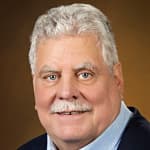
Dr. Scott Benjamin is a native of the Tri-County area and is a graduate of SUNY Buffalo, School of Dental Medicine and has been in full-time private practice in the Tri-Town Area for over 25 years. He has been a leader in computerized dental practice management since its' infancy. Dr. Benjamin has presented internationally at major dental meetings, universities, workshops, study clubs, and user meetings and has published more than 100 articles on dental technology in over a dozen publications on topics ranging from computerization, and the Internet to micro air abrasion, diagnostic modalities, and lasers. Dr. Benjamin is presently the Technology Editor of "The Journal of Practical Hygiene" (JPH), the Section Editor of Advanced Technologies for "The Journal of Practical Procedures & Aesthetic Dentistry" (PPAD), and is on the editorial board of "The Journal of the Academy of Laser Dentistry" (JALD). Dr. Benjamin has been appointed as a member of the Presidential Task Force on the National Healthcare Information Network (NHIN). He is also a member of ADA Standards Committee on Dental Informatics (ADA-SCDI), and is the Working Group Chair for three sub committees: Data Redundancy, Archiving, and Storage; Digital Photography and Imaging; and The Electronic Patient Dental Record. He is also a member of the ADA Standards Committee on Dental Products (ADA-SCDP) and is on the Board of Directors for the Academy of Laser Dentistry (ALD), a member of the National Dental Electronic Data Interchange Council (NDEDIC) Board of Trustees, President of the Tri-County Dental Society and Vice-President of the Sixth District Dental Society of the New York State Dental Association (NYSDA). Dr. Benjamin also is a Visiting Professor at the SUNY at Buffalo School of Dental Medicine, participated in the World Health Organization's (WHO) Collaborating Centre for Oral Cancer and Precancer 2005 Closed Session Working Group on "Potentially Malignant Oral Mucosal Lesions and Conditions Terminology; Classification; Diagnosis and Prognosis". Dr. Benjamin's interest in technology and advancing computerization in dentistry began with his first practice management system, in the early 1980's, and was instrumental in the development and implementation of electronic insurance submittals, in the mid 1980's while serving as an advisor to several dental technologies companies, and is continuing to assist in the progression of digital electronic patient records into mainstream dentistry. His interest continues today on a much broader scale with his involvement in the development of clinical screening, diagnostic, and treatment modalities and incorporating the appropriate utilization of advanced technologies into the everyday clinical dental practice. Dr. Benjamin is a consultant and advisor for many dental practices and several dental technology companies utilizing his expertise in clinical dentistry, digital radiography, imaging, practice management, dental computerization, and workflow.
Dental podcast hosted by Dr. Phil Klein: This VivaPodcast will discuss advanced laser procedures. Joining us today is an expert in the field of dental lasers, Dr. Scott Benjamin. He is currently in private practice in upstate NY and has faculty appointments at several universities. He is the Chairman of the ADA Standards Committee Working Group on Dental Lasers, a Past-President of the Academy of Laser Dentistry & is the Technology Editor of the Compendium.
Transcript
Read Full Transcript
This transcript was automatically generated and may contain errors or inaccuracies. It is provided for reference and accessibility purposes and may not represent the exact words spoken.
You're listening to the Dr. Phil Klein Dental Podcast from Viva Learning.com.
On today's Viva podcast, we'll be discussing advanced laser procedures. With us is Dr.
Scott Benjamin, an expert on the topic of dental lasers. Dr. Benjamin is in private practice in
upstate New York, is the chairman of the ADA Standards Committee Working Group on Dental Lasers, a
past president of the Academy of Laser Dentistry, and is the technology editor of the Compendium.
Scott has done several great podcasts for us in the past, and he's joining us again. Scott,
thanks for being on the program. Well, thank you again for the invitation. It's always a pleasure
to work with you. We're talking about advanced laser procedures. What are some of the advanced
laser procedures that are being performed today? Well, today with the use of dental lasers,
the sky is the limit. We have a variety of things we're doing. Traditionally,
people think of lasers as doing simple things like pocket decontamination, fibromal removals,
frenectomies, and things along that line. But today, with our advanced procedures, we're doing
everywhere from endodontics that we've talked about in a previous podcast. to doing procedures
where we're reducing snoring and improving tissue tightening, actually doing things like gingival
augmentation, where we're actually being able to create an environment where we can gain some
attached gingiva without grafting. And the idea, and also low-level laser utilization,
which today is referred to as photobiomodulation, where we're using light energy to stimulate a
healing response within the patients itself. When you talked about snoring,
so that's very related to sleep apnea, obviously, and that's a big thing now, sleep apnea.
Is this something that out of the advanced laser procedures you just mentioned, are some of these
procedures applicable to a general practitioner's office? Well, the idea of what is and isn't
applicable to the general practitioner's office depends on the clinician's own comfort level. The
idea of snoring reduction as an adjunct to assist in sleep apnea is something that's extremely
valuable. The biggest concern a clinician has to have is exactly we are not licensed as dentists to
be treating sleep apnea. The sleep studies and things along that line need to be done by a sleep
specialist. And what we are doing is facilitating. the use of it. And again,
this is a tightrope that dentists need to be very careful as they're walking down. As we do this in
our practice, we emphasize very, very strongly when we're using our Erbium laser to stimulate
collagen neogenesis, that the goal here is to open up the breathing pathway to facilitate the other
modalities that they're using for their sleep apnea if they have sleep apnea.
Studies showed today that 80% of the people who snore have some form of sleep apnea,
and that 60% of the patients today have some sort of snoring issue.
So as you mentioned, this is something that is very contemporary going on today.
And we as dental clinicians, we are literally leading the forefront with it and using lasers to
help. in this area becomes very important but it's very very important that clinicians understand
they do not want to overstep their quote-unquote legal legal responsibilities and it's something
that again I stress very highly with my patients that what we're doing is we're trying to
facilitate and refer them to the appropriate people to have the right sleep studies done and then
monitoring them. Because one of the things we have an advantage of being dentists, that routinely
we're seeing our patients more frequently than their primary care physicians, and especially with
people with sleep apnea, we are the front lines of actually discussing it. diagnosing the potential
of the problem and then referring them out after they've had the sleep study,
then in turn being able to do things that can help them breathe better, sleep better,
and have a more productive life. Right, but it's very important that the general dentist
understands that this type of laser procedure is available to their patients, for instance,
for snoring. And then, like you said, they can make that recommendation to refer out. And we're
certainly the general dentist or the front line to not only this type of condition, but also to the
early detection of oral cancer, which is something that I know you were very involved with for many
years as well. Exactly. Using light technologies to literally give us additional information so
that we can make early detection of. of mucosal abnormalities. And I mean,
one of the problems with all devices that are sold in dentistry is the way they're marketed.
Again, using things like the Velscope, like the BioScreen and some of the other devices that are
out there, the goal of these devices are not to give us a definitive diagnosis, but to use light
energy. to facilitate a response out of the tissue that gives us more information to help us ask
the appropriate questions and to determine what we should be doing next. And it's the same thing
with what we're doing. In my waiting room, in my practice, I actually have a picture there of a
young couple in bed with a wife with her hands over her ears.
And with just the phrase underneath, Does this sound familiar? We may be able to help.
Right. So with that picture in the waiting room, when it does apply to a patient that comes in to
see you, you don't do the procedure yourself if it's something even not that invasive using a
laser? Or do you? Or do you just? We do. We actually do a snoring reduction.
We're using an Erbium YAG laser with a very specialized handpiece.
basically tighten the tissue of the soft palate complex to basically open up the oral pharyngeal
pathway so that the patient can breathe better. What's amazing about your practice is,
and I don't mean to interrupt, but I have to say this, your practice reminds me of a restaurant
that was on Barrow Street many years ago in the village in New York City. This restaurant had
literally everything on the menu. It was 15 pages of special culinary delights on this menu.
And I don't know where this guy learned how to cook, but he just knew how to make everything from
every ethnic background you can possibly think of. And with your practice, you being in a remote
location, you learned how to do so many different procedures. It's mind-boggling.
Through the past podcasts that we've done together and me knowing you for so many years, you do
things that general dentists don't do. Do you think that's related to the fact that you were in a
remote area where you didn't have specialists to refer to except they had to travel 50, 60 miles?
Yes and no. One of the things that annoys me to no end in a CE course is when they talk about case
selection. And case selection is very important to understand the patient's problems.
But unfortunately, the patient only has their case. You know,
and the idea is a patient comes in with a problem. As an oral health care provider, it is my
responsibility to identify the problem. And then to do whatever I can and that I have the
competency to do. And when I don't have the competency or I don't able to obtain the results I'm
looking for. is then to refer them on to a specialist, whether it's in medicine or in dentistry,
that has the expertise to do what the patient needs. And I mean, this is very important.
The patients are their own cases. They can't select what case they are. Right. But at the same
time, you don't want to step beyond your level of expertise. And that's exactly it.
And you've heard me refer to things in the past as the latter syndrome. And in my oral cancer
lectures, I talk a lot about the role of the primary care dentist in oral cancer detection,
that routinely the discovery is made not by the dentist, but by the hygienist.
She sees something that is abnormal going on. She, in turn, hands it up the ladder to me.
I look at it and say, you know, and she says, Scott, I want you to pay particular attention to this
area. As we look at it, I gather more information. As I gather that information,
I then in turn hand it off to the appropriate people. If it's something that I feel that needs to
be biopsied and I feel a comfort level of myself doing it, I will do it. If I feel it's something
in an area that needs to be seen by a periodontist or an oral surgeon, I will refer them to them
for the care. They don't make the diagnosis either. They gather additional information to use their
expertise. to then decide what should be done next. And the only people that can make the diagnosis
in the cases of things like oral cancer are the oral pathologists. We, as everybody else,
are just leading up that pathway. to who's going to make the diagnosis. And then in turn,
while we determine that harvesting a specimen and sending it out to the oral pathologist needs to
be done, the specimen is harvested, they make the diagnosis. They then guide the oral surgeon,
the periodontist, or the general dentist that have harvested that specimen to what they feel should
be done next, where the next referral should be. And oftentimes in the case of oral cancer, It
becomes, let's get them to an oncology center. Having them do basically their cancer bank of where
they look at it, and the cancer board then determines what is the next thing to do. The appropriate
procedure is then performed usually in that facility. And ironically,
when they get all done doing their treatment, what do they do with it? But they pass it back to the
general dentist. for ongoing surveillance. Right, right. Getting back into the special procedures
for lasers, I didn't mean to get you off track. Yeah, go ahead. But this whole thing becomes
climbing up that ladder of where your confidence level is. Right, right, absolutely. Which is going
back to where your question was. And so again, using lasers in your practice, you build a
confidence of doing a procedure that then gives you possibly more confidence to move on to the
next. If you don't build that baseline confidence, you're not going to move on to the next.
And going back to the cancer scenario, the head and neck surgeon doesn't have the confidence to do
routine hygiene, so he hands it back to the general dentist and the hygienist for that role.
And it's the idea of everybody climbing up their ladder of expertise to where everybody's going to
get a fear of heights somewhere. And that's the point of handing it off. And the value of having
these advanced technologies such as lasers, I can climb up that ladder a little bit higher with
more confidence to be able to do things. But it's not overselling the procedure being done,
going back to where we were with the snoring reduction. Our goal here is to open up the pathway to
reduce the snoring and to increase the breathing. It's not the correct sleep apnea. And we were
very emphatic about explaining that to our patients. We're going to be working. It takes a team of
people to get the right outcome. So the special procedure that you use for the snoring that you do
in your office, how long does that take? Tell us something about that. Well,
the procedure itself, and if there's an Achilles heel to the procedure, it's the time. Because to
do the appropriate assessment takes about a half an hour. To interview the patient, to discuss the
scenario, we actually have forms that the patient fills out for them and their sleep partner of,
again, on their drowsiness scale, their sleeping patterns, and those type of things.
Referring them, again, to the sleep clinic and the sleep medicine specialist.
Then when they come back and they get referred to, and if they are presently, and typically what
we're finding is many of our patients are supposed to be wearing a CPAP and are not.
And that is a real problem that we have in society today. It's been estimated anywhere from 50% to
80% of the people who should be wearing a CPAP are not wearing it routinely.
Yeah, I mean, that's prevalent throughout. Yeah, I've heard those statistics as well. And so we
have to be careful as a clinician that it's not being perceived that we are encouraging them to get
off their CPAP. And you have to make sure as a dental clinician that you have the appropriate
documentation. We're doing, again, an adjunctive procedure to hopefully tighten the tissue to in
turn enhance the breathing pathway to help the CPAP become more efficient.
And that's done with a soft tissue laser? Actually, that's actually done with an erbium, which
would be considered oftentimes by many a hard tissue laser. And we're actually doing it. And what
we're doing with it, we're using very specialized hand pieces. Yeah, tell us about those hand
pieces, would you? We have a fractional hand piece that actually is basic for a simplistic way.
It's doing pulse stacking that we're drilling tiny little holes into the soft tissue. And again,
drilling is the inappropriate word, but each pulse with a very specialized mode is we're vaporizing
tissue deeper and deeper and deeper, stimulating the collagen to turn over. And that collagen
turnover is referred to as collagen neogenesis, very similar to what's being done in dermabrasion
or being done in plastics and dermatology on the skin to tighten the skin.
We're actually doing the same thing to the oral mucosa on the inside of the oral cavity. And the
concept of what we're doing that way is treating the entire soft palate complex in a very specified
pattern and a very specified mechanism. And it takes, again, you mentioned time.
It takes about a half an hour to do the thorough workup. And then about 20 to 30 minutes per
appointment. It usually takes three appointments to get. the efficacy that we're looking for.
Where did you get your training to do this? Well, again, this training was actually provided by the
people that sold me the laser, the Photana Company, which is the one that actually developed the
technique, which is a very interesting company because they specialize in lasers, not only in
dental, but in gynecology, dermatology, and plastics. And the process of this came from...
is actually after childbirth of doing vaginal rejuvenation, of tightening the lumen that has been
stretched out by childbirth and helping women with urinary incontinence of how they were able to
tighten the tissue, using the same type of protocols to literally in turn tighten the mucosa
instead of being in the reproductive system, now being in the oral cavity to gain the same type of
turnover of the tissue. And this is where the concept came. And this is why dealing with companies
that specialize in lasers, and that is their primary focus, on these very advanced procedures
become very important. Do they have a training facility there? Or where do you do it?
Actually, the initial training I took on this was done at one of their training facilities that
they have, and they have several scattered around the country. And I've also had, you know,
courses on this in Europe and other places. And they have a whole certification program that they
go through. Not that I like the word certification, but a whole training program. Because the word
certification is reserved for the specialist. As you as an endodontist have a certification in an
endodontics. Right. And it's reserved for those specialists. And that is probably one of the most.
mis-overused words today that a lot of the state boards are starting to have problems with. Well,
even as Viva Learning is an ADA cert provider, what we used to call certificates,
we had to change the name to proof of CE because the ADA did not really look favorably upon a
document that said certificate because we're not really providing certification.
Verification of training is what I use in my courses. They're exactly for that reason.
To be in the appropriate compliance with the AGD and the ADA, it's you're verifying that the person
has been trained. You're not certifying that they are a specialist in any one field. And again,
that's sort of off on a tangent, but that's a very, very important concept. And a lot of the state
boards, and I'm working with a lot of state boards on laser regulations, get very upset with that.
And they're trying because of the false information, the misleading information, I guess it's a
better way to phrase it. So listening to your podcast, we've had several great series of great
episodes of podcasts so far. And we hope to do more with you on lasers. I'm, of course,
learning a tremendous amount. It seems to me the dentist buys a laser. They decide they want to
implement a laser in their practice. They get a laser and they start with what they feel confident
doing. They get some basic training and they do these procedures and then they slowly become more
confident, as you say, with the laser. And now in this podcast, we're talking about advanced laser
procedures. But this is a process like anything else. You're using a technology that applies to
dentistry and it's in other medical verticals, of course. But you seem to be leading the way in the
dental vertical with dental lasers. There's no doubt about it. Do you agree that it's just a
process of getting confident with the device over time, starting with simple procedures and moving
up? It's a combination of getting familiar with the device, but more importantly, getting familiar
with the technology and being able to read the tissue to understand where you're going.
And when the laser energy interacts with the tissue, what is the response you're looking for? As I
work with the students in the dental schools, I talk to them about the techniques that you're doing
here are extremely simple. Reading and understanding what's going on within the tissue itself is
where the learning curve is. So as the clinician reads the tissue, learns the response the tissue
has as they change the parameters, which may be the laser. It may be the wavelength.
It may be the power. It may be how the power is delivered. It may be the hand speed they're using.
It may be, again, the amount of cooling or irrigation they're applying. All of these are various
ways to manipulate the tissue to give you the outcomes that you're looking for. The snoring
procedure that we've talked about has a huge amount of interest just because of the whole sleep
issue that has hit our profession in the last few years. The same basic concept is being done
internally to tighten the mucosal tissue to actually do an almost like an inter-oral facelift,
where we're actually using the laser to tighten the mucosa of the oral cavity,
which in turn... tightens the skin on the outside to reduce wrinkles and various processes along
that line. And again, with the idea, what is the comfort zone? As we know,
we have doctors that today are getting into all sorts of things that are sort of on the fringe of
dentistry, Botox injections, et cetera. This is a way to help augment those that are doing that.
Again, giving the patients the ability. to have simple procedures enhance their quality of life.
The idea of another procedure that I'm doing routinely, several times a week,
unfortunately, in my practice, is a procedure of gingival augmentation, where I'm taking a very
simple soft tissue laser that I have complete control over, and in turn being able to increase the
dimensions of attached gingiva. to negate the need for having to wait until they have to have graft
surgery. What's the mechanics behind that? How does that work? Well, basically what we're doing is
we're creating a surgical wound to heal by secondary intention. And just like when you cut your
skin or when we do a graft surgery and we harvest tissue from the heart palate, what happens to the
heart palate over a period of time? The tissue regenerates by growing from the lateral borders in.
So it's a matter of being able to read the tissue, understanding the composition, being able to
understand the depth that you want to get the light energy to, and how you want it to heal in the
long run. And so we have got the ability now that we do routinely when we see a patient that's
starting to lose or has an inadequate zone of attached gingiva, rather than waiting until it's all
gone and going and doing a graft procedure, that we can intervene very early in the process,
literally with using a high-powered 970 diode laser or an NDAG laser,
be able to do it with topical anesthetic. So increasing this attached gingiva,
this sounds to me like a perio procedure for a periodontist. More and more periodontists are going
down this pathway. And again, as I teach my laser courses, believe it or not, this one procedure
probably gets more questions and it's got the biggest wow factor of anything that I teach because
they can easily recognize the problem. And when they see the post-op results and the simplicity of
doing it because of the way the light energy interacts with the tissue, but it's all understanding
the tissue response. And you're saying that using this technique, when you compare it to taking
tissue from the palate, which is uncomfortable for the patient, as you mentioned, has to heal by
secondary intention, you're getting the same clinical results without doing that graft?
I've been questioned by periodontists, how did I make my graft look that well? Because when it gets
done, it literally looks like there was never a defect there in the first place. Well, it's the
same tissue.
You hit the nail on the head. We're encouraging the body to do what the body is programmed to do.
You're not taking tissue from the palate and putting it there.
It's attached gingiva that's just growing. And that's exactly, and the idea is understanding the
goal that you're after, how the body responds becomes very important, which is going back to the
concept of learning how the tissue responds. Photography becomes extremely important.
Being able, as you're doing in any laser procedure, but especially in things in advanced laser
procedures, doing it. And a diagnostic photograph, and it doesn't got to be high quality,
but something that you can actually see and understand the tissue. Taking one immediately
postoperatively so you can see what you have just accomplished. And then follow-up appointments at
maybe three or six months or a year or multiple year increments. You can then assess your own work,
learn of where you've been successful and what you did. and where you have failed and why you
failed. And the idea is to critically assess your own work is the greatest way to learn how to do
better health care. Now, as far as the grafting goes, a grafting procedure has a certain billing
code. What does this build under? It's very interesting you ask that question.
I do some technical consulting for the Academy of Dental Insurance Consultants.
And I actually presented one of these cases to them, which was where I was questioned on great
detail. I showed them the pre-op, asked them what they would pay for. They showed the pre-op
photograph, and I asked them what they paid for. And I had them with voting machines. Ninety-some
percent said they would pay for graft surgery, looking at it without a doubt. Right. So they're
looking at the pre-op before they know how you got to your end result. And then I showed them the
post-op a year later, and I asked them on a scale of 1 to 10. rate the outcomes.
The lowest number I got was a nine. I was questioned by various periodontists,
how would you make that blend in so well? Right. Assuming that you grafted it. You know,
that tissue looks absolutely perfect. How did you accomplish that? I said, I didn't do a graft.
And they're like, what did you do? And then I showed them the procedure with the idea.
And I said, now you told me on a previous questions that I ask them and then I have them vote on
that. Am I paid for the procedure or am I paid for the successful outcome? So what's the answer to
that? Their answer was the successful outcome. And then I said, okay, so should I be compensated
for graft surgery here? Because I got an outcome equivalent to graft surgery. And you could have
heard a freaking pin drop because I showed him it was a 45 second procedure.
That sounds like my friend Scott playing with their hands.
And my comment to them is, now, is that fee fair to the patient?
The heck with the third-party reimbursement. Is that fee fair to the patient? And I said,
in my opinion, it's not. I've saved them that huge amount of expense. I'm normally doing this
procedure, believe it or not, at the end of a hygiene visit because it takes me longer to explain
it to the patient than it does to do it. So what do you bill for it? Well, we got into a discussion
with the insurance group on that, which is where I went down this pathway. And I said, would you
feel that billing this as a gingiplasty for the normal billing fee of a gingiplasty would be
appropriate? And everybody in the room, and again, agreed that that was probably a very fair way to
bill it as far as for the patient as well. And again, but the benefit here is I've saved the
patient a huge amount of...
I saved the patient a huge amount of money. I saved the insurance company a fair amount of money.
And I have basically performed care that I got well compensated for, for literally a minute's worth
of time. Right, based on the time that you put in. So the question is, would periodontists be
willing to give up 25% of their grafting procedures?
and do this procedure and reduce their overall revenue to their practice? I mean,
I don't know. Maybe on the other side is the procedure is that simple. Would the GPs be doing this
routinely once they understand how simplistic it is? And the people that I have taught this
procedure to all come back to me raving about how simple it is and about the incredible results
they're getting. And the laser that you used for this, what type?
Routinely, I'll use my 970 serolaser with a high peak power of 14 watts and a very,
very short pulse duration. That's a soft tissue laser. That's a soft tissue laser. Or I can do it,
I can get the same results with my NDAG laser, which is also a soft tissue laser that has even
higher peak power, but a much shorter pulse duration because we're vaporizing tissue and not
burning it. And with the aging population, this seems like a much more...
applicable clinical procedure that you're going to be doing, you know, just with the geriatric
patient population? Well, more importantly, because it's minimal discomfort at all to the patient
and the fact that it can be done quickly and routinely by being proactive on this,
we in turn have minimized the advancement of the disease.
Do I always get what I'm looking for the first time around? And the answer is probably not. I would
say probably 80% of the cases I get a very acceptable response the first time around.
When the patient comes back in 100% of the cases, I have an improved outcome from where we
started. The patient is back for their hygiene visit in six months.
We look at it and we've gained some, but not all that I need. I tell the patient, you know what?
We've got to. We got some gain, but it's not ideal. We should do a little bit more. Let's do it
right now. And they've already been through the procedure. They know the minimal discomfort
associated with it. And those patients, I routinely don't even charge them for it. Because it's
only, again, it's only a minute of my time. And I'm a very big, again, being a small town dentist,
I'm very big on quality of care and treating my patients fairly. Yeah, but remember the time,
it may be a short amount of time. to do the actual procedure, but you spent a whole career learning
about it. So in all your education, that has value too. Well, that's exactly it.
But the idea is it's a role of a professional to share knowledge and to share their expertise with
their colleagues. And this is an obligation that the true professionalism,
which unfortunately seems to be dying in our profession, needs to focus on. Right. Is how do we do
this in a way that's going to benefit? all of our patients. And this is an extremely important
concept because having the patients understand that I truly care about their health really
facilitates me doing what's in their best interest. Tell us about photobiomodulation,
Scott, which was previously referred to as low-level laser therapy. Can you elaborate on that a
little bit? Yeah, well, photobiomodulation is basically going to be the future of healthcare. It is
using light energy, usually either a laser or an LED light, at a very low intensity to stimulate
and enhance a healing response. And we're doing this at a cellular level, and we are routinely now
performing this type of a procedure as an adjunct to all of our surgical techniques, whether it's
extractions, whether it's soft tissue surgery. whether it's even endodontic therapy,
to help enhance the healing process. And it's something that, yeah, I believe we're going to have
another podcast and go more into detail. Yeah, definitely. A lot of research has been done in this
area? The research on this area is quite extensive. There are routinely now about 30 studies being
published monthly. There have been over 500 randomized controlled trials and about 4,000
laboratory studies that have already been completed on it. This area of medicine is exploding.
One study that has been done at the University of Pittsburgh Medical Center, they've been able to
literally eliminate oral mucositis related to radiation therapy 100% in a study with approximately
300 patients in it. To me, photobiomodulation is the greatest enhancement we have done to quality
of life of anything I've seen in my career. Wow, that's quite a statement. And this low-level
laser therapy, what type of laser emits this? Well, again, it's a matter of the various wavelengths
that are out there. And unlike a surgical laser that you want to have absorbed into the surface,
you're going to use a laser that enables you to penetrate deeper into the tissue. So the
wavelengths that are traditionally used in this are wavelengths in the 660 range, the low 800
range, and even up into the 1064 with high power, the NDX.
So those are the lasers that traditionally have been used in this, and there's more and more
research being done, and it's exploding at an ever-expanding rate.
Jerry Boko, a colleague of ours who was... is now at the University of West Virginia, who was at UT
Houston, the dental branch down there, actually had a study that he showed at the NIH where he
actually was able to convert type 4 bone that was too porous for an implant by treating it with
light therapy for 15 minutes a day, was able to convert it into type 1 bone. And how long did it
take for that density to increase? About 90 days. Wow.
Powerful stuff. Yeah. And again, then we'll get in more into detail in that next podcast.
The role of photobiomodulation is to encourage cells to do what cells are programmed to do.
Right. It's similar to the procedure you just discussed about the grafting.
Exactly. The attached, the secondary intention growing attached gingiva. Yeah. And that's the whole
idea of empowering the body to respond the way the body has been programmed to respond. That's
amazing stuff. Yeah, so we'll wrap up this one. Another great podcast from Scott Benjamin, Dr.
Scott Benjamin. And as I mentioned, he's certainly one of the top experts in the world on dental
lasers. And he's going to be doing another podcast for us very shortly.
It'll be on photobiomodulation, which he briefly talked about here. Thanks, Scott, for joining us
on this podcast. And we really appreciate all the information. Thank you very much for the
invitation, and it's always a pleasure to work with you, Phil, and your people there.