June 22, 2026 · Isolation Protocol
The Bond Beneath Your Composite: Why Isolation Is the Difference Between Five Years and Twenty-Five
Only 20 to 30 percent of general dentists consistently use a rubber dam outside of endodontics — yet meticulous isolation may be the single biggest factor separating composites that last decades from those failing within five years. As adhesive dentistry has moved away from mechanical retention toward bonded restorations, the stakes for controlling saliva, blood, and crevicular fluid have never been higher.
Dr. Nate Lawson, DMD, PhD, is uniquely positioned to weigh in. An Associate Professor and Director of the Division of Biomaterials at the University of Alabama at Birmingham School of Dentistry, Dr. Lawson has served as investigator on over 75 research grants and authored more than 200 publications on dental materials. He also practices as a general dentist in the UAB Faculty Practice — meaning his perspective bridges the laboratory bench and the operatory chair.
Why Isolation Determines Composite Longevity
The comparison is striking: amalgams placed decades ago often hold up beautifully, while neighboring composites placed within the past year already show staining and marginal breakdown. Why?
"I would argue the biggest advantage to composite is that you can do a lot more conservative prep where you don't have to prep for retention anymore," Dr. Lawson explains.
That conservative-prep advantage comes with a tradeoff — composite is inherently technique-sensitive. Three factors drive the success or failure of any bonded restoration:
- Polymerization shrinkage during light curing
- Adhesive technique (scrub time, solvent evaporation)
- Isolation quality before and during bonding
Of these, Dr. Lawson considers isolation potentially the biggest culprit when composites underperform.
Selective Etch: The Case for Etching Enamel Only
A recent informal poll from Dr. Lawson's lab revealed that more dentists are still total-etching enamel and dentin than using a selective-etch approach with universal adhesives — a finding that surprised him.
The evidence favors selective etch paired with a universal adhesive. "Enamel, you got to etch it. A self-etch on enamel is just kind of not good," Dr. Lawson says. On dentin, the picture is different. Bond strength studies show comparable results between self-etch and etch-and-rinse on dentin, with UAB's own research showing a slight edge for self-etch.
The practical advantage is reduced technique sensitivity:
- No guesswork on etch duration (over-etching dentin demineralizes too deeply for the adhesive to penetrate)
- No concern about uniform rinse-off of the etchant
- Preserved substrate for MDP monomers in universal adhesives to chemically bond with
Dr. Phil Klein, host of The Dr. Phil Klein Dental Podcast, points out, “Over-etched dentin leaves less inorganic material in the hybrid layer for MDP to engage with, forcing the adhesive to rely more heavily on resin tags and tubule penetration alone.”
Rubber Dam: What's Really Holding Dentists Back
When asked why so many GPs skip the rubber dam, Dr. Lawson cites survey data referenced during a recent Viva Learning webinar:
- 40% cite inconvenience
- 28% consider it unnecessary
- 11% claim patient refusal
- 10% cite time
- 0% cite cost
Dr. Lawson is skeptical of the patient-refusal number. "I've yet to have a patient refuse a rubber dam that I can remember." His own compliance improved with two simple changes: consolidating the rubber dam armamentarium into a single location, and using a punch guide to space the holes correctly. Holes punched too close together stretch and tear; holes too far apart leave excess material that complicates flossing through contacts.
For restorative work specifically, he prefers a wingless clamp. The projection on a winged clamp can block access for wedges, rings, or matrix bands on the mesial of the clamped tooth — a small detail that pays off across hundreds of cases.
Listen to the Podcast Episode
Why Isolation Is Non-Negotiable for Predictable Bonding Success
Where Integrated Systems Solve What the Rubber Dam Can't
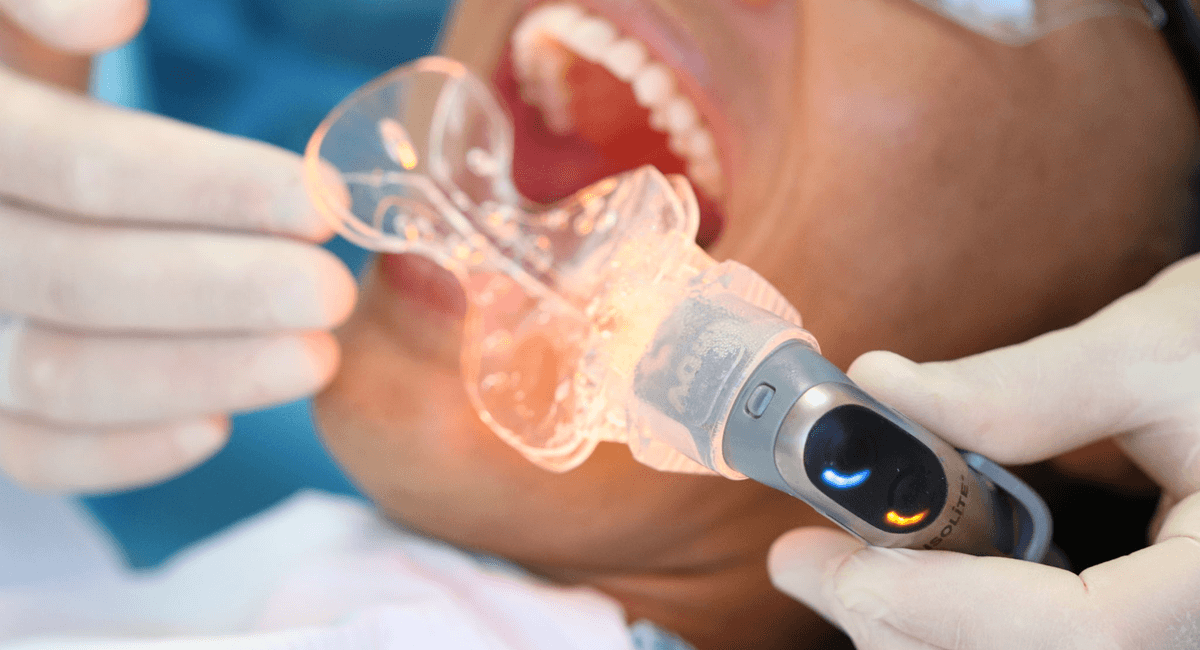
Integrated isolation and evacuation systems like the Zyris Isolite® do something the rubber dam can't: deliver continuous suction, a built-in bite block, and simultaneous tongue and cheek retraction in a single device. For subgingival cases, that combination becomes especially valuable — because the rubber dam itself can physically interfere with matrix band placement at the very margin that matters most.
Dr. Lawson describes a recent case that captured the problem. Working on deep anterior composite margins, he had the rubber dam placed and his anterior matrices positioned. "I take everything apart. And I realized that some of the rubber dam slipped between my matrix and the tooth. And now I've got this little void there. And so I had all the best intentions. And then I had an unfortunate outcome." For cases like that, an integrated system removes the obstruction without sacrificing isolation.
The cost picture is more favorable than many dentists expect. The mouthpiece is disposable while the hard plastic connector autoclaves and reuses across cases. Per-case cost runs roughly 30 to 40 percent more than a rubber dam — a margin most practices absorb easily once the clinical advantages are factored in.
Both tools have their place. The rubber dam remains an excellent choice for many bonded restorations, and integrated systems like Isolite® extend isolation into the subgingival cases, hard-to-isolate young patients, and limited-access situations where the dam alone falls short.
When Contamination Happens: Rescue Protocols and Alternatives
Even with excellent isolation, contamination happens. Dr. Lawson's evidence-based rescue protocols depend on the stage at which contamination occurs:
- Saliva on uncured adhesive — rinse, dry, and reapply fresh adhesive before light curing
- Saliva on cured adhesive — rinse, dry, and proceed directly with composite placement (no need to reapply adhesive)
- Blood contamination — limited research exists, but EDTA or sodium hypochlorite on a cotton pellet are reasonable cleaning agents; sodium hypochlorite is more accessible in most operatories
"All of these led to lower bond strengths, but it was the best thing... aside from going back and re-prepping a little," Dr. Lawson notes. According to Lawson, when time permits and isolation can be re-established, refreshing the prep surface remains the gold standard recovery approach.
One important clarification on sodium hypochlorite: dentists sometimes group it with hydrogen peroxide and carbamide peroxide, which release oxygen and inhibit composite polymerization. The research on sodium hypochlorite is different — multiple studies show it doesn't compromise dentin bonding the way peroxide-based agents do.
For areas that simply won't isolate — subgingival caries on high-caries-risk patients, for example — glass ionomer earns its place in the armamentarium. A 2020 study by Shimazu and colleagues showed glass ionomer and resin-modified glass ionomer bond strength was unaffected by saliva contamination, even in what the researchers called "lots of saliva." Dr. Lawson confirms this from his own work: "We've bonded GI cements in just a pool of saliva, and the bond was unaffected."
The Takeaway
Adhesive dentistry has changed what we can do — but not what physics requires. A bond is only as strong as the field it was placed in. As Dr. Lawson puts it: "I think it's one of the big reasons why composites just don't have the clinical lifetime of amalgams. I think isolation is a big part of it."
Whether that means utilizing a rubber dam, taking advantage of an integrated system like Isolite® or choosing glass ionomer when isolation simply isn't possible — the dentists getting decades out of their composites are the ones treating isolation as non-negotiable, not optional.